Tag Archives: historical fiction

#BookReview ‘The Last Daughter’ by @NicolaCornick #historical

A modern-day disappearance is combined with myths and a famous historical mystery, knit together in The Last Daughter by Nicola Cornick. Nicola CornickThis is a time-slip story involving true characters in history, a magical stone – the Lovell Lodestar – and the legend of The Mistletoe Bride. The latter is story of sorrow and grief attributed to many English mansions and stately homes in which a bridegroom and his bride, tired of dancing at their wedding, play hide and seek. She disappears and is never found until a skeleton is discovered many years later. It is eleven years since Caitlin Warren disappeared, presumed dead. Her twin sister Serena still struggles to move on from her loss, a feeling magnified by the lack of evidence and Serena’s worry that the cognitive amnesia she has suffered since that night may obscure the truth. When a skeleton is discovered during an archaeological dig at Minster Lovell, the country house where the sisters’ grandparents lived and where Caitlin disappeared, the memories come flooding back. Told in two timelines – Serena, present day; and Anne FitzHugh in the 15th century. Anne’s mother is from the powerful Neville family, a major power during the Wars of the Roses. Five-year old Anne is to be betrothed to eight-year-old Francis Lovell, best friend of Richard of Gloucester, younger brother to the Yorkist King Edward IV. History combines with myth when Anne is told the ghostly story of The Mistletoe Bride who disappears into a different place, a different time.
Serena returns to Minster Lovell Hall in Oxfordshire in an attempt to confront her hidden memories and to be interviewed by the police. There she encounters old friends and visits her grandfather Dick, now suffering from dementia. How can Serena in the 21st century be connected to Anne FitzHugh and what bearing could this have on Caitlin’s disappearance?
A complex story full of so many twists, mysteries and myths that I occasionally floundered. When I surrendered to the flow of the story and stopped worrying about a few gaps and implausible connections, the pages flew by. I finished it wondering if the story would be stronger with slightly less myth and more of Anne and Francis.

Read my review of these other novels by Nicola Cornick:-
THE FORGOTTEN SISTER
THE OTHER GWYN GIRL
THE WINTER GARDEN

If you like this, try:-
The Dream Weavers’ by Barbara Erskine’
The Almanack’ by Martine Bailey
The Cursed Wife’ by Pamela Hartshorne

And if you’d like to tweet a link to THIS post, here’s my suggested tweet:
#BookReview THE LAST DAUGHTER by @NicolaCornick https://wp.me/p5gEM4-5ri via @SandraDanby

#BookReview ‘The Garden of Angels’ by David Hewson #WW2 #thriller

David Hewson is a new author for me. The Garden of Angels is a combination of historical novel and World War Two thriller, written in a patient, multi-layered style which explores a moment in history through the lives of a small number of people. Hewson makes wartime Venice come alive in all its stench, beauty, cruelty, fear and starvation. David HewsonIt is 1943 and the locals are watching the news, following the Allies’ progress towards Rome, wondering how much longer they must wait to be free once more. Meanwhile the Germans search amongst the locals for partisans, traitors, communists. But most of all they search for Jews. A teenage boy, alone after his parents are killed in a bombing raid, must continue the business of the family firm, jacquard weavers of the most beautiful velvet. He must complete the commission his father won just before he died. He stays within the four walls of his home, whilst on the streets outside people are being killed. Until one day Paulo sees something that makes him determined to do something rather than stand by.
The story hinges on the modern-day relationship between a boy and his grandfather, encapsulated from page one as Nonno Paulo reads a bedtime story to five-year-old Nico. He reads from a true story from a history book and they discuss the nature of truth, the truth of death. Ten years later, in 1999 when Nonno Paulo is dying, he gives to Nico a series of letters telling the truth of his life in Venice in 1943 during the German occupation. No one knows Paulo’s real story.
In 1943, Venice is a closed city, tight-knit, full of secret spaces and places the Germans don’t know. It is both a place for hiding and a place for living under the eye of the Nazis and Black Brigades. Paolo shelters two partisans who are on the run. Brother and sister Vanni and Mika Artom are not hunted solely because they have killed Germans, but because they are Jews. Mika, unable to sit quietly by, finds a local resistance group and agrees to take part in a plot to murder a visiting VIP, Salvatore Bruno, a Jew who is betraying other Jews. Vanni, injured and hardly able to move, helps Paolo and his assistant Chiara to weave.
This is a powerful story that hooks you from the beginning and draws you in. I was still thinking about the book days after finishing it. It is not a regular war thriller though it has all the usual conventions. It is more about how we as humans act under extreme circumstances, what we do to survive, where we draw our red lines, when to stand aside and when to step in, how far we will go to win; surprisingly similar dilemmas for the occupiers and the occupied when all are ultimately ordinary people.

If you like this, try:-
A Beautiful Spy’ by Rachel Hore
The Heat of the Day’ by Elizabeth Bowen
Midnight in Europe’ by Alan Furst

And if you’d like to tweet a link to THIS post, here’s my suggested tweet:
#BookReview THE GARDEN OF ANGELS by David Hewson https://wp.me/p5gEM4-5pi via @SandraDanby

#BookReview ‘Plague Land’ by @SD_Sykes #historical #plague

I’ve realised that when I start reading the first book in new series, I should have different expectations. It will not be a standalone novel so there will be continuing threads, unanswered questions and seemingly unrelated sub-plots which all come good in later books. In other words, I wear my ‘be patient’ hat. Plague Land by SD Sykes is first in the historical mystery Oswald de Lacy series. Set in 1350 in countryside ravaged by the plague, teenager Oswald reluctantly finds himself called home from the monastery to be lord of the manor. For almost the whole of the book, he is out of control of events. SD Sykes

This is a historical mystery with an uncertain, inexperienced young lord at its centre. Oswald’s mother and sister are rude to him, the locals simply ignore him, his servants show a lack of respect. A neighbouring lord and the local churchman see him as easy to manipulate and when he is new to his role, Oswald agrees with them. He longs to return to the monastery with his mentor, Father Peter, who returned to Somershill Manor with Oswald. Sykes does a good job portraying a young adult trying to occupy a mature man’s role. What drives him on is an incurable determination to find the truth and an endearing bravery which makes him ask awkward questions and takes him to places he probably shouldn’t be.
When one young woman from the village, then another, are killed in mysterious circumstances, Oswald doesn’t so much lose control of the situation as never hold control in the first place. Rumours of dog-headed monsters rip through the community despite Oswald’s attempts to engage the villagers in logical analysis. Superstition, fear and myth abound in a countryside empty of people; understandable following the horror of death, disease and poverty of the plague.
Many people are not how or who they seem and Oswald learns the hard way not to take appearances or counsel for granted. His questioning of everything and everyone inevitably leads to conflict, and conflict is the beating heart of fiction.
I connected more with Oswald as the story progressed and he was less naive, and now anticipate reading the rest of the series. Coming soon, my review of The Butcher Bird, second in the five-book Oswald de Lacy series.
CLICK HERE TO READ MORE ABOUT THIS BOOK

If you like this, try:-
The Almanack’ by Martine Bailey, #1TabithaHart
Winter Pilgrims’ by Toby Clements #1Kingmaker
Gone are the Leaves’ by Anne Donovan

And if you’d like to tweet a link to THIS post, here’s my suggested tweet:
PLAGUE LAND by @SD_Sykes #bookreview https://wp.me/p5gEM4-5nv via @SandraDanby

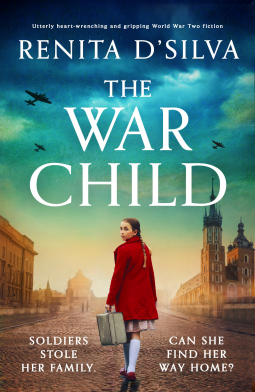
#BookReview ‘The War Child’ by Renita D‘Silva @RenitaDSilva #WW2 #historical

Two women, two generations apart. In The War Child, Renita D‘Silva explores the connections between a mother and child, through danger and separation, self-sacrifice, unstoppable events and the pressures of modern life. Renita D‘SilvaD’Silva tells the dual timeline stories of Clara and Indira over many decades, setting the strength and promise of women across four decades against the twentieth century prejudices of chauvinism and racism. In London, 1940, teenager Clara is woken by her mother as their home is bombed. Her mother presses into Clara’s hand a necklace, a St Christopher’s medal, with the promise that it will always protect her. Orphaned, Clara is taken in by her aunt and begins helping at a local hospital treating injured soldiers. When nurses and doctors ignore a wounded Indian soldier because of the colour of his skin, Clara nurses him to health. When the war ends, she decides to fulfil a long-held promise to herself. Inspired by sitting on her father’s knee and listening to his stories of India, Clara takes a job as nurse companion to a delicate boy whose parents are re-locating to India. And there, she falls in love.
In India, 1995, 33-year old Indira is chairing a board meeting when she gets a message to ‘go to the hospital’. Fearing her young son is dying – he is in hospital for a minor surgical procedure – she finds her husband and son both well. The message refers to Indira’s father who has had a heart attack. Indira returns home to her parents, somewhere she hasn’t been much of late as she seeks to avoid their simplistic boring life, resenting their dissatisfaction with her life choices.
Sometimes raw and painful, always emotionally complex with surprising twists that make you gasp, The War Child is another brilliant book by my first-choice author for Indian historical romance. D’Silva is such a visual writer that India is a real place on the page, the colours and scents are both beautiful and challenging, her descriptions as full of contrasts as fresh guava sprinkled with chilli powder.

Read my reviews of these other novels by Renita D’Silva:-
A DAUGHTER’S COURAGE
A MOTHER’S SECRET
BENEATH AN INDIAN SKY
THE GIRL IN THE PAINTING
THE ORPHAN’S GIFT
THE SPICE MAKER’S SECRET
THE SECRET KEEPER

If you like this, try:-
The Tea Planter’s Wife’ by Dinah Jefferies
Call of the Curlew’ by Elizabeth Brooks
The Sapphire Widow’ by Dinah Jefferies

And if you’d like to tweet a link to THIS post, here’s my suggested tweet:
#BookReview THE WAR CHILD by Renita D‘Silva @RenitaDSilva https://wp.me/p5gEM4-5mW via @SandraDanby

#BookReview ‘The Dream Weavers’ by Barbara Erskine @Barbaraerskine #historical

I like the timeslip construction and so The Dream Weavers by Barbara Erskine caught my eye. Although well-established, she’s a new author for me as I explore more historical fiction. I admit to looking for more novels without technology and the mores of the modern world. A bit of escapism. Barbara ErskineSet in two different centuries – Anglo-Saxon England 788AD and the English/Welsh border in 2021 – The Dream Weavers is about the romance of a young English noblewoman and a Welsh prince who meet as Offa’s Dyke is being built. Eadburh and Elisedd are sent by their fathers to ride out along the construction line and report back on progress, but over a few days they fall in love. The dyke is a symbol throughout the book, of rivalries and divisions, of tribes seeking separation rather than acceptance of differences. Eadburh’s father King Offa meant it to be a permanent border line between the two countries but in the centuries after it was built it fell into disrepair. In the modern strand of the story – told by Beatrice Dalloway whose husband Mark is canon treasurer of nearby Hereford Cathedral – the dyke is a bit of a mystery, difficult to find, often missing or destroyed, invisible in the rural landscape.
I liked the history, the myths, the hunting down of secrets and particularly the exploration of how history’s perception of the past can be mistaken. Historians make judgements based on the information available to them at the time, but often they may be unaware that what they believe are historical facts are in reality assumptions, lies, cultural misunderstandings, political interpretations or written by chroniclers with personal agendas. This theme is embodied in the character of historian Simon Armstrong, a specialist in the Anglo-Saxon period, who has rented a cottage in the isolated countryside near the dyke to finish writing his latest book. But Simon has a problem, his cottage seems to have a ghost and his landlady calls Bea for help. Bea is a mystic who has an affinity with ghosts and has studied folklore and the supernatural, a hobby which sits uneasily alongside her husband’s job. As Bea investigates the mysterious voice and noises in and around the cottage, Simon’s two children arrive to stay. Teenager Emma seems delicately susceptible to the supernatural and is drawn into Bea’s dreaming. The connections between Bea and Emma with the Welsh borders of 788AD strengthen and both find it difficult to stay in the 21st century, at increasing danger to themselves.
This felt like a long read but when I finished it and checked I was surprised to see it is only 512 pages. Nowhere near the books I think of a ‘long read’ – Hanya Yanagihara’s A Little Life [737 pages], Kate Mosse’s Labyrinth [752] and itself a timeslip tale, or Ken Follett’s The Pillars of the Earth [a stonking 1104 pages]. The links between the timeslip sections became repetitive with Bea sitting down, falling asleep and dreaming a lot of times and at all times of day. This stop-start rhythm took me away from the historical story. I enjoyed all Eadburh’s sections, following her from the first meeting with Elisedd through their whirlwind romance to all that followed. So the modern-day sections of Bea seemed intrusive. But of course this is a timeslip story so it is set in two different time zones, and today’s accepted storytelling method is to introduce a threat to your key character. Bea’s modern-day strand features a cathedral volunteer who at first seems a nosy woman, interfering, disliking the new canon’s wife and possibly fancying Mark herself. But Sandra Bedford is not all she seems and her role towards the end was not what I was expecting.
I was held to the last page by the telling of a tragic love story set in Anglo-Saxon times. I wanted to know what happened to Eadburh and Elisedd – did their love last, did they meet again – and cared less for the other characters.

Here’s my review of another timeslip novel by Barbara Erskine:-
THE STORY SPINNER

If you like this, try:-
The Crows of Beara’ by Julie Christine Johnson
The Evening and the Morning’ by Ken Follett #PREQUELKINGSBRIDGE
The Ninth Child’ by Sally Magnusson

And if you’d like to tweet a link to THIS post, here’s my suggested tweet:
#BookReview THE DREAM WEAVERS by Barbara Erskine @Barbaraerskine https://wp.me/p5gEM4-5md via @SandraDanby

#BookReview ‘The Rose Garden’ by @AuthorTracyRees #historical

I just loved The Rose Garden by Tracy Rees. The characters start off isolated from each other and are gradually threaded together as their separate challenges and crises become interlinked. When I finished it, I wanted to start reading it all over again. Tracy ReesThe Rose Garden is the story of Mabs, Ottie, Olive and Abigail. Four completely different women who live near Hampstead Heath as the 20th century approaches. It is a time of societal and family change when women are beginning to show strength in changing their lives but when traditional barriers erected by male society and assumptions still remain.
Mark is eighteen and works in the Regent’s Canal, moving huge lumps of ice from underground storage up to the fresh air. It is a dark, dangerous job. But Mark is really Mabs Daley, working to support her brothers and sisters and Pa, who hasn’t worked since being widowed. The family lives in one room, dirty and dishevelled, but with an underlying spirit that Mabs fears won’t last much longer. Things change when she hears of a job as a lady’s companion at a house on nearby Hampstead Heath. Mabs is full of hope and plans that at last she’ll be able to raise the fortunes of her family. But though her employer Mr Finch is sanguine about her lack of experience and unpolished manners, Mrs Finch locks Mabs out of the room.
When Olive Westallen, a single, educated, wealthy woman in her late twenties, decides to adopt a child from a nearby children’s home, even her liberal parents are concerned. She calls her new daughter Clover and for the first few weeks everything seems delightful until Clover’s behaviour inexplicably changes.
Twelve-year old Otty is bored. Stuck at home waiting to start her new school, her father is at work, her mother keeps to her room while her older brothers and sisters live their own lives. Recently moved to London from Durham, she has no friends so starts exploring the local area alone. In a spot of bother by the canal she’s rescued by Jim, a young ‘darkie’ who reveals himself to be Jill. As Jill explains the problems living as a black girl in the city, Otty struggles to understand the reasons for this inequality and prejudice.
To say how Mabs, Olive, Otty and Abigail become acquainted is to give away too much of the plot. Tracy Rees is wonderful at creating a small world with a world [as she did in the South Yorkshire mining villages in The House at Silvermoor] and populates them with struggling, flawed characters who you just want to succeed.
Ultimately a story of friendship, at the heart of The Rose Garden are women who want more to life than marrying a man and becoming his property. They want the freedom to make their own life choices, to work, to marry, to be educated, to move around freely and unthreatened, to own what is rightfully theirs. Independently and together, they fight back against injustice, control, expectations and the law of the time.
Don’t miss it.
CLICK HERE TO READ MORE ABOUT THIS BOOK

Click the title below to read my reviews of other novels by Tracy Rees:-
AMY SNOW
DARLING BLUE
THE ELOPEMENT
THE HOUSE AT SILVERMOOR

If you like this, try:-
Birdcage Walk’ by Helen Dunmore
The Orphan Twins’ by Lesley Eames
The Clergyman’s Wife’ by Molly Greeley

And if you’d like to tweet a link to THIS post, here’s my suggested tweet:
#BookReview THE ROSE GARDEN by @AuthorTracyRees https://wp.me/p5gEM4-5lW via @SandraDanby

#BookReview ‘The Rose Code’ by Kate Quinn @Kate_Quinn #WW2 #Bletchley

The Rose Code by Kate Quinn is the first book I’ve read by this author. I was drawn in by the WW2 setting and promise of mystery, but it’s much more than that. There are two timelines; 1947 as the royal wedding of Princess Elizabeth approaches, and 1939 at the outbreak of war. At its centre are three young women who don’t quite fit into their worlds. War introduces something new to their lives. Opportunity. Advancement. Recognition. Friendship. Home. Kate QuinnMabs has grown up in Shoreditch but longs to escape. She follows her own plan of improvement – reading the classics, copying the accents of assistants in upper class shops – with the long-term aim of rescuing her younger sister Lucy from poverty. Osla is a Canadian society girl, rich, pretty, labelled as a dim deb who trains as a riveter to make Hurricanes. Both have mysterious interviews and are sent on a train journey to ‘Station X’. This turns out to be a large country mansion – Bletchley Park – where secret war work is undertaken. Both must sign the Official Secrets Act before they are admitted. At their lodgings, they meet Beth, downtrodden daughter of their strict religious landlady Mrs Finch.
Beth’s skill at crosswords is recognised and soon all three girls are working at ‘BP’. In their jobs – typing, translating, decoding – the three girls get to know each other and, despite the rules of secrecy, they learn how gossip inside ‘BP’ works. Soon they are promoted, learning top secret information before it is transmitted to government, before even Churchill. And with knowledge comes power, and danger.
We follow the three through romances – Osla with young naval officer, Prince Philip of Greece – and bombings. There is something to like and dislike about each woman making them realistic, rounded characters. Mab was my favourite, Osla slightly irritating, while Beth changes the most throughout the course of the book. The 1947 strand becomes a hunt for a traitor as the Cold War gets colder and a former WW2 ally becomes the enemy. The girls must revisit their wartime secrets to question the nature of truth and loyalty, to each other and to their country.
The Second World War is often thought of as a time of liberation for women doing the jobs of men and in some ways it was; but Quinn shows this was a transitory advantage – temporary, class driven, certain jobs only – and women were still ultimately dependant on a man in so many ways. As the women look back at their former lives we see how much, and how little, has changed for them.
Some of the coding puzzles went straight over my head but that didn’t really matter. The Bletchley setting is great, the gossip of the weekly scandal rag, the familiar names dropped – Alan Turing, Joan Clarke – the book club and 3am kidneys on toast. I’m not sure the 1947 royal wedding deadline adds much to the narrative, there’s enough threat without it. As I was getting towards the end of the book and was interrupted, I snatched up the book again at the next possible opportunity.

Here are my reviews of other novels by Kate Quinn:-
THE ALICE NETWORK
THE BRIAR CLUB
THE ROSE CODE

If you like this, try:-
Life After Life’ by Kate Atkinson
Another You’ by Jane Cable
Life Class’ by Pat Barker

And if you’d like to tweet a link to THIS post, here’s my suggested tweet:
#BookReview THE ROSE CODE by Kate Quinn @Kate_Quinn https://wp.me/p5gEM4-5lQ via @SandraDanby

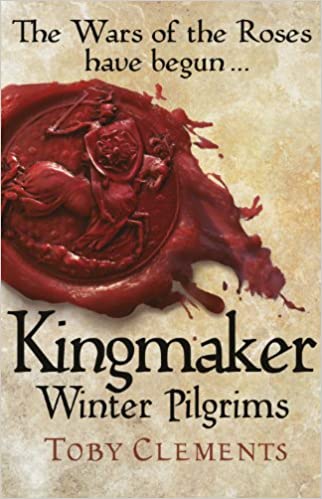
#BookReview ‘Winter Pilgrims’ by Toby Clements #historical #WarsoftheRoses

This is the first of a four-book series about the Wars of the Roses. Toby Clements is a new author for me, I admit to picking up the paperback by mistake in a bookshop when browsing and am happy to find an unknown historical author to explore. Winter Pilgrims is the first of the four novels, telling the well-documented story of the Lancaster versus York wars through the eyes of two fictional people on the edge of the action. Toby ClementsIn February 1460, at a priory in Lincoln, two people flee from marauding soldiers. Despite living yards apart in the same priory Brother Thomas and Sister Katherine have never met until this morning, their previously segregated lives are to be entwined as they escape danger only to encounter new threats. And some old ones.
At first I worried that the plot was moving slowly and felt occasionally drowned by detail, but I stuck with it and was rewarded. By the end – and it’s a long book, the paperback is 560 pages – I wanted to starting reading the second novel straight away. Clements excels at historical detail, particularly soldiers and fight scenes, living conditions and basic human detail. Both characters are conflicted by their religious backgrounds, the things they must do to survive frequently challenge their faith. Life in the real world is brutal, dirty, dangerous and poor. Neither have the personalities of victims. Thomas trains as an archer, Katherine – adopting the male persona as Kit – proves to be an adept surgeon.
Making snap decisions takes them to unknown places with sometimes reliable, sometimes untrustworthy people. Along the way they become involved in some of the key battles of the year as their story is set within the broader framework of civil war. Over the years I have read a lot about the Wars of the Roses due to an early fascination via Shakespeare, but still find it disorientating and so was disappointed with the map and superficial character list. But the story of Thomas and Katherine kept me turning the pages late at night, just one more chapter.
A good book to lose yourself in.

Read my reviews of the other books in this series:-
BROKEN FAITH #2KINGMAKER
DIVIDED SOULS #3KINGMAKER

And also by Toby Clements:-
A GOOD DELIVERANCE

If you like this, try:-
The Evening and the Morning’ by Ken Follett #PREQUELKINGSBRIDGE
The Lady of the Rivers’ by Philippa Gregory
The Burning Chambers’ by Kate Mosse #1JOUBERT

And if you’d like to tweet a link to THIS post, here’s my suggested tweet:
#BookReview WINTER PILGRIMS by Toby Clements https://wp.me/p5gEM4-5iY via @SandraDanby

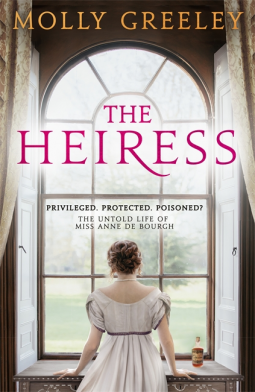
#BookReview ‘The Heiress’ by @MollyJGreeley #historical #romance

An intriguing premise for this second novel by Molly Greeley which re-imagines the story of a minor character in Jane Austen’s Pride and Prejudice. In The Clergyman’s Wife it was Charlotte Collins, in The Heiress it’s the turn of Anne de Bourgh. Molly GreeleyWell-written in a slightly modernised style of Austen, it is easy to slip into the head of Lady Catherine de Bourgh’s sickly daughter who at first sight seems an unpromising protagonist. But keep reading. Greeley starts with the birth of a daughter to a young married couple. In order for this book to work you have to both forget Austen’s portrayal of Anne, to sink yourself into the life of this delicate child, but also to remember the original. That is the path to enjoying the asides, thoughts and occasionally darting but puzzling urges that Anne experiences growing up. Scenes I looked forward to, critical in Pride and Prejudice, were skirted over here in favour of new material. Familiar characters occur, some more importantly than others – Darcy, Colonel Fitzwilliam, Mr Collins – but this is 100% Anne’s story.
Sickly from birth, Anne is dosed twice daily with laudanum drops. She is protected from exertion, emotions and unspecified dangers of the outside. Playing the piano is too strenuous, novels and poetry too emotional. Then when she is twelve after an unsuccessful treatment of sea bathing, Anne’s life change when a governess arrives. This is not yet the nodding Mrs Jenkinson from Austen but Miss Hall, a young woman determined to teach her unschooled young pupil what she needs to know to be the future mistress of Pemberley and Rosings.
This is a story of laudanum addiction, the tentacles of the drug’s control preventing any small rebellion by Anne, any protestation that she feels healthy before her curative drops are administered and only weak afterwards. Cocooned from emotion, her true personality smothered, Anne lives at a distance from those closest to her. An article in a newspaper is to be the catalyst for change. But change of any kind takes immense courage, needing a confrontation with her controlling mother. Greeley gives Lady Catherine a moment of redemption though as we, and Anne, catch a glint of history that explains the elderly woman portrayed by Austen and challenged so gleefully by Lizzie Bennet.
For Anne to fulfill Miss Hall’s objective of being a fit mistress of the estate of Rosings, she must do more than break free of drugs. She must discover the truth of who she is.
A fascinating exploration of one woman’s search for freedom in a time of female subjugation to men, when females were labelled as delicate with little diagnosis or review, when many women were unable to live alone or manage their own inheritance. At times surprising, the detail of The Heiress is Austen-like but the emotions are of the twenty-first century.

Click here to read my review of THE CLERGYMAN’S WIFE, also by Molly Greeley.

If you like this, try:-
Cecily’ by Annie Garthwaite
The Cottingley Secret’ by Hazel Gaynor
The Almanack’ by Martine Bailey

And if you’d like to tweet a link to THIS post, here’s my suggested tweet:
#BookReview THE HEIRESS by @MollyJGreeley https://wp.me/p5gEM4-5l4 via @SandraDanby

#BookReview ‘A Room Made of Leaves’ by Kate Grenville #historical

When she is 21, a moment’s dalliance in a bush forces orphan Elizabeth to marry soldier John Macarthur. The story of their marriage in 1788, journey to the colony of Australia on board a convict ship and life in the new settlement called Sydney Town, is told in A Room Made of Leaves by Kate Grenville. Kate GrenvilleElizabeth was a real woman but little is known of her, though her husband features in Australia’s history books as the British army officer who became a politician, legislator and pioneer of the Australian wool industry. Grenville is free to imagine what life must have been like as a white settler, and a woman, in a rough, uncultured town where the native people are viewed as animals.
Very quickly Elizabeth finds her new husband is a bully and her new home is a brutal, unforgiving, judgmental place. She spends much time alone with her sickly son and survives by disguising how clever she is, particularly from her husband. More children quickly follow and she bonds more with the convicts who work for her as servants, than she does with the wives of her husband’s friends. An outlier, she decides to improve her learning and seeks lessons on astronomy from an officer in her husband’s corps. What follows changes her understanding of her new country and her place in it.
The pacing seems at times off kilter, a trifle slow in places and rushed at the end, but the writing is as beautiful as I remember from Grenville’s earlier books. Of the book’s two halves, I wanted less of the first half and more of the second about Elizabeth’s role in developing breeds of sheep suited to the wool trade.
Essentially this is a delicately-written story of a young woman who, after making one mistake, is trapped in a loveless marriage far away from her Devon home. She learns how to manage her husband without him realising he is being managed, she tempers his outbursts and steers him out of trouble. Perhaps this fictional account of Elizabeth’s life will mean more to Australians who have grown-up with the historical story of the real John Macarthur.
A good read but not my favourite Grenville book.

Read my review of another Kate Grenville book, RESTLESS DOLLY MAUNDER.

If you like this, try:-
Dangerous Women’ by Hope Adams
The Pearl Sister’ by Lucinda Riley
Rush Oh!’ by Shirley Barrett

And if you’d like to tweet a link to THIS post, here’s my suggested tweet:
#BookReview A ROOM MADE OF LEAVES by Kate Grenville https://wp.me/p5gEM4-5jI via @SandraDanby