Tag Archives: historical fiction

#BookReview ‘Cecily’ by @anniegarthwaite #historical

Cecily by Annie Garthwaite was a gradual falling-in-love process for me as I became so immersed in the story and fell in fascination with the character of Cecily Neville. What a wonderful fictionalised account of the Duchess of York it is. Mother of two kings, equal partner to her husband Richard, mother, politician, diplomat, kingmaker. Annie GarthwaiteI started knowing nothing more of her than that she was mother to both Edward IV and Richard III. Garthwaite paces herself in the telling of Cecily’s story and there were times when the [necessary] exposition of England’s 15th century politics and the seemingly endless battles and arguments of the Wars of the Roses, seemed to pause the narrative. But as the pages turn, the tension builds as you wonder how the family will survive. The politics and family connections of the time were intricately linked and can be confusing, so the exposition is a necessary part of the novel.
Cecily is a gift of a character who was somehow overlooked in the history books, as Garthwaite explains in her afterword, ‘Writing Cecily’. “Cecily lived through eighty years of tumultuous history, never far from the beating heart of power. She mothered kings, created a dynasty, brought her family through civil war…. Last woman standing.”
This does not feel like a debut novel. Cecily comes alive off the page and it’s clear that Garthwaite lived and breathed in Cecily’s shoes. She creates a modern woman, a strong woman in a man’s world which, given Cecily’s history, she must have been to survive. This is an epic story starting in 1431 as the teenage Cecily watches as Joan of Arc burns at the stake, ending with the coronation of her eldest son as King Edward IV. On the way, family alliances are sundered, friends become traitors, battles are won and lost and Cecily gives birth to thirteen children. Through it all, she believes her husband has a stronger claim to the throne than the current king, Henry VI. The tension between husband and wife ebbs and flows throughout the years as Cecily encourages and pushes Richard to claim his rightful place.
There are so many twists, betrayals, secrets and threats that I found myself just reading one more page, one more chapter, even as my eyes closed late at night. I did not want this book to end.
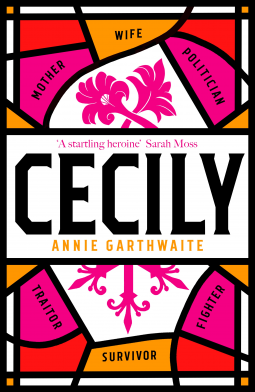
And what a stunning cover!

Here’s my review of THE KING’S MOTHER, also by Annie Garthwaite

If you like this, try:-
Orphans of the Carnival’ by Carol Birch
Dangerous Women’ by Hope Adams
Rush Oh!’ by Shirley Barrett

And if you’d like to tweet a link to THIS post, here’s my suggested tweet:
#BookReview CECILY by @anniegarthwaite https://wp.me/p5gEM4-5it via @SandraDanby

#BookReview ‘The City of Tears’ by @katemosse #historical

Steeped in the historical detail of sixteenth-century religious tension and war in France, The City of Tears by Kate Mosse continues the story started in The Burning Chambers. Through the eyes of Minou and Piet we experience the Saint Bartholomew’s day massacre of Huguenots and its aftermath as the story moves from Paris and Chartres to Amsterdam, home to refugees and a protestant uprising. Kate MosseIt is 1572 and the action starts in Puivert, Languedoc, where the Reydons have found a fragile peace from Catholic persecution of the Huguenots. Minou and Piet take their family to Paris to witness the diplomatically-sensitive royal wedding of catholic King Charles’s sister Marguerite to the protestant Henry of Navarre. Unknown to the Reydons their old enemy Cardinal Valentin, also known as Vidal du Plessis, is in Paris planning to kill Huguenots. What follows drives the old enemies together and sets in motion Mosse’s story. The Reydons are forced to flee to save their lives, leaving behind one daughter possibly dead or missing. They run to Amsterdam where they establish a new life though their grief for Marta ruptures their previous marital harmony. But religious extremism follows them and once again they must face the threat of violence. As Piet’s past catches up with him, an uncomfortable family secret is revealed. The need to find the truth once and for all takes them to Chartres and the home of a hunter of religious relics.
These books need be read with full concentration. This period of history is a gap in my knowledge, which made The City of Tears an interesting read. The story lacked drama, though I find it difficult to pin down why. Minou is the heart of this book and it is she who pulled me on through some of the heavy historical detail. I settled into the book better when I gave up trying to remember the historical fact and let Minou’s fictional story take over.
As in The Burning Chambers, the Prologue is set in South Africa two centuries later. And still the woman featured in 1862 is a mystery. The City of Tears is set at a time of change in French Protestantism and the birth of the Dutch Republic and is one of a series of novels covering 300 years of religious turmoil in Europe. Mosse follows the geographical movement of the Huguenot refugees from sixteenth-century France and Amsterdam to the Cape of Good Hope in the eighteenth and nineteenth centuries. No word on how many novels this series will finally comprise.
I think I will always prefer Labyrinth.
CLICK HERE TO READ MORE ABOUT THIS BOOK

And here are my reviews of other novels by Kate Mosse:-
CITADEL [#3LANGUEDOC]
THE BURNING CHAMBERS #1JOUBERT
THE TAXIDERMIST’S DAUGHTER

If you like this, try:-
The Ashes of London’ by Andrew Taylor
The Witchfinder’s Sister’ by Beth Underdown
The Last Hours’ by Minette Walters

And if you’d like to tweet a link to THIS post, here’s my suggested tweet:
#BookReview THE CITY OF TEARS by @katemosse https://wp.me/p5gEM4-5gU via @SandraDanby

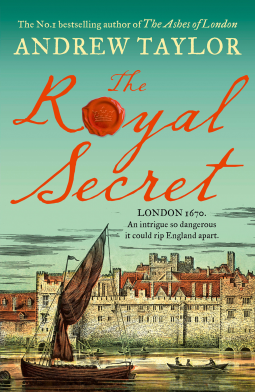
#BookReview ‘The Royal Secret’ by @AndrewJRTaylor #Historical

The Royal Secret is another excellent instalment in the historical drama series by Andrew Taylor that started in 1666 with the Fire of London. I hesitate to call The Royal Secret a thriller as these books cross historical sub-genres and are consequently fulfilling on a number of levels. Crime, political intrigue, social commentary, architecture, strong characterization and a dash of romance all set in the post-Restoration excess, poverty and turmoil of Charles II’s rule. Andrew TaylorEvery successful thriller needs a villain to hate and Dutchman [or is he?] Henryk van Riebeeck certainly gives James Marwood the run-around. Marwood, now working for Secretary of State Lord Arlington, is charged with investigating the disappearance of top secret papers and the sudden death of a palace clerk. As Marwood follows the trail across London via a gambling club and Smithfield meat market, Cat Hakesby pursues success as an architect. Having completed a successful commission – a rather grand poultry house – her next project is a bigger, grander poultry house for a French aristocrat who is also sister of King Charles. Nothing is as it seems in this series so when Cat travels to France to show her plans to her client, we know she must unwittingly be caught up in a political intrigue. But what exactly? And how does this connect with Marwood’s pursuit of missing state papers which threaten a diplomatic treaty being negotiated between the English and the French? Is van Riebeeck a villain or a hero?
Based on the machinations of a real treaty between France and England, Taylor has once again combined a sharp plot with colourful characters [one gentleman is a collector of exotic animals] and, of course, Marwood and Cat. The will-they-won’t-they thread which runs throughout this series faces a chasm here not helped by copious misunderstandings, jealousy, Cat’s stubborn independence and Marwood’s dedication to the secrecy of his employment.
Excellent. Bring on the next one.
CLICK HERE TO READ MORE ABOUT THIS BOOK AT AMAZON

Read my reviews of the other books in this series:
THE ASHES OF LONDON #FIREOFLONDON1… and try the first paragraph of THE ASHES OF LONDON.
THE FIRE COURT #FIREOFLONDON2
THE KING’S EVIL #FIREOFLONDON3
THE LAST PROTECTOR #FIREOFLONDON4
THE SHADOWS OF LONDON #FIREOFLONDON6

And a World War Two novel by the same author:-
THE SECOND MIDNIGHT

If you like this, try:-
The Doll Factory’ by Elizabeth Macneal
The Taxidermist’s Daughter’ by Kate Mosse
The French Lesson’ by Hallie Rubenhold

And if you’d like to tweet a link to THIS post, here’s my suggested tweet:
#BookReview THE ROYAL SECRET by @AndrewJRTaylor https://wp.me/p5gEM4-5fe via @SandraDanby

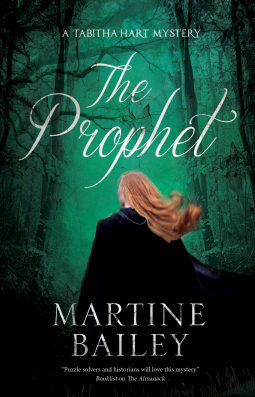
#BookReview ‘The Prophet’ by @MartineBailey #historical #mystery

When a dead body is found at the foot of an ancient oak, a tense plot begins. The Prophet is the second Martine Bailey novel to feature the characters of Tabitha and Nat De Vallory, first seen in The Almanack. The oak tree in question is not just any tree; it is the Mondren Oak, and nearby an evangelist preacher and his community have made an encampment in ancient woodland belonging to Nat’s father. Martine BaileyEighteenth-century England was a place of superstition and myth, of religious fervour and persecution. It was also a time of scientific study and enlightenment. The body of a young woman is found on May Day, 1753. The date is significant and the novel’s action winds up slowly in pace and tension towards Midsummer’s Day, coincidentally the due date for the arrival of Tabitha and Nat’s first baby. Baptist Gunn and his growing number of followers believe a new saviour will be born close to the oak tree on Midsummer’s Day. Gunn, a ‘sleeping prophet’, is gathering his congregation, and money, in preparation to sail for a new life in America.
Tabitha is a likeable protagonist, happy to be married and living in the place where she grew up, but challenged by the new monied life she leads. Her colourful background comes in handy when she determines to seek the woman’s murderer. Heavily pregnant, she makes an eye-catching amateur detective. Advised by her doctor to avoid shock, surprise, and the night-time attentions of her husband, Tabitha feels distanced from Nat. She distrusts the claims of Baptist Gunn and fears he is a fraudster. Meanwhile Nat seeks the preacher’s company, keen to run a scientific experiment studying the veracity of prophecies. Eager to support his ailing father and needing to establish his authority in the community as heir to the estate, Nat takes risks that Tabitha fears endanger their lives.
Are our lives governed by fate and can this be forseen by a privileged few? Why do some people trustingly accept claims and predictions without examination, while others demand proof and evidence? Bailey’s novel is a historical reminder to the 21st century not to believe everything you hear without an analysis of motivation, fact and context.
The Prophet is an unusual historical mystery rooted in an ancient Cheshire woodland. Bailey has created an authentic rural community which lightly bears the depth of her historical research. Watch out for the plot surprises, the secrets and lies.

And here are my reviews of other novels by Martine Bailey:-
THE ALMANACK #1 TABITHAHART
AN APPETITE FOR VIOLETS
THE PENNY HEART

If you like this, try this:-
The Wicked Cometh’ by Laura Carlin
The Confessions of Frannie Langton’ by Sara Collins
The Wonder’ by Emma Donoghue

And if you’d like to tweet a link to THIS post, here’s my suggested tweet:
#BookReview THE PROPHET by @MartineBailey https://wp.me/p5gEM4-5er via @SandraDanby

#BookReview ‘Heresy’ by SJ Parris @thestephmerritt #historical #crime

Including touches such as secret messages written in orange juice, ciphers and hidden codes, Heresy is the introduction to the Giordano Bruno series of historical mysteries by SJ Parris. Set in 1583, this is the English Reformation of Queen Elizabeth I and her spymaster, Sir Francis Walsingham, as they steer the country from catholicism to protestantism. Meanwhile, catholics continue to worship in secret. SJ ParrisFormer Italian monk turned heretic and philosopher Bruno rides out of London on a horse borrowed from the French ambassador, to meet with a royal party bound for Oxford. Accompanied by his friend, courtier poet and secret spy, Sir Philip Sidney, Bruno has two secret missions. The first, along with Sidney, is to expose a catholic conspiracy in the university city. The second is to find a heretical text, stolen long ago but rumoured to be in England, which states that the earth revolves around the sun. This second mission is the one, I suspect, that will continue beyond this book and through the whole series.
When the murders begin, Bruno’s position as an outsider at Lincoln College is both an advantage and disadvantage. His lack of foreknowledge gives him a clear vision of factual events and the awkward questions to ask, but his ignorance of the incestuous and competitive city’s petty squabbles, hidden feuds and flirtations puts him in the path of danger. He stumbles from incident to incident, working out who to believe and who to trust. Regarded as a foreigner and therefore a suspect by everyone else, Bruno’s difficulties reflect the turmoil of the times. The murders are brutal but so are the legal punishments for crimes.
A dense plot with an infinity of tentacles of historical fact and religious conflict that, at times, I found it hard to keep up. In the style of truly satisfying detective stories, when the villain was unveiled I thought ‘of course’ and was annoyed with myself for not guessing correctly.
Much-compared to CJ Sansom’s Matthew Shardlake series – which are set in the times of Elizabeth’s father King Henry VIII and his master fixer Thomas Cromwell – I found this book slower-moving and different in focus, but nevertheless enjoyable.
I do love finding a good series.
CLICK HERE TO READ MORE ABOUT THIS BOOK AT AMAZON

Read my reviews of other books in the series:-
PROPHECY #2GiordanoBruno
SACRILEGE #3GiordanoBruno

If you like this, try:-
Dissolution’ by CJ Sansom
The Ashes of London’ by Andrew Taylor
The Last Hours’ by Minette Walters

And if you’d like to tweet a link to THIS post, here’s my suggested tweet:
#BookReview HERESY by SJ Parris @thestephmerritt https://wp.me/p5gEM4-5dX via @SandraDanby

My Porridge & Cream read… @jane_fenwick60 #books #historical

Today I’m delighted to welcome historical novelist Jane Fenwick.  Her ‘Porridge & Cream’ read is Ross Poldark by Winston Graham.

Ross Poldark was first published in 1946. It’s surprisingly ‘modern’ and fresh even today. I first read it in the 1970s after the saga was made into a TV series. I was intrigued to see how different the two versions were. They were massively different as it turns out, the book being far better.

Jane Fenwick“There are twelve books in all but the first, Ross Poldark, is the one I reread time and time again. I’ve lost count exactly how many times I’ve read it. I go back to it time and time again because it’s like putting on a comfortable pair of old shoes. It always makes me feel better. Also, each time I read it I see something new, some scene which for some reason has new significance, some word choice which adds depth, some character detail I’d missed.

“I’m drawn to this book for two reasons; firstly the main character and secondly the writing style. The central character, Ross Poldark is not a hero, he’s flawed. He makes mistakes but has a conscience and a strong moral compass. Sometimes he is his own worst enemy but you understand his point of view because the reader is witness to not only his actions but his internal dialogue. He’s beautifully drawn.

“Winston Graham was a brilliant writer. The Poldark saga, set in eighteenth/nineteenth century Cornwall, is historically well researched and accurate. As a writer of historical fiction, I find this aspect of his writing very satisfying. WG manages to write unsentimentally about the times but with such warmth and insight that the reader becomes immersed in the story and the lives of the characters. Ross Poldark is the start of the journey and once read it’s impossible not to read the other eleven books in the series. But for me Ross Poldark is my favourite.”
Jane FenwickBUY THE BOOK

Jane’s Bio
Jane Fenwick lives in Settle in Yorkshire, England. She studied education at Sheffield University gaining a B Ed (Hons) in 1989 and going on to teach primary age range children. Jane decided to try her hand at penning a novel rather than writing school reports as she has always been an avid reader, especially enjoying historical and crime fiction. She decided to combine her love of both genres to write her first historical crime novel Never the Twain. Jane has always loved the sea and although she lives in the Yorkshire Dales she is particularly drawn to the North East coast of Yorkshire and Northumberland. This coastline is where she gets her inspiration. As she has always loved history, she finds the research particularly satisfying.

When she isn’t walking on Sandsend beach with her dog Scout, a Patterdale “Terrorist” she is to be found in her favourite coffee shop gazing out to sea and dreaming up her next plot.
Jane is currently writing a historical series again set on the North East coast beginning in 1765. The first two books, My Constant Lady and The Turning Tides were well received. Look out for the third and last in the series Safe Harbour in May 2021.

Jane’s links
Website
Facebook 

Jane’s latest book
Jane FenwickGabriel Reynolds and his stunning red-haired wife Eleanor have settled happily into married life at Westshore… or have they? A woman with a loaded gun, a servant with a grudge, and a buccaneering Irish sea captain seem intent on rocking the boat. When Caroline Hodgeson makes what her ex-fiancé Gabriel sees as an unsuitable match, it sets off a chain of events which will change all their lives. And not for the better.
The Turning Tides, second in the Reynolds seafaring saga, is a tale of jealousy and jeopardy, mistrust and malice. The continuing tale of one man’s love for an unconventional woman.
BUY THE BOOK

What is a ‘Porridge & Cream’ book? It’s the book you turn to when you need a familiar read, when you are tired, ill, or out-of-sorts, where you know the story and love it. Where reading it is like slipping on your oldest, scruffiest slippers after walking for miles. Where does the name ‘Porridge & Cream’ come from? Cat Deerborn is a character in Susan Hill’s ‘Simon Serrailler’ detective series. Cat is a hard-worked GP, a widow with two children and she struggles from day-to-day. One night, after a particularly difficult day, she needs something familiar to read. From her bookshelf she selects ‘Love in A Cold Climate’ by Nancy Mitford. Do you have a favourite read which you return to again and again? If so, please send me a message.

Discover the ‘Porridge & Cream’ books of these authors:-
Sue Johnson’s choice is ‘Jamaica Inn’ by Daphne du Maurier
Sue Moorcroft chooses ‘A Town Like Alice’ by Nevil Shute
Chocolat’ by Joanne Harris is chosen by Kate Frost

And if you’d like to tweet a link to THIS post, here’s my suggested tweet:
Why does @jane_fenwick60 re-read ROSS POLDARK by Winston Graham #books https://wp.me/p5gEM4-58D via @SandraDanby

#BookReview ‘The Evening and the Morning’ by @KMFollett #historical

I absolutely loved The Evening and the Morning by Ken Follett. It is thirty years since Follett published his monster hit The Pillars of the Earth and this novel is his prequel to what became the Kingsbridge series. Set in Southern England in the year 997 at the end of the Dark Ages – so called because the lack of historical documents and archaeological remains from the time means our knowledge of the era is thin – it was a period of unrest and war. Viking raids, skirmishes with the Welsh, the law allows violence against slaves while power-hungry local rulers disobey the rules of King Ethelred. Ken FollettThe story is told by three principal characters – a French noblewoman, a young English boatbuilder and an English monk. Each is smart, ambitious and honest but they are confronted by violence, cruelty, law-breaking, jealousy and betrayal.
In the west country village of Combe, eighteen-year old boatbuilder Edgar waits on the beach for his true love. She is married and the pair are going to run away together. But as Edgar waits, he sees the arrival of a Viking ship and his life changes. The town is destroyed. Three powerful brothers arrive to examine the damage – Wilwulf, ealdorman of local region Shiring; Bishop Wynstan of Shiring; and Wilgelm, thane of Combe – each will lose income because of the raid. It is decided a visit to Normandy is necessary to ask for support from Count Hubert, a Norman lord in Cherbourg who has influence with the Vikings.
In Normandy, Hubert receives two English visitors, a monk and a priest. The monk, Brother Aldred, has a chest of books he has bought in a French abbey. His plan is to create a library, a scriptorium, at Shiring Abbey. Hubert’s daughter Ragna is under pressure from her parents to marry a local lord she dislikes. She wishes Guillaume was educated like Aldred who, being a monk, is celibate. But when English lord Wilwulf arrives, she quickly falls in love.
Ragna travels to England where she will marry Wilfulf. En route she arrives at Dreng’s Ferry and meets Edgar. His family now lives on a farm at this, a poor, lawless place where the local dean and clergy live life to their own rules.  This is the beginning of a long friendship that will last many years. Though life as the wife of an English ealdorman is not what she expected, Ragna is supported by the presence in Shiring of Aldred who also becomes a friend.
This is an endlessly fascinating story, with so many twists and turns, achievements and horrific setbacks for the three friends that it’s easy to get lost in the ups and downs of their lives. The structure of the story may be predictable at times but the characters are strongly written, the historical setting is believable and the themes of friendship and perseverance are uplifting.
As soon as I finished reading it – and it’s a long book, 832 pages – I wanted to start at the beginning again. The last time I felt like that was when I finished The Pillars of the Earth.

Click the titles to read my reviews of other Follett novels:-
THE PILLARS OF THE EARTH #1KINGSBRIDGE
WORLD WITHOUT END #2KINGSBRIDGE
A COLUMN OF FIRE #3KINGSBRIDGE
THE ARMOUR OF LIGHT #4KINGSBRIDGE
NEVER

If you like this, try:-
The Almanack’ by Martine Bailey
Days Without End’ by Sebastian Barry
The Signature of All Things’ by Elizabeth Gilbert

And if you’d like to tweet a link to THIS post, here’s my suggested tweet:
#BookReview THE EVENING AND THE MORNING by @KMFollett https://wp.me/p5gEM4-59F via @SandraDanby

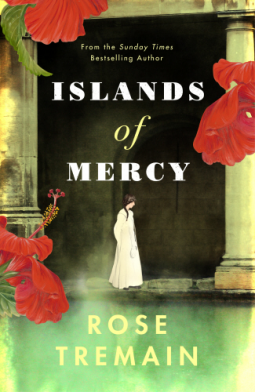
#BookReview ‘Islands of Mercy’ by Rose Tremain #historical

In Bath, England in 1865, such are Jane Adeane’s nursing skills that she is known as the Angel of the Baths. Islands of Mercy by Rose Tremain is about Jane’s destiny to make something of herself, a journey which involves choosing between a tempestuous love affair with another woman and marriage to a respectable doctor. Being the Angel of the Baths is not enough for her and this impacts on the lives of everyone around her. Rose Tremain Islands of Mercy is in fact three stories in one, lightly linked together by the merest connection and fleeting physical meeting. The story starts with Clorinda Morrissey who arrives in Bath from Ireland. ‘She was not beautiful, but she had a smile of great sweetness and a soft voice that could soothe and calm the soul’. By selling a ruby necklace, a family heirloom, Clorinda sets up what becomes a highly popular tea room. It is in this tea room that she first sees Jane Adeane who is taking tea with a man. Jane leaves abruptly and Clorinda is curious why. The man concerned is Doctor Valentine Ross, medical partner of Jane’s father Sir William Adeane and brother of naturalist Edmund Ross, currently pursing butterflies in the Malay Archipelago. In this scene, all three storylines are kickstarted.
The narrative moves back and forth from Bath to London, Dublin and Ireland’s west coast to Borneo. Each place is drawn vividly, Tremain is excellent at settings. In her descriptions of heterosexual and homosexual relationships, she explores the social limitations of the time on the free expression of love for men and women. While Jane can explore her own feelings for another woman only in extreme secrecy and risk of rejection by society, in Borneo a rich ‘rajah’ and his dependent servant live openly. Can Jane make her own way in the world or must she be conventional and marry a man. And can Clorinda’s independence at the tea shop continue or will she come to regret her sale of the ruby necklace. Is money necessary for happiness.
This is an unpredictable read. As Jane’s father Sir William comments, ‘We are overtaken by flashes of lightning and brilliant storms, and we can only submit.’ All the characters act on impulse and not all their decisions make sense, in particular Valentine’s behaviour changes so rapidly he seems a different man.
I was left with mixed feelings. As a Tremain fan dating back to The Colour, I wanted to enjoy this book more than I did. The writing, as always, is of the highest quality but it feels like three novels squeezed into one. I wanted to read more about Clorinda’s story, or concentrate on Jane, rather than go to Borneo which felt like an interruption to the main narrative.
CLICK HERE TO READ MORE ABOUT THIS BOOK AT AMAZON

Read my reviews of these other novels by Rose Tremain:-
LILY
THE GUSTAV SONATA

If you like this, try:-
At Mrs Lippincote’s’ by Elizabeth Taylor
Stanley and Elsie’ by Nicola Upson
Blackberry and Wild Rose’ by Sonia Velton

And if you’d like to tweet a link to THIS post, here’s my suggested tweet:
#BookReview ISLANDS OF MERCY by Rose Tremain https://wp.me/p5gEM4-55D via @SandraDanby

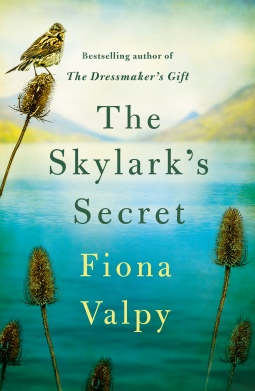
#BookReview ‘The Skylark’s Secret’ by Fiona Valpy @FionaValpy #WW2

Aultbea, a small fishing village on the shores of Loch Ewe on the west coast of Scotland, was transformed during World War Two into a Royal Navy base for the Arctic convoys. Into this true history Fiona Valpy weaves the fictional story of Flora Gordon in The Skylark’s Secret. Fiona ValpyIn 1977, Lexie Gordon returns to Loch Ewe from London after the death of her mother Flora. Lexie arrives home a single mother to baby Daisy, her West End singing career broken because of her damaged vocal chords. She feels a failure, gossiped about by the locals, seen as an outsider. Living in her mother’s cottage, she becomes curious about the father she never met and who her mother never spoke freely about.
In this dual timeline story, the narrative alternates clearly between Lexie in the Eighties and Flora in 1940-1944. Flora lives with her widowed father, Iain, gamekeeper for local estate Ardtuath House, in a quiet village where the toughest enemy is the weather. Then one day a fleet of warships arrive, the first of many. Loch Ewe is to become the temporary base for the Home Fleet. As thousands of navy ratings and officers arrive, Iain and Flora hope her brother Ruaridh will be aboard one of the destroyers. The convoys are to change life by the loch forever. Flora and her two friends Bridie and Mairi enlist in the Wrens as drivers. Laird’s son Alec also returns home with an English girlfriend. When Alec admits his lifelong love for Flora, the two young people must face the disapproval of the intimidating laird. With both Alec and Ruaridh on separate ships accompanying the Arctic convoy of merchant ships sailing for Russia, Flora fears for their lives. Meanwhile, a group of evacuees arrive from Glasgow, including two ragamuffins who lodge with bossy but kind-hearted Moira Carmichael.
Valpy unravels the story of Flora’s war years, the hardships, the danger, the exhilarating moments of freedom when the two young men arrive home safe. But always on the horizon is the next convoy which must face the twin dangers of Arctic ice and marauding U-boats. In 1978, Lexie must make a place for herself and Daisy in the community which includes her mother’s old friend Bridie, Lexie’s schoolfriend Elspeth, and fisherman Davy. She feels a stranger and takes to walking the hills, remembering times with her mother, trying to find her place in the world.
This is a story of wartime courage, romantic entanglements, fear, grief and gratitude for sacrifices made. A well-researched book that shows that research with a light hand on the page, allowing the fictional story room to breathe. Excellent.

Here’s my review of another Fiona Valpy novel:-
THE SKY BENEATH US

If you like this, try:-
Mrs Sinclair’s Suitcase’ by Louise Walters
The Paying Guests’ by Sarah Waters
Another You’ by Jane Cable

And if you’d like to tweet a link to THIS post, here’s my suggested tweet:
#BookReview THE SKYLARK’S SECRET by Fiona Valpy @FionaValpy https://wp.me/p5gEM4-53P via @SandraDanby

#BookReview ‘The Missing Pieces of Nancy Moon’ by Sarah Steele #mystery

If you’re looking for a little escapism, a trip to the Riviera of the Sixties, then The Missing Pieces of Nancy Moon by Sarah Steele is for you. A family mystery spanning two generations is unravelled by Flo, Nancy Moon’s great-niece, who treads in her aunt’s footsteps across Europe following the clues. It all starts with a photograph. Sarah Steele Told in two timelines, it is Nancy’s story that came alive for me and I would have been happy if the book had focussed solely on Nancy. Brimming with nostalgia for life in the 1960s, the Riviera, Paris, Nice, Venice, Capri, Steele tells of Nancy’s trip as companion to Pea, a teenage girl sidelined by her distracted artist father and disinterested step-mother. It is clear Nancy is running from something and, though this is billed as a historical romance, it is essentially a tale of grief and moving on.
Clearing her grandmother’s house after her death, Flo finds a photograph of her grandma Peggy and three friends. One is a complete stranger. The next discovery is a cache of dressmaking envelopes. Each is dated and inside are cut-out dress pieces and other momentoes left by Great-Aunt Nancy, photographs, postcards and oddments. Flo has never heard of Nancy Moon. Why was she never spoken of? Flo, grieving not only for the death of Peggy but for the break-up of her marriage and the loss of a baby, decides to follow Nancy’s trail across Europe.
The motif of dressmaking patterns is underlined by Steele’s beautiful descriptions of Sixties dresses, swimsuits and fabrics. We see Nancy wearing the original version of the home-made garment, and then Flo following in her footsteps wearing a contemporary version of the same outfit. At the beginning there are so many characters introduced that it’s disorientating. It took me a while to unravel them until halfway through when I realised I simply wanted to read Nancy’s story.
So, an intriguing story idea weakened by the sudden switching of narrator and timeline intended to introduce mystery. The simple addition of chapter headings with the year and location would help. In truth I figured out the mystery very early on. How much stronger this would be as a single viewpoint, traditional historical narrative without the coincidences and neat solutions of Flo’s storyline.
I was pleased I stuck with the story, despite the slow beginning. There is plenty to admire in the writing and the locations are beautiful, a real piece of escapism for armchair travellers.

If you like this, try:-
The Lost Letters of William Woolf’ by Helen Cullen
On a Night Like This’ by Barbara Freethy
The Art of Baking Blind’ by Sarah Vaughan

And if you’d like to tweet a link to THIS post, here’s my suggested tweet:
#BookReview THE MISSING PIECES OF NANCY MOON by Sarah Steele https://wp.me/p5gEM4-53k via @SandraDanby