Tag Archives: historical fiction

#BookReview ‘The Streets’ by Anthony Quinn #historical #sociology

The Streets by Anthony Quinn is part sociology, part history, part mystery, part political discussion. Set in the 1880s, it sets a fictional tale within true history, the sort of thing hated by historians themselves who fear that readers will believe it is all true. They should credit we readers with the ability to recognize fiction from fact. This is a story encompassing poverty, pride, crime, corruption, community and, almost, eugenics. Anthony QuinnDavid Wildeblood has a new job. He is an inspector, a fact-collector, charged with touring the North London borough of Somers Town, conducting interviews and collating information to be published in Henry Marchmont’s weekly news sheet The Labouring Classes of London; living conditions, work, income, religion, diet, pastimes, crime, health etc. Marchmont is based on Henry Mayhew’s London Labour and the London Poor and Charles Booth’s Life and Labour of the People of London. At first Wildeblood is an outsider and woefully naïve, until he stumbles on costermonger Jo. Soon Wildeblood learns the argot, the alleys to avoid, and how to best submit his report to Marchmont’s loyal assistant Mr Rennert. Then he stumbles onto a scheme in which criminal landlords defraud their tenants, refuse to repair their properties then clear the streets for redevelopment leaving the inhabitants homeless. When a local man organizes a protest, he is later found drowned in the river. Wildeblood is warned by a reporter friend, Clifford Paget of The Chronicle, that his life may be in danger but he continues to investigate.
Wildeblood’s time in Somers Town is juxtaposed with his, albeit tenuous, relationship with his wealthy godfather Sir Martin Elder and Kitty, his daughter. The two stories come together as he recognizes a connection between a social charity providing poor city dwellers with a day trip to the countryside, and what is happening in Somers Town. The tentacles of property exploitation, fraud and social engineering spread around London. At times the sociology and politics of the author intruded into my head and the exposition distracted me from the story but, like all Quinn’s novels, the characters are a delight.
The description of The Streets as a ‘thriller’ though, is misleading. This is a thoughtful considered novel. Well-researched, it feels as if this book is close to the author’s heart; perhaps too close. For me, it was a slower, worthy read, compared with his other novels and less accessible.

Read my reviews of these other novels also by Anthony Quinn:-
CURTAIN CALL
FREYA
HALF OF THE HUMAN RACE
MOLLY & THE CAPTAIN
OUR FRIENDS IN BERLIN
THE RESCUE MAN

If you like this, try:-
‘The Walworth Beauty’ by Michèle Roberts
‘The Penny Heart’ by Martine Bailey
‘Birdcage Walk’ by Helen Dunmore

And if you’d like to tweet a link to THIS post, here’s my suggested tweet:
#BookReview THE STREETS by Anthony Quinn https://wp.me/p5gEM4-3e2 via @SandraDanby

SaveSave

#BookReview ‘The Bird in the Bamboo Cage’ by Hazel Gaynor @HazelGaynor #WW2

What an engrossing story this is if you’re looking for a world to lose yourself in, a world more horrific and frightening than we can ever imagine. A war story that is at times both traumatic and heart-warming, The Bird in the Bamboo Cage by Hazel Gaynor tells the story of a teacher and pupil interned in China during World War Two, a story often forgotten and seldom told. Hazel GaynorBased on the true story of a real school – the China Inland Mission’s Chefoo School in Yantai, Shandong province in northern China – as the Japanese army invades and school life is changed overnight. Gaynor tells her fictionalised story through the viewpoints of teacher Elspeth Kent and pupil Nancy ‘Plum’ Plummer. Elspeth is struggling to write a letter of resignation, intending to return home and join the war effort, when war arrives at the school gates. At first Chefoo School proudly continues to operate under armed guard but after the Japanese attack of Pearl Harbour in December 1941 and the entry of America into the war, the school is moved to Temple Hill internment camp and later to Weihsien. At each step, privations, hardships, hunger, threat and sexual exploitation threaten teachers, pupils and the wider camp community.
Elspeth and Plum offer different perspectives on what is happening and we see the growing friendship and respect between the two women, because Plum starts off a child and grows as a woman unable to remember her mother, unsure if she will ever see her parents again. The teachers truly are ‘in loco parentis’ when the school is relocated and the children learn to support each other, to endure hardship by recognising there is always someone worse off than you and that everyone is a person in their own right [pupils, teachers, guards, fellow internees, night soil women] with their own hopes, dreams and fears. They face hunger, theft and personal attack. Gaynor portrays the school’s protestant ethic with a light hand, instead making Elspeth Brown Owl of Chefoo’s Guides and using the Girl Guide Handbook’s mottos as a thematic skeleton. For each new challenge they meet there is a guiding motto to help them face what must be done.
I am not a lover of all ends being neatly tied and certainly this book is not perfect – chunks of time pass in brief summary paragraphs and at times the action seems delayed with detail of the school day – but Gaynor has created a world of prisoners and enemy that made me want to read on. Of course, we know how the war ended but we so want to know what happens to each pupil and teacher.
Essentially this is a novel about the strength and value of friendship and loyalty, the love that binds people together and enables them to survive horrific situations.

Read my reviews of these other novels by Hazel Gaynor:-
THE COTTINGLEY SECRET
THE LAST LIFEBOAT … and try the #FirstPara of THE LAST LIFEBOAT.

If you like this, try:-
White Chrysanthemum’ by Mary Lynn Bracht
The Translation of Love’ by Lynn Kutsukake
The Gift of Rain’ by Tan Twan Eng

And if you’d like to tweet a link to THIS post, here’s my suggested tweet:
#BookReview THE BIRD IN THE BAMBOO CAGE by Hazel Gaynor @HazelGaynor https://wp.me/p5gEM4-4ZN via @SandraDanby

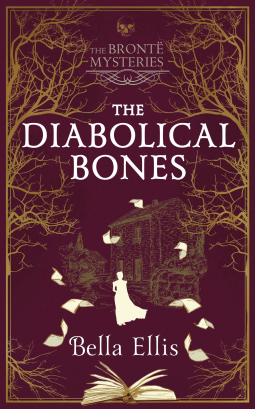
#BookReview ‘The Diabolical Bones’ by Bella Ellis #historical #crime

If you’ve never read a novel by one of the Brontë sisters, it doesn’t matter. There is plenty to enjoy about the Brontë Mysteries by Bella Ellis without figuring out the innumerable references to Wuthering Heights, Jane Eyre and The Tenant of Wildfell Hall. The Diabolical Bones is second in the crime series after the impressive first, The Vanished Bride. This one is better, and darker. Bella EllisWhen bones are found interred in the walls of a local house on the moor, the three detecting sisters and reluctant brother Branwell set out to confirm the child’s identity so it can be respectfully buried. There are few clues; the location of the find, the father and son who live in the house, the age of the child, and a medallion found with the bones. Top Withens, the remote house concerned, is said to be Emily’s inspiration for the house of the Earnshaw family, Wuthering Heights.
Ellis has constructed a convincing world for the sisters; the parsonage, their blind father, housekeeper Tabby, the villagers in Haworth and wider circle of acquaintances. The charm of this portrayal of the Brontës is the strength of the series. Branwell’s presence is key as in 1852, lone women could not venture out as the sisters do here without the company of a man. The portrayal of the sisters is fascinating, the dynamic between the three, the shared history and understanding of each other, the irritations and the love, their intellectual capabilities, their doubts and bravery. Each has differing strengths which lend weight to the investigations. Emily is impulsive and inspired, Anne is calm and logical, Charlotte is clever but insecure. As Anne says, ‘Detecting does seem to involve a great deal of time looking for something that might not exist.’
It is winter and freezing cold and as the sisters wrap themselves in cloaks to adventure outdoors, the atmosphere is dark and Gothic. Social issues are addressed; the exploitation of orphan children, the plight of urban and rural poor, the prejudice against Irish immigrants, the privilege of wealth.
Of course, the reward when reading crime novels is to spot the murderer early in the tale. I admit to thinking ‘surely it’s not…’ This plot is well constructed; read it and see if you spot any early clues. The story skips along at a fair pace and when I put the book down, I was always longing to read just another chapter.
The series is fast becoming a favourite. Brilliant escapism.

Click the title below to read my reviews of these other Bella Ellis novels:-
THE VANISHED BRIDE #1BRONTEMYSTERIES
THE RED MONARCH #3BRONTEMYSTERIES
A GIFT OF POISON #4BRONTEMYSTERIES

And one by Rowan Coleman [aka Bella Ellis]:-
THE GIRL AT THE WINDOW 

If you like this, try:-
‘A Death in the Dales’ by Frances Brody
The Mystery of Three Quarters’ by Sophie Hannah
Yuki Chan in Bronte Country’ by Mick Jackson

And if you’d like to tweet a link to THIS post, here’s my suggested tweet:
#BookReview THE DIABOLICAL BONES by Bella Ellis https://wp.me/p5gEM4-4YZ via @SandraDanby

#BookReview ‘Miss Benson’s Beetle’ by Rachel Joyce #adventure

What an uplifting read is Miss Benson’s Beetle by Rachel Joyce, an author who never fails to deliver a read that is both thoughtful and chuckle-out-loud. It is a tale of failure, friendship, the spirit of adventure and never-say-die. Above all it is a story of not giving up, never allowing yourself to be defeated. Rachel Joyce Margery Benson has never fit in, never married. It is 1950 and she is a teacher at a girls’ school, mocked and ridiculed by pupils, never liked by colleagues. Alone now after the death of her aunts who raised her after the death of her parents, she knows she lacks self-worth but doesn’t know how to change things. The one thing that gives her pleasure is remembering time spent as a child with her father who encouraged her to read. Her favourite book was Incredible Creatures, an illustrated guide to extinct and ‘never found’ animals. Margery fell in love with a gold beetle suspected to be living on the Pacific island of New Caledonia.
A sequence of events sets the middle-aged Margery on an ocean liner bound for Australia in search of both the beetle and a purpose for her life. After interviewing and rejecting three unsuitable people for the job of her assistant, Margery is resigned to travelling alone. Until she is joined at the last minute by probably the most unsuitable of the three applicants, Enid Pretty. ‘Her hair was a stiff puff with the perky hat pinned on top; about as useful in terms of sun protection as a beer mat on her head.’ Unbeknown to both women, they are being followed by someone else. And unbeknown to Margery, Enid has another reason for wanting to leave the country in a hurry.
I read this at a pace as the women negotiate prejudice, snobbishness, barriers and phobias. Joyce doesn’t spare the at times graphic detail of two unsuitable women on a tropical island facing cyclones, eels, hunger and illness, trekking through the jungle, in search of a beetle that probably doesn’t exist.
A joyful book.
CLICK HERE TO READ MORE ABOUT THIS BOOK

Read my reviews of these other novels by Rachel Joyce:-
MAUREEN FRY AND THE ANGEL OF THE NORTH
PERFECT
THE LOVE SONG OF MISS QUEENIE HENNESSY

And read here the first paragraph of THE UNLIKELY PILGRIMAGE OF HAROLD FRY

If you like this, try:-
The Signature of All Things’ by Elizabeth Gilbert
Doppler’ by Erlend Loe
Highland Fling’ by Nancy Mitford

And if you’d like to tweet a link to THIS post, here’s my suggested tweet:
#BookReview MISS BENSON’S BEETLE by Rachel Joyce https://wp.me/p5gEM4-4UW via @SandraDanby

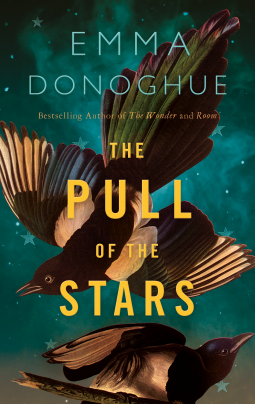
#BookReview ‘The Pull of the Stars’ by Emma Donoghue #historical

In Dublin, 1918, it is a time of immense global and social change. Emma Donoghue’s latest novel The Pull of the Stars takes place almost exclusively in a cramped three-bed fever ward in an understaffed hospital. All patients are pregnant and quarantined while the world is racked by war and influenza. Both of these are unpredictable, killing at random, lasting longer than predicted and classless. This is an at times breath-taking, touching and emotional novel that sucks you into a feverish dream so you want to read on and on.Emma Donoghue

Taking place over three days, Nurse Power arrives for work to find herself temporarily in charge. Donoghue excels at the ordinary detail of Julia’s life, her journey to work, the arbitrary rules of the matron, the needs at home of her war-damaged soldier brother Tim who is now mute. On the day the story stars, Julia’s only help comes from an untrained young volunteer, Bridie McSweeney, who acts as a runner to find doctor or orderly as required. The figure of three recurs – three beds, three days, three key characters. The third, Doctor Kathleen Lynn, is a real person, her history documented. She was arrested during the 1916 Easter Rising and in The Pull of the Stars is wanted by the police as a rebel. Power and McSweeney are Donoghue’s inventions. Every character, major and minor, is touched by the twin enemies of war and flu.
Gradually we fall under the spell of Donoghue’s story as Julia and Bridie attend to the needs of their patients in the room with its handwritten note on the door, Maternity/Fever. As temperatures rise and coughs hack, labour pains rise and fall. Donoghue doesn’t skimp on the detail of labour, this isn’t for the squeamish, but she writes with such skill that makes you care for her patients too.
This novel pulls you into its drama and won’t let you go until the end. The ebb and flow of each patient’s condition, Julia’s never-ending fight to help them despite the lack of support, the joy of birth and grief of death, the irreverence and youth brought into the room by Bridie, the quiet and resolute calm of Doctor Lynn, are woven together to create a micro portrayal in this small room of the world in 1918. And bound into every page is the strength and hope of love. I read this book in two sittings.
Researched and written prior to Covid-19, this book is an eerie glimpse into how the Spanish Flu epidemic ravaged through a world at war a century ago, distracted and ill-equipped to deal with it.
A small grumble – I find the lack of speech marks jarring.

Read my reviews of these books by Emma Donoghue:-
AKIN
FROG MUSIC
THE WONDER

And read the first paragraph of ROOM.

If you like this, try:-
A Single Thread’ by Tracy Chevalier
Life Class’ by Pat Barker
A Long Long Way’ by Sebastian Barry

And if you’d like to tweet a link to THIS post, here’s my suggested tweet:
#BookReview THE PULL OF THE STARS by Emma Donoghue https://wp.me/p5gEM4-4Ub via @SandraDanby

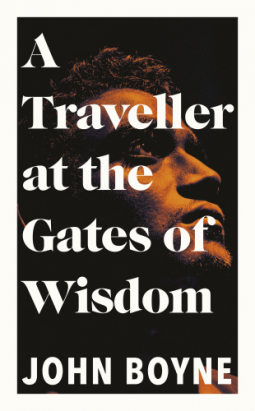
#BookReview ‘A Traveller at the Gates of Wisdom’ by @JohnBoyneBooks #historical

Where to start? A Traveller at the Gates of Wisdom by John Boyne is like no other book I’ve read. It’s a historical, classical, contemporary mash-up which takes a group of characters on a journey through the centuries, starting with Palestine in AD1 and ending in AD2080 living in a colony in space. The same group of characters feature in each chapter, advancing in time and moving location, each time with different names though always starting with the same letter. John Boyne In Palestine we first hear the voice of our, in the beginning, unnamed sole protagonist. This is his story told in soundbite chapters. He starts with his own origins, the meeting of his father Marinus and mother Floriana and progresses across two thousand years to the near future. At times there is violence, much against women but also brutal murder, torture and random killing. There is betrayal, cruelty, prejudice, foolhardiness and bravery, love and loyalty. Essentially it is the story of one family – mother, father, two brothers and a sister. One brother has the strength and brutality of his father, the other has the creativity of his mother.
As the decades pass and the story progresses, the brothers progress through childhood to adults, they fight, argue, divide, meet and divide again. Each chapter offers a snapshot of a place and time in history, sometimes set against the backdrop of real events and people. And always the family is placed at the centre of the action, with a supporting cast of recognisable characters who re-appear.
To explain the story here is too complex and would contain too many spoilers. Read it for yourself but prepare to be challenged. The print book is 407 pages long. I read it on Kindle and it seemed longer than that. Some chapters whizz by, others creep. Each new time/setting includes a little recap from the end of the previous chapter, a device essential in the first third of the book but I think dispensable once the structure and device is familiar to the reader.
Such an ambitious project, I read it with a spirit of adventure, never knowing what was coming next.

Read my reviews of these other novels by John Boyne:-
A HISTORY OF LONELINESS
A LADDER TO THE SKY
ALL THE BROKEN PLACES
STAY WHERE YOU ARE AND THEN LEAVE
THE HEART’S INVISIBLE FURIES… Curious? Read the first paragraph of THE HEART’S INVISIBLE FURIES here.
WATER #1ELEMENTS
EARTH #2ELEMENTS

If you like this, try:-
‘How to Stop Time’ by Matt Haig
The Pillars of the Earth’ by Ken Follett
Barkskins’ by Annie Proulx

And if you’d like to tweet a link to THIS post, here’s my suggested tweet:
#BookReview A TRAVELLER AT THE GATES OF WISDOM by @JohnBoyneBooks https://wp.me/p5gEM4-4TK via @SandraDanby

#BookReview ‘The Pillars of the Earth’ by Ken Follett @KMFollett #historical

Why have I never discovered this book before? When I mentioned to friends I was reading it I was told ‘oh yes, it’s fantastic’. And fantastic it is. The Pillars of the Earth by Ken Follett holds up a mirror to modern times. It is a historical thriller about the building of a twelfth century cathedral. The politics, governmental and religious, civil war, families torn asunder, romance, loss, courage and hope. It left me with a yearning to walk around a cathedral and study its architecture, better to understand the feat accomplished at Kingsbridge. Ken FollettThe Pillars of the Earth tells the story of stonemason Tom Builder and his family, who in 1135 are on the verge of starvation. When they meet Philip, prior of Kingsbridge, so begins a relationship which lasts all their lives. Philip is a pragmatic monk. He knows his poor town must find a way to survive and decides to build a cathedral. Tom becomes his master builder. But there are enemies who want to thwart this ambition, greedy, ruthless men who change political sides with will, who pillage and rape, who store riches while their peasants starve. The differences are not just political and royal, they are between brothers too.
This is a long novel and for not one moment did that matter. If you like novels that create a world for you to lose yourself in, then this will suit you. This is the medieval world; when the crown is disputed by King Stephen and Maud, when a father abandons a baby because he cannot feed it, when outlaws live wild in the forests, when the wealthy and titled can rape and steal and get away with it. Through this morally thin time, there are beacons of light. Prior Philip is quiet, gentle and Machiavellian. Determined not to be beaten by bullies, that his town and citizens shall not lose their livelihoods, he motivates his villagers so they have the belief to stand up for their rights.
Don’t be put off because this book is about a cathedral. The cathedral is the glue that holds the community of Kingsbridge together, it gives the book its narrative drive. Ken Follett packs in so much historical detail and it is all relevant to the plot; despite its 1104 pages, this is a quick read. Highly recommended.
This is the first of the Kingsbridge trilogy, next is World Without End.

Click the titles to read my reviews of other Follett novels:-
THE EVENING AND THE MORNING #PREQUELKINGSBRIDGE
WORLD WITHOUT END #2KINGSBRIDGE
A COLUMN OF FIRE #3KINGSBRIDGE
THE ARMOUR OF LIGHT #4KINGSBRIDGE
NEVER

If you like this, try:-
‘The Last Hours’ by Minette Walters
‘Gone are the Leaves’ by Anne Donovan
‘The Ashes of London’ by Andrew Taylor #1FIREOFLONDON

And if you’d like to tweet a link to THIS post, here’s my suggested tweet:
#BookReview THE PILLARS OF THE EARTH by @KMFollett https://wp.me/p5gEM4-3BF via @SandraDanby

#BookReview ‘The Orphan Twins’ by @LesleyEames #saga #historical

Lily and Artie are ten-year old twins in Bermondsey. It is 1910. After the death of their parents, brother and sister are brought up by their laundress grandmother. Out of the blue, a benefactor gives Artie the chance of a proper education. Then Gran gets ill. The Orphan Twins by Lesley Eames is a story of how chances were different from girls and boys in the 1900s. Lesley EamesLily is at the core of this story both in terms of narrative and emotional heart. When Gran dies, the twins are tugged further apart. Lily encourages Artie to take his chance, seeing him educated in a way she can only dream of, watching as his accent and dress change and he looks more middle-class. Eames gives us a positive story about the changing role of women at the turn of the twentieth century. Deemed not worth educating, pragmatic Lily instead decides to work hard and gain as much experience as she can so at some point in the future she can fulfil her dream. Not yet sure what that dream is, she gains comfort from seeing Artie do well. It’s impossible not to love Lily, through all her wobbles and setbacks, she sets her shoulders straight and moves on. Until war threatens.
Told completely through Lily’s eyes, we see the country – and the opportunities for women – changing. The trio of best friends – Lily, Phyllis and Elsie – are inseparable despite having to make their own way in the world. Each has a talent that shines through. Facing difficulties and challenges, the girls encourage each other. Into their world come people they meet through work. The three girls, Artie, Hilda and Marion Tibbs, and Mr Bax become an extended family, supporting each other through shared love, loss and fear. Throughout the toughest of times, Lily and Artie show how perseverance, self-belief and hard work enable social mobility.
Reading this book was like snuggling into a blanket on a cold day. The Orphan Twins is full of emotion. It’s the first book I have read by Lesley Eames, now I want to explore the others.

If you like this, try:-
Pattern of Shadows’ by Judith Barrow
A Daughter’s Hope’ by Margaret Kaine
The Orphan’s Gift’ by Renita D’Silva

And if you’d like to tweet a link to THIS post, here’s my suggested tweet:
#BookReview THE ORPHAN TWINS by @LesleyEames https://wp.me/p5gEM4-4SO via @SandraDanby

#BookReview ‘The Mercies’ by Kiran Millwood Hargrave #historical

Based on a historical event, The Mercies by Kiran Millwood Hargrave tells the story of a village on a remote island in 17th century Norway after a once-in-a-lifetime storm kills the village’s fishermen. Following the loss of their husbands, brothers and sons, Vardø becomes a settlement of women. Kiran Millwood HargraveAt first they grieve then they struggle to survive without men, but survive they do. Eighteen months later a government official arrives to impose control on a female population at the edge of nowhere. He finds the women behaving in an unseemly manner, behaving as men, forsaking church and flirting with officially disapproved-of Sámi rituals.
Hargrave tells the story of the women of Vardø through the viewpoints of two very different women. Maren Magnusdatter’s fiancé Dag is killed in the storm. So are her father and brother. She lives in a claustrophobic house with her elderly mother, her Sámi sister-in-law Diinna and Diinna’s son Erik. Ursula lives in Bergen with her widowed father and sister. When her father proposes a marriage match to Absalom Cornet, a Scottishman, Ursa imagines ice and darkness. She sails north with her new husband, a stranger, of whom she knows nothing.
When they arrive on the island of Vardø, Ursa is unused to the ways of the far north, the cold, the starkness of life and, used to a servant, cannot keep house or make food. Her house becomes slovenly, her thin inadequate clothes caked with mud. Maren takes pity on the newcomer and helps her prepare meat and make a coat from furs. A close friendship grows between the two women. Hargrave’s portrayal of the machinations of this small female community – the alliances, the petty jealousies, the childhood envies, the gossip, the lies – is spot-on. But while the women are watching each other, Commissioner Cornet is watching them and looking for signs of witchcraft. Maren and Ursa encourage Diinna to at least attend church, to set aside her Sámi folklore habits of stones and poppets, but Diinna will not become someone she is not. And then Ursa’s husband makes his first arrest and for the first time Ursa understands she is married to a witchfinder.
I quickly became absorbed in the story of these women and the situation in which they find themselves. It is a difficult read at the beginning, the setting is dour and the life hard, descriptions of the daily privations are depressing, but the growing relationship between the two women lies at the core of the story.
The middle section sags a little as there is a pause in the action, waiting for the witch hunting to begin. The final third is devastating.
A fascinating book about a harrowing story.
CLICK HERE TO READ MORE ABOUT THIS BOOK

Click the title to read my review of THE DANCE TREE, also by Kiran Millwood Hargrave.

If you like this, try:-
The Witchfinder’s Sister’ by Beth Underdown
The Western Wind’ by Samantha Harvey
Burial Rites’ by Hannah Kent

And if you’d like to tweet a link to THIS post, here’s my suggested tweet:
#BookReview THE MERCIES by Kiran Millwood Hargrave https://wp.me/p5gEM4-4Nj via @SandraDanby

#BookReview ‘The Rescue Man’ by Anthony Quinn #WW2 #historical

The Rescue Man, debut novel of Anthony Quinn, is slow moving tale of a man changed by war. Set in Liverpool throughout World War Two, it is clearly a love letter to the city by Liverpool-born Quinn. It focusses on a love triangle between a historian and two photographers. Anthony Quinn Tom Baines is a quiet architectural historian in his late thirties. He lives in the past, researching a book about Liverpool’s buildings which he somehow never manages to finish. In 1939, his mentor recommends he research a misunderstood Liverpool architect, Peter Eames who mysteriously committed suicide leaving his work never properly recognised.
When war breaks out Baines volunteers as a rescue man, working in teams to extract people and bodies from the bombed buildings he was supposedly cataloguing for his book. This experience, and the people he works with, have a profound impact and slowly his life changes. His language coarsens, thanks to mixing with the men on his team, and in response to his publisher’s request to speed up his research of the city’s buildings before they are destroyed by bombs, he meets husband and wife photographers Richard and Bella.
The romance is a long time coming and the first half of the book seems to meander along without urgency, Tom is a quiet, academic unassuming man and I had to work at sticking with the book. I wondered what there was in him which attracted the bright flower, Bella.
Tom Baines says, ‘It was only when war came and I started doing rescue woke that I sort of… woke up.’ Unfortunately the book is a third through before we reach 1940 and the bombing of Liverpool and two-thirds through before the pace picks up. There is a sense of time being suspended until the final quarter of the book is reached and, as the brutality of the bombing clears street after Liverpool street and many of the historic buildings Baines was meant to catalogue are reduced to rubble, Tom hits crisis point.
The pace is not helped as the story of Peter Eames is told via diary extracts which are stop start with substantial gaps. The themes of wartime destruction – not only of buildings, but of trust between family, lovers and friends – are mirrored between the Eames and Baines timelines. Architect Eames builds, rescue man Baines negotiates the rubble left by the Luftwaffe’s bombing raids. And both are key players in love triangles where trust is betrayed and marriage vows broken.
This is Anthony Quinn’s debut novel and though thoughtful like his later books, it lacks their narrative pace. If you are familiar with Liverpool, which I’m not, it will be a more fulfilling read. There is no doubt about Quinn’s beautiful writing, simply that the subject – and the perhaps over-use of the Liverpool setting – did not hold me. Not his best book but well worth reading if you know his later work such as Freya.

Read my reviews of these other books by Anthony Quinn:-
CURTAIN CALL
FREYA
HALF OF THE HUMAN RACE
MOLLY & THE CAPTAIN
OUR FRIENDS IN BERLIN
THE STREETS

If you like this, try:-
The Slaves of Solitude’ by Patrick Hamilton
‘Homeland’ by Clare Francis
Life After Life’ by Kate Atkinson

And if you’d like to tweet a link to THIS post, here’s my suggested tweet:
#BookReview THE RESCUE MAN by Anthony Quinn https://wp.me/p5gEM4-4Gx via @SandraDanby