Tag Archives: historical fiction

#BookReview ‘The Forgotten Sister’ by @NicolaCornick #historical

The Forgotten Sister by Nicola Cornick is a retelling of the Tudor love triangle of Queen Elizabeth I, Robert Dudley and Dudley’s wife Amy Robsart. The death of Amy has intrigued historians for centuries: did she fall downstairs, or was she pushed? Did her husband arrange her murder so he could marry the queen? Tudor history is mashed together with time travel and all kinds of mystical goings-on. Nicola CornickCornick has fun with her explanation of events, telling the story in dual timelines and mirroring Tudor characters with a contemporary circle of celebrities. At first, I found this irritating and was diverted from the story by trying to match up modern personalities with their Tudor equivalent. But when I stopped doing that, I sank into this easy-to-read story which I read over a weekend.
Lizzie Kingdom is a television personality with a clean-cut image. Her best friend is Dudley Lester, wild boy and former boy band member of Call Back Summer. When Dudley’s wife Amelia falls down the stairs to her death at their country house, Oakhanger Hall, Lizzie is suspected of having an affair with Dudley. Her ‘good girl’ image is in tatters and the press is hunting her. Lizzie’s story races along, she quickly discards her sycophantic group of followers and retreats to a country house she inherited but has rarely visited. And there we start to understand the mystical ability which Lizzie possesses connecting her with events in the past simply by touching an object – known as psychometry, or token object reading.
The romantic sub-plot sparks into life when Lizzie accidentally touches Arthur Robsart, the quiet rather stolid older brother of Amelia. Never before has her psychometric ability worked on a person. Arthur and his sister Anna suspect Lizzie of responsibility for the disappearance in odd circumstances of their younger brother Johnny. With the police seeking her again, this time for possible murder, Lizzie must choose whether to use the ability she has previously used only to remember her dead mother. To say more will give away the plot.
This was a fun read though populated with some unpleasant characters who were difficult to like. I was left wondering what the story would have been like if the viewpoints had been expanded to four. Cornick tells the story only via Amy Robsart and Lizzie Kingdom and shows us nothing of the events as experienced by Queen Elizabeth I [Lizzie’s equivalent] or Amelia Lester [Amy’s modern-day equivalent]. After Amelia’s death, Lizzie is crucified on social media, I was left wondering if Queen Elizabeth knew, or cared about, the gossip surrounding Dudley’s, and her own, guilt in Amy’s death.
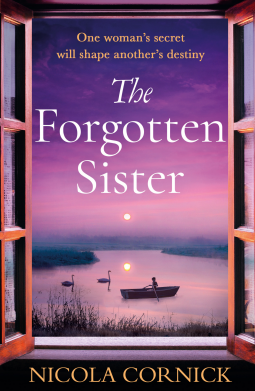
A note on the cover, yet again another cover design which, though attractive, bears little connection with the story.

Read my reviews of these other novels by Nicola Cornick:-
THE LAST DAUGHTER
THE OTHER GWYN GIRL
THE WINTER GARDEN

If you like this, try:-
Kings and Queens’ by Terry Tyler
The Lady of the Rivers’ by Philippa Gregory
Last Child’ by Terry Tyler

And if you’d like to tweet a link to THIS post, here’s my suggested tweet:
#BookReview THE FORGOTTEN SISTER by @NicolaCornick https://wp.me/p5gEM4-4JT via @SandraDanby

#BookReview ‘The Orphan’s Gift’ by Renita D’Silva @RenitaDSilva #historical #India

The Orphan’s Gift by Renita D’Silva tells the stories of two women, Alice and Janaki, and moves across four decades between India and England. It is a deceptive tale of love and loss and the mystery of how these two young women are connected at a time when certain love was forbidden. It is an unforgiving world where broken rules may be punished by death, isolation and poverty and where the sanctions may come from those closest to you. Renita D’SilvaWe first meet Alice, aged four, living a privileged life in the house of her parents, surrounded by beauty, warmth, and servants. But there are shadows too. Alice’s parents are distant and she finds love and companionship with her Ayah and Ayah’s son, Raju. Alice’s mother is delicate and spends all her time in a shadowed bedroom, her father is Deputy Commissioner of the British Government in India. Alice’s story starts in 1909 when the first agitations of Indian independence begin.
Janaki’s story begins in 1944 when she is raised by nuns in an Indian orphanage, she was left there as a tiny baby, wrapped in a hand-made green cardigan. Desperate for love, Janaki learns a difficult lesson; that even when love is found, there is no insurance against future pain.
The lives of both women are coloured by their early years and their differing experiences of love. Each story on its own is fascinating, but the fascination comes from how the two women are linked. Occasionally we see a tantalising glimpse of the elderly Alice in India in 1986, as an unknown visitor arrives. Hints are given in the Prologue which of course I read then forgot about as I became enthralled in the world of the book. Only as the book approaches its end does the significance of the Prologue become clear. D’Silva’s theme is how life turns on a sixpence. ‘It takes so little to change a life.’
I particularly enjoyed Janaki’s life at the orphanage, her friendship with Arthy, the pact the two girls make to study as doctors after meeting Mother Theresa and seeing one of their friends die because of the orphanage’s inability to pay for a doctor. Janaki’s story jumps forwards to the 1960s when she is a trailblazing doctor of gynaecology, at a time when female doctors are rare and given many column inches, but when she feels at her loneliest.
Love, and its subsequent loss, is not always fair; it hurts and can be unjust. This is a story of the ripple of consequences, it is also about the strength and truth of unselfish love which transcends prejudice, poverty and status. This book is full of the colours and scents of India but at its heart is a darkness and sadness which jabs an emotional punch. D’Silva is my go-to author for novels about India; she creates a sensory world which never fails to delight but into this setting she weaves stories tackling moral and heart-breaking themes.

Read my reviews of these other novels by Renita D’Silva:-
A DAUGHTER’S COURAGE
A MOTHER’S SECRET
BENEATH AN INDIAN SKY
THE GIRL IN THE PAINTING
THE SECRET KEEPER
THE SPICE MAKER’S SECRET
THE WAR CHILD

If you like this, try:-
At First Light’ by Vanessa Lafaye
The Sapphire Widow’ by Dinah Jeffries
Fatal Inheritance’ by Rachel Rhys

And if you’d like to tweet a link to THIS post, here’s my suggested tweet:
#BookReview THE ORPHAN’S GIFT by Renita D’Silva @RenitaDSilva https://wp.me/p5gEM4-4Fw via @SandraDanby

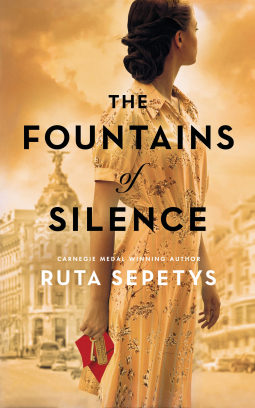
#BookReview ‘The Fountains of Silence’ by Ruta Sepetys @RutaSepetys #historical #YA

Ruta Sepetys is a new author for me and I was drawn to The Fountains of Silence because it is set in the Spanish Civil War. Only after finishing the book did I realise Sepetys is a Young Adult author though this does not mean she backed away from tackling difficult subjects or that the book lacks emotional depth. Basically, this is a tale of young love in politically sensitive times. Ruta SepetysThe story starts in 1957 when teenager Daniel Matheson arrives in Madrid, Spain, with his parents. Daniel, a talented photographer, wants to go to J-School to study as a photojournalist; his father wants him to work at the family oil company. Playing diplomat between them is Daniel’s mother, who was born in Spain. The family stays at the Castellana Hilton where they are assigned an assistant, Ana. While Daniel takes photos, his father tries to close an oil deal. Only when Daniel meets Ben Stahl from the Madrid bureau of the New York Herald Tribune, does he understand his father’s deal involves meetings with General Franco.
As Ana and Daniel grow closer, hiding their relationship and sneaking precious moments together, Sepetys shows the dark side of life under Spain’s dictator. Truths are hidden, atrocities are committed every day, desperate poverty is normal and people live under daily fear of the Guardia Civil, Franco’s police force. Ana’s cousin Pura, who works at the Inclusa orphanage, has a curious mind and is puzzled by some of the things she sees at the orphanage and its associated clinics and hospital. Ana’s brother Rafa and his friend Fuga work as gravediggers where they bury many tiny coffins. Then Fuga discovers that some of them are empty. There are many unanswered questions that are dangerous to investigate; Rafa and Fuga hope Daniel’s photographs will reveal the truth.
Fuga’s lifelong ambition is to be a bullfighter and, wearing a borrowed traje de luces [a suit of lights, worn by bullfighters in the ring], he gets his first chance. In exchange for driving Fuga to the location of the fight, Daniel takes photos. Fuga and Daniel make an uneasy truce.
I was left wanting to know more from certain characters; particularly Fuga, and Julia, Ana’s sister, so critical to the plot but whose voice is hardly heard. Although the viewpoint switches around often, the bulk of the narration is by Daniel. The cast list is long, too long perhaps, which adds to the slightly disjointed feeling of chunks of story remaining untold. Some of the language sounded contemporary rather than post-Civil War Spain – ‘father-son dynamic’ – but Sepetys weaves in Spanish phrases and this adds authenticity and worked well.
Septeys is skilled at describing 1957 Madrid, she creates a totally believable picture. If you know nothing about the Franco dictatorship, this book is a good place to start. I was left wanting to know more; perhaps this is the difference between a YA novel and one written for adults.

If you like this, try:-
Midnight in Europe’ by Alan Furst
The Tuscan Secret’ by Angela Petch
Our Friends in Berlin’ by Anthony Quinn

And if you’d like to tweet a link to THIS post, here’s my suggested tweet:
#BookReview THE FOUNTAINS OF SILENCE by Ruta Sepetys @RutaSepetys https://wp.me/p5gEM4-4IC via @SandraDanby

#BookReview ‘Heartstone’ by CJ Sansom #Tudor #detective

The Matthew Shardlake series by CJ Sansom continues to get better. Heartstone, the penultimate book of the six, involves a puzzle which kept me guessing until the reveal. Despite Shardlake vowing to take a back seat from Royal intrigues, the Tudor lawyer/detective is pulled into a case at the behest of Queen Catherine Parr. This is a great series to lose yourself in. CJ SansomA tutor, son of one of the Queen’s staff, has alleged an injustice done against a former pupil, Hugh Curteys, by the Hobbey family who adopted Hugh and his sister Emma after the death of their parents. This complaint takes Shardlake before the Court of Wards, not Shardlake’s natural territory, where the lives and rights of orphaned minors are protected. In truth, it is rife with fraud and abuse and the case brings Shardlake face-to-face with old and new enemies.
A journey into Hampshire at the time King Henry VIII is mobilising his army and navy south to oppose the expected invasion by the French, is ill-advised. Normal life is suspended as Henry distributes new coinage, devalued to pay for his war, and men are conscripted in the fields and the streets. But Shardlake, as ever driven by the desire to correct injustice, becomes the scourge of the Hobbey family at Hoyland Priory, north of Portsmouth. Despite the misgivings of his clerk, Jack Barack, Shardlake also takes the opportunity to research another mystery; Ellen Fettiplace, a patient at Bedlam who featured in earlier novels, was born in a Sussex village and Shardlake takes the opportunity to research the events which led to her madness and imprisonment.
This is a clever series with legal cases providing the puzzles and Tudor politics – and this time, war – providing the scheming, manipulative characters. With the story climaxing on board the Mary Rose as it sets sail against the French, we all know the history but cannot know Shardlake’s part in it. This is a long book, encompassing the Curteys and Fettiplace mysteries and the preparations for war as Shardlake and Barak travel south with a company of archers destined to fight on one of the great warships. Stuffed with history and fascinating detail.
CLICK HERE TO READ MORE ABOUT THIS BOOK AT AMAZON

And here are my reviews of other novels by CJ Sansom:-
DOMINION
DISSOLUTION #1SHARDLAKE
DARK FIRE #2SHARDLAKE
SOVEREIGN #3SHARDLAKE
REVELATION #4SHARDLAKE
LAMENTATION #6SHARDLAKE

If you like this, try:-
Orphans of the Carnival’ by Carol Birch
The Surfacing’ by Cormac James
Dark Aemilia’ by Sally O’Reilly

And if you’d like to tweet a link to THIS post, here’s my suggested tweet:
#BookReview HEARTSTONE by CJ Sansom #Tudor #detective https://wp.me/p5gEM4-4CM via @SandraDanby

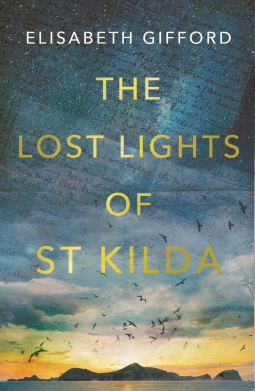
#BookReview ‘The Lost Lights of St Kilda’ by Elisabeth Gifford #historical

Told in two timelines, 1927 and 1940, this a story of love – between two people, and for an island and an endangered way of life. In The Lost Lights of St Kilda by Elisabeth Gifford, the beautiful yet harsh landscape of the island is made vividly alive. This is a delight to read, a novel about love, trust, betrayal and forgiveness. Elisabeth GiffordIn 1940 Fred Lawson, a Scottish soldier from the 51st Highland Division, is imprisoned at Tournai, captured at St Valery in retreat as other soldiers were being evacuated at Dunkirk. Through the darkest moments of fighting, his memories of St Kilda sustain him. ‘It was your face that had stayed with me as we fought in France. It was you who’d sustained me when we were hungry and without sleep for nights as we fought the retreating action back towards the Normandy coast.’ Fred escapes and heads for Spain, forced to trust strangers, not knowing who is a friend and who is an informer, but drawn on by his memories of St Kilda.
At the same moment in Scotland, a teenage daughter longs to know more of her birth. Says Rachel Anne, ‘My mother says I am her whole, world, and she is mine, but all the same I would still like to know at least the name of my father.’
In 1927, geology student Fred travels to the remote Scottish island of St Kilda with his university friend Archie Macleod whose father owns the island. No one knows that three years later the island will be abandoned, the population on the edge of starvation. Archie, the laird’s son, has a privileged position on the island. As a teenage boy he played with the island children, play acting at the work their fathers do, learning their future trades – farming, catching puffins and fulmars – on the dangerous cliffs. And he flirts with Chrissie Gillies. But by the time Archie returns to the island in 1927 with Fred, he has developed an arrogance and a liking for whisky. Over the long summer months, Fred falls in love with the island and with Chrissie. Everything changes when tragedy strikes.
This is a beautiful read, contrasting the softness and closeness of romance with the harsh facts of life as the difficulties of island survival are laid bare. Life in the summer months seems an idyll of isolation and peace, a return to the basics of life that matter. But inevitably winter approaches and, as the real world is complicated, a misunderstanding occurs. But hope is never abandoned. Despite being separated by the years and by lies, Fred and Chrissie never forget each other.

Read my review of A WOMAN MADE OF SNOW also by Elisabeth Gifford.

If you like this, try:-
Days Without End’ by Sebastian Barry
Rush Oh!’ by Shirley Barrett
After the Party’ by Cressida Connolly

And if you’d like to tweet a link to THIS post, here’s my suggested tweet:
#BookReview THE LOST LIGHTS OF ST KILDA by Elisabeth Gifford @elisabeth04liz  https://wp.me/p5gEM4-4yq via @SandraDanby

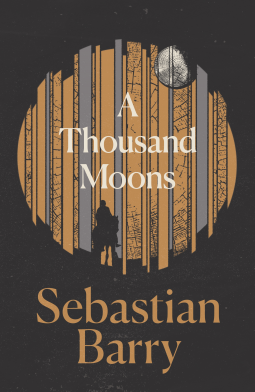
#BookReview ‘A Thousand Moons’ by Sebastian Barry #historical

1870s Paris, Tennessee, a young Lakota girl Ojinjintka, lately known as Winona Cole, travels a delicate path in post-Civil War America. Another 5* book from Sebastian Barry, A Thousand Moons is sequel to Days Without End, though both books can be read independently. This is a dangerous time when the rule of law is often non-existent and hatred is on every street. Winona says, ‘It was a town of many eyes watching you anyhow, an uneasy place.’ Barry tells this heart-rending story in eloquent prose that makes the pages turn.Sebastian BarryWinona is the adopted daughter of Thomas McNulty and John Cole, whose wartime story is told in Days Without End. Now, peace has come and Thomas and John raise their daughter to be educated and respectful. This in itself causes problems. ‘It is bad enough being an Indian without talking like a raven,’ says Winona. ‘The white folks in Paris were not all good speakers themselves.’
A story of one young woman’s journey through life’s racism, prejudice and latent violence, this is also a story of love. The love, for its time, of an unusual family; an Indian cared for when her family is killed when she is six years old. Winona finds a new home with Cole and McNulty, living with fellow Civil War soldier Lige Magan on his farm, with two black ex-slaves, cook Rosalee Bouguereau and her farm labourer brother Tennyson. Winona finds a mentor in Lawyer Briscoe, for whom she clerks. What happens next is the catalyst for the story; an event she struggles to understand, to hide. This is a coming-of-age story in which Winona must reconcile her Lakota birth with her childhood and young adulthood in a changing racial world, and also find herself as a woman.
A beautifully written book.

Read my reviews of these books also by Sebastian Barry:
DAYS WITHOUT END #1DAYSWITHOUTEND
A LONG LONG WAY
OLD GOD’S TIME
THE WHEREABOUTS OF ENEAS MCNULTY

If you like this, try:-
At The Edge of the Orchard’ by Tracy Chevalier
Frog Music’ by Emma Donoghue
Time Will Darken It’ by William Maxwell

And if you’d like to tweet a link to THIS post, here’s my suggested tweet:
#BookReview A THOUSAND MOONS by Sebastian Barry https://wp.me/p5gEM4-4ww via @SandraDanby

#BookReview ‘The Lady of the Ravens’ by Joanna Hickson @joannahickson #Historicalfiction

It is England, just after the War of the Roses. The Lady of The Ravens by Joanna Hickson starts with the new Tudor King Henry VII on the throne and the country awaiting his marriage rumoured to be to Elizabeth of York, older sister of the Princes in the Tower. The marriage is intended to heal divisions between the two warring factions after Henry’s defeat of King Richard III at Bosworth Field, so allowing peace to settle on the land. But of course it is not that simple. Joanna HicksonTwenty-four year old Joan Vaux is a servant to the princess and follows her to court on her marriage to the king. Watching the childbirth experiences of Queen Elizabeth, her own sister and other women of the court marry and bear children – some dying in the process – Joan develops a phobia of childbirth. But the king requires his courtiers to be married and a husband for Joan is proposed, but the situation is complicated as while she dithers a proposal is received from an unexpected source. Joan must make her choice, a decision which echoes throughout her life.
Joan has an affinity with the ravens, starting from when as a child she first saw the ravens at the Tower of London. Their presence there is said to herald a continued royal reign; their absence means trouble. And so the birds become a bellweather for the state of the nation in a politically turbulent time in Europe. Now living in luxurious married quarters at the Tower, the adult Joan admires these clever glossy black birds; but someone does not share her view. Their nest boxes are destroyed and set on fire. Her new husband refuses to give credence to her suspicions.
Meanwhile the country’s political future is vulnerable as the Yorkist threat to regain the throne from the usurper Henry has not disappeared. As heir, young Prince Arthur grows and his betrothal to the Spanish princess approaches but this is threatened as a Yorkist pretender to the throne gains support from England’s enemies. Joan is an observer at the highest level of the court, privy to secrets, defender of ravens, confidante of the queen.
Occasional modern phraseology – toddler, doggy treats – wrenched me out of the period and off the page but the character of Joan drew me straight back. A novel for lovers of Tudor historical mysteries this is the story of one woman, her family, choices, strengths and vulnerabilities in a country riven by war but where peace is fragile and the wrong choice can mean banishment, poverty or death.
After I finished reading it, I learned that The Lady of the Ravens is the first in the Queen of the Tower series. Good!

And here’s my review of the second book in the series:-
THE QUEEN’S LADY #2QUEENSOFTHETOWER
And another book by Joanna Hickson:-
THE HOUSE OF SEYMOUR

If you like this, try:-
Girl in Hyacinth Blue’ by Diana Vreeland
The Last Hours’ by Minette Walters
The French Lesson’ by Hallie Rubenhold

And if you’d like to tweet a link to THIS post, here’s my suggested tweet:
#BookReview THE LADY OF THE RAVENS by Joanna Hickson @joannahickson https://wp.me/p5gEM4-4tP via @SandraDanby

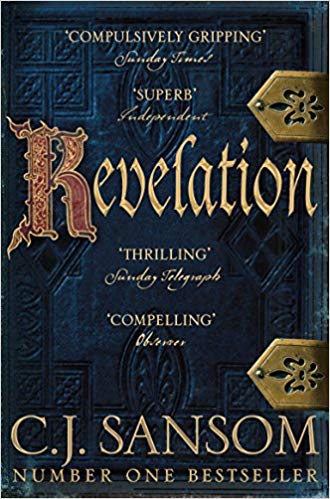
#BookReview ‘Revelation’ by CJ Sansom #Tudor #detective

I’m sorry if I’m beginning to sound like a cracked record, but I continue to love the Matthew Shardlake Tudor detective series by CJ Sansom. Fourth in the series, Revelation, is a roller-coaster ride of killings motivated by the Book of Revelation’s fire and damnation. Shardlake and his assistant Barak race around London struggling to second-guess the murderer’s motivations and identify his next likely target. CJ SansomSansom achieves a difficult feat for a historical novelist, he balances world-building – the Tudor toxic politics and Tudor gossip-mongering – will Lady Catherine Parr say yes to the King’s proposal – with Shardlake’s legal world and the fascinating detail and colour which brings London in Spring 1543 to life. Once again we see Shardlake’s vulnerability – when an old friend is murdered in mystifying and frightening circumstances – and his moral strength as he faces the dangers of investigation. These dangers do not threaten only his life but of those around him; they also threaten his position and future, as he is drawn unwillingly again into the circle of the Tudor court where queens, and courtiers, often last only a short time. These are the only historical novels I have read which are truly page-turners in its meaning of ‘one more chapter before I turn out the light’.
Set at a time of radical religious reform, when saying the wrong thing may find you shamed, hanged or burned, Matthew is working on the case of a teenage boy sent to Bedlam hospital. Is he mad, or possessed by the devil? Is he safer in Bedlam or with his parents where he might escape and be burned as a heretic. When Matthew’s friend is found dead in bizarre circumstances he is charged with solving the crime by Archbishop Cranmer. Guy of Malton, former apothecary monk from Dissolution, the first book in the series, is now a doctor and has a theory that excludes God and religion. Could a serial killer be at loose?
If you want to lose yourself in book, to travel to another world and time, then try this series. I am already anticipating the loss when I have read the last book. But the Shardlake books have so much detail and depth with recurring characters who become familiar,  I know I will be re-reading them soon.
CLICK HERE TO READ MORE ABOUT THIS BOOK AT AMAZON

And here are my reviews of other novels by CJ Sansom:-
DOMINION
DISSOLUTION #1SHARDLAKE
DARK FIRE #2SHARDLAKE
SOVEREIGN #3SHARDLAKE
HEARTSTONE #5SHARDLAKE
LAMENTATION #6SHARDLAKE

If you like this, try:-
Orphans of the Carnival’ by Carol Birch
The Lady of the Rivers’ by Philippa Gregory
The Cursed Wife’ by Pamela Hartshorne

And if you’d like to tweet a link to THIS post, here’s my suggested tweet:
#BookReview REVELATION by CJ Sansom #Tudor #detective https://wp.me/p5gEM4-4fU via @SandraDanby

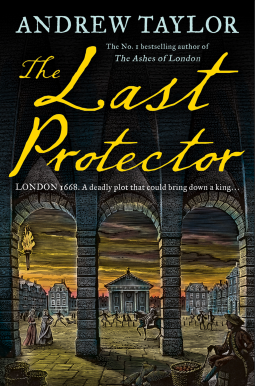
#BookReview ‘The Last Protector’ by @AndrewJRTaylor #Historical

Fourth in the 17th century crime series by Andrew Taylor, The Last Protector sees the return to London of Richard, Oliver Cromwell’s son, and last Protector of England before the restoration of the king in 1660. And it also heralds the central plot return of Cat Lovett. Ever since the first book in the series, I have waited for Cat to have a key role in the plot again. Andrew TaylorThe story begins as James Marwood, clerk to the Under secretary of State to Lord Arlington, is sent to secretly observe a duel between two lords. Meanwhile Cat, now Mistress Hakesby and married to a frail elderly architect, meets a childhood acquaintance in the street. This is Elizabeth Cromwell, daughter of Richard. Remembering their friendship as a fleeting thing, Cat is confused by Elizabeth’s eagerness to rekindle their relationship. Until, visiting Elizabeth at her godmother’s house, she is introduced to a fellow guest John Cranmore. But a peculiar habit of tapping a finger on the table brings back memories for Cat, to the time when she and her father moved in elevated political circles, and she realizes Cranmore is a false name. Elizabeth, it becomes clear, is seeking a precious object hidden by her grandmother. The object is hidden in the Whitehall sewers beneath The Cockpit, site of the cockfighting pit, theatre and jumble of additional buildings. The Hakesbys have the architectural drawings and Elizabeth needs Cat’s help to instigate her search.
In the bigger picture, Easter holiday riots attacking brothels seem to be politically motivated. Holidays are notorious times for brawls by apprentices, but these riots by the Levellers seem encouraged by bawdy newssheets of questionable origin. The Levellers shout ‘we have been servants, but we will be masters now’. Marwood is attacked and chased around the back alleys of the City while Cat, helping Elizabeth retrieve the mysterious package, is chased and escapes with the help of Ferrus, a mazer scourer, the lowest of the low who clears blockages in the sewers.
Marwood and Cat share little page time but their separate stories and chases become entwined as the troublesome history of Cat’s dissenter father puts her in grave danger. And affecting everything are the political machinations and arguments between crown and government.
An excellent page-turner.
CLICK HERE TO READ MORE ABOUT THIS BOOK AT AMAZON

Read my reviews of the other books in this series:
THE ASHES OF LONDON #FIREOFLONDON1… and try the first paragraph of THE ASHES OF LONDON.
THE FIRE COURT #FIREOFLONDON2
THE KING’S EVIL #FIREOFLONDON3
THE ROYAL SECRET #FIREOFLONDON5
THE SHADOWS OF LONDON #FIREOFLONDON6

And a World War Two novel by the same author:-
THE SECOND MIDNIGHT

If you like this, try:-
The Wicked Cometh’ by Laura Carlin
The Mermaid and Mrs Hancock’ by Imogen Hermes Gowar
‘The Winter Garden’ by Nicola Cornick

And if you’d like to tweet a link to THIS post, here’s my suggested tweet:
#BookReview THE LAST PROTECTOR by @AndrewJRTaylor https://wp.me/p5gEM4-4tI via @SandraDanby

#BookReview ‘The Secrets We Kept’ by Lara Prescott #Cold War #Pasternak

The Secrets We Kept by Lara Prescott is a mixture of Cold War thriller, romance and the true story of the publication of Dr Zhivago by Boris Pasternak. Set in the 1950s, this novel is about the power of the written word. So powerful that two nations try to outwit the other as a big new novel is set to be published; neither has any regard for the effects of their plans on the author. Lara PrescottThe two worlds are radically different, Prescott builds both convincingly. I can see Pasternak’s vegetable garden at his dacha, I can hear the typewriters in the Typing Pool at The Agency on National Mall in Washington DC. It is important to note that this is a blend of real events, real people and total fiction.
Irina is American, a first generation Russian-American, her father left behind in the Soviet Union as his pregnant wife departed for a new life in America. Irina’s Mama is a dressmaker, speaking Russian to Irina at home while making elaborate dresses for Russian immigrants. Irina never meets her father. Always an outsider, when she goes for a job interview in a typing pool Marla wears a skirt made for her by Mama. She gets the job in the Typing Pool at The Agency (the CIA) because she has something different to offer; she is trained for extra duties in the evening, acting as a messenger and learning tradecraft to avoid detection. Her job is at The Agency’s Soviet Russia Division, the ‘SR’.
In Moscow, Boris Pasternak is writing a novel and reading it aloud to his lover, Olga. One day Pasternak, deemed a threat by the authorities, is sent a warning: Olga is sent to a work camp for three years. When she returns home, his novel is finished. It is Dr Zhivago.
The Secrets We Kept is a fascinating read, a glimpse into the true story of Dr Zhivago’s publication and the role of the CIA in disseminating it to Soviet citizens. Structurally the pace did not hold up and slowed each time the story moved to Boris and Olga. But some interesting areas are covered – the treatment of homosexuals in the workplace and sexual manipulation between the ranks, the assimilation of first generation Americans, and the American obsession with communism.
Set at the time of Sputnik, Prescott is good at the contemporary culture, politics and the atmosphere of rivalry and impending threat of the Soviet Union. The clothes, the food, the films, the parties. The typists see and hear but don’t repeat, but are as capable of analysing and doing the jobs that the men are doing.
The ending fizzled out, perhaps because the book tries to do so much, possibly too much.

If you like this, try:-
An Officer and a Spy’ by Robert Harris
‘The Translation of Love’ by Lynne Kutsukake
‘The Museum of Broken Promises’ by Elizabeth Buchan

And if you’d like to tweet a link to THIS post, here’s my suggested tweet:
#BookReview THE SECRETS WE KEPT by Lara Prescott https://wp.me/p5gEM4-4tg via @SandraDanby