Tag Archives: historical fiction

#BookReview ‘The Clergyman’s Wife’ by Molly Greeley #JaneAusten

If like me you are fascinated and disturbed by the decision of Charlotte Lucas to marry Mr Collins in Pride and Prejudice, then you will enjoy The Clergyman’s Wife by Molly Greeley. I felt immediately immersed in Charlotte’s world at Hunsford. Molly GreeleyI won’t summarise the background to this novel on the assumption that all readers will be fans of Pride and Prejudice. Suffice to say, this could so easily have slipped into negative territory, negativity about William Collins and Lady Catherine de Bourgh, but Greeley handles Austen’s characters with respect, taking the heritage of Charlotte’s situation and adding a fresh perspective on her future. We see Mr Collins from a new, sympathetic angle, and are given an insight into Charlotte’s decision to marry him, her family’s position and the limited options available to her.
I liked Charlotte extremely, a considered, thoughtful woman, given an impossible choice to make and often put into uncomfortable situations by the crassness of people around her. Charlotte however is not negative, she works out the positive thing to do rather than assign blame.
This is a Regency family drama structured around the meaning of love; all kinds of love, for your spouse, your parents and siblings, as a mother, for the people who are your responsibility, and for yourself. Although Charlotte lives a life constrained by geography, convention and manners, that does not mean she lacks freedom. It is a freedom of imagination, a freedom of the mind. So when she faces a situation which she never believed would befall her, it is a life-changing experience.
A delightful light read, I read it in one sitting in holiday, you most definitely must have read Pride and Prejudice first to get the most from the undercurrent of references. I can’t help but wonder what Jane Austen would think of it.

Click here to read my review of THE HEIRESS, also by Molly Greeley.

If you like this, try:-
Miss Austen’ by Gill Hornby
The Ballroom’ by Anna Hope
‘The Clockmaker’s Daughter’ by Kate Morton

And if you’d like to tweet a link to THIS post, here’s my suggested tweet:
#BookReview THE CLERGYMAN’S WIFE by Molly Greeley https://wp.me/p5gEM4-4sX via @SandraDanby

#BookReview ‘The Ninth Child’ by Sally Magnusson @sallymag1 #historical #Scotland

The Ninth Child by Sally Magnusson is a Scottish historical mystery featuring a doctor’s wife, Queen Victoria, an infrastructure project to bring clean water to Glasgow from the wild and beautiful lochs, and the sithichean (fairies). Sally MagnussonIt is a story of water and the fate of two different women, both expecting their ninth child, and their husbands; one who is ignorant until the end, the other who looks the threat in the eye and shivers. The pregnant women, who have never met, are the Queen and Isabel, wife of Dr Alexander Aird, physician to the water construction project. The Airds live on the remote and basic construction site in a stone cottage called Fairy Knoll, alongside the drilling and tunnelling of the water project. There are two stories here – a historical saga about health and living conditions for the families which struggle both in Glasgow tenements and of the navvies that work on the water project; and a mystical story of a preacher stolen by the fairies in 1692 who returns 167 years later to talk and walk with Isabel Aird. His purpose is not clear but he is egged on by a fairy voice with whom he has made an unearthly deal. The link with Queen Victoria is tenuous and, after a strong introduction, this strand goes silent for a long time.
The tale is told by the Aird’s neighbour and servant Kirsty McEchern, alternating with Robert Kirke the preacher and, briefly, Prince Albert. At times the transition between viewpoints is sudden and confusing and I admit to skipping over some of the Robert Kirke passages. Sometimes his dialect merged into a following section by Kirsty and this took me away from the story. But I did like the character of Isabel Aird and the portrayal of her journey through the grief for her eight miscarriages. Inspired by contemporary women such as Florence Nightingale and Anne Lister, Isabel fights against her husband’s expectations that she pursue a gentlewoman’s traditional life. The juxtaposition of the Queen, Isabel and Kirsty demonstrates that women, whatever their class and education, face many of the same trials in life and have the similar mental and physical fortitude when called upon.
Magnusson is a confident writer in this period and I believed in the construction site she describes near Loch Chon and Loch Katrine. Many characters and incidents are based on real people and events including many places in the Trossachs national park which to this day bear fairy names. The Queen Victoria strand promised much but was under-used. I wished the story had more pace and for this reason the first three-quarters of the book was a 3* for me, rising to 4* for the last quarter which races along. A special mention goes to the glorious purple thistle cover.

If you like this, try:-
The Good People’ by Hannah Kent
‘The Threshold’ by Anna Kovacevic
‘The Crows of Beara’ by Julie Christine Johnson

And if you’d like to tweet a link to THIS post, here’s my suggested tweet:
#BookReview THE NINTH CHILD by Sally Magnusson @sallymag1 https://wp.me/p5gEM4-4sR via @SandraDanby

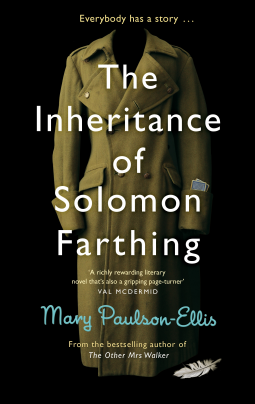
#BookReview ‘The Inheritance of Solomon Farthing’ by Mary Paulson-Ellis #WW1

A group of Great War soldiers is waiting for orders. During the last skirmishes of the war, men are still dying. Will the men receive orders to retreat or advance? Who will live or who will die? There are two strands to The Inheritance of Solomon Farthing by Mary Paulson-Ellis and the title refers to the second. A contemporary man in Edinburgh, an heir hunter, finds a pawn ticket amongst the possessions of Thomas Methven, an old soldier who died alone. Mary Paulson-Ellis This is a detailed story with many layers and many characters introduced as the two strands are told and hesitantly connected. At times the detail became confusing with so many descriptive repetitions I found myself skipping forwards. Paulson-Ellis writes scenes so well – the soldier’s gambling scene with the chicken is totally believable, and her portrayal of the foundling school in NE England is heart breaking. As Solomon tracks the life story of the deceased soldier, we see flashes of his own story, orphaned at seven and sent to live with his grandfather. Though interesting I found this distracting, it took me away from the story of the soldiers and added even more characters and family trees to remember.
The message is that the debts of the past do not disappear. Captain Godfrey Farthing is waiting, always waiting; to live to die, to advance, to retreat. He is simply trying to keep his men safe to the end of the war, which they suspect may come at any time. But Farthing’s intentions may be wrecked by enemy attack, by orders to attack, or by his own men themselves who are confined and bored. ‘A strange peace was coursing through his veins; that terrible calm that comes when a man knows the end is coming, but not in the way he had imagined when he began.’
Gambling is a continuous theme throughout the WW1 strand, and I lost track of the treasures gambled, won and lost, coveted, stolen and hidden. There are 11 soldiers involved, surely too many. Like The Lord of the Flies, the boredom of the men, their jealousies, petty rivalries and guns come to dominate their world, as if the war is already over. The treasures they gamble can be the smallest thing which to us may seem irrelevant but in war is crucial. Not monetary value as known at home, but representing an emotional or practical value.
Different rules apply during wartime and items that are significant then are cast into the spotlight when they survive across the generations to be found by modern day relatives. I admit to confusion about who was related to who and perhaps the cutting of a few peripheral characters would help. Given my interest in family history and WW1, I expected to love this book but longed for a firmer editing hand.

If you like this, try:-
Life Class’ by Pat Barker #1LIFECLASS
‘A Long Long Way’ by Sebastian Barry
Half of the Human Race’ by Anthony Quinn

And if you’d like to tweet a link to THIS post, here’s my suggested tweet:
#BookReview THE INHERITANCE OF SOLOMON FARTHING by Mary Paulson-Ellis https://wp.me/p5gEM4-4tz via @SandraDanby

My Porridge & Cream read Rosemary J Kind @therealalfiedog #books

Today I’m delighted to welcome historical novelist Rosemary J Kind. Her ‘Porridge & Cream’ read is Under Milk Wood  by Dylan Thomas.

“I was brought up on books. Both my mother and grandfather were great readers of literature and our house was full of books. I don’t know if I first fell in love with Under Milk Wood by Dylan Thomas, reading it myself or on one of our family holidays, boating on the River Thames, when we’d all curl up in the evening and Mum would read to us all. Many of the passages we knew by heart and would quote them to each other, adding lines where the other finished. To this day my favourite scene is the one in Butcher Beynon’s kitchen. The humour is so dry and so cleverly done that it never fails to make me laugh.”

Rosemary J Kind

Rosemary with her copy of Under Milk Wood

“I must have read it for myself at about the age of ten, and when stuck at home a couple of years later with glandular fever, listened to the Richard Burton recording of the book over and over. It is a book in which poetry and prose intertwine like lovers. Where the musicality of the language coupled with the keen observations of humanity deliver humour, narrative and dialogue to the reader in a way that can always satisfy me. My mother’s copy was a beautiful hardback with a light blue dust jacket. Many many years later I was lucky enough to be given a present by my husband of my very own first edition of the book, signed by the author’s niece. It is one of my most treasured possessions.”
Rosemary J Kind BUY THE BOOK

Rosemary’s Bio
Rosemary J Kind writes because she has to. You could take almost anything away from her except her pen and paper. Failing to stop after the book that everyone has in them, she has gone on to publish books in both non-fiction and fiction, the latter including novels, humour, short stories and poetry. She also regularly produces magazine articles in a number of areas and writes regularly for the dog press.
As a child she was desolate when at the age of 10 her then teacher would not believe that her poem based on Stig of the Dump was her own work and she stopped writing poetry for several years as a result. She was persuaded to continue by the invitation to earn a little extra pocket money by ‘assisting’ others to produce the required poems for English homework!
Always one to spot an opportunity, she started school newspapers and went on to begin providing paid copy to her local newspaper at the age of sixteen. For twenty years she followed a traditional business career, before seeing the error of her ways and leaving it all behind to pursue her writing full-time.
She spends her life discussing her plots with the characters in her head and her faithful dogs, who always put the opposing arguments when there are choices to be made. Always willing to take on challenges that sensible people regard as impossible, she established and ran the short story download site Alfie Dog Fiction for six years building it to become one of the largest in the world, representing over 300 authors and carrying over 1600 short stories. She closed it in order to focus on her own writing.
Her hobby is developing the Entlebucher Mountain Dog in the UK and when she brought her beloved Alfie back from Belgium he was only the tenth in the country. She started writing ‘Alfie’s Diary’ as an Internet blog the day Alfie arrived to live with her, intending to continue for a year or two. Thirteen years later it goes from strength to strength and has been repeatedly named as one of the top ten pet blogs in the UK.

Rosemary’s links
Twitter
Facebook
Website 
Blog 

Rosemary’s latest book
Rosemary J Kind 1866. Daniel Flynn and Molly Reilly’s lives have been dogged by hardship since their orphan days on the streets of New York. Finally, the future is looking bright and Indiana is the place they call home. Now they can focus on making Cochrane’s Farm a success.
The Civil War might have ended but the battle for Cochrane’s Farm has only just begun. The Reese brothers are incensed that land, once part of their family farm, has been transferred to the ownership of young Molly. No matter that their Daddy had sold it years previously, jealousy and revenge have no regard for right. Women should know their place and this one clearly doesn’t.
Times are changing and a woman’s place is changing with it. How far will Daniel and Molly go to fight injustice and is it a price worth paying?
BUY THE BOOK
What is a ‘Porridge & Cream’ book? It’s the book you turn to when you need a familiar read, when you are tired, ill, or out-of-sorts, where you know the story and love it. Where reading it is like slipping on your oldest, scruffiest slippers after walking for miles. Where does the name ‘Porridge & Cream’ come from? Cat Deerborn is a character in Susan Hill’s ‘Simon Serrailler’ detective series. Cat is a hard-worked GP, a widow with two children and she struggles from day-to-day. One night, after a particularly difficult day, she needs something familiar to read. From her bookshelf she selects ‘Love in A Cold Climate’ by Nancy Mitford. Do you have a favourite read which you return to again and again? If so, please send me a message.

Discover the ‘Porridge & Cream’ books of these authors:-
Julia Thum’s choice is ‘The Little White Horse’ by Elizabeth Goudge
Ivy Logan chooses ‘Reckless’ by Cornelia Funke
It Shouldn’t Happen to a Vet by James Herriot is chosen by Mary Grand

And if you’d like to tweet a link to THIS post, here’s my suggested tweet:
Why does Rosemary J Kind @therealalfiedog re-read UNDER MILK WOOD  by Dylan Thomas? #books https://wp.me/p5gEM4-4a3 via @SandraDanby

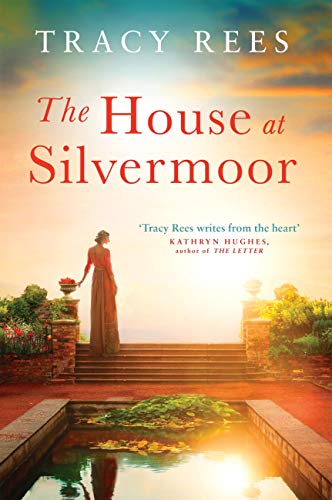
#BookReview ‘The House at Silvermoor’ by Tracy Rees @AuthorTracyRees #historical

Expectations and generalisations are an odd thing. When I first read the the blurb for The House at Silvermoor and saw it is set in a South Yorkshire mining community, I hesitated. But I decided to place my trust in the author, Tracy Rees, because I read and loved her Amy Snow. What a good decision it was. Tracy ReesInspired by her grandfather Len, Rees researched coal mining at the turn of the century. This research informs every page but never interferes with her story of Tommy Green from the mining village of Grindley and Josie Westgate of nearby Arden. When they are twelve they meet in a country lane, talking over a dropped bunch of bluebells. Rees is excellent at world creation: the hard grind of the mining families, the lack of options, the durability and sense of inevitability of the families, the autocratic families that rule the mines, the temptation of the unknown. Tommy is destined to work in the pits of the Sedgewick family of Silvermoor where his father and brothers work, where his brother Dan died in an accident. Josie’s father and brothers work in the nearby pits owned by Winthrop Barridge, where standards are lower, the work more hazardous, and no compensation for widows of miners killed at work. Her sisters work at the mine too, above ground, washing coal.
As the story starts, it is Tommy’s last day at school. His destiny is to work in the pits despite wanting more, something different, despite his dreams. Dismissed by his schoolteacher as the best of a bad lot and accused of false pride, Tommy is tongue-tied. ‘In quite real terms, my tongue had lodged in my throat in a glutinous lump, and I could neither swallow nor speak’. That night, in a rite of manhood, he is taken poaching at midnight by his father to Heston Manor, the rundown estate owned by Barridge and patrolled by guards. Entrance is forbidden but food is scarce so the risk is worth it. Josie’s sister Alice is marrying and she runs to her secret place in the grounds of Heston Manor to pick wildflowers. She is caught by the gamekeeper Paulson. She lies her way out of an awkward situation, runs towards home and bumps into Tommy. It is a lovely meeting between two adolescents, on the brink of their lives, both rebels, both smart enough to talk their way out of trouble, and both capable of getting themselves into trouble.
The relationship between Tommy and Josie is at the heart of this novel as they navigate the difficult paths deemed to be their fate. Both want more, both struggle with restriction and each supports the other. Into the picture come Arden shopkeeper Dulcie Embry, who inherits the village shop from her uncle and is determined to prove it is a job for a woman, and who becomes a particular friend of Josie; a mysterious ghost that haunts Heston Manor and rides a white stallion; and Lord Walter Sedgewick, son of the earl and five years younger that Tommy, who was christened on Tommy’s birthday. This connection runs throughout the story in ways I did not expect and opens up new friendships and loyalties that cross the rigidities of class.
It is the turn of the century, the promise of the 1900s brings expectations, new opportunities and tradition challenged. This is a story of love, loyalty, the fight against exploitation, the hope of goodness. It is the story of a family mystery and a romance, bound up with the rapidly changing social history of its time. Excellent. A note about the cover design; beautiful, but completely irrelevant to the story.

Click the title below to read my reviews of other novels by Tracy Rees:-
AMY SNOW
DARLING BLUE
THE ELOPEMENT
THE ROSE GARDEN

If you like this, try:-
The Almanack’ by Martine Bailey
The Doll Factory’ by Elizabeth Macneal
The Taxidermist’s Daughter’ by Kate Mosse

And if you’d like to tweet a link to THIS post, here’s my suggested tweet:
#BookReview THE HOUSE AT SILVERMOOR by Tracy Rees @AuthorTracyRees https://wp.me/p5gEM4-4lK via @SandraDanby

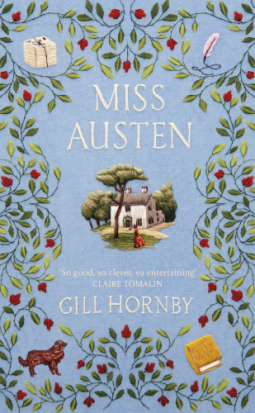
#BookReview ‘Miss Austen’ by Gill Hornby @GillHornby #JaneAusten #historical

What a delicious first chapter there is to Miss Austen by Gill Hornby. Elderly Cassandra Austen arrives unannounced to visit a family friend in Kintbury, endures a parsimonious supper and a difficult evening without much conversation. Why, I wondered, is Cassandra there. And then at bedtime, comes a hint at her reason. Gill HornbyCassandra visits Isabella, a family friend who is grieving the death of her father. Cassandra’s objective, is to retrieve any incriminating letters between her sister Jane and Isabella’s mother, Eliza, before Isabella leaves the family vicarage. With both letter writers dead, and knowledge of the novelist Jane Austen more widely sought than ever before, Cassandra is anxious to protect Jane’s legacy.
What follows is a gentle telling of the sisters’ relationship as Hornby pieces together the real letters of the Austen sisters and the known biography of the family, combined with events and dialogue of her own imagination. This is a meandering read without a real focus, there is the imagined threat to Jane’s reputation as Cassandra searches for the missing letters under threat of exposure by her sister-in-law Mary. But this threat is not wholly formed and the story goes back and forth between Cassandra reading the letters at the dead of night, to key times in the life of Jane.
Not until three-quarters of the way through does the dilemma becomes personal to Cassandra. Until this point, it is oddly numb. Cassandra has been seeking private – and very personal – letters written to Eliza but instead finds letters that cast what she, Cassandra, believes to be a bad light on her own life. Not Jane’s. The stakes are raised and I wanted to see more than a snapshot of the man involved and don’t really care if he was a real person or the author’s invention.
Cassandra in her old age is dismissive of those who do not read or don’t appreciate the art of her sister’s books, and has a lack of interest in anyone not an Austen. ‘Those other mortals, whose poor veins must somehow pulse with no Austen blood in them, always appeared to her comparatively pale’. This quote reminded me of Marianne’s dismissal of Edward’s underwhelming reading of Shakespeare sonnets and made me want a 360 degree picture of Cassandra’s own life.
I finished Miss Austen reflecting on the difficulty of writing this novel. What an awkward task it is for an author, to balance biography and real letters with invention and how strong must be the impulse to stick with the truth. I longed for Hornby to take a bigger risk and show us more of the life, and loves, Cassandra may have had.

If you like this, try:-
After Leaving Mr Mackenzie’ by Jean Rhys
The Confessions of Frannie Langton’ by Sara Collins
Amy Snow’ by Tracy Rees

And if you’d like to tweet a link to THIS post, here’s my suggested tweet:
#BookReview MISS AUSTEN by Gill Hornby @GillHornby https://wp.me/p5gEM4-4iB via @SandraDanby

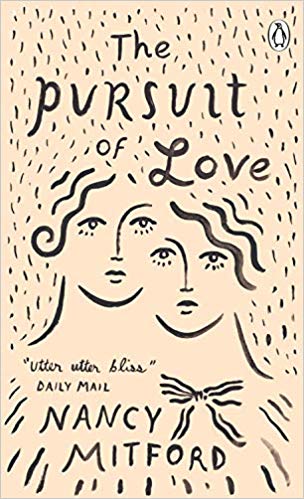
#BookReview ‘The Pursuit of Love’ by Nancy Mitford #romance

A slower, more meditative pace inhabits The Pursuit of Love by Nancy Mitford, less frenetic than her earlier novels. More fond, less satirical. Fanny Logan narrates this story of the Radlett family and, in particular, her cousin Linda’s pursuit of love. Nancy MitfordThe teenage Linda and sisters, and cousin Fanny who visits the Radletts at the fading freezing family pile, Alconleigh in the Cotswolds, want to grow up now. They are obsessed by sex and romance whilst being woefully ignorant of the practicalities. The reality, however, is more difficult and less romantic than they imagined. They form a secret society The Hons. When not out hunting, The Hons spend hours in a large warm cupboard gossiping about love and Fanny’s disreputable mother, ‘The Bolter’, who abandoned her daughter to pursue love. Fanny, raised by her Aunt Emily and stepfather Davey, spends all her holidays at Alconleigh with Uncle Matthew and Aunt Sadie and their family.
As with all Mitford novels there are many laugh-out-loud moments. Alconleigh is an eccentric world where Uncle Matthew rules his staff and family; he despises foreigners, Catholics, the nouveaux riche and people who say ‘perfume’ instead of ‘scent’. Desperate to find true love and not follow the family black sheep – The Bolter – into leapfrogging from affair to affair, the cousins are woefully naïve and unprepared for meeting men. Linda sums up true love, ‘it was like seeing somebody in the street who you think is a friend, you whistle and wave and run after him, and it is not only not the friend, but not even very like him. A few minutes later the real friend appears in view, and then you can’t imagine how you ever mistook that person for him.’
Published in 1945, the story starts in the Thirties and runs through the Spanish Civil War and the start of World War Two and The Blitz. The Radletts may be ‘hons’ but they suffer and slings and arrows of fortune in love. Fanny is the narrator of the family’s story and we are treated to occasional morsels about her own love and life. Like Nick Carraway in The Great Gatsby, the story therefore includes Fanny’s own interpretation of affairs as well as her recounting of Linda’s own stories.
This is a tale of lost aristocracy, and the levelling effects of love and war. Funny, witty and sharp featuring an absent parenting style completely alien today, The Pursuit of Love has at its heart a strong streak of sadness and tragedy. No matter who you are, love cannot always be found; if found, it cannot always be retained.

Read the first paragraph of THE PURSUIT OF LOVE here.

Read my reviews of these other novels by Nancy Mitford:-
CHRISTMAS PUDDING
HIGHLAND FLING
LOVE IN A COLD CLIMATE
PIGEON PIE
THE BLESSING
WIGS ON THE GREEN

If you like this, try these:-
‘Miss Pettigrew Lives for a Day’ by Winifred Watson
‘The Ballroom’ by Anna Hope
‘My Dear, I Wanted to Tell You’ by Louisa Young

And if you’d like to tweet a link to THIS post, here’s my suggested tweet:
#BookReview THE PURSUIT OF LOVE by Nancy Mitford https://wp.me/p5gEM4-3kq via @SandraDanby

My Porridge & Cream read @marlaskidmore44 #books #JaneAusten

Today I’m delighted to welcome historical novelist Marla Skidmore. Her ‘Porridge & Cream’ read is Emma by Jane Austen.

“It was difficult to choose just one book for my Porridge and Cream read, as I have so many favourites. Anya Seton’s Katherine and Georgette Heyer’s An Infamous Army are very near the top of my list but if I have to pin it down to just one book, then it has to be Emma. It was at school, during a double Library period in the Summer of 1965, that my impressionable teenage self, became entranced by the world that Jane Austen created in her novels. Initially it was haughty Mr Darcy and feisty Lizzie Bennet in Pride and Prejudice, that caught my attention but then I discovered her wonderfully flawed, high spirited and delightfully managing heroine, Emma Woodhouse.

Marla Skidmore

Marla’s copy of Emma

‘Handsome, clever and rich,’ Emma has no responsibilities other than the care of her rather foolish, elderly father.When her close companion, the motherly Anne Taylor gets married and leaves her, Emma sets out on an ill-fated match-making career which focuses on the pretty but dim Harriet Smith. Emma manages to cause misunderstandings with every new tactic she employs. Cherished and spoilt, she is charming to all those around her but insensitive to their feelings, so it takes her some time to learn her lesson and profit from spending less time worrying about how other people should live their lives and more time redeeming herself in the eyes of Mr Knightly, the man who loves her dearly but who is also her sternest critic. The more I read Emma, the more I appreciate Jane Austen’s sharp wit; her subtle analysis of contemporary life in small town Regency England and her incisive portraits of characters such as Mrs Augusta Elton, who has £10,000 but is boasting, pretentious and vulgar and the  Frank Churchill, whose surface charm hides a manipulative self-centred nature, determined to ensure his secret engagement to Jane Fairfax remains undetected.”
Marla SkidmoreBUY THE BOOK

Marla’s Bio
Marla Skidmore grew up in a small medieval city in the Yorkshire Dales.   After living in Europe for a number of years, she returned home to become a mature student. Having completed her studies and gained dual Honours in English and History and a Master’s degree in Literature; Marla went on to become a College Lecturer. Her award-winning debut novel, Renaissance – The Fall and Rise of a King, is inspired by the discovery of King Richard III’s remains on the 25th August 2012. She is now researching and writing the sequel Renegade, the story of Francis Viscount Lovell – King Richard’s greatest and most loyal friend. When not immersed in her current writing project, Marla enjoys gardening, exploring ancient ruins and taking long walks with her West Highland Terrier in the countryside surrounding the Dales village where she now lives.

Marla’s Links
Website
Facebook
Twitter 
Goodreads
Instagram 

Marla’s latest book
Marla SkidmoreDeath is not always the end. King Richard III.  Betrayed, defeated and savagely slain but Fate is not quite finished with him. He regains consciousness on Bosworth’s bloody field and concludes that the Almighty has granted him another chance to fight for his throne. About to leave the battlefield to head North, Richard is forced to take cover by the arrival of Henry Tudor and his men who are searching for his body to put on display.  Suddenly the cry goes up ‘We have found the king!’ He sees Henry Tudor standing triumphant over a mauled and battered corpse and hears him whisper ‘It is done. England is mine.’ How could this be when he is not dead? Richard sidles closer; to his utter horror finds himself looking at his own body. The appearance of the mysterious monk Father Gilbert, convinces him that he is dead and now in Purgatory – and so begins Richard’s harrowing journey through the Hereafter. Through his recollections in the Afterlife, reader is witness to the key events that lead to his violent end. The man behind the myths is revealed, as is the torment of a soul who believes that his honour and reputation have been forever destroyed by the malign propaganda of the Tudors. When at last Richard learns that this has not reigned supreme through the ages, he faces a decision that will affect his soul throughout eternity.
BUY THE BOOK

What is a ‘Porridge & Cream’ book? It’s the book you turn to when you need a familiar read, when you are tired, ill, or out-of-sorts, where you know the story and love it. Where reading it is like slipping on your oldest, scruffiest slippers after walking for miles. Where does the name ‘Porridge & Cream’ come from? Cat Deerborn is a character in Susan Hill’s ‘Simon Serrailler’ detective series. Cat is a hard-worked GP, a widow with two children and she struggles from day-to-day. One night, after a particularly difficult day, she needs something familiar to read. From her bookshelf she selects ‘Love in A Cold Climate’ by Nancy Mitford. Do you have a favourite read which you return to again and again. If so, please send me a message.

Discover the ‘Porridge & Cream’ books of these authors:-
LM Milford’s choice is ‘4.50 From Paddington’ by Agatha Christie
Lexi Rees chooses ‘The Hitchhiker’s Guide to the Galaxy’ by Douglas Adams
Jane Eyre by Charlotte Bronte is chosen by Julie Stock

And if you’d like to tweet a link to THIS post, here’s my suggested tweet:
Why does historical novelist @marlaskidmore44 re-read EMMA by Jane Austen #books https://wp.me/p5gEM4-4hB via @SandraDanby

#BookReview ‘The Second Midnight’ by Andrew Taylor @AndrewJRTaylor #WW2

In The Second Midnight, Andrew Taylor unpicks the connections between a group of people – a dysfunctional family, spies, ordinary people – before, during and after World War Two in England and Czechoslovakia. Essentially it is a novel of relationships wrapped up in the parcel of wartime spying, lies and romance. In its scope it reminds me of Robert Goddard’s Wide World trilogy, except Taylor covers the subject in one book rather than three. Andrew TaylorIt is 1939 and twelve year old Hugh Kendall is bullied by his father, sighed over by his harried mother, ignored by his older brother and manipulated by his older sister. Hugh retreats into imaginative games with his toy soldiers. His father, failing glass importer Alfred Kendall, is recruited by the Secret Services as a courier on a glass-buying trip to Czechoslovakia. In tow is Hugh, recently expelled from school, a nuisance to his father. Alfred is not a natural spy, though he thinks he is. When things get sticky and Alfred must return to England, the Czech Resistance keeps Hugh as collateral to ensure his father’s quick return. But Hugh finds himself alone in Prague after the German invasion, unsure who to trust, unsure if he will be rescued. He quickly learns to live on his wits. This for me was the best section of the book.
The thing that makes this story stand apart for me is Hugh. He makes an uncanny narrator, giving us a view of life in an occupied country, stranded from everything that is safe and familiar. Adept at languages, Hugh quickly becomes familiar with Czech and German allowing him to assume a false identity as Rudi Messner, a Czech-Hungarian boy.  Cared for by a German officer, Colonel Helmut Scholl, Hugh works as the gardener’s boy at Scholl’s mansion in Prague and meets the colonel’s children, Heinz and Magda. These relationships weave across the years and the pages into the post-war years and the fight against communism.
The significance of the title left me wondering if I had missed something. It is set up with an intriguing connection between two characters, then abandoned. The connection with the Prologue was also lost on me as it is only mentioned again at the end and I had forgotten what happened; ends neatly tied without adding understanding. Taylor knows how to tell a page turning story, I read this quickly. This is a fascinating read over a complex time period, but an enormous subject; I wish it had been given the space of three books to explore fully.

Read my reviews of Andrew Taylor’s ‘Marwood & Lovett’ series that starts on the night of the Great Fire of London:-
THE ASHES OF LONDON #FIREOFLONDON1… and read the first paragraph of THE ASHES OF LONDON.
THE FIRE COURT #FIREOFLONDON2
THE KING’S EVIL #FIREOFLONDON3
THE LAST PROTECTOR #FIREOFLONDON4
THE ROYAL SECRET #FIREOFLONDON5
THE SHADOWS OF LONDON #FIREOFLONDON6

If you like this, try:-
Corpus’ by Rory Clements #1TOMWILDE
The Ways of the World’ by Robert Goddard #1WIDEWORLD
Five Days of Fog’ by Anna Freeman

And if you’d like to tweet a link to THIS post, here’s my suggested tweet:
#BookReview THE SECOND MIDNIGHT by Andrew Taylor @AndrewJRTaylor https://wp.me/p5gEM4-4gC via @SandraDanby

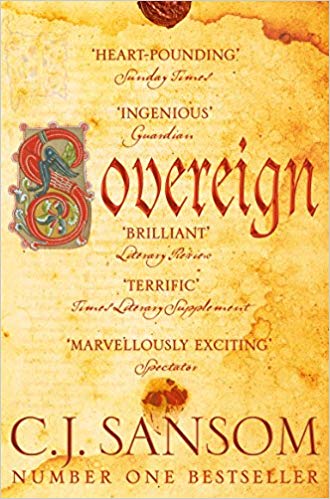
#BookReview ‘Sovereign’ by CJ Sansom #Tudor #detective

Sovereign by CJ Sansom is third in the Matthew Shardlake series and the best so far. Taking true events –Henry VIII’s Royal Progress to York in 1541, the northern rebellion against the crown and the rumours of Queen Catherine’s infidelity – Sansom writes a complex story of rebels, betrayal, bastards and inheritance that keeps one more page turning. CJ SansomLawyer Shardlake is in York at the bequest of Archbishop Cranmer ostensibly to present legal petitions to the King, but he also has a secret task. To watch over the welfare of a Yorkist prisoner, ensuring the man is kept alive and able to be interrogated in London. Shardlake agrees reluctantly, aware he will be keeping alive a man destined for torture and the rack. But a series of odd events make him question his role in York and whether his life is in danger. This is a densely plotted novel with many clues and dead ends as Shardlake tries to find answers – to the murder of a local glazier removing glass from church windows, to an old legend about royal succession, to the connivings and hidden intentions of some of the ladies employed by the Queen, and why an old enemy is rousing dissent against Shardlake. As always, he is determined to stay on the side of what is right; which lands him in trouble. At his side, Barak defends his master and cautions him to stop annoying powerful people by asking difficult questions and failing to fall into line. But this is the reason Shardlake is so popular with readers; when his hunched back is ridiculed by the king, no less, it made me want to shout out aloud.
The mid-sixteenth century is a dark point in history with an arrogant and obsessive king, an obsequious court, and corruption everywhere. Set mostly in York, this novel has a different feel to the previous two. The politics of the time saw Yorkshire punished for its support of the House of York and its opposition to the Tudors, there was much poverty, starvation and injustice. So, fertile ground for Sansom to use as the basis for Sovereign, writing period detail with the tension of a modern thriller as Shardlake questions his own beliefs and values. Uncomfortable reading in places, doing the right thing is sometimes easy to talk about but not always easy to do.
Very good.
CLICK HERE TO READ MORE ABOUT THIS BOOK AT AMAZON

And here are my reviews of other novels by CJ Sansom:-
DOMINION
DISSOLUTION #1SHARDLAKE
DARK FIRE #2SHARDLAKE
REVELATION #4SHARDLAKE
HEARTSTONE #5SHARDLAKE
LAMENTATION #6SHARDLAKE

If you like this, try:-
Dark Aemilia’ by Sally O’Reilly
The Ashes of London’ by Andrew Taylor
Lord John and the Private Matter’ by Diana Gabaldon

And if you’d like to tweet a link to THIS post, here’s my suggested tweet:
#BookReview SOVEREIGN by CJ Sansom #Tudor #detective https://wp.me/p5gEM4-3YA via @SandraDanby