Tag Archives: historical fiction

#BookReview ‘Conspiracy’ by SJ Parris @thestephmerritt #historical #crime

Paris 1585. In Conspiracy by SJ Parris, Italian philosopher spy Giordano Bruno is finding the French capital more difficult to negotiate than London. ‘God this city!… So many factions, so many plots; everyone an informer with two faces, playing one party off against the others.’ SJ ParrisFifth in this series, Bruno arrives in a Paris riven by religious fear and violence, when the reign of King Henri III is under threat from the Catholic League led by the Duke of Guise. Henri is ruled by his mother, Catherine de Medici, features regularly in scurrilous scandal sheets and seems unable to sire an heir. When a fellow priest is murdered, Bruno is drawn into the Parisian web of secrets, spies and court intrigue. Always balancing on a knife edge, Bruno must use his detecting skills to identify the murderer. He is ordered by two powerful men – neither knows of the other’s contract – to discover the truth of the murder. Bruno trusts neither and, though his knowledge of how the royal court functions is useful, he finds himself drawn deeper into danger.
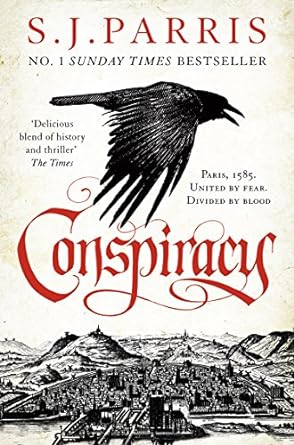
A second most unexpected murder within the royal court itself threatens to reveal secrets about Henri, his wife Queen Louise, and his mother Catherine de Medici. This court is a world of courtesan spies where courtiers may be working for both sides, where everyone could be considered two-faced, their word untrustworthy. Bruno survives on his wit, bravery, and sheer damn luck. As Bruno is working for two bosses, he must also consider that everyone he meets is a spy, a double or triple agent, or may be lying to protect themselves, for ambition or for money. The plot ties itself in knots, at times the sheer number of suspects is bewildering.
I particularly enjoyed Bruno’s meetings with fellow spy Charles Paget whose wry remark that Bruno doesn’t look over his shoulder often enough would spoil some of the plot twists. The plot of Conspiracy continues some threads and recurring characters from earlier novels. Scandal and rumour combine in the echo chamber of the royal court as Bruno uncovers one conspiracy after another, or has he. Jumping to conclusions too early gets him into some scrapes and brings him into contact with a wide variety of personalities including an acting troupe I Gelosi.
These are long and complicated books and Bruno has enviable diplomatic and survival skills. The Parisian royal court is poisonous, the city is dirty and dangerous, there are sexy men, gorgeous women and gambling clerics.
A really good historical thriller. If you’re new to this series, please start with the first book to appreciate all the plot twists and themes.

Read my reviews of other books in the series:-
HERESY #1 GIORDANOBRUNO
PROPHECY #2 GIORDANOBRUNO
SACRILEGE #3 GIORDANOBRUNO
TREACHERY #4GIORDANOBRUNO

If you like this, try:-
The Burning Chambers’ by Kate Mosse #1Joubert
The Silver Wolf’ by JC Harvey #1FiskardosWar
Winter Pilgrims’ by Toby Clements #1Kingmaker

And if you’d like to tweet a link to THIS post, here’s my suggested tweet:
#BookReview CONSPIRACY by SJ Parris @thestephmerritt https://wp.me/p2ZHJe-7Hl via @SandraDanby

COMING SOON… THE NEXT BOOK I REVIEW WILL BE:- Helena Dixon

#BookReview ‘Tombland’ by CJ Sansom #Tudor #detective #crime

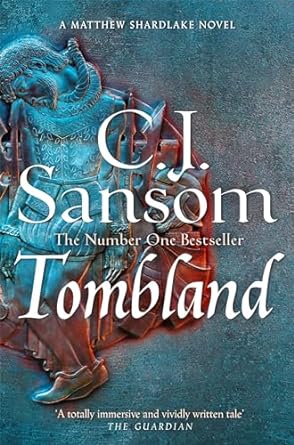
Before reading Tombland by CJ Sansom I knew nothing about the English rebellions in 1549. What a magnificent series this is, so often emulated but rarely equalled. And how fitting that the final Matthew Shardlake book should shed light on such a little-known uprising. CJ SansomTwo years after King Henry VIII’s death his young son Edward VI sits on the throne, but a Protector rules in his stead. With war against the Scots and a new law allowing the enclosure of land, dissent among the yeomen and farm labourers rumbles into protest into rebellion. The poorest in society find their voice to protest against injustice imposed by the wealthy.
In these uncertain times lawyer Shardlake, living a quieter life in London, is called to investigate a murder in Norfolk. The man accused is related distantly to Anne Boleyn and therefore to her daughter Princess Elizabeth. What is planned as a short visit to Norwich turns into a prolonged stay when Shardlake and his assistant Nicholas Overton are caught up in the rebellion, captured by the rebels who see them as gentlemen and therefore enemies in the fight for peasant rights against the powerful landlords. Set in a time of continuing religious changes, the introduction of Cranmer’s new English language prayer book, churches stripped bare of decoration and walls painted white, people have become used to hiding their true beliefs. As the crown has spies amongst the rebels, the rebels have their own spies. Amidst this suspicion, distrust, gossipmongering and manipulation, Shardlake must find the murderer of John Boleyn’s former wife. Able for some time to survive in the rebel camp, aiding the leader Robert Kett to ensure good law is followed, he must decide whether he is a rebel or a loyalist.
Sansom sets a complicated murder story within a patchwork of historical events, some of those described sound too violent and far-fetched to be true though the Author’s Note assures us they happened. With familiar characters – the return of Jack Barack is welcome – many new faces add their voices to the world as we see it through Shardlake’s eyes, troubled as he is that the valid demands of the protestors will be defeated. Bullied stable boy Simon. Shardlake’s former servant Josephine and her husband Edward. Goodwife Everneke who is the ‘mother’ of the Swardeston village group within the huge Mousehold Heath rebel camp outside Norwich. Isabella Boleyn, former barmaid and second wife of the accused man. Throughout it all, the honesty and goodness of Matthew Shardlake shine through. He defends the underdogs, challenges the liars and stands up to bullies. Always in pursuit of the truth, no matter how uncomfortable, how painful, how inconvenient.
Tombland is a big book, 880 pages, but I read it far quicker than I do many shorter novels, picking it up at every opportunity. And though long, I would not reduce it. This paperback has been sitting on my shelf for ages, calling to be read. From the first sentence I knew I was in a familiar place, ‘I had been in my chambers at Lincoln’s Inn when the messenger came from Master Parry, asking me to attend him urgently.’ Such a simple sentence but the voice so clearly that of Matthew Shardlake.
I had been hesitating over picking up Tombland, wanting to have one more Shardlake book left on the shelf still to be read. Oh what a treasure it is. So now I’ll go back to the beginning and read Dissolution again.

And here are my reviews of other novels by CJ Sansom:-
DOMINION
DISSOLUTION #1SHARDLAKE
DARK FIRE #2SHARDLAKE
SOVEREIGN #3SHARDLAKE
REVELATION #4SHARDLAKE
HEARTSTONE #5SHARDLAKE
LAMENTATION #6SHARDLAKE

If you like this, try:-
Three Sisters, Three Queens’ by Philippa Gregory
Cecily’ by Annie Garthwaite
‘The Lady of the Ravens’ by Joanna Hickson #1QueensoftheTower

And if you’d like to tweet a link to THIS post, here’s my suggested tweet:
#BookReview TOMBLAND by CJ Sansom #Tudor #detective https://wp.me/p2ZHJe-7z3 via @SandraDanby

COMING SOON… THE NEXT BOOK I REVIEW WILL BE:- Helena Dixon
#BookReview ‘The Glassmaker’ by @Tracy_Chevalier #historical #Venice

Enthralling from the first page to the last, The Glassmaker by Tracy Chevalier is by far the best novel I’ve read so far this year. It’s a heady mixture of beautiful glass, Venice in rich times and poor, passion, jealousy and intense competition, focusing on Orsola Rosso and her glass-making family on Murano island within the Venice lagoon through the centuries to the present day. Tracy ChevalierChevalier introduces us to the idea of time-skipping in her brief introduction. ‘The City of Water runs by its own clock. Venice and its neighbouring islands have always felt frozen in time – and perhaps they are.’ And so we follow the same family across six hundred years. In the first chapter in 1494 we meet nine-year old Orsola; this is her story, told in leaps and skips across the centuries. The second instalment of Orsola’s life is in 1574 when she is eighteen years old. Those close to her have aged similarly, only Venice is at once the same and different. Its an ingenious way to tell the story of the Rosso family, the ups and downs of the glassmaking business, their loves and losses, the wars and disease, all set within the framework of Venice and of Murano glass.
When Maestro Lorenzo Rosso dies, Orsola’s eldest brother Marco must take charge of the family business but he is impulsive and designs flamboyant impractical pieces. When contracts are lost and Marco is in his cups, Orsola learns the art of glass bead making. The business of glassmaking is always kept within the immediate family, different families have different specialities, and so matches are made for the sons and daughters of maestros according to the skill or wealth of the incomer. Orsola knows she must marry one day. Her mother and brother’s selection of the man to be her husband is pragmatic, it turns the direction of the story and influences everything that follows.
Life is lived in a bubble on Murano island; loyalties are intense but so is hatred and rivalry. While most women are mutually supportive, others are jealous and ambitious. Murano families rarely go to Venice, Venetians don’t go to Murano. None of them go to the mainland, terraferma. Above all for these families who live close to the bread line, security of employment and supply of food for the family is the primary concern. We follow the Rossos through feast and famine, war, plague, flood and Covid.
So many of Chevalier’s novels are based upon a specific craft or skill – art in The Girl with a Pearl Earring, embroidery in A Single Thread, tapestry weaving in The Lady and the Unicorn, fossil-hunting in Remarkable Creatures. The Glassmaker is another homage to skilled craftsmen who create beautiful objects that last across time.
A magical story, beautifully written. And what a gorgeous cover!

Read my reviews of other novels by Tracy Chevalier:-
A SINGLE THREAD
AT THE EDGE OF THE ORCHARD
NEW BOY
THE LAST RUNAWAY

If you like this, try:-
Disobedient’ by Elizabeth Fremantle
How to be Both’ by Ali Smith
Nat Tate: an American Artist 1928-1960’ by William Boyd

And if you’d like to tweet a link to THIS post, here’s my suggested tweet:
#BookReview THE GLASSMAKER by @Tracy_Chevalier https://wp.me/p2ZHJe-7xg via @SandraDanby

COMING SOON… THE NEXT BOOK I REVIEW WILL BE:- Victoria Hislop

#BookReview ‘Restless Dolly Maunder’ by Kate Grenville #historical

Restless Dolly Maunder by Kate Grenville tells the life story of a poor white girl who wants to be a teacher in late 19th century Australia. Dolly Maunder must gain her father’s approval to take the pupil teacher test and is determined to ask though she knows he will refuse. This beginning sums up the story of Dolly’s life which Grenville recounts until her end in 1945. Kate GrenvilleA melding of fiction with family history, memoir and feminist study, we follow the restless heroine who always wants more. At the beginning I was sympathetic with Dolly’s lot, cornered into marriage, her dreams crushed, taken to live on a windswept isolated farm. This is a portrayal of a woman who rubs against her parents, their narrow expectations, the drudgery and lack of emotion and who as a parent herself struggles with the same constraints. But when life improves and there is money, Dolly still struggles to connect with those around her.
This constant searching for something new is a classic case of grass being greener on the other side of the fence. Sometimes Dolly’s plans work out financially for the family but sometimes end in struggle and hardship. And each time her three children are uprooted, taken somewhere unfamiliar where they must start again.
Dolly was born too early, struggling for her right to be a woman in a man’s world where every legal document must be signed by a man. From farm to shop to hotel and bar, Dolly and husband Bert Russell move on as the 20th century passes from the Great War and Great Depression to the approach of the Second World war. She is a tough woman living in tough times, unwilling to reshape her ambitions and accept the good of what she has achieved, unable to soften herself to allow others to love her.
At the end of the novel the position of women in society is contextualised, viewed across three generations comparing Dolly’s life with that of her mother and her own daughter Nancy. ‘She thought of all the women she’d ever known, and all their mothers before them, and the mothers before those mothers, locked in a place where they couldn’t move.’ Dolly’s own generation, she decides, is like a hinge allowing a door to be opened, slowly at first, painful inch by painful inch, for the women who follow.
A linear story which I read quite quickly, at times admiring Dolly’s determination and sheer strength of will, but struggling with her inability to connect emotionally with anyone around her. Don’t miss the Author’s Note at the end which adds context to the story.
A sad, depressing story.

Read my review of A ROOM MADE OF LEAVES, also by Kate Grenville

If you like this, try:-
Barkskins’ by Annie Proulx
At the Edge of the Orchard’ by Tracy Chevalier
My Name is Yip’ by Paddy Crewe

And if you’d like to tweet a link to THIS post, here’s my suggested tweet:
#BookReview RESTLESS DOLLY MAUNDER by Kate Grenville https://wp.me/p2ZHJe-7wJ via @SandraDanby

COMING SOON… THE NEXT BOOK I REVIEW WILL BE:- Verity Bright

#BookReview ‘Treachery’ by SJ Parris @thestephmerritt #historical #crime

The Giordano Bruno historical mystery series by SJ Parris is into its stride now. Treachery is fourth in the series and my favourite so far. It is 1585 and Sir Francis Drake is assembling a fleet of ships to attack the Spanish. Bruno, with poet and gentleman Sir Philip Sidney, visits Plymouth as the covert expedition is about to leave. But departure is delayed by a murder on board the flagship ‘Elizabeth Bonaventure’ and Bruno agrees to solve the crime. SJ ParrisA slow-build that turns into a page-turning mystery, Parris twists the plot this way and that, suspects come, go, and return as Bruno tracks the murderer on water and on land. Plymouth is a colourful setting for the mystery. Set three years before Drake plays bowls on Plymouth Hoe as the Spanish Armada approaches, Parris weaves a complicated tale of European politics, spies, military strategy plus old-fashioned greed and revenge. Bruno follows clues in the city via an upmarket brothel to Drake’s Island in Plymouth Sound, a small fortified island reached only by boat. Or, according to local legend, through a maze of secret underground tunnels used by smugglers and villains.
Giordano Bruno, the Italian who longs for his home but cannot return, is no longer a monk but a philosopher, academic, a foreigner wherever he lives and works; all things that make him the man he is. A modern man in the sixteenth-century. ‘My face, my voice, my ideas mark me as different. Perhaps, as I have often feared, a man like me belongs everywhere and nowhere.’ Is that why he makes such a good spy, a good solver of crime? He is brave and has a poker face which is useful when confronting suspects, but is sensitive also to emotion and fear. And in the background lurk the influence of master spy Sir Francis Walsingham and political demands of Queen Elizabeth I. Parris mixes fact, particularly the lasting impact of Drake’s earlier voyages and the friends and foes, and some characters are real.
For one said to be good at solving mysteries, Bruno does have a tendency to backing his latest theory and throwing accusations around. But perhaps causing trouble is his gift as a detector as his efforts invariably upset some people, so he makes enemies but also uncovers new clues and suspects. Bruno is such a likeable hero, brave but not macho, lacking the peacock posturing of Sidney and the politicking of Drake. In his position in society as an outsider in a foreign country in politically uncertain times, he is cautious but given to moments of recklessness. It is these moments that enable Parris to kick-start the plot to a new level of tension.
A sprawling story with connections to characters from the previous books in the series, I approached the end turning pages quickly and reading into the night to finish it.
CLICK HERE TO READ MORE ABOUT THIS BOOK AT AMAZON

Read my reviews of other books in the series:-
HERESY #1GiordanoBruno
PROPHECY #2GiordanoBruno
SACRILEGE #3GiordanoBruno

If you like this, try:-
The Fire Court’ by Andrew Taylor #FireofLondon2
The Swift and the Harrier’ by Minette Walters
The Key in the Lock’ by Beth Underdown

And if you’d like to tweet a link to THIS post, here’s my suggested tweet:
#BookReview TREACHERY by SJ Parris @thestephmerritt https://wp.me/p2ZHJe-7uw via @SandraDanby

COMING SOON… THE NEXT BOOK I REVIEW WILL BE:- Dinah Jefferies
#BookReview ‘Disobedient’ by Elizabeth Fremantle #historical #art

Knowing little of the life of seventeenth-century Italian painter Artemisia Gentileschi, reading a fictionalised account of her life in Disobedient by Elizabeth Fremantle was a delight. Elizabeth FremantleIt is an absorbing read. In Rome, 1511, Fremantle creates a fierce world in which teenager Artemisia lives with her father and three brothers. Expected to accept her fate as a lesser person – she is not taught to read and write, must defer to her drunken father and isn’t consulted about decisions that affect her life – she must assist her [lesser talented] artist father while secretly painting her own work.
When her friend Piero assess a work-in-progress and says ‘Apparently, you know more than you think you do about men’s desires,’ Artemisia replies, ‘I watch. And I listen.’ Her skill, her dedication to her art, her confidence and simple difference from other subservient women, is her strength and her weakness. Men feel threatened by her or attracted to her. When her father Orazio begins a search for a husband for her, he courts Agostino Tassi in the hope that as a painter he will allow Arti to continue to paint after marriage. But Tassi is not all he seems. Arti finds herself trapped in a nightmare. Fighting against the restrictions placed on women, her only rebellion is on canvas. She paints the most disturbing, violent, incisive art that has been seen, by a man let alone by a woman. Desperate to be free of Tassi, she has two options. Marriage, or the law court.
Disobedient is an unflinching portrayal of life for women in seventeenth-century Italy, and a portrayal of one artist who refused to submit. Artemisia Gentileschi was a real person, she painted the pictures depicted in Fremantle’s novel, she was raped and tried by torture. Around the historical facts, Fremantle has constructed a compelling, emotional, heart-rending story that is uplifting and at the same time difficult to read.
Excellent. The anger and sense of injustice pours off the page.

If you like this, try:-
The Silence of the Girls’ by Pat Barker
How to be Both’ by Ali Smith
Girl in Hyacinth Blue’ by Susan Vreeland

And if you’d like to tweet a link to THIS post, here’s my suggested tweet:
#BookReview DISOBEDIENT by Elizabeth Fremantle https://wp.me/p2ZHJe-7qz via @SandraDanby

COMING SOON… THE NEXT BOOK I REVIEW WILL BE:- Fiona Leitch

#BookReview ‘The Princess’ by Wendy Holden @Wendy_Holden #historical #royal

The early days of a young girl who is in love with the idea of being in love, with heroes, with paperback romances. Whatever love means. The Princess by Wendy Holden starts with two thirteen-year old girls, Diana Spencer and her friend Sandy, on the train going back to boarding school. Love, thinks Sandy, sounds ‘like a particularly delicious bath, deep and warm, with lots of bubbles.’ Wendy HoldenIt is Diana’s character that beams off the page. Packed with contemporary references, foods, music, expressions, we see what happens when the enthusiasm and can-do attitude of a teenage girl meets the tradition and rules of royal life. Through Diana’s voice and thoughts, through Sandy’s eyes and that of Stephen Barry, valet to the Prince of Wales, we see the young girl who is destined to become a queen. Holden has captured the exuberance as well as the shadows and emotional bruises of a broken family. But this isn’t a love story, it’s the story of old-fashioned matchmaking by two grandmothers.
The second part moves quicker than the first. I enjoyed the meetings between Diana and Princess Margaret. The pace, and sadness, picks up after the engagement when Diana moves into an empty, soulless Buckingham Palace; foreshadowing the days her body would lay at rest at St James’s Palace before her state funeral in 1997.
A poignancy hangs over this tale, the knowledge of the marriage’s failure and Diana’s death. Also the sadness of Charles, trapped in his role, unable to marry the woman he loves, forced into marriage by the need to marry and produce an heir. But The Princess is Diana’s story.
Though young and naïve in this book, she was also smart and not afraid to challenge the status quo. Her influence can be seen in the royal family today. Holden ends her story in 1992, the divorce was finalised in 1996. The book is packed with familiar incidences and quotations mixed in with many inventions. The story of how the famous photograph was taken of her in a transparent skirt at her nursery school in Pimlico, her sister Sarah saying, ‘Your face is on the tea towels,’ the Emmanuels taking in the waist of her wedding dress at every fitting.
Holden gets the tone of Diana’s voice spot-on. So familiar from page one from her public appearances and recordings, it is clear that the spoken words on the page, and the inner thoughts, belong to Diana.
Not as compelling as I expected, perhaps because the story is so well known. The Princess seems to end when it is just getting going.

And here’s my review of THE DUCHESS, also by Wendy Holden.

If you like this, try:-
Shrines of Gaiety’ by Kate Atkinson
The Forgotten Sister’ by Nicola Cornick
The Heiress’ by Molly Greeley

And if you’d like to tweet a link to THIS post, here’s my suggested tweet:
#BookReview THE PRINCESS by Wendy Holden @Wendy_Holden https://wp.me/p2ZHJe-7pI via @SandraDanby

COMING SOON… THE NEXT BOOK I REVIEW WILL BE:- Elizabeth Fremantle

#BookReview ‘The Beasts of Paris’ by Stef Penney #historical #Paris #siege

Set in Paris in 1870 during the four-month siege of the city, part of the wider Franco-Prussian war, The Beasts of Paris by Stef Penney tells this 19th century wartime story through the eyes of three young people. Each is an outsider, each is in the process of finding out who they are. Stef PenneyCanadian photographer Lawrence Harper works at the Studio Lamy taking saucy pictures of naked women, in his own time he visits the nearby Menagerie and focusses on wild beasts. He is particularly drawn to the large cats, a lion Tancred and lioness Irma, Nero the panther and particularly Marguerite the Caspian tigress. Anne Petitjean, former inmate at the Salpêtrière asylum, is also drawn to the animal cages, especially Marguerite. The animals are special, indulged, worshipped, but when war comes to Paris even the animals go hungry, even the tiger is in danger. No-one is immune. Ellis Butterfield, an American in Paris and nephew of a US diplomat, is a surgeon with experience of the American Civil War a decade earlier. The last thing Ellis wants to do is operate again, to sever limbs, to see death at every turn.
Each of the three sees and does things they never dreamed they would. There are awful choices, hardships, separations and bereavements awaiting them and they must find the strength and wits to survive. As the city falls apart and the political classes and working-class Commune fall out, scores are settled, new laws introduced. And then the denunciations, arrests and shootings begin.
Penney’s three lead characters are so believable, distinct, each infuriating at times but always drawing our understanding. The supporting cast are convincing too, particularly assistant vet Victor Calmette and studio model Fanny Klein. Before the war, everyone has a job, a role, a place in society. But as the city descends into the chaos of siege, with no food, bombarded by shells, afraid to go out and afraid to stay indoors, everyone becomes equally imprisoned. War is a great leveller and the siege is cruelly intense as people strive to go about their ordinary daily lives as guns fire on the streets they know and love.
The knife edge of daily fear is sharpened by the lack of reliable information. The city is surrounded. There is no news, no communication, no mail service from outside. Scandal sheets spring up, written and printed inside the besieged city. They publish ‘news’ stories which are factually unproven. Rumour and gossip – such as the Amazons of the Seine, said to be a ladies battalion armed with hat pins dipped in prussic acid – not unlike unverified rumour on social media today. Distrust of anyone different, the colour of their skin, their accent, their behaviour dominates daily life and any journey outside the home. Besieged Paris is a microcosm of human’s best, and worst, attributes. A petrie dish for rebellion fuelled by emotion, anger, misinformation and wishful thinking. In the centre of this, Penney has placed a relationship, a romance that begins with friendship.
Not a thriller despite its wartime setting, this is a high-quality character-led drama. The best novel I’ve read so far this year. I loved Under a Pole Star, but this book is way better.
CLICK HERE TO READ MORE ABOUT THIS BOOK AT AMAZON

Read my review of UNDER A POLE STAR, also by Stef Penney.

If you like this, try:-
The Warlow Experiment’ by Alix Nathan
An Officer and a Spy’ by Robert Harris
Birdcage Walk’ by Helen Dunmore

And if you’d like to tweet a link to THIS post, here’s my suggested tweet:
#BookReview THE BEASTS OF PARIS by Stef Penney https://wp.me/p2ZHJe-7g1 via @SandraDanby

COMING SOON… THE NEXT BOOK I REVIEW WILL BE:- Michelle Paver

#BookReview ‘Sparrow’ by James Hynes #historical #RomanEmpire

Sparrow by James Hynes is a unique novel. It is a harsh and unrelenting story, often harrowing to read, about a slave boy in a brothel in a Spanish city on the edge of the fading Roman Empire. It is a slow burner told in retrospective by the grown boy, now a man called Jacob. So, we know he survives but we don’t know how. James HynesIn the city of New Carthage [now Cartagena in Spain] towards the end of the Roman Empire, Pusus, the slave name for ‘boy,’ is growing up in Helicon, a taberna with a brothel upstairs. Pusus thinks this is the name he was given by his parents, until he learns that slave names refer to the job done by that slave. His nickname in the household is Mouse. He lives a hard life but the women of the taberna, particularly cook Focaria and wolf Euterpe [one of the whores] try to shield him. Euterpe tells him stories, in part to distract him, in part to educate him but as Pusus sees more of the world outside Helicon he’s unsure if her stories are true or not. As he is exposed to the harsh realities of slave life he begins to resent her untruthfulness.
One day Euterpe tells a story about a small bird, a sparrow, and Pusus realises he is like a sparrow who is ‘not excellent at anything, but just good enough at everything.’ Being a slave means his body, his time, his privacy and everything about him belongs to his Dominus, his master, and Audo, the bully who manages the brothel. Only his thoughts are still his own. So Pusus imagines himself as a sparrow flying high, flying free, up high in the sky, looking down at life in the taberna and the small thin slave boy below.
His first job is as house boy, scrubbing floors. The taberna and its enclosed garden are his world, he’s not allowed beyond the heavy wooden door to the street. Next, he is sent out to the local fountain to fill the heavy water buckets. Then he is trusted with money to visit local merchants and buy bread and fish and deliver dirty sheets to the laundry. With each new freedom comes a wakening awareness of the wider world of Carthago Nova. Until the day comes when Pusus is renamed Antinous and moves upstairs into his own cell amongst the wolves.
The story moves slowly, tiny detail built on tiny detail. It is told retrospectively by the elderly Jacob, how old he is we don’t know, as he reflects on the ups and downs of his life at Helicon. Jacob is educated, he reads the philosophers and histories and reflects on his life as a boy. The Roman Empire ended in AD476 but Sparrow’s life speaks also about today’s class distinctions, racism, selfishness and corruption. The detail of life in Carthago Nova is honest and tough, the sophistication of the mansions, the grinding poverty of the slaves and the free people who live hand to mouth. The neighbours of the taberna, tradesmen such as fullers and bakers, are often customers of the wolves upstairs. There is a clear strata to society which reminds me of the 1966 Frost Report sketch ‘I Know My Place’ featuring John Cleese, Ronnie Barker and Ronnie Corbett. Watch it at You Tube.
There is much pain, mental and physical, and always the threat that if Pusus doesn’t pick himself up he will be sold at the slave market. There is also sex, friendship, betrayal, abuse, violence, ambition and corruption. I honestly can’t say I enjoyed this story, it is too brutal for that, but it tells a story of a time long ago, and a time that is now.

If you like this, try:-
The Wolf Den’ by Elodie Harper #1WolfDen
A Traveller at the Gates of Wisdom’ by John Boyne
‘The Silence of the Girls’ by Pat Barker

And if you’d like to tweet a link to THIS post, here’s my suggested tweet:
#BookReview SPARROW by James Hynes https://wp.me/p2ZHJe-76L via @SandraDanby

COMING SOON… THE NEXT BOOK I REVIEW WILL BE:- Noah Hawley

#BookReview ‘The Girl Who Escaped’ by Angela Petch #WW2

World War Two drama The Girl Who Escaped by Angela Petch is a heartbreaking slow-burner that had me reading late at night to finish it. Angela PetchThe story about four friends in the small Italian town of Urbino begins with a Prologue set in 1988. Enrico, waiting for a reunion with his childhood friends, looks at a photograph of them taken fifty years earlier, before the war, on a mountain hike. Young. Carefree. Unsuspecting.
In 1940 in Urbino, 20-year-old medical student Devora Lassa is struggling to accept how her movements, as a Jew, are now limited by law. She is unable to study, is seen as different. Sabrina Merli, who has a long-standing crush on Conte Enrico di Villanova, is jealous at a party when Enrico greets Devora with a kiss on both cheeks. Luigi Michelozzi, a civil servant, watches, quiet and thoughtful.
After the party, Devora’s world is thrown into chaos when her father explains the hard truth. Tomorrow, Italy will enter the war on the side of Germany and the racial laws applying to Jewish people will again be changed. Her parents, who were born in Germany but are Italian citizens, must leave in the morning for an internment camp near Arezzo. Their Jewish neighbours, not Italian citizens, are being deported. As Devora and her two younger twin brothers were born in Italy they are able to stay in the family home in Urbino but now Devora, helped by their maid Anna Maria, must become parents to the boys.
This the story of Devora, whose life within a matter of hours changes out of all recognition. She is the girl who escapes a multitude of times, but in wartime Italy it is difficult to know where is safe, who is trustworthy, strangers who help, friends who change sides, neighbours who spy, Italians who are fascists or partigianos (resistance fighters), German soldiers who are fascists and torturers or world-weary soldiers missing their own families. Every decision Devora makes affects not just herself but those closest to her. When Luigi warns her to leave Urbino, the three siblings are reunited with their parents at Villa Oliveto, the internment camp turned into a Jewish community by its inmates, with gardening, theatre, medical treatment. But is anywhere safe?
Devora runs and runs again, and comes to hate herself for not turning and fighting. When she joins the resistenza, she needs every ounce of bravery, ingenuity and intelligence to survive. But in Urbino, no-one can predict who will betray you, who wants to help, who is setting a trap. She is a fantastic heroine, we live with her day-by-day as she begins to understand what is happening to her country, as she grows from indignant student to strong fighter. She must learn to move in the shadows, how to act a role, when to keep quiet and when step forwards. Her character development is compelling. Luigi is fascinating too, his job registering births and deaths allows him to falsify records to protect people. We see a little of Enrico, an arrogant, flashy personality who I had no time for, and even less of Sabrina. I needed to know more about Sabrina’s behaviour throughout the war, to understand her experiences. She blows with the wind, supporting whoever she thinks will be of advantage to her, her loyalty is an enigma. Some people fight to survive, others stay quiet and collaborate.
The Girl Who Escaped portrays the reality of wartime Italy, focussing on one town and the four friends. At times its not an easy read, the plight of ordinary people persecuted for no other reason than their religion is not new but Petch maintains the suspense to the end so we don’t know who betrays who.

Here are my reviews of other novels also by Angela Petch:-
THE POSTCARD FROM ITALY
THE TUSCAN SECRET

If you like this, try:-
Day’ by AL Kennedy
The Garden of Angels’ by David Hewson
The Bird in the Bamboo Cage’ by Hazel Gaynor

And if you’d like to tweet a link to THIS post, here’s my suggested tweet:
#BookReview THE GIRL WHO ESCAPED by Angela Petch https://wp.me/p2ZHJe-74A via @SandraDanby

COMING SOON… THE NEXT BOOK I REVIEW WILL BE:- Ray Bradbury