Yearly Archives: 2014

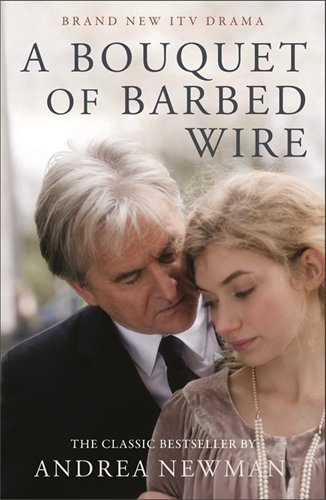
Great Opening paragraph 49… ‘A Bouquet of Barbed Wire’ #amreading #FirstPara

“It began to rain as he entered the park, but not hard enough to make him look round for a taxi. Emerging from the station, he had been tempted by a pale gleam of sunshine, sufficient to convince him of the physical benefits of walking. He needed exercise, he had decided, just as he needed fewer cigarettes and less alcohol: it was pathetic how the habits of sloth and self-indulgence crept up unnoticed, along with middle age, that unbecoming state which you did not even recognize until events brought it sharply and unkindly home to you. And now the fine spring rain, for her first day back. He pictured her with painful tenderness, suntanned and shivering, getting ready for college in the unfamiliar flat. Was he too late? Would she still be there by the time he was able to phone? He had left home an hour ahead, under Cassie’s indulgent eyes, to catch an earlier train, feeling he could only telephone properly from the office, yet not knowing what he could possibly find to say that would be sufficiently casual when he finally heard her voice.”
Andrea NewmanFrom ‘A Bouquet of Barbed Wire’ by Andrea Newman

Try one of these #FirstParas & discover a new author:-
‘The Road’ by Cormac McCarthy 
Notes on a Scandal’ by Zoe Heller
‘Armadillo’ by William Boyd

And if you’d like to tweet a link to THIS post, here’s my suggested tweet:
#Books #FirstPara A BOUQUET OF BARBED WIRE by Andrea Newman http://wp.me/p5gEM4-mG via @SandraDanby

Great Opening Paragraph… 49

andrea newman - a bouquet of barbed wire 10-6-13“It began to rain as he entered the park, but not hard enough to make him look round for a taxi. Emerging from the station, he had been tempted by a pale gleam of sunshine, sufficient to convince him of the physical benefits of walking. He needed exercise, he had decided, just as he needed fewer cigarettes and less alcohol: it was pathetic how the habits of sloth and self-indulgence crept up unnoticed, along with middle age, that unbecoming state which you did not even recognize until events brought it sharply and unkindly home to you. And now the fine spring rain, for her first day back. He pictured her with painful tenderness, suntanned and shivering, getting ready for college in the unfamiliar flat. Was he too late? Would she still be there by the time he was able to phone? He had left home an hour ahead, under Cassie’s indulgent eyes, to catch an earlier train, feeling he could only telephone properly from the office, yet not knowing what he could possibly find to say that would be sufficiently casual when he finally heard her voice.”
‘A Bouquet of Barbed Wire’ by Andrea Newman

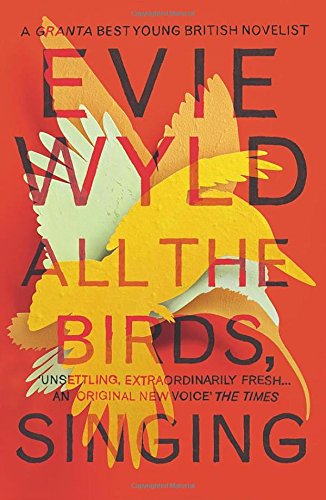
#BookReview ‘All the Birds, Singing’ by Evie Wyld #mystery

All the Birds, Singing by Evie Wyld is about secrets, now, in the past, in Australia, in England. The opening is shocking, a mutilated sheep, no description spared. Jack Whyte, a man’s name but a female character, feels threatened, fears the attack on the sheep is meant as a message for her. Evie Wyld And from here the rollercoaster starts, as we follow Jack’s current grey existence with her sheep, somewhere anonymous in England, and a dog called Dog. This story is told in alternating chapters, switching between England now, and Australia then. The story in the present goes forward, in linear time, normal time. Jack’s back story in Australia, the reasons she is where she is, is told backwards. This seemed strange to start with, but the author handles this structure elegantly and it suits the sinister tone. I didn’t guess Jack’s secret, didn’t know how it would all end.
There is a deep sense of foreboding throughout this book. Something happened: Jack is running from something, from someone, but what?  Are local children in England attacking her sheep, or is there a huge animal which roams at night? Why does she shun the locals? Why is she in England, so far from home? And is it all in her head? Should we believe her fears?
She has come from a hard world in Australia, a man’s world of sheep stations, sheep shearing, where she is the only woman, she does press-ups and has biceps to rival the men she works alongside. It feels as if she is trapped by her situation, by her life, by the sinister men which she seems to attract. At one point in Australia she moves the animals’ pen onto some thin grass so the pathetic sheep can eat “but they just stand there, a silent little group, I try to move them about, but they’re not scared of me. Resigned is what they are, and I tell them, ‘You can move around if you want to,’ waving my arms and jumping about, but they just sway a little in the hot fly air.” For a while, Jake acts like these sheep; staying where she is, swaying in the heat. But the reader knows she is in England now, so she must have run: when, where, why?
In England a neighbour advises her to go to the pub once in a while, get to know the other farmers. Don says:  “Some things you just can’t do on your own… That’s why farmers need to know each other, you help them, they help you, that’s just how it goes… because sooner or later I’m going to hit the post and be dead and then what’ll you do? Starve to death I suppose.” Yes, I believed she would rather starve.

If you like this, try:-
Restless Dolly Maunder’ by Kate Grenville
‘The Bear’ by Claire Cameron
‘Summer House with Swimming Pool’ by Herman Koch

And if you’d like to tweet a link to THIS post, here’s my suggested tweet:
#BookReview ALL THE BIRDS, SINGING by Evie Wyld http://wp.me/p5gEM4-MK via @SandraDanby 

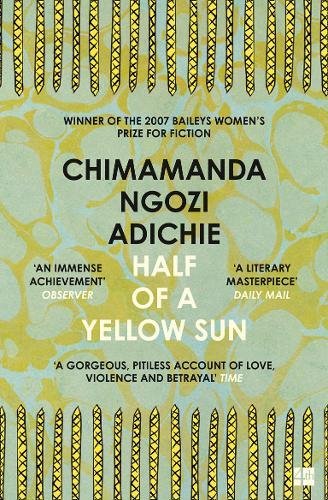
Great Opening paragraph 48… ‘Half of a Yellow Sun’ #amreading #FirstPara

“Master was a little crazy; he had spent too many years reading books overseas, talked to himself in his office, did not always return greetings, and had too much hair. Ugwu’s aunty said this in a low voice as they walked on the path. ‘But he is a good man,’ she added. ‘And as long as you work well, you will eat well. You will even eat meat every day.’ She stopped to spit; the saliva left her mouth with a sucking sound and landed on the grass.”
Chimamanda Ngozi AdicheFrom ‘Half of a Yellow Sun’ by Chimamanda Ngozi Adiche

Try one of these #FirstParas & discover a new author:-
‘Lucky You’ by Carl Hiassen
‘After You’d Gone’ by Maggie O’Farrell
‘Family Album’ by Penelope Lively

And if you’d like to tweet a link to THIS post, here’s my suggested tweet:
#Books #FirstPara HALF OF A YELLOW SUN by Chimamanda Ngozi Adiche http://wp.me/p5gEM4-mJ via @SandraDanby

Great Opening Paragraph… 48

Chimamanda Ngozi Adiche - half of a yellow sun 10-6-13“Master was a little crazy; he had spent too many years reading books overseas, talked to himself in his office, did not always return greetings, and had too much hair. Ugwu’s aunty said this in a low voice as they walked on the path. ‘But he is a good man,’ she added. ‘And as long as you work well, you will eat well. You will even eat meat every day.’ She stopped to spit; the saliva left her mouth with a sucking sound and landed on the grass.”
‘Half of a Yellow Sun’ by Chimamanda Ngozi Adiche

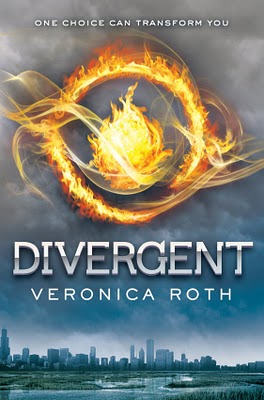
#BookReview ‘Divergent’ by Veronica Roth #YA #fantasy

Divergent by Veronica Roth is a book that had passed me by until I read online reviews, which prompted my Kindle purchase of the trilogy. Veronica RothI wonder what percentage of Young Adult [YA] fiction currently published features a dystopian world. Are our teens disenchanted with their own real world and so want to read fantasy? Certainly Suzanne Collins and Stephanie Meyer have a lot of responsibility for this, their two series have dominated the bookshelves and cinema screens. And they are all entertaining, in different ways.
Divergent is set in a city which was once Chicago where every citizen belongs to one of five factions. Each faction represents a human virtue: Candor [honesty], Amity [kindness], Dauntless [fearlessness], Abnegation [selflessness], Erudite [searching for knowledge]. At 16, teenagers are assessed for their affinity to the factions and can choose the faction they will be for the rest of their life. Anyone whose test results are inconclusive is labelled ‘divergent’. Tris, the protagonist, is divergent. This is her story and is the first of a trilogy.
Tris embraces her non-conformity. She is brave enough to be true to herself even though at times she is not sure what that is. She learns to be suspicious of labels, not to pre-judge people. But for me some factions verge on cliches. In particular, the fearlessness of the Dauntless verges on stupidity, danger for the sake of it. It is that particular computer-game type of violence that doesn’t hurt on the page but would seriously damage/kill in real life.
I’d like to see more character development, none of the depth here of The Hunger Games, but this is the first book of the trilogy so there is a world to set-up. Also I’d worked out the ending before I got there. It’s not that I didn’t enjoy the book but just that it seems superficial in comparison with The Hunger Games, which from page one gives you the sense of the deep back story. My expectations are set high.

Click the title to read my reviews of the other books in this series:-
INSURGENT #2DIVERGENT
ALLEGIANT #3DIVERGENT

If you like this, try:-
Gregor the Overlander’ by Suzanne Collins #1UNDERLANDCHRONICLES
The Queen of the Tearling’ by Erika Johansen #1TEARLING
The Magicians’ by Lev Grossman #1THEMAGICIANS

And if you’d like to tweet a link to THIS post, here’s my suggested tweet:
#BookReview DIVERGENT by Veronica Roth http://wp.me/p5gEM4-Jq via @SandraDanby

#BookReview ‘Wake’ by Anna Hope #historical #WW1

Amongst the profusion of novels about the centenary of the Great War, Wake by Anna Hope stood out for me from the rest because it is about the aftermath rather than the fighting. The spine of the narrative is the journey of the body to be entombed in Westminster Abbey as the ‘Unknown Soldier.’ Anna HopeI have visited the tomb but had not considered its selection, the post-war politics and social consequences of choosing one soldier’s remains rather than another. Anna Hope handles a delicate topic – isn’t everything to do with war emotionally-delicate? – with confidence. Wake is a powerful novel by a debut author.
There is something unsettling about the first scenes where un-named soldiers drive out into what was no-man’s-land, not knowing where they are going or why. They are directed to dig up the remains of a soldier: unidentified soldiers dig up the remains of an unidentified victim. Four bodies are laid out, not so much bodies as heaps of remains. A Brigadier-General closes his eyes and rests his hand on one of the stretchers, this body is put into a thin wooden coffin. The three not chosen are put into a shell hole at the side of the road, a chaplain says a short prayer, and then re-buried. The chosen one is taken to London.
Three storylines run parallel to this central spine. Hettie and Di are dancers at the Hammersmith Palais. Charging 6d for a dance, Hettie is skilled at spotting the injured soldiers who are disguising the lack of a limb, she is skilled at matching the rhythm of her dancing to theirs. Dancing is the bright spot in her life; her home is under the shadow of her father’s death and her brother’s shell shock.
Evelyn works in a Government department, her job is grey, her surroundings are grey. She is no longer close to her brother who returned from the war seemingly uninjured but is emotionally removed from life. Every day she deals with former soldiers, struggling to make a new life, and each soldier she sees reminds her of her lover who died in the war. She wants to move on from the war but feels that she, like everyone else, is trapped in a cycle of grief, disability, guilt and memory.
Ada is still grieving for her son, a grief which puts distance between her and her husband. Her solace is her neighbour Ivy, also grieving. Then one day an ex-soldier knocks on the door, wanting to sell her dishcloths, and something happens which sends her to a medium.
All are drawn to the streets of London on November 11th, 1920, looking for catharsis.

Read my review of THE BALLROOM, also by Anna Hope.

If you like this, try:-
‘Life Class’ by Pat Barker
‘A Long Long Way’ by Sebastian Barry
‘The Lie’ by Helen Dunmore

And if you’d like to tweet a link to THIS post, here’s my suggested tweet:
#BookReview WAKE by Anna Hope via @SandraDanby http://wp.me/p5gEM4-LK

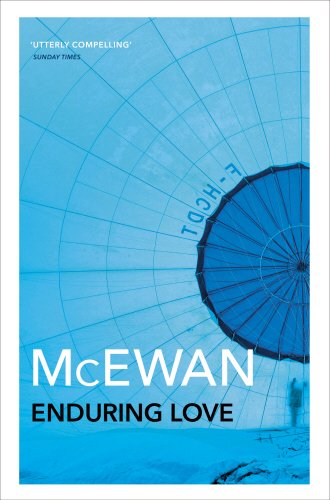
Great Opening Paragraph 47… ‘Enduring Love’ #amreading #FirstPara

“The beginning is simple to mark. We were in sunlight under a turkey oak, partly protected from a strong, gusty wind. I was kneeling on the grass with a corkscrew in my hand, and Clarissa was passing me the bottle – a 1987 Daumas Gassac. This was the moment, this was the pinprick on the time map: I was stretching out my hand, and as the cool neck and the black foil touched my palm, we heard a man’s shout. We turned to look across the field and saw the danger. Next thing, I was running towards it. The transformation was absolute: I don’t recall dropping the corkscrew, or getting to my feet, or making a decision, or hearing the caution Clarissa called after me. What idiocy, to be racing into this story and its labyrinths, sprinting away from our happiness among the fresh spring grasses by the oak. There was the shout again, and a child’s cry, enfeebled by the wind that roared in the tall trees along the hedgerows. I ran faster. And there, suddenly, from different points around the field, four other men were converging on the scene, running like me.”
Ian McEwanFrom ‘Enduring Love’ by Ian McEwan

Read my reviews of these other novels by McEwan:-
MACHINES LIKE ME
NUTSHELL
THE CHILDREN ACT

And try two more McEwan #FirstParas:-
THE CEMENT GARDEN
THE CHILDREN ACT

Try one of these #FirstParas & discover a new author:-
‘Divisadero’ by Michael Ondaatje
‘Possession’ by AS Byatt
‘That They May Face The Rising Sun’ by John McGahern

And if you’d like to tweet a link to THIS post, here’s my suggested tweet:
#Books #FirstPara ENDURING LOVE by Ian McEwan http://wp.me/p5gEM4-mr via @SandraDanby

Great Opening Paragraph… 47

ian McEwan - enduring love 10-6-13“The beginning is simple to mark. We were in sunlight under a turkey oak, partly protected from a strong, gusty wind. I was kneeling on the grass with a corkscrew in my hand, and Clarissa was passing me the bottle – a 1987 Daumas Gassac. This was the moment, this was the pinprick on the time map: I was stretching out my hand, and as the cool neck and the black foil touched my palm, we heard a man’s shout. We turned to look across the field and saw the danger. Next thing, I was running towards it. The transformation was absolute: I don’t recall dropping the corkscrew, or getting to my feet, or making a decision, or hearing the caution Clarissa called after me. What idiocy, to be racing into this story and its labyrinths, sprinting away from our happiness among the fresh spring grasses by the oak. There was the shout again, and a child’s cry, enfeebled by the wind that roared in the tall trees along the hedgerows. I ran faster. And there, suddenly, from different points around the field, four other men were converging on the scene, running like me.”
‘Enduring Love’ by Ian McEwan

#BookReview ‘The Lie’ by Helen Dunmore #WW1 #historical

I found this to be an unbelievably poignant novel. In The Lie by Helen Dunmore, Daniel Branwell has returned home to Cornwall from The Great War. The stories of his childhood, his war, and his return are interwoven seamlessly. It is also the story of all the lost men who returned from fighting in 1918 and didn’t know where to go or what to do. They faced their futures alone, unsure if they were mad, if their memories of war were correct or whether they were strong enough to resist the memories of carnage. Dan’s life unfolds like a thriller, with mysteries and suspicions, so that I turned the pages looking for answers and before I knew it I had reached the end. Helen DunmoreDunmore is an accomplished novelist and poet who handles her emotionally explosive subject with sure hands, juxtaposing the daily reality of post-war Cornwall with Dan’s memories, perhaps true, perhaps confused, of battle. Truth is the unknown. The war is in every move Dan makes, every thought, every dream. Needing food, he digs the earth to plant vegetables but cannot escape the battlefield: “It was the smell of earth. Not clean earth, turned up by spade or the fork, to be sunned and watered. This earth had nothing to do with growth. It was raw and slimy, blown apart in great clods, churned to greasy, liquid mud that sucked down men or horses. It was earth that should have stayed deep and hidden, but was exposed in all its filth, corrosive, eating away at the bodies that had to live in it. It breathed into me from its wet mouth.”
Soil is an important presence throughout the book. Dan is a gardener, a skill he soon finds on joining the army will not exempt him from fighting as it does the blacksmiths, chefs and mechanics. “Skilled men had their hands full, and weren’t likely to find themselves in the fire-trench. But there wasn’t any call for a gardener. You’d be marched through a village which had been knocked to bits by shelling, and all there’d be left of a hundred gardens was a bit of green straggling out of a gash in a wall.” Instead, Dan digs. Fields don’t look the same as the fields in Cornwall. “Once you got near the line, there wasn’t much you could recognise as a field, any more than the woods were woods. It was all a jumble.”
His childhood in Cornwall with his best friend Frederick, and Frederick’s sister Felicia, resonates throughout the book. Their differences – poor boy and rich boy, the squaddie and the officer – are at the centre of the book. Dan visits their large house with its library full of shiny red-leather bound volumes, smuggling out one book at a time up his jumper. He reads and memorizes: “I hoarded new words and brought them out like coins.” Frederick, who is sent to private school, has no mind for books and envies Dan’s photographic memory. But when war comes, Frederick is sent to officer school and Dan to basic camp.
In Belgium, before the night-time trench raid which changes their lives, Frederick asks Dan to recite a poem. The prospects of the two men are so fragile that the juxtaposition of war and the poem by Matthew Arnold cannot help but be moving:
“And we are here as on a darkling plain
Swept with confused alarms of struggle and flight,
Where ignorant armies clash by night.”
When Dan returns to Cornwall he has nowhere to go. As he struggles to survive, shunning company, preferring solitude, he meets Felicia again. The memories come flooding back and he struggles to repel them.

Read my reviews of two other novels by Helen Dunmore:-
BIRDCAGE WALK
EXPOSURE

If you like this, try:-
‘Wake’ by Anna Hope
A Long Long Way’ by Sebastian Barry
The Bone Church’ by Victoria Dougherty

And if you’d like to tweet a link to THIS post, here’s my suggested tweet:
#BookReview THE LIE by Helen Dunmore http://wp.me/p5gEM4-Lw via @SandraDanby