#FirstEdition ‘Pride and Prejudice’ by #JaneAusten #books #old books #classics

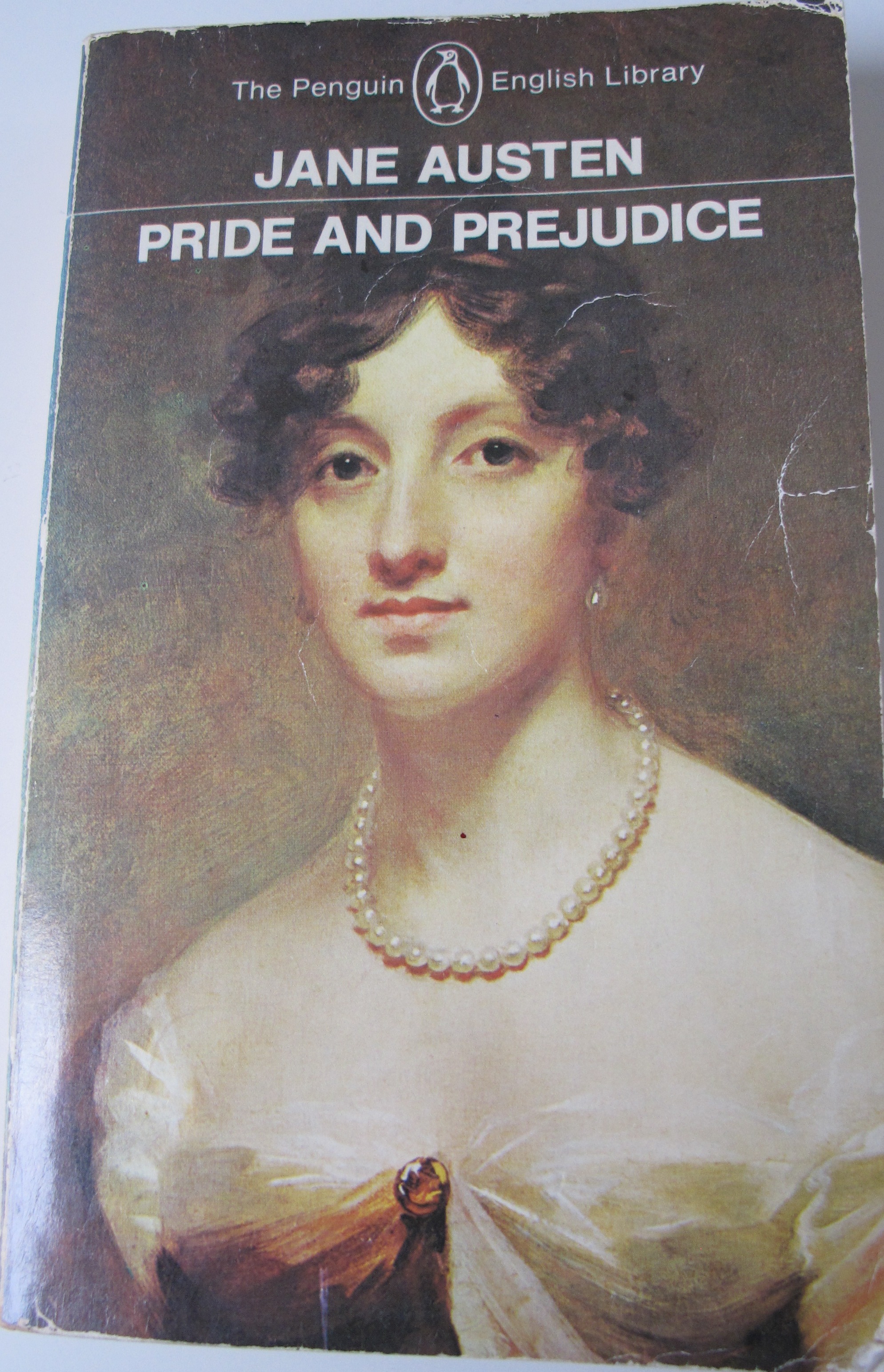
I can’t remember the first time I read Pride and Prejudice. I read Emma at the age of 17 as part of my English Literature syllabus, my battered copy is dated August 1977 when I was 16. My copy of Pride and Prejudice [below] is dated January 1980 and was bought in my first year at university. Jane Austen
The story
Is this the most well-known story? Young woman meets young man, each dislikes the other on sight and are therefore destined to fall in love. But along the way, Jane Austen offers us a study of manners, a humorous portrait of a family of girls who have no fortune of their own and therefore must make a fortunate match. The first sentence is one of the most quoted: ‘It is a truth universally acknowledged, that a single man in possession of a good fortune, must be in want of a wife.’ But this is so much more than a romance. And there are so many editions, see some below.

The film
For me, the best dramatic version of the book is the UK television series, broadcast in 1995 [below]. Featuring a young Colin Firth as Mr Darcy, it is famous for its ‘wet shirt’ scene. I prefer Jennifer Ehle as Lizzie Bennet, rather than Keira Knightly in the 2005 film version.

I also have a soft spot for the 1940 Hollywood version [below] featuring Laurence Olivier and Greer Garson. It starts on a cheerful note, ‘It happened in OLD ENGLAND… in the village of Meryton…’ The capitals are as featured in the credits of the film.

The first edition
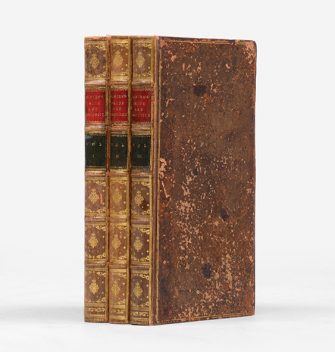
Jane AustenThe first editions cost a fortune. This one, in three volumes, is described by seller Peter Harrington as ‘By the author of Sense and Sensibility’ and is priced at £87,500. It was first offered by her father, then titled First Impressions, to Thomas Cadell in 1797 who declined it without seeing the manuscript. It was published in 1813 in London by T Egerton. Here’s the title page. Jane Austen

If you like old books, check out these:-
‘Watership Down’ by Richard Adams
‘Alice’s Adventures in Wonderland’ by Lewis Carroll
‘The Hobbit’ by JRR Tolkein

And if you’d like to tweet a link to THIS post, here’s my suggested tweet:
#FirstEdition #books PRIDE AND PREJUDICE by Jane Austen #oldbooks via @SandraDanby http://wp.me/p5gEM4-2gO

#BookReview ‘The Lost Ancestor’ by Nathan Dylan Goodwin #familyhistory #crime #genealogy

When forensic genealogist Morton Farrier is asked by a dying client to find out what happened to his great aunt, who disappeared in 1911, Morton doesn’t expect to find his own life threatened. The Lost Ancestor by Nathan Dylan Goodwin is a moreish combination of mystery, history about the pre-Great War period, and family history research. Nathan Dylan GoodwinIf you like Downton Abbey, you will identify with the 1911 sections about Morton’s great aunt Mary Mercer. In an effort to escape her rough, unemployed father and unpleasant mother, Mary takes a job as third housemaid at Blackfriars, a great house at Winchelsea in East Sussex. Little does she realize the love and heartache she finds there will shape her life. A dreamer who imagines she is the lady of the house, Mary has a rude awakening on her first day at work. She had no idea what the job of a chambermaid entailed. But the presence of her cousin Edward makes life easier to bear. When her parents fall ill, Mary gives them all her wages and so loses her chances of escaping to a better life.
Goodwin knows the Winchelsea and Rye area so well that I immediately felt I was there. His descriptions of Rye, where Morton lives and work, feel real: the streets, the old houses, and the Mermaid Inn are described with a light pen.
The story is told in two strands. Morton searches online and at local archives, and visits the real Blackfriars house, now open to the public. This story alternates with Mary’s in 1911. Goodwin weaves the two tales together so as we get nearer to the truth of Mary’s disappearance and why her mentions in all official records stop – did she die, was she killed, did she change her name and run away to Scotland, or emigrate – the threats on Morton’s life, and that of his partner Juliette, get serious. The mystery in both strands build as the family connections between past and present are revealed. I did not forsee the ingenious ending.
The Morton Farrier books are excellent. Although the cover designs are a little old-fashioned, don’t let this put you off reading them.

Read my reviews of the next books in the Morton Farrier series:-
HIDING THE PAST #1MORTONFARRIER
THE ORANGE LILIES #3MORTONFARRIER
THE AMERICA GROUND #4MORTONFARRIER

If you like this, try:-
Fred’s Funeral’ by Sandy Day
‘Deadly Descent’ by Charlotte Hinger
‘The Marriage Certificate’ by Stephen Molyneux

And if you’d like to tweet a link to THIS post, here’s my suggested tweet:
#BookReview THE LOST ANCESTOR by Nathan Dylan Goodwin http://wp.me/p5gEM4-2iM via @SandraDanby

Great Opening Paragraph 93… ‘Death in Summer’ #amreading #FirstPara

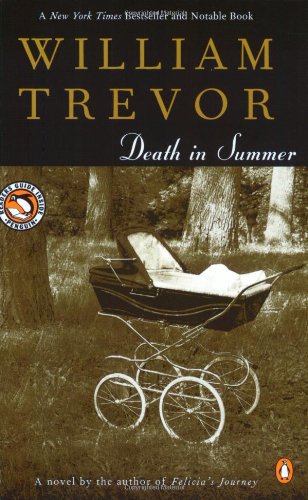
“After the funeral the hiatus that tragedy brought takes a different form. The suddenness of the death has gone, irrelevant now. Thaddeus has stood and knelt in the church of St Nicholas, has heard his wife called good, the word he himself gave to a clergyman he has known all his life. People were present in the church who were strangers to him, who afterwards, in the house, introduced themselves as a few of Letitia’s friends from the time before he knew her. ‘And where is Letitia now?’ an undertaker a week ago inquired, confusing Thaddeus, who for a moment wondered if the man knew why he had been summoned. ‘It’s Letitia who has died,’ he said, and answered, when the man explained, that Letitia was in the mortuary, where she’d been taken.”
William TrevorFrom ‘Death in Summer’ by William Trevor

Here’s another #FirstPara by William Trevor:-
READING TURGENEV

Try one of these #FirstParas & discover a new author:-
The Heart is a Lonely Hunter’ by Carson McCullers 
Astonishing Splashes of Colour’ by Clare Morrall 
The Crying of Lot 49’ by Thomas Pynchon 

And if you’d like to tweet a link to THIS post, here’s my suggested tweet:
#Books #FirstPara DEATH IN SUMMER by William Trevor via http://wp.me/p5gEM4-1Vz @SandraDanby

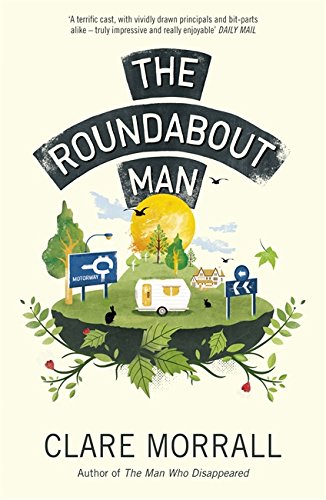
#BookReview ‘The Roundabout Man’ by Clare Morrall #contemporary

The Roundabout Man is a clever and involved story by Clare Morrall about a man, his real mother, father and triplet sisters, and the seemingly identical fictional family created by his author mother in her popular series ‘The Triplets and Quinn.’ It is a gentle story which reels you in. Clare Morrall At the age of 60 Quinn is living in a caravan parked in the middle of a wooded roundabout. He enjoys the quiet and the solitude. He forages for items to reuse, and scavenges for leftover food at the nearby Primrose Valley service station. We learn he fled the family home, The Cedars, the setting for The Triplets and Quinn series, after spending his adult years there caring for his eccentric widowed mother and showing fans of her stories around the house. The real story of this family has been subsumed by his mother’s fiction, easy answers to inquisitive fans who spout fiction as if it is reality, and his unwillingness to face up to unpalatable truths.
As real life and his mother’s fiction merge in Quinn’s head, it is a while before Quinn (and we) start to piece together the real story. Meanwhile real life intrudes at the roundabout and Quinn is forced to socialise with the service station employees. When, individually, his sisters visit him, he ends up with no answers and more questions. Why did his parents foster so many disadvantaged children, and then seem not to care about them? Was the story about the fictional Quinn’s kidnap as a baby based on a true event? And are the casseroles, left anonymously on his caravan doorstep, left there by foster child Annie of whom Quinn has fond memories?
Yet again, another delightful novel from Clare Morrall. She is so good at delving into human nature, family connections and the unintended misunderstandings and mis-firings which can affect a person’s life. Is it too late for Quinn? With his parents, Mumski and the Professor dead, is the truth out of reach?

Click the title to read my reviews of these other novels by Clare Morrall:-
AFTER THE BOMBING
NATURAL FLIGHTS OF THE HUMAN MIND
THE LANGUAGE OF OTHERS
THE LAST OF THE GREENWOODS
THE MAN WHO DISAPPEARED

Read the first paragraph of ASTONISHING SPLASHES OF COLOUR here.

If you like this,try:-
Perfect’ by Rachel Joyce
‘The Signature of All Things’ by Elizabeth Gilbert
‘The Last Days of Rabbit Hayes’ by Anna McPartlin

And if you’d like to tweet a link to THIS post, here’s my suggested tweet:
#BookReview THE ROUNDABOUT MAN by Clare Morrall http://wp.me/p5gEM4-1ZL via @SandraDanby

#BookReview ‘At the Edge of the Orchard’ by @Tracy_Chevalier #historical

Tracy Chevalier is a ‘must buy’ author for me and At the Edge of the Orchard does not disappoint. It is a story about roots – of family and trees – about the pioneers who populated built America’s mid-west and west coast, battling swamp and mountains. Most importantly it is about apples. Tracy ChevalierThe scent of the fruit imbues every page. But this is not a romantic story. The Goodenough family live an at-times brutal life as they try to establish an apple orchard in Ohio’s Black Swamp in 1838. Love them or hate them, the apples affect the direction of their lives.
The story started slowly for me as we hear the family’s daily life told by mother Sadie and father James. The two are so antagonistic that you wonder how they ever married. They battle the elements, each other and Sadie’s need for applejack, to put food in the mouths of their surviving children. In winter they wade through mud, in summer they battle swamp fever. Sadie is an almost completely unsympathetic character, hiding in a bottle while her husband hides with his apples. The children, if they survive, are adults before their time.
The story really took off for me when we hear what happens to Robert, the youngest son, who one day simply walks away from the farm. Fifteen years later he is an itinerant worker on boats and even in the Gold Rush, before a chance meeting in California with a plant collector [the real William Lobb] changes his life. He writes home to the family in the Black Swamp, but hears nothing. Is his family dead? Why did he really leave? Can Robert leave behind the apple legacy and become his own man? Will he ever shake off memories of his difficult upbringing and forge close relationships himself? Having seen the Californian sequoias which Robert discovers, I loved the second half of this book.

Read my reviews of Tracy Chevalier’s other novels:-
A SINGLE THREAD
NEW BOY
THE GLASSMAKER
THE LAST RUNAWAY

If you like this, try:-
‘The Knife with the Ivory Handle’ by Cynthia Bruchman
‘If I Knew you were going to be this Beautiful, I never would have let you go’ by Judy Chicurel
‘Time will Darken It’ by William Maxwell

And if you’d like to tweet a link to THIS post, here’s my suggested tweet:
#BookReview AT THE EDGE OF THE ORCHARD by @Tracy_Chevalier via @SandraDanby http://wp.me/p5gEM4-2dY

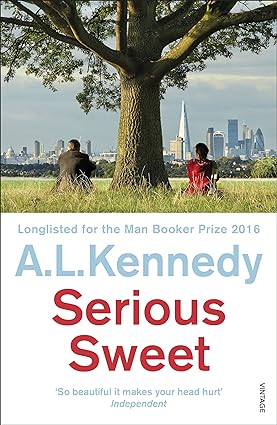
#BookReview ‘Serious Sweet’ by AL Kennedy @Writerer #contemporary

Serious Sweet by AL Kennedy is about one day in the lives of two troubled Londoners, Jon and Meg. I didn’t click quickly with this angry experimental novel and wondered if I missed its subtlety or whether it needed a serious edit. But I stuck with it. AL Kennedy The set-up is intriguing. First we are shown a family on a Tube train, the baby daughter is scarred, the family Arabic in appearance. Next we meet Jon, a civil servant. Pages are dedicated to his rescuing of a baby blackbird tangled in twine. At first, I was touched by the delicacy of his situation and the anxiety of the hovering mother blackbird. Then I became bored with Jon’s internal monologue. Thirdly, we go with Meg to an undefined gynaecological appointment. More internal monologue.
The timeline is confusing. Everything supposedly takes place in the course of one day but there is so much remembering of past events by Jon and Meg, separated by short scenes of seeming unrelated people, at times I lost the will to read on. Why did I? Because it is AL Kennedy and I loved her edition of short stories, All the Rage, so I was prepared to stick with it. But the stop-start stream of consciousness thoughts were often boring and inexplicable. I missed and forgot multiple references. Either the author or publisher or both were not sure how to describe this book – politics (both Jon and Meg rant), self-help, alcoholism recovery, romance or a spy/thriller. I was almost expecting a terrorist bomb. The mystery actually hangs on whether Jon and Meg will meet. They do, finally [at 46% on my Kindle] meet by letter.
It is a long book, 528 pages, which could be so much shorter and tighter. There were moments of clever, beautiful description and thoughts which made me smile, some made me chuckle, but there were others which made my eyes skip to the next paragraph. I finally got it at around 75% and read the last quarter quickly.
CLICK HERE TO READ MORE ABOUT THIS BOOK AT AMAZON

And click the title to read my reviews of these other AL Kennedy books:-
ALL THE RAGE
DAY
ON WRITING

If you like this, try:-
Autumn’ by Ali Smith #1SeasonalQuartet
In the Midst of Winter’ by Isabel Allende
The Noise of Time’ by Julian Barnes

And if you’d like to tweet a link to THIS post, here’s my suggested tweet:
#BookReview SERIOUS SWEET by AL Kennedy @Writerer via @SandraDanby http://wp.me/p5gEM4-2bD

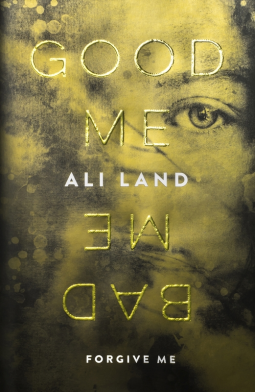
#BookReview ‘Good Me Bad Me’ by Ali Land @byAliLand #thriller

Good Me Bad Me by Ali Land is a difficult book to review without giving anything away. It is compulsive, difficult reading, and though I raced through it I can’t honestly say I enjoyed it. Ali LandTeenager Annie is living with a foster family whilst waiting to give evidence at her mother’s trial. Her mother is accused of being a serial killer of children, Annie turned her in to the police. As she waits for the trial, Annie [now called Milly] is coached by her foster father on how to handle being in court and giving evidence under cross-examination. For Milly, there is no escaping her horrible childhood. As Mike tells her, the only way out is through. But Milly isn’t telling Mike everything.
Milly’s identity is secret, her name false, her reason for being fostered is fabricated. In this world of officially-approved lies, Milly must face her memories of what happened: what is real, and not-real. What did her mother really do? What did Milly do? At times of stress – and there are many as she fits into a foster family with an unwelcoming teenage daughter – Milly hears the voice of her mother in her head, encouraging her to be controlling, to be nasty. This is the ‘good me, bad me’ of the title. Of course every person is a mixture of light and dark, what matters is the decisions we make. Will Milly be able to let go of her past and make a new life?
Covering the few tense weeks in the run-up to the trial, Good Me Bad Me is a turbulent emotional read. One minute I thought ‘please don’t do that, Milly’, the next I was indignant on Milly’s behalf at some of her foul treatment at the hands of school friends. The picture of teenagers, girls selfish and taunting, boys over-sexualised, is not an easy-read. You will make up your own mind whether to like Milly and whether to believe her.

If you like this, try:-
‘Wolf’ by Mo Hayder
‘The Girls’ by Lisa Jewell
‘Taunting the Dead’ by Mel Sherratt

And if you’d like to tweet a link to THIS post, here’s my suggested tweet:
#BookReview GOOD ME BAD ME by Ali Land @byAliLand http://wp.me/p5gEM4-2ip via @SandraDanby

#BookReview ‘The Penny Heart’ by @MartineBailey #historical

This is the sort of novel which creates a world into which you can sink. It is a story of revenge, cookery and two women in 18th century England, connected by one man. The story of The Penny Heart by Martine Bailey is told by the two women, who cannot be more different. It is about the nature of truth, the passage of time and the difficulty of deciphering the lies hidden within truth. Martine BaileyIn 1787 when Mary Jebb is caught playing a confidence trick on a young man, she is sentenced to the colonies. Before she leaves, she sends two pennies, each engraved with a promise, to the two men she blames for her fate. These are the penny hearts. In contrast, virtuous and timid Grace Moore marries handsome Michael Coxon in a property deal arranged by her father and husband. She soon learns that her husband is not what he seems. At the isolated and rundown Delafosse Hall she is lonely but finds a friend in her new cook, Peg.
By halfway through I really didn’t want to put the book down and the last third runs along with an ingenious ending that was impossible to foresee. Whose story to trust? Mary, resourceful and struggling to survive in a world which gives her nothing. Or Grace, who escapes a drunken father and finds herself marooned with an exploitative husband? Will Grace realize Peg is not what she seems? Will Peg’s plans work out? And which facts are true, and which lies? This is not a pretty historical story set in which involves a few recipes. It is a dark story of murder, double-crossing and lies.
CLICK HERE TO READ MORE ABOUT THIS BOOK

And here are my reviews of other novels by Martine Bailey:-
AN APPETITE FOR VIOLETS
THE ALMANACK #1 TABITHAHART
THE PROPHET #2 TABITHAHART

If you like this, try:-
‘The Miniaturist’ by Jesse Burton
‘Gone are the Leaves’ by Anne Donovan
‘The Other Eden’ by Sarah Bryant

And if you’d like to tweet a link to THIS post, here’s my suggested tweet:
#BookReview THE PENNY HEART by @MartineBailey via @SandraDanby http://wp.me/p5gEM4-2ii

#BookReview ‘Fair Exchange’ by Michèle Roberts #historical

This story by English/French author Michèle Roberts starts with a woman dying, she has a secret to confess. We must wait until almost the end of the book to find out the truth. In a village near Paris, Louise is dying, it is the early 1800s, after the French Revolution and during the subsequent English/French war. Fair Exchange is the story of that secret, of Louise’s part in it and how she impacts on the lives of two other women, one English one French. Michèle RobertsIn an Author’s Note, Roberts explains the inspiration for the story: William Wordsworth’s love affair, at the beginning of the French Revolution, with Annette Vallon. This is not a true account, it is historical fiction about the romances of two couples – English poet William Saygood and Annette Villon [note the mis-spelling], and Jemima Boote [sketchily based on Mary Wollstonecraft] and Frenchman Paul Gilbert. Roberts’ telling of the story combines the detail of poverty at that time – the grinding daily life of Louise and her mother Amalie in the village of Saintange-sur-Seine near Paris – with sumptuous description. Louise is picking plums: ‘The plums were so ripe that they fell into her hands. They smelled fragrant in the warm sunlight, as though she were biting them off the tree and tasting their sweet juice. Flies rose up in clouds as she pushed into the web of branches and she beat them away from her face in clouds. They had got there first, settling, in blue glints of jewelled wings, on minute cracks in the fruit that oozed gold.’
This is a period of history about which I am ignorant. First Annette, and then Jemima, arrive in Saintange-sur-Seine, single women, and pregnant. Louise is drawn into their lives, caring for them, supporting them, observing them. Fascinating stuff.

Read my review of THE WALWORTH BEAUTY also by Michèle Roberts, and try the first paragraph of FAIR EXCHANGE.

If you like this, try:-
‘An Appetite for Violets’ by Martine Bailey
‘The Knife with the Ivory Handle’ by Cynthia Bruchman
‘Gone are the Leaves’ by Anne Donovan

And if you’d like to tweet a link to THIS post, here’s my suggested tweet:
#BookReview FAIR EXCHANGE by Michèle Roberts http://wp.me/p5gEM4-1Of via @SandraDanby

#BookReview ‘Pale as the Dead’ by @FionaMountain #geneaology #mystery

Pale as the Dead by Fiona Mountain is an unusual mix of genealogy mystery and history, centred on the glamorous Pre-Raphaelite artists and Lizzie Siddal, the girl in the famous ‘Ophelia’ painting. Fiona MountainAncestry detective Natasha Blake meets a mysterious, beautiful young woman, Bethany, who is re-enacting the Lizzie Siddal scene for a photographer. Bethany confides in Natasha her fear that her family is cursed following the deaths of her sister and mother. After asking Natasha to research her family tree, Bethany goes missing. Has she run from a failing love affair, committed suicide, or has she been murdered?
The trail is cold. Natasha must turn detective in two senses: she searches the birth, marriage and death records, census returns and wills, to find Natasha’s ancestors; at the same time, she is being followed by someone driving a red Celica. Adam, the photographer, is also Bethany’s boyfriend but Natasha feels there is more to his story than he is telling.
The narrative wandered rather from the central story, complicated unnecessarily by Natasha’s own history and love life which added little. Perhaps this could have been avoided by telling part of the story from Lizzie Siddal’s point of view. There were so many peripheral characters, both in the present time and the historical story, that at times I lost my way. I was also unconvinced by the threat to Natasha – the red car, the break-in. These jarred, almost as if added as an afterthought to appeal to lovers of crime fiction which I think was unnecessary. The kernel of the story about Bethany and Lizzie is fascinating in its own right.

And here’s my review of the second book in the Natasha Blake series:-
BLOODLINE

If you like this, try:-
‘Deadly Descent’ by Charlotte Hinger
‘In the Blood’ by Steve Robinson
‘The Marriage Certificate’ by Stephen Molyneux

And if you’d like to tweet a link to THIS post, here’s my suggested tweet:
#BookReview PALE AS THE DEAD by @FionaMountain http://wp.me/p5gEM4-23v via @SandraDanby