Tag Archives: book review

#BookReview ‘The Sun Sister’ by Lucinda Riley #romance

Electra, the youngest d’Aplièse sister in the Seven Sisters series of adoption mysteries by Lucinda Riley, has always seemed the most explosive personality of the siblings. And so The Sun Sister, sixth in the series and the one dedicated to telling the story of Electra’s family history, is explosive too. It’s a 5* read and a long one, 850 pages, as Riley digs deep into Electra’s African origins and the drug epidemic of today’s world. Lucinda RileySupermodel Electra seems to have it all, fame, beauty, money, rock star boyfriend, a glamorous lifestyle in Manhattan. But she also has a drink and drug habit. Her behaviour is erratic, obsessive, selfish and angry, made worse by the sudden death of her adoptive father Pa Salt and being ditched by her boyfriend Mitch. Cutting herself off from friends and family, Electra is spiralling downwards when she receives a letter from a strange woman claiming to be her grandmother.
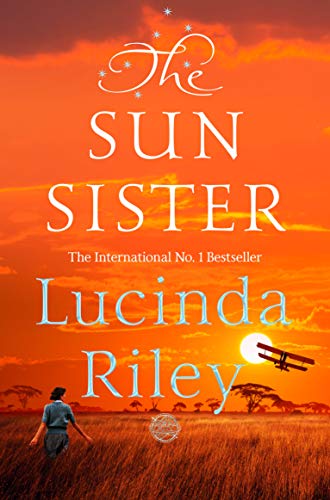
The Sun Sister tells the story of Electra’s life now in New York 2008, interleaved with that of Cecily Huntley-Morgan, daughter of a fine New York family who, in 1938, has just been jilted by her fiance. Taking up the invitation of her glamorous and eccentric godmother Kiki Preston to escape the gossip and return with her to Africa, Cecily finds herself part of the infamous Happy Valley set living beside Lake Naivasha in Kenya. Unable to stick with Kiki’s partying and frequent hangovers, Cecily makes a friend of Katherine Stewart, soon be married to cattle rancher Bobby Sinclair, who introduces her to life in the bush and to Bobby’s friend, fellow rancher Bill Forsythe. With war approaching, Cecily finds herself in an impossible position. She must choose whether to stay in Africa or take a risky passage home to America. She stays and life presents her with tragedy and a discovery that will change the direction of her life.
Cecily’s story is told to Electra by her grandmother, Stella Jackson, a prominent black rights activist in America. With Stella’s help Electra begins to understand how being black affected her childhood in a predominantly white world. In drug rehab Electra must face up to her addictive behaviour, understand its roots and learn to live life differently. Stella insists that in order to understand her birth family, Electra must first learn about Cecily’s life in Africa
Previous novels have concentrated on the stories of the individual sister’s birth family two generations back, and I have longed to know more about the sister’s birth parents. I wanted the family connections to be immediate, more accessible, and in The Sun Sister Riley delivers. The life of Electra’s birth mother acts as plot pivot which deepens the emotion of the story. Interestingly, in the previous six books I found Electra the least sympathetic and difficult to like sister, but The Sun Sister explains how Electra became the adult she is at the beginning of this ambitious series. She has the most dramatic character curve of any of the sisters so far.
Overall, The Sun Sister is excellent though perhaps slightly too long, understandable given the difficult subjects addressed.

Read my reviews of some of the other novels in Lucinda Riley’s ‘Seven Sisters’ series:-
THE SEVEN SISTERS #1SEVENSISTERS
THE STORM SISTER #2SEVENSISTERS
THE SHADOW SISTER #3SEVENSISTERS
THE PEARL SISTER #4SEVENSISTERS
THE MOON SISTER #5SEVENSISTERS
THE MISSING SISTER #7SEVENSISTERS

… plus my reviews of these standalone novels, also by Lucinda Riley:-
THE BUTTERFLY ROOM
THE GIRL ON THE CLIFF
THE LOVE LETTER

If you like this, try:-
‘Pale as the Dead’ by Fiona Mountain #1NatashaBlake
The Ghost of Lily Painter’ by Caitlin Davis
The Irish Inheritance’ by MJ Lee

And if you’d like to tweet a link to THIS post, here’s my suggested tweet:
#BookReview THE SUN SISTER by Lucinda Riley https://wp.me/p5gEM4-4AT via @SandraDanby
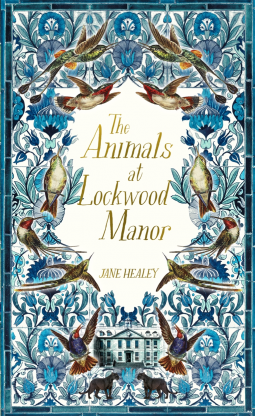
#BookReview ‘The Animals at Lockwood Manor’ by Jane Healey @Healey_Jane #mystery #WW2

As soon as I read the premise of The Animals at Lockwood Manor by Jane Healey, I was intrigued. It is 1939, war is declared, and a decision is taken to move the exhibits from the Natural History Museum to safety. Hetty Cartwright is charged with moving the mammal collection to a country house where they, and she, will stay for the duration of the war. Jane HealeyLockwood Manor is one of those atmospheric houses in literature that will stay with you after you read it. Crumbling, dusty and dirty, it has rats and secret rooms, ghost stories and scandal. It is an extra character in this story and in fact has a clearer presence than some of the peripheral characters who perhaps could have been deleted. Hetty arrives with her cargo of taxidermy animals in display cases plus catalogues and samples to find a mixed welcome from the manor’s servants who see the new arrivals as extra work. The irascible lord of the manor welcomes them then disappears, he is seen briefly at mealtimes and when ushering his latest girlfriend from the house. At first Hetty, charged with the care of the mammals, is kept busy arranging, cleaning and organising. Then she finds an ally in the lord’s daughter, Lucy, who though mentally fragile, finds peace amongst the animals. Hetty and Lucy, with their vulnerabilities and lack of confidence, have almost inter-changeable voices.
Then Hetty hears noises at night and starts to find animals not in their correct place in the morning. So when a case of hummingbirds is opened and the tiny stuffed treasures disappear, it becomes clear that something sinister lurks in the house. Is it a ghost, a mischief maker or a burglar? The odious Lord Lockwood and the equally unlikeable housekeeper are dismissive of Hetty’s fears, adding to her feeling of incompetence. This is part ghost mystery, part love affair, part family history. Hetty suspects everyone, first of mischief but she soon comes to realise it is something altogether more dangerous. Feeling vulnerable in her own job and not wanting to admit she can’t cope, she vascillates over writing to her boss in London. The delay is costly.
I remained conflicted about this book to the end. The clever idea is hindered by a slow pace and repetitive description, there are many beautiful passages which do not add to the plot. The final quarter raced along well enough though I still skipped some paragraphs, but I was left feeling I had read a nineteenth century Gothic story set in the Victorian era not World War Two. The absence of war from Lockwood Manor is such that the story might have been set at another time, the wartime setting is wasted. The introduction of a voice from outside the house would rectify this omission, perhaps from someone at the museum, adding conflict, moving the plot along and strengthening the feeling that Lockwood Manor exists in an abnormal bubble.
Read it for the descriptions of the house, the brooding atmosphere and for the way Hetty likens everyone she meets to an animal. ‘Lucy had been called a dove by her father but, as a mammal lover, I thought that she rather reminded me of a cat somehow, in her glamour and warm smiles’.

If you like this, try:-
The Wicked Cometh’ by Laura Carlin
‘The Hoarder’ by Jess Kidd
Whistle in the Dark’ by Emma Healey

And if you’d like to tweet a link to THIS post, here’s my suggested tweet:
#BookReview THE ANIMALS AT LOCKWOOD MANOR by Jane Healey @Healey_Jane https://wp.me/p5gEM4-4EE via @SandraDanby

#BookReview ‘Redhead by the Side of the Road’ by Anne Tyler #literary

Anne Tyler is one of my favourite writers, so elegantly understated, so spot-on with her characters. Her latest Redhead by the Side of the Road is slim, at 180 pages, but a delight. Why? Because she writes about what it is like to be human, the everyday things, the ticks, the habits, the way we are and the subtle ways we change. Anne TylerHers are not plot-driven page-turning books, they are thoughtful portraits of people who seem to be like us – they chop vegetables and mop the kitchen floor, like Micah Mortimer, an unmarried 44 year old self-employed IT specialist and janitor of his apartment block. His family teases him about his finicky household habits and he accepts the teasing with good grace. He is infinitely patient with his elderly clients, going round to reboot computers and routers. No scene is wasted in this novella. I particularly loved Micah’s visit to new client Rosalie Hayes who has inherited a house, and computer, from her grandmother. Rosalie cannot find her grandmother’s passwords and is tearing her hair out. This is how we see Micah’s world, through his interactions with neighbours, family, clients, girlfriend Cass and a stranger who turns up on his doorstep – the student son of Micah’s old college girlfriend. Brink’s arrival precipitates change.
Because we see and come to understand Micah’s thought processes, we see how he misunderstands Cass and fails to say the right thing. And we see him find the right thing to say to student Brink who knocks on Micah’s door under a misapprehension and stays because of a problem he cannot express. It is Micah’s gentle nature which finally reveals Brink’s difficulties. Anne Tyler is brilliant at creating characters who, whether you love them or hate them, make you want to read about their story.
A definite 5*. A book you will read and enjoy, wanting to get to the end while at the same time wishing it would last longer.

Read my reviews of these other books by Anne Tyler:-
A SPOOL OF BLUE THREAD
CLOCK DANCE
FRENCH BRAID
LADDER OF YEARS
VINEGAR GIRL

And read the first paragraphs of:-
DINNER AT THE HOMESICK RESTAURANT 
BACK WHEN WE WERE GROWN UPS 

If you like this, try:-
A Wreath of Roses’ by Elizabeth Taylor
Brooklyn’ by Colm Tóibín
A Sudden Light’ by Garth Stein

And if you’d like to tweet a link to THIS post, here’s my suggested tweet:
#BookReview REDHEAD BY THE SIDE OF THE ROAD by Anne Tyler https://wp.me/p5gEM4-4Di via @SandraDanby

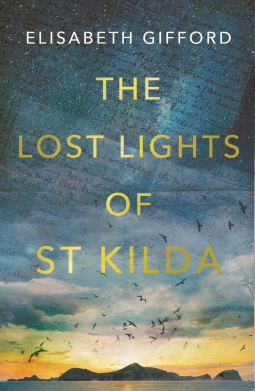
#BookReview ‘The Lost Lights of St Kilda’ by Elisabeth Gifford #historical

Told in two timelines, 1927 and 1940, this a story of love – between two people, and for an island and an endangered way of life. In The Lost Lights of St Kilda by Elisabeth Gifford, the beautiful yet harsh landscape of the island is made vividly alive. This is a delight to read, a novel about love, trust, betrayal and forgiveness. Elisabeth GiffordIn 1940 Fred Lawson, a Scottish soldier from the 51st Highland Division, is imprisoned at Tournai, captured at St Valery in retreat as other soldiers were being evacuated at Dunkirk. Through the darkest moments of fighting, his memories of St Kilda sustain him. ‘It was your face that had stayed with me as we fought in France. It was you who’d sustained me when we were hungry and without sleep for nights as we fought the retreating action back towards the Normandy coast.’ Fred escapes and heads for Spain, forced to trust strangers, not knowing who is a friend and who is an informer, but drawn on by his memories of St Kilda.
At the same moment in Scotland, a teenage daughter longs to know more of her birth. Says Rachel Anne, ‘My mother says I am her whole, world, and she is mine, but all the same I would still like to know at least the name of my father.’
In 1927, geology student Fred travels to the remote Scottish island of St Kilda with his university friend Archie Macleod whose father owns the island. No one knows that three years later the island will be abandoned, the population on the edge of starvation. Archie, the laird’s son, has a privileged position on the island. As a teenage boy he played with the island children, play acting at the work their fathers do, learning their future trades – farming, catching puffins and fulmars – on the dangerous cliffs. And he flirts with Chrissie Gillies. But by the time Archie returns to the island in 1927 with Fred, he has developed an arrogance and a liking for whisky. Over the long summer months, Fred falls in love with the island and with Chrissie. Everything changes when tragedy strikes.
This is a beautiful read, contrasting the softness and closeness of romance with the harsh facts of life as the difficulties of island survival are laid bare. Life in the summer months seems an idyll of isolation and peace, a return to the basics of life that matter. But inevitably winter approaches and, as the real world is complicated, a misunderstanding occurs. But hope is never abandoned. Despite being separated by the years and by lies, Fred and Chrissie never forget each other.

Read my review of A WOMAN MADE OF SNOW also by Elizabeth Gifford.

If you like this, try:-
Days Without End’ by Sebastian Barry
Rush Oh!’ by Shirley Barrett
After the Party’ by Cressida Connolly

And if you’d like to tweet a link to THIS post, here’s my suggested tweet:
#BookReview THE LOST LIGHTS OF ST KILDA by Elisabeth Gifford @elisabeth04liz  https://wp.me/p5gEM4-4yq via @SandraDanby

#BookReview ‘The House on the Shore’ by Victoria Howard @VictoriaHoward_ #romance

The House on the Shore by Victoria Howard starts off seeming to be a conventional romance and turns into a satisfying suspense story set in a beautiful, remote Western Scottish loch. The remoteness is central to the plot. Victoria HowardAfter a love affair turns sour, Anna MacDonald leaves Edinburgh for her remote croft, once her grandmother’s, beside Loch Hourn in the Western Highlands. She longs for peace and quiet to write her book. Tigh na Cladach, a two bedroom cottage alone at the end of a twelve mile track, is her bolt hole where she hopes to nurse her injured pride and heart. When she arrives, an unknown yacht is anchored in the bay. On board is a rather handsome American sailor, stranded as he waits for a part to repair his engine. A combative relationship develops between the two; Anna resents the intrusion of Luke Tallantyre but is driven to help by the local community spirit; Luke bridles at the prickly, aggressive woman he must rely on for help. Meanwhile, Alistair Grant, heir to the Killilan Estate which borders Anna’s land, and who was a teenage friend of hers, returns from his life of luxury in the South of France to run the estate. But Grant’s plans for change upset the villagers. In echoes of the Highland Clearances of the 18th century, rents are raised, livelihoods threatened, sensitivities ignored. Anna inspired, begins to write a novel set during this troubled time, imagining her croft and what happened there.
The pace of the modern-day story changes when her tyres are slashed and someone takes a pot shot at her with a shotgun. Romance becomes romantic suspense. I confess during some romantic passages – eg. ‘his broad suntanned chest’ – I wished for less not more, but that is personal taste. The pace of the story was good alternating between Anna’s historical novel, the political dispute about the Estate’s future, the dark threats, and the growing romance.
This is modern day suspense story, mirroring the unique history of the region, with a touch of romance; rather than a page turning psychological thriller. An enjoyable read which I whizzed through on holiday, guessing the identity of the real villain but not working out the motivation.

If you like this, try:-
Love and Eskimo Snow’ by Sarah Holt
Please Release Me’ by Rhoda Baxter
The Lost Letters of William Woolf’ by Helen Cullen

And if you’d like to tweet a link to THIS post, here’s my suggested tweet:
#BookReview THE HOUSE ON THE SHORE by Victoria Howard @VictoriaHoward_ https://wp.me/p5gEM4-4uf via @SandraDanby

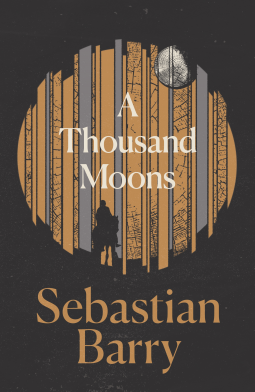
#BookReview ‘A Thousand Moons’ by Sebastian Barry #historical

1870s Paris, Tennessee, a young Lakota girl Ojinjintka, lately known as Winona Cole, travels a delicate path in post-Civil War America. Another 5* book from Sebastian Barry, A Thousand Moons is sequel to Days Without End, though both books can be read independently. This is a dangerous time when the rule of law is often non-existent and hatred is on every street. Winona says, ‘It was a town of many eyes watching you anyhow, an uneasy place.’ Barry tells this heart-rending story in eloquent prose that makes the pages turn.Sebastian BarryWinona is the adopted daughter of Thomas McNulty and John Cole, whose wartime story is told in Days Without End. Now, peace has come and Thomas and John raise their daughter to be educated and respectful. This in itself causes problems. ‘It is bad enough being an Indian without talking like a raven,’ says Winona. ‘The white folks in Paris were not all good speakers themselves.’
A story of one young woman’s journey through life’s racism, prejudice and latent violence, this is also a story of love. The love, for its time, of an unusual family; an Indian cared for when her family is killed when she is six years old. Winona finds a new home with Cole and McNulty, living with fellow Civil War soldier Lige Magan on his farm, with two black ex-slaves, cook Rosalee Bouguereau and her farm labourer brother Tennyson. Winona finds a mentor in Lawyer Briscoe, for whom she clerks. What happens next is the catalyst for the story; an event she struggles to understand, to hide. This is a coming-of-age story in which Winona must reconcile her Lakota birth with her childhood and young adulthood in a changing racial world, and also find herself as a woman.
A beautifully written book.

Read my reviews of these books also by Sebastian Barry:
DAYS WITHOUT END #1DAYSWITHOUTEND
A LONG LONG WAY
OLD GOD’S TIME
THE WHEREABOUTS OF ENEAS MCNULTY

If you like this, try:-
At The Edge of the Orchard’ by Tracy Chevalier
Frog Music’ by Emma Donoghue
Time Will Darken It’ by William Maxwell

And if you’d like to tweet a link to THIS post, here’s my suggested tweet:
#BookReview A THOUSAND MOONS by Sebastian Barry https://wp.me/p5gEM4-4ww via @SandraDanby

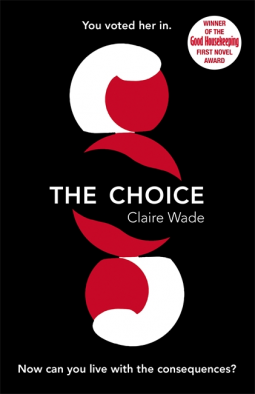
#BookReview ‘The Choice’ by Claire Wade #books #dystopian

The Choice by Claire Wade is set in an alternative world, one where sugar is banned, exercise is compulsory and every supermarket visit is preceded by a weigh-in. It is a Big Brother world where a new government, initially intent on preventing sickness and encouraging healthy living, has gone OTT and taken control of the smallest details of people’s lives. Claire WadeOlivia used to be a baker before the changes. When she lost her shop, she lost her reason for living. And so she subsists, making the best of the meal plans approved by Mother Mason, chivvying her friend Alice to keep to the rules and stay out of trouble, and worrying about the effect all of this is having on husband Danny and their two children. And then she gets a glimpse of a fightback. Is Olivia brave enough to join the protest, or will she play safe to protect her family? Of course she fights, in the only way she knows how. It starts in a small way, baking cakes for the local protest group to raise money for the cause. But then her rebellion gets way out of hand and she is faced with shame and condemnation.
The premise for this novel is fascinating and it reads as a freely-written novel, by which I mean the writer let the story flow and go where it wanted to. This adds to the excitement but it also left me feeling vaguely unsatisfied [like one of Mother Mason’s dietary-approved snack bars]. This is a hugely ambitious subject to tackle – one which, in the real world, we are struggling to address – so perhaps it is not surprising that the ending fades away with a lightweight conclusion. But the middle section is a rip-roaring read of domestic fightback. The passages in the detention centre and the shame box are great group scenes and this is where the novel is strongest.
I was left feeling the absence of a male voice – the key characters are all women – and longed for a deeper exploration of a challenge facing modern society with slightly less about cake ingredients. If you like Bake Off you will probably love this.

If you like this, try:-
The Ship’ by Antonia Honeywell
The Last of Us’ by Rob Ewing
‘The Art of Baking Blind’ by Sarah Vaughan

And if you’d like to tweet a link to THIS post, here’s my suggested tweet:
#BookReview THE CHOICE by Claire Wade https://wp.me/p5gEM4-4tv via @SandraDanby

#BookReview ‘The Vanished Bride’ by Bella Ellis #historical #crime

Yorkshire, 1845. A woman disappears overnight from her home. Her husband is distraught. All that remains of her is copious amounts of blood on the bed. The local police are inept. The Vanished Bride by Bella Ellis [also writing as Rowan Coleman] is the first in the ‘Bronte Mysteries series about the three Bronte sisters, amateur sleuths. Bella EllisI loved this book from the beginning. Bronte fans will love it but anyone new to Bronte will find it an engaging introduction to the three clever and inspirational sisters. What a fresh idea to involve Charlotte, Emily and Anne in an occupation that suits their imaginations, attention to detail and energy. Anne says, ‘It is truly terrible that I am a little thrilled to think of us as three invisible lady detectors seeking out the truth? I believe we could be quite the only such creatures in all existence.’
Their characters are clearly drawn and their engagements with other characters – brother Branwell, father Patrick, cook Tabby and maid Martha – are all convincing. The case of the vanished bride comes to their attention because the governess to the two small children of the missing woman is none other than Matilda French, a former schoolfriend of Charlotte and Emily at Cowan Bridge school.
As they track down clues and bravely confront strangers to ask questions, the three sisters must learn to manage the wilder leaps of their imagination and use judgement to analyse clues, sifting, comparing, discarding. At first their naivety while charming, is a problem, as they tend to believe everything they hear. But they soon wise up to the disreputable agendas of others and become adept at setting trick questions, analysing body language, and basically not believing everything they are told. Stepping outside their comfort zone at Haworth, they venture into worlds not usually frequented alone by unmarried women. Though obviously a fictional not historical account, it is an interesting picture of the real world limitations they faced.
Owing not a little to the gothic, their detecting involves folklore and supernatural elements, a wonderful journey to the seaside at Scarborough to find a witness, and thrilling night time excursions involving a little breaking and entering. Throughout it all, their clergyman father is ignorant of their ‘detecting’ and the risks they take, and they become adept at soothing his concerns at their odd behaviour.
The author has been a Bronte fan since childhood and this is demonstrated in her knowledge of character, setting and historical context. In the Author’s Note, she explains her choice of August 1845 for this first novel. Charlotte has returned home from Brussels to join Emily while Branwell and Anne are home again from employment at Thorp Grange. It is the first time for several months the four are under the same roof. The characters, the settings, are pure Bronte; the detective story is Ellis’s own.
To set the timing of The Vanished Bride within the context of the Brontes’ real life, it takes place a year before their first publication – of Poems by Currer, Ellis and Acton Bell – in 1846. In 1847, Charlotte’s Jane Eyre, Emily’s Wuthering Heights, and Anne’s Agnes Grey, were published.
Excellent, one of the most enjoyable books I’ve read this year.

Click the title below to read my reviews of these other Bella Ellis novels:-
THE DIABOLICAL BONES #2BRONTEMYSTERIES
THE RED MONARCH #3BRONTEMYSTERIES
A GIFT OF POISON #4BRONTEMYSTERIES

And one by Rowan Coleman [aka Bella Ellis]:-
THE GIRL AT THE WINDOW 

If you like this, try:-
The Dream Weavers’ by Barbara Erskine
Yuki Chan in Bronte Country’ by Mick Jackson
A Snapshot of Murder’ by Frances Brody 

And if you’d like to tweet a link to THIS post, here’s my suggested tweet:
#BookReview THE VANISHED BRIDE by Bella Ellis https://wp.me/p5gEM4-4uY via @SandraDanby

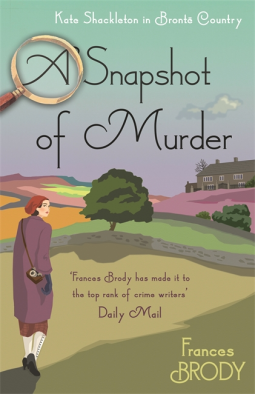
#BookReview ‘A Snapshot of Murder’ by Frances Brody @FrancesBrody #cosycrime

In 1928, a Photography Society outing to Haworth to see the opening of the new Bronte Parsonage Museum has an unexpected outcome. One of the group does not go home alive. A Snapshot of Murder by Frances Brody is tenth in the Kate Shackleton 1920s detective series, a satisfying story about jealousy, long lost love and betrayal. Frances BrodyKate’s friend Carine Murchison runs a photographic studio with her boorish husband Tobias. Derek, friend of Kate’s niece Harriet, has a theory that Tobias wants his wife dead so he can inherit the studio. But the story is so much more complicated. Throw in a long lost lover returned, the wonderfully scratchy mother and daughter landladies of Ponden Hall near Haworth where the Photography Society stays, the flamboyant Rita who dresses in Indian silks and works in a pharmacy, and a London policeman and former love of Kate who arrives to investigate the murder, and there are plenty of options for arguments, jealousy, upsets and both rejected and reciprocated love. The echoes of the Brontes are welcome too, but Brody never allows this to dominate her story.
This is a character-led crime drama. Kate’s world is created with skill by Brody, I particularly enjoyed Mrs Sugden, Mr Sykes and the addition of Sergeant Dog who plays a key role. Kate investigates with a combination of skill learned from watching her policeman father and a sense of human nature of which Miss Marple would be proud.
The shadow of the Great War hangs over the story with everyone touched in some way by the conflict. Brody twists and turns our emotions, and her reveal of the facts, so our sympathy and dislike of characters is always in flow and the true stories of victim and perpetrator are never simple.

Read my reviews of these other Kate Shackleton novels:-
DYING IN THE WOOL #1KATESHACKLETON … and read the #FirstPara HERE
A DEATH IN THE DALES #7KATESHACKLETON
DEATH AND THE BREWERY QUEEN #12KATESHACKLETON
A MANSION FOR MURDER #13KATESHACKLETON

If you like this, try:-
Hiding the Past’ by Nathan Dylan Goodwin #1MORTONFARRIER
After the Party’ by Cressida Connolly
Blood-Tied’ by Wendy Percival #1ESMEQUENTIN

And if you’d like to tweet a link to THIS post, here’s my suggested tweet:
#BookReview A SNAPSHOT OF MURDER by Frances Brody @FrancesBrody https://wp.me/p5gEM4-4u9 via @SandraDanby

#Bookreview ‘The Lady of the Ravens’ by @joannahickson #Historical

It is England, just after the War of the Roses. The Lady of The Ravens by Joanna Hickson starts with the new Tudor King Henry VII on the throne and the country awaiting his marriage rumoured to be to Elizabeth of York, older sister of the Princes in the Tower. The marriage is intended to heal divisions between the two warring factions after Henry’s defeat of King Richard III at Bosworth Field, so allowing peace to settle on the land. But of course it is not that simple. Joanna HicksonTwenty-four year old Joan Vaux is a servant to the princess and follows her to court on her marriage to the king. Watching the childbirth experiences of Queen Elizabeth, her own sister and other women of the court marry and bear children – some dying in the process – Joan develops a phobia of childbirth. But the king requires his courtiers to be married and a husband for Joan is proposed, but the situation is complicated as while she dithers a proposal is received from an unexpected source. Joan must make her choice, a decision which echoes throughout her life.
Joan has an affinity with the ravens, starting from when as a child she first saw the ravens at the Tower of London. Their presence there is said to herald a continued royal reign; their absence means trouble. And so the birds become a bellweather for the state of the nation in a politically turbulent time in Europe. Now living in luxurious married quarters at the Tower, the adult Joan admires these clever glossy black birds; but someone does not share her view. Their nest boxes are destroyed and set on fire. Her new husband refuses to give credence to her suspicions.
Meanwhile the country’s political future is vulnerable as the Yorkist threat to regain the throne from the usurper Henry has not disappeared. As heir, young Prince Arthur grows and his betrothal to the Spanish princess approaches but this is threatened as a Yorkist pretender to the throne gains support from England’s enemies. Joan is an observer at the highest level of the court, privy to secrets, defender of ravens, confidante of the queen.
Occasional modern phraseology – toddler, doggy treats – wrenched me out of the period and off the page but the character of Joan drew me straight back. A novel for lovers of Tudor historical mysteries this is the story of one woman, her family, choices, strengths and vulnerabilities in a country riven by war but where peace is fragile and the wrong choice can mean banishment, poverty or death.
After I finished reading it, I learned that The Lady of the Ravens is the first in the Queen of the Tower series. Good!

And here’s my review of the second book in the series:-
THE QUEEN’S LADY #2QUEENSOFTHETOWER

If you like this, try:-
Girl in Hyacinth Blue’ by Diana Vreeland
The Last Hours’ by Minette Walters
The French Lesson’ by Hallie Rubenhold

And if you’d like to tweet a link to THIS post, here’s my suggested tweet:
#BookReview THE LADY OF THE RAVENS by @joannahickson https://wp.me/p5gEM4-4tP via @SandraDanby