Tag Archives: book review

#BookReview ‘Autumn’ by Ali Smith #SeasonalQuartet #contemporary

Uplifting, enlightening, funny, clever, depressing, sad and heartwarming. The mischievous Autumn by Ali Smith is an ingenious novel, the first of the ‘Seasonal Quartet’ telling the story of the UK fragmented after the post-Brexit vote in 2016, when ugliness and prejudice rose to the surface setting brother against sister, friend against friend, dividing streets, neighbourhoods and towns, a binary split with each side convinced it is right and the other, wrong. Ali SmithDaniel Gluck is 101 years old and in a nursing home, we see from his wonderful lyrical dreams that he teeters on the edge of death. Smith builds her world around Mr Gluck and Elisabeth Demand who, with her mother Wendy, lived next door to Daniel when Elisabeth was a child. Their relationship starts in 1993. Elisabeth, aged eight, must interview a neighbour for a homework project. Her mother is not keen and tries to bribe her to invent a neighbour instead. The following day Elisabeth meets Mr Gluck and, despite her mother’s misgivings (single man, dodgy, must be gay, might be unsafe etc) they become firm friends. Now he is 101 and she tells a lie to the nursing home – yes, she is his grand-daughter – in order to gain a visitor’s pass. She sits by his bed and reads Brave New World.
Smith compares and contrasts modern life with past times in the twentieth-century, we see modern life through Elisabeth’s storyline countered by Daniel’s memories and dreams, and his interpretations of books, art and song for the child Elisabeth. The story wings its way through contemporary references from television antiques programmes and passport applications to celebrity Christine Keeler, sculptor Barbara Hepworth and pop artist Pauline Boty.
This is all very interesting but, with the lightest of hands, Smith gives a warning about the danger of nationalism, populism and the easy appeal of accepting political lies rather than asking difficult questions of the politicians and ourselves. One passage in particular underlines it all: Daniel’s younger sister Hannah is captured in Nice, France, in 1943 despite carrying papers which identify her as Adrienne Albert.
Running throughout are the themes of truth v lies [juxtaposed often, with lies often being throwaway and easy whilst truth can be awkward and difficult to say] and identity. There is a hilarious passage where Elisabeth tries to renew her passport application at the Post Office, an all-too-believable portrayal of officialdom. Some of the historical sections, particularly about Keeler and Boty, seemed rushed and I would have liked more of Daniel’s songwriting background which was mentioned fleetingly.
Short, at 272 pages, Autumn can be read in one sitting. It is a joy to read. Next in the quartet comes Winter.
Autumn was shortlisted for the 2017 Booker Prize.

Click the title to read my reviews of other books by Ali Smith:-
WINTER #2SeasonalQuartet
SPRING #3SeasonalQuartet
SUMMER #4SeasonalQuartet
COMPANION PIECE #5SeasonalQuartet
HOW TO BE BOTH

If you like this, try:-
‘Moon Tiger’ by Penelope Lively
‘Darktown’ by Thomas Mullen
‘Shelter’ by Sarah Franklin

And if you’d like to tweet a link to THIS post, here’s my suggested tweet:
#BookReview AUTUMN by Ali Smith http://wp.me/p5gEM4-2SX via @SandraDanby
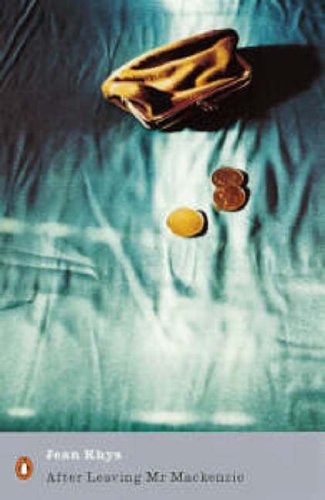
#BookReview ‘After Leaving Mr Mackenzie’ by Jean Rhys #historicalfiction

A slim novel, After Leaving Mr Mackenzie is the second novel by Jean Rhys, published in 1931. Semi-autobiographical, it tells the story of a young woman [if a woman in her mid-thirties can be called young] who faces up to the realities of life after a love affair ends. The title is not strictly true because Julia did not leave Mr Mackenzie, he left her. Jean Rhys She moves to a cheap hotel room where the furnishings are faded and the only decoration is a poor painting which she assumes must have been left in lieu of debt by a previous tenant. Where Rhys excels is her description of the small details, drawing a picture of Julia’s surroundings and her moods. ‘She found pleasure in memories, as an old woman might have done. Her mind was a confusion of memory and imagination. It was always places that she thought of, not people. She would like thinking of the dark shadows of houses in a street white with sunshine; or of trees with slender black branches and young green leaves, like the trees of a London square in spring; or of a dark-purple sea, the sea of a chromo or of some tropical country that she had never seen.’ Like the title of the novel, it is not always clear what is true and what is imagination.
After the death of her baby and the breakdown of her marriage, which is not really explained, Julia survives in Paris thanks to the men she dates. They give her cash, buy her clothes, pay for her lodging; in this, Julia is similar to Marya in Rhys’ first novel Quartet. This novel takes a step further in that when her maintenance payments stop, Julia takes action to help her situation. After unsuccessfully asking Mr Mackenzie for cash, she is helped by a stranger, Mr Horsfield. Julia buys new clothes and a train ticket to London where she visits her sister who cares for their dying mother.
This is a study of one woman’s desperate situation and her dependency on others. Julia is a sad woman with a past, shabby, as if wearing a sign around her neck saying ‘trouble’. The delight in reading this book is how Rhys tells Julia’s story, as much as the story itself.
CLICK HERE TO READ MORE ABOUT THIS BOOK AT AMAZON

Here’s my review of another novel by Jean Rhys:-
QUARTET

If you like this, try:-
Orphans of the Carnival’ by Carol Birch
Birdcage Walk’ by Helen Dunmore
‘The Duchess’ by Wendy Holden

And if you’d like to tweet a link to THIS post, here’s my suggested tweet:
#BookReview AFTER LEAVING MR MACKENZIE by Jean Rhys via @SandraDanby http://wp.me/p5gEM4-2d7 

#BookReview ‘The Blue Flower’ by Penelope Fitzgerald #historical

If ever there is a book to persevere with, to have patience with, and to go back and re-read again, it is The Blue Flower by Penelope Fitzgerald. When I bought it, I didn’t realize it was the last novel by the Booker prize winner; published five years before her death in 2000 aged 83. For someone about to read it, it can seem a trifle intimidating. Penelope FitzgeraldSet in 18th century Germany, Fitzgerald tells her imagining of the teenage story of real German poet and philosopher Fritz von Hardenberg, later called Novalis. He is a young man so self-contained, so absorbed in his thoughts, that I wondered where the drama would arise. But it does, because he falls in love.
The Blue Flower is a short novel, 223 pages. The chapters are concise [mostly only two or three pages each] and this encouraged me to ‘just read another’ and so, gradually, almost without realizing, I fell into the story. Fitzgerald recreates this particular time in German history with a delicacy that, despite the language and sometimes confusing names, makes the people become real.
It is 1794 and Fritz, an idealistic and passionate student of philosophy and writer of poems, stays with some family friends and meets their youngest daughter, Sophie von Kühn. Love is instant for Fritz and, despite a little bemusement on the part of Sophie, and astonishment by his siblings and friends, he proves himself constant.
It is the sort of novel that, when you are reading it you ‘get’ it but afterwards, when trying to describe it to someone else, you struggle to grasp it. I still do not really understand the meaning of the blue flower. But although the deeper meaning may elude me, there are passages I love. Particularly the opening chapter when a guest arrives at the Hardenberg house in Kloster Gasse; it is washday, the annual occasion for washing personal and household linen, and his arrival effects an introduction to the household. This starts a juxtaposition which runs throughout the novel, of the ordinary everyday mundanity of life alongside Fritz’s poetic sensibilities. He calls twelve-year old Sophie his Philosophy, his guardian spirit. Knowing he must wait for her, he trains as an official in the salt mines and Fitzgerald treats us to some of the practicalities and science of this industry.
This is not a lazy read. Be prepared to invest something into it yourself. Fitzgerald does not put it all onto the page, she expects the reader to think, to research, to work it out, as she did when writing. If each book is the visible bit of an iceberg above the waterline, with the research submerged, The Blue Flower is the snowball on top of the iceberg.

Read my review of OFFSHORE, also by Penelope Fitzgerald.

If you like this, try this:-
‘The Ballroom’ by Anna Hope
‘The Past’ by Tessa Hadley
‘Gone are the Leaves’ by Anne Donovan

And if you’d like to tweet a link to THIS post, here’s my suggested tweet:
#BookReview THE BLUE FLOWER by Penelope Fitzgerald https://wp.me/p5gEM4-2Zr via @SandraDanby

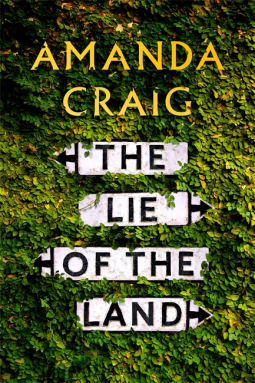
#BookReview ‘The Lie of the Land’ by @AmandaPCraig #contemporary

A simple yet deceptively nuanced story of modern times, The Lie of the Land by Amanda Craig is full of the contrasts and comparisons thrown up by ordinary life. The Bredins, Quentin and Lottie, have agreed to divorce after his infidelity but cannot afford to. Unable to sell their London house, they rent it out instead and move to Devon to a dank dark creepy farmhouse where they must manage to live together. Amanda CraigWhat happens over the next year is unexpected and changes all their lives forever. This is a funny, mysterious and sometimes sad story of a city family in the country where, instead of leaving their problems behind, they find they are magnified. There is truth in the old adage, you cannot run from your problems.
What happened to the previous tenant of Home Farm? Who is the mysterious tramp in the local pub? And is Lottie really having an affair with a local architect. Meanwhile, Quentin’s father is dying and his mother is stoically coping. Lottie’s son Xan works in the nearby pie factory where, as well as finding himself a Polish girlfriend, he makes friends with Dawn, the daughter of the Bredin’s cleaner. Dawn, who seems downtrodden, obese and introverted, can play the piano like an angel. Craig has written a character-driven novel with a community of characters to make Devon feel at once cozy and familiar while being secretive and insulated. Where contrasts are expected between urban and rural life, there are often likenesses. There are several sub-plots cleverly woven into the main family narrative, of caring for elderly parents, bullying, childlessness, rural phone and broadband reception, Polish workers and urban snobbishness about country life.
I particularly liked sheep farmer’s wife Sally Verity, whose job as a social worker sees her move around the countryside, cleverly knitting together people and stories. Lottie’s mother Marta, though she stays in London, is another link between generations, locations and storylines. Only when I had finished the book did I learn that some of the characters appear in other novels by Craig, something which did not affect my understanding or enjoyment of the book.

If you like this, try:-
‘Himself’ by Jess Kidd
‘My Husband the Stranger’ by Rebecca Done
‘Ghost Moth’ by Michèle Forbes

And if you’d like to tweet a link to THIS post, here’s my suggested tweet:
#BookReview THE LIE OF THE LAND by @AmandaPCraig http://wp.me/p5gEM4-2Pp via @SandraDanby

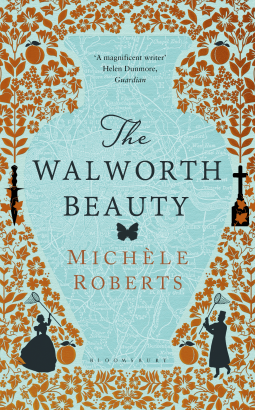
#BookReview ‘The Walworth Beauty’ by Michèle Roberts #historical

From the first page, I knew this was going to be one of those reads rich in historical scents and sensations, a story to lose yourself in. The Walworth Beauty by Michèle Roberts is set in the London district of Walworth, just south of the River Thames and part of the Borough of Southwark. It tells the story of Joseph Benson in 1851 and Madeleine in 2011, 160 years apart but experiencing so many similar things. Michèle RobertsMadeleine loses her job as a lecturer of English literature, as a result she moves to a garden flat in Apricot Place, Walworth. She is delicately attuned to the history of London, walking its streets and seeing Virginia Woolf walking ahead of her, Hilda Doolittle passing her by, and, in a basement kitchen in Lamb’s Conduit Street, a mistress instructing her new housemaid. Just how closely Madeleine is connected to the past becomes clearer in the second half of the story as she explores Walworth, researching its local history and meeting her new neighbours.
Joseph and his family live in a rented house in Lamb’s Conduit Street. He works for sociologist Henry Mayhew, researching the working conditions and social backgrounds of prostitutes in Walworth. Joshua is a contradictory character, perhaps a man of his time with contemporary attitudes and assumptions about women. Still mourning his idolised first wife Nathalie, he is outwardly respectable but has money problems. He is a spendthrift and betrays Cara his second wife [and Nathalie’s older sister] by visiting prostitutes, viewing it as a necessity so Cara will not conceive again, rather than unfaithfulness. His research takes him to a house in Apricot Place where he meets landlady Mrs Dulcimer, an exotic brown-skinned woman who Joshua mistakes for a madam but who in fact helps struggling young women to establish themselves with jobs and homes.
The theme of classification runs throughout this novel, the formal type of labelling as in Mayhew’s study and the Dewey Decimal labelling system for libraries, but also the informal way of labelling people, pre-judging, jumping to conclusions. Mayhew classifies prostitutes as criminals and it is with this view that Joseph conducts his first research. In meeting Mrs Dulcimer, however, he learns the true stories of struggle and abandonment in the lives of many of the women he labels so easily as whores. He is an unreliable judge of women’s characters, however, even those closest to him.
We see similar classifications in Madeleine’s story in modern-day Walworth. There are themes of grief, longing for what is out of reach, women’s position in society and men’s attitudes towards women and sexuality. Judgements based on class and sex. The two storylines are connected in places by hints of ghosts or presences, which I found a little unsatisfactory. This is a novel about the different parts of society, some isolated, some overlapping like a Venn diagram, and as true today as in Victorian London.
I enjoyed unpicking the connections between 1851 and 2011, handled so delicately that it would be easy to pass them by. Such as Mrs Dulcimer’s missing earring, surrendered as an identifying token at the Foundling Hospital when she handed in her baby, is seen by Madeleine in a display at the Foundling Museum. There are countless examples like this of mirrored details and parallel experiences, connecting Joseph and Mrs Dulcimer with Madeleine.
The Walworth Beauty is one of the most enjoyable books I have read this year and is worth re-reading to absorb the beautiful detail written by a novelist entwined with her story and subject.
CLICK HERE TO READ MORE ABOUT THIS BOOK AT AMAZON

Read my review of FAIR EXCHANGE also by Michèle Roberts, and try the First Paragraph here.

If you like this, try:-
‘Frog Music’ by Emma Donoghue
‘Birdcage Walk’ by Helen Dunmore
The Western Wind’ by Samantha Harvey

And if you’d like to tweet a link to THIS post, here’s my suggested tweet:
#BookReview THE WALWORTH BEAUTY by Michèle Roberts http://wp.me/p5gEM4-2SQ via @SandraDanby

#BookReview ‘Shadow Baby’ by Margaret Forster #adoption

A slow-build read which, by halfway, Shadow Baby by Margaret Forster had me glued to the page. It is in part a story about unplanned pregnancy – choices, motherhood and how a girl grows to be a mother herself – and part social history. The history is the skeleton on which the flesh of the story hangs and inter-connects. Two young women fall pregnant, Leah in 1887 and Hazel in 1956. Both abandon their babies. Margaret ForsterThis is the story of Leah and her daughter Evie, Hazel and her daughter Shona. The circumstances are different – Evie is brought up first in a children’s home and then by reluctant relatives; Shona is adopted by a family desperate for a child with a mother whose care is suffocating – but the stories so similar. Both daughters are obsessed with their birth mothers.
From generation to generation, mistakes are uncannily mirrored. Attitudes from the 19th century reappear in the 20th. Shadow Baby is a thoughtful and measured exploration of how the nature of being a mother differs from woman to woman, expectations, fears, well-meaning but hurtful family and social pressure. And how, when the daughter grows into a woman who in turn becomes pregnant, the same fears, expectations and social pressures kick in. Forster is perceptive about the rejection felt by the daughters, and the shame of their mothers, shame which prompts denial and continued rejection. These women have to make hard decisions to survive, decisions a million miles away from how we live today in our comfortable 21st century lives but with a stark reminder of how the actions of a previous generation can affect the next.

If you like this, try:-
‘The Letter’ by Kathryn Hughes
‘Innocent Blood’ by PD James
‘Chosen Child’ by Linda Huber

And if you’d like to tweet a link to THIS post, here’s my suggested tweet:
#BookReview SHADOW BABY by Margaret Forster http://wp.me/p5gEM4-2dO via @SandraDanby 

#BookReview ‘House of Names’ by Colm Tóibín #Greekmyths #saga

I have a sketchy knowledge of Greek literature lost in the mist of time, and so approached House of Names by Colm Tóibín with a sense of trepidation combined with anticipation of reading something new. As always with Colm Tóibín’s novels, the writing is exquisite but House of Names did, for me, lack an emotional connection. And I’m not sure why. Colm TóibínThe novel begins with the story of Agamemnon, warrior king, who sacrifices his daughter Iphigenia to the gods in the hope of victory in battle. However this novel is not about the king but what happens next. Tóibín imagines the continuance of the story, of Agamemnon’s wife Clytemnestra, daughter Electra and son Orestes. As always with classical literature, it is easy to find parallels with modern life, in politics, war and television. Double-crossing, lies, scheming politicians, vengeful soldiers, royal disagreements, distrustful servants, sibling rivalry, kidnapping and violence.
We share Clytemnestra’s version of the story first, told in first person and more vivid for that, as her husband murders their daughter rather than celebrating her marriage. Clytemnestra broods and plans her revenge, revenge which she takes with her own hand. But the central question in this story is who is telling the truth. Did Clytemnestra arrange for the ‘safe-guarding’ of her son Orestes and the banishment to the dungeon of her daughter Electra? Or was it her new ally, the prisoner-turner-lover Aegisthus?
The story then switches to Orestes who is marched across country to be imprisoned with a group of kidnapped boys. The title of the novel comes from this section, told in the third person it moves slower. Orestes, with friend Leander, escapes captivity and wanders the barren countryside, on the edge of starvation, until they stumble on refuge in a cottage by the sea occupied by an elderly woman. With Electra’s viewpoint, the narration switches back to first person. Electra is the most enigmatic, conversing with spirits, moving silently, observing the plotting. Is she simply a watcher, or has she inherited the vengeful nature of her mother? Through Electra we finally put together the pieces of Agamemnon’s death and the subsequent intrigue, though it pays to be patient as some things only make sense as the end approaches. Somewhere through the tale the emphasis is placed on the violence of Clytemnestra’s revenge while the event which sparked her fury – her husband’s murder of Iphigenia – becomes blurred.
I did not research Aeschylus’ Oerestia before reading House of Names and there are other reviews online which efficiently compare the original with Tóibín’s re-imagining. However I do feel that an ignorance of the original is perhaps helpful when reading a novel such as this, I was able to relax into the story without worrying about changes made and diversions taken.
Colm Tóibín is one of my favourite authors and House of Names, though an experimental read for me, has not changed my mind.

Read my reviews of these other novels by Colm Tóibín:-
BROOKLYN
NORA WEBSTER

If you like this, try:-
The Silence of the Girls’ by Pat Barker
Stone Blind’ by Natalie Haynes
A Traveller at the Gates of Wisdom’ by John Boyne

And if you’d like to tweet a link to THIS post, here’s my suggested tweet:
#BookReview HOUSE OF NAMES by Colm Tóibín http://wp.me/p5gEM4-2NV via @SandraDanby

#BookReview ‘The Crows of Beara’ by Julie Christine Johnson #contemporary #romance

The Crows of Beara by Julie Christine Johnson is a sensitive tale of two lost souls from opposite sides of the world who are in such pain they are unable to recognise a fresh chance for happiness. Annie Crowe, recovering addict and corporate PR specialist, flies from Seattle to Ireland to promote a new copper mine. When she meets Daniel Savage, an artist with a troubled past, both start to hear a mystical Gaelic voice whispering words of poetry. Julie Christine JohnsonThe west coast of Ireland is a bleak, beautiful, empty place. Jobs are thin on the ground so when a new copper mine is announced, the locals are divided: the economy, or nature. Annie arrives, determined to make a success of this last chance to get her career back on track. When she discovers the mine will endanger the nesting site of the Red-Billed Choughs, she must tell lies in the name of PR. She doesn’t expect it to make her acknowledge the lies she has been telling herself; about her failed marriage, her failing career, and her alcoholism.
Annie, flawed but vulnerable, is an easy character to like. Weighed down by her addiction and the knowledge she did shameful things she can’t remember, she moves forward step-by-step. You will her onwards. She soon falls in love with the beauty of Beara and the openness of the community. This causes a professional problem, how can she promote a copper mine which will damage this exquisite nature. As she wrestles with her conscience, she must also resist the temptation to pick up a glass of alcohol. In Annie and Daniel, Johnson has created two wounded characters who are not sorry for themselves, who face up to their pasts and their grief, who try to look forward. This is an uplifting story on so many levels.
As with In Another Life, Johnson’s debut novel, there is something mystical going on in The Crows of Beara. A skeleton of myth and legend underlies the Irish setting and runs throughout the story. The west coast of Ireland is certainly an extra character here; the descriptions of the Beara Peninsula, its mists, its cliffs, its Red-Billed Choughs [the crows of the title] are so beautifully written you will be getting out your hiking boots and googling hotel accommodation.

And here’s my review of IN ANOTHER LIFE, also by Julie Christine Johnson.

If you like this, try:-
‘Himself’ by Jess Kidd
‘The Little Red Chairs’ by Enda O’Brien
‘Nora Webster’ by Colm Tóibín

And if you’d like to tweet a link to THIS post, here’s my suggested tweet:
#BookReview THE CROWS OF BEARA by Julie Christine Johnson http://wp.me/p5gEM4-2Ok via @SandraDanby

My Porridge & Cream read: Caroline James

Today I’m delighted to welcome romance novelist Caroline James. Her ‘Porridge & Cream’ read is The Old Wives’ Tale by Arnold Bennett.

“First published in 1908 and set in the fictional town of Bursley in the Potteries, it traces the lives of two sisters, shy Constance and romantic Sophia, who are born into a secure world, supported by their parent’s drapery business.
Caroline James“I first discovered this book when I was a young girl working in London. My flat mates were into Jilly Cooper novels and couldn’t understand why I was reading such ‘an old book’. I was born close to the area where the narrative takes place and grew up on the borders of the five towns that comprise Stoke-on-Trent. As I read, I remember feeling that I was in a time warp, fantasising that I had walked the same streets as the sisters.

“I have always been in awe of Bennett’s writing. A male author who writes with such knowledge and clarity from a female perspective. The prose is exquisite and he makes every word count. Over the years, when far away from home, I re-read The Old Wives’ Tale. Despite being a period setting, written over a century ago, I am fondly reminded of the warmth and ways of Pottery folk, still retained today. Drawn to the book repeatedly, it feels like a hug from my mum. Bennett says, “No life is ever small to the person living it.” A phrase my mum might have said. The older I get the more this book speaks to me and reminds me to be respectful. Everyone was young once. Arnold Bennett is commemorated in the Stoke museum and I’ve studied his personal artefacts on many occasions, in awe of his brilliance and grateful that such an author is accessible to this day.”

Caroline James’ Bio
Caroline James has owned and run businesses encompassing all aspects of the hospitality industry – a subject that features in her novels. She is based in the UK and spends her time writing, climbing mountains and running a consultancy business. Caroline has a great fondness for the Caribbean and escapes to the islands whenever she can. She is a public speaker, reviewer and food writer and loves cooking and baking, especially cake.

Caroline James’ links
Twitter
Facebook
Website

Caroline James’ books
Caroline JamesSet in Cumbria and Barbados, Coffee, Tea, The Caribbean & Me follows the lives of Jo and Hattie who are flying solo in their middle years. Is there hope for the newly single baby boomers and can romance happen? Join the pair as they romp into their future and prove that anything is possible. Coffee, Tea, The Caribbean & Me is an Amazon best-seller and a ‘Top Recommended Read’ by Thomson Holidays.
Read how Caroline researched her second novel, So You Think You’re A Celebrity…Chef?

‘Coffee, Tea, The Caribbean & Me’ by Caroline James [UK: Ramjam Publishing]

Caroline James

What is a ‘Porridge & Cream’ book? It’s the book you turn to when you need a familiar read, when you are tired, ill, or out-of-sorts, where you know the story and love it. Where reading it is like slipping on your oldest, scruffiest slippers after walking for miles. Where does the name ‘Porridge & Cream’ come from? Cat Deerborn is a character in Susan Hill’s ‘Simon Serrailler’ detective series. Cat is a hard-worked GP, a widow with two children and she struggles from day-to-day. One night, after a particularly difficult day, she needs something familiar to read. From her bookshelf she selects ‘Love in A Cold Climate’ by Nancy Mitford. Do you have a favourite read which you return to again and again? If so, please send me a message via the contact form here.

Discover the ‘Porridge & Cream’ books of these authors:-
Carol Cooper
Claire Dyer
Lev D Lewis


‘The Old Wives’ Tale’ by Arnold Bennett [UK: Churnet Valley Books] 

And if you’d like to tweet a link to THIS post, here’s my suggested tweet:
Why does @CarolineJames12 love THE OLD WIVES’ TALE by Arnold Bennett via @SandraDanby http://wp.me/p5gEM4-2Pw #amreading

#BookReview ‘Shelter’ by Sarah Franklin #WW2

This book is full of trees. The Forest of Dean to be exact. Shelter by Sarah Franklin is the story of two outsiders who find themselves in the forest during World War Two. As they struggle to survive, to learn about their surroundings, how to get by from day to day, each finds a way to live the rest of their lives. Sarah FranklinEarly in 1944 in Coventry, Connie Granger’s life is changed in the course of one night. Escaping the bombing, city-girl Connie takes a job with the Women’s Timber Corps. Unable to follow her dreams, she resents the change of direction.  Sent to the Forest of Dean for her training, she turns out to be so good the manager keeps her on. Meanwhile, in the forest, a prisoner-of-war camp is built for Italian soldiers captured during fighting in Africa. Neither prisoner Seppe, nor Connie, know one tree from another but together they learn to fell trees and work timber. And they get to know each other.
The themes of nature, change and new birth are strong throughout Shelter, symbolised not just by the trees but by the growth of Joe, Connie’s baby, and the increasingly fluency of Seppe’s English. Both are odd-ones-out. Both feel they don’t ‘fit’. Except in the forest. Connie lodges in the cottage of farmer Amos, who worries for the life of his absent soldier son Billy. Seppe, though he lives in the camp, exploits the lax guards and spends more time amongst the trees. These three, with timber manager Frank and his wife Joyce, completes the cast of characters.
The story of the wartime lumberjills was fascinating. This is a well-written debut novel by a writer brave enough to allow Connie to be determined and selfish, unsure, selfish again, before working out what she wants. There is something honest in Connie’s selfishness which makes her seem real. The switching around of the timeline at the beginning was unnecessarily confusing, but after that the story swung along as Connie transforms from someone who doesn’t recognise bluebells as she walks through a wood, to a woman who stops to watch a hawk swoop in for the kill.

Read my review of HOW TO BELONG also by Sarah Franklin.

If you like this, try:-
‘Homeland’ by Clare Francis
‘Another You’ by Jane Cable
‘After the Bombing’ by Clare Morrall

And if you’d like to tweet a link to THIS post, here’s my suggested tweet:
#BookReview SHELTER by Sarah Franklin http://wp.me/p5gEM4-2MI via @SandraDanby