Tag Archives: book review

#BookReview ‘The Quick’ by Lauren Owen #historical

The Quick by Lauren Owen is a gothic tale about a brother and sister from Yorkshire. The story moves between Aiskew Hall – where we first meet Charlotte and James as children – and London; both settings atmospheric, both drawn so clearly you can smell the air. This book will reward re-reading: only after I had finished the last page did I go back to the beginning and appreciate the menace of the first sentence, “There were owls in the nursery when James was a boy.” Lauren Owen Aiskew is ever-present. When they are older and far from home, Charlotte reminds James “… how the air smelled green in spring, and smoke-grey in autumn, how on April mornings the mists would lift slowly, leaving a blue haze behind.”
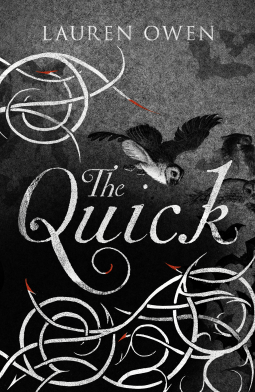
This book has a really slow build. It starts with a prologue, an excerpt from 1890, which I read and then immediately forgot. I enjoyed Part One about the childhood of James and Charlotte at Aiskew, their mother dead, their father absent, Charlotte teaching James his alphabet by chalking the letters onto flagstones, playing games in the secrets of the big house. When the siblings are parted as James goes to university and then to London, the story starts to move a little quicker. I started to feel expectant, waiting for something to happen. Which of course, it does, and it is creepy and not what I was expecting. For me the story really gets going when Charlotte comes to London. After that, the action comes thick and fast. The tension in the second half is more like a film, making the first part of the book feel as if the author was feeling her way into the story.
Definitely one to read again. And I can see it on television.

If you like this, try:-
‘Frog Music’ by Emma Donoghue
‘The Penny Heart’ by Martine Bailey
‘Orphans of the Carnival’ by Carol Birch

And if you’d like to tweet a link to THIS post, here’s my suggested tweet:
#BookReview THE QUICK by Lauren Owen via @SandraDanby http://wp.me/p5gEM4-Rj

#BookReview ‘Holes’ by Louis Sachar #YA #mystery

Holes by Louis Sachar has been sitting on my shelf forever but I picked it up this week when I exhausted my Kindle’s battery. How lovely to hold an actual book again. I know this is a book for tweens, but I’d heard such good things about it that I wanted to see for myself. Louis Sachar I loved the premise: that Stanley is wrongly found guilty of stealing a pair of trainers and is sent to a juvenile correction camp where the punishment is to dig a hole a day. Five feet deep and five feet wide. Every day. It is supposed to be character-building, but Stanley thinks there is another agenda. “There is no lake at Camp Green Lake. There once was a very large lake here, the largest lake in Texas. That was over a hundred years ago. Now it is just a dry, flat wasteland.”
It is a story about finding out who you are, standing up to bullies and finding your bravery. “Out on the lake, rattlesnakes and scorpions find shade under rocks and in the holes dug by the campers.”
Woven in with the day-to-day tale of hole-digging is the background to Stanley’s unlucky family; unluckiness blamed on his no-good-dirty-rotten-pig-stealing-great-great-grandfather. Stanley is a kind of every-boy, who helps a boy worse off than himself and ends up challenging the system.  And Sachar ties up the loose-ends brilliantly.
Not just for kids.

Read my review of THE CARDTURNER, also by Louis Sachar.

If you like this, try:-
‘The Ship’ by Antonia Honeywell
‘The Choir’ by Joanna Trollope
‘The Mystery of Three Quarters’ by Sophie Hannah #3Poirot

And if you’d like to tweet a link to THIS post, here’s my suggested tweet:
#BookReview HOLES by Louis Sachar http://wp.me/p5gEM4-K1 via @SandraDanby

#BookReview ‘Insurgent’ by Veronica Roth #YA #fantasy

Insurgent, second in the fantasy trilogy by Veronica Roth, is action-led and the pace fairly trips along. Everyone living in the post-dystopian city of Chicago belongs to one of five factions, each represents a human virtue. When the factions disagree, there is a struggle for power. Veronica RothHeroine Tris is a complex mixture of two factions: her upbringing in Abnegation [considerate, selfless] and her adopted faction Dauntless [brave, daring, reckless]. This dangerous mixture gets her into trouble and that drives the story along. She is confrontational, brave, but often makes questionable decisions. She distrusts Four’s father and believes he is misleading them: ‘…sometimes, if you want the truth, you have to demand it.’ Demand, not ask: this tells me more about Tris than about Four’s father Marcus.
As this is the second novel of the trilogy there is more time for characterisation, we see more of Tris’s inner world in Insurgent compared with Divergent. She is maturing into her divergent personality, ‘I drift off to sleep, carried by the sound of distant conversations. These days its easier for me to fall asleep when there is noise around me. I can focus on the sound instead of whatever thoughts would crawl into my head in silence. Noise and activity are the refuges of the bereaved and guilty.’ And she is both.
I had difficulty keeping track of the huge list of characters and longed for a cast list. But more importantly is the lack of clarity about the main enemy: who is it? There’s lots of infighting to keep track of too, petty squabbles some of which have carried forward from the first book and which I had forgotten. I made the mistake of not reading the books back-to-back which would have really helped.
Tris’s confusion reminded me of my teenage years, confusion is universal: ‘Sometimes I feel like I am collecting the lessons each faction has to teach me, and storing them in my mind like a guidebook for moving through the world. There is always something to learn, always something that’s important to understand.’ Like all young people, Tris must learn there is no cut-off date by which she will have learned everything, adults continue to learn until they die.

Click the title to read my reviews of the other books in this series:-
DIVERGENT #1DIVERGENT
ALLEGIANT #3DIVERGENT

If you like this, try:-
‘Beneath the Keep’ by Erika Johansen #PREQUELTEARLING
‘Children of Blood and Bone’ by Tomi Adeyemi #1LEGACYOFORISHA
‘The Rose Field’ by Philip Pullman #3THEBOOKOFDUST

And if you’d like to share a link:
#BookReview INSURGENT by Veronica Roth via @SandraDanby http://wp.me/p5gEM4-Po

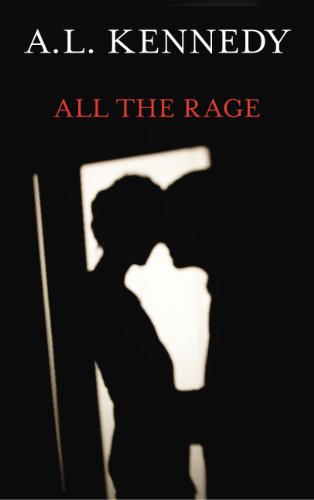
#BookReview ‘All the Rage’ by AL Kennedy @Writerer #shortstories

What a treat is All the Rage. Twelve stories about love by the inimitable AL Kennedy. Love:  looking for it, losing it, exploring what love is. Instead of describing the stories, I want to celebrate her writing. The way she tells us so much in just one or two sentences. AL Kennedy‘Late in Life’ features  an older couple waiting. They are waiting in a queue at the building society, waiting for him to pay off her mortgage, in a coming-together of two lives. She provocatively eats a fig, being sexy for him “to pass the time.” Despite his hatred of public show, he watches her, “he is now-and-then watching.” He gives her “the quiet rise of what would be a smile if he allowed it. She knows this because she knows him and his habits and the way the colour in his eyes can deepen when he’s glad, can be nearly purple with feeling glad when nothing else about him shows a heat of any kind.”
In ‘The Practice of Mercy’, Dorothy is lost, alone and approaching old age and contemplating her relationship. “She realised once more, kept realising, as if the information wouldn’t stick, realised again how likely it was that someone you’d given the opening of leaving, someone you’d said was free to go, that someone might not discover a way to come back.”
‘All the Rage’ is set on a train platform. A couple are delayed, travelling home from Wales, stuck waiting for a train that never comes. Kennedy tells us everything about their relationship by describing their suitcase. “Inside it, their belongings didn’t mix – his shirts and underpants in a tangle, Pauline’s laundry compressed into subsidiary containments. They had separate sponge bags too. Got to keep those toothbrushes apart.”
Simon, the narrator of ‘Run Catch Run’, considers his unnamed dog, he is at once a child teaching his puppy and also an adult with a mature awareness of inevitability. “His dad had suggested she could be called Pat, which was a joke: Pat the dog. Simon didn’t want to make his dog a joke.”
She shows us so much, in so few sentences.

Read my reviews of these other AL Kennedy novels:-
DAY
SERIOUS SWEET

If you like this, try:-
‘The Story’ ed. Victoria Hislop
‘An Unfamiliar Landscape’ by Amanda Huggins
‘Last Stories’ by William Trevor

And if you’d like to share a link, try:
#BookReview ALL THE RAGE by AL Kennedy @Writerer http://wp.me/p5gEM4-NL via @SandraDanby

#BookReview ‘The Returned’ by Jason Mott #suspense #mystery

When Harold opens the door to a strange man and boy, he sees someone he knew he would never see again. “Synapses kicked on in the recesses of his brain. They crackled to life and told him who the boy was standing next to the dark-skinned stranger. But Harold was sure his brain was wrong.” On that day, the lives of Harold and his wife Lucille change as they become involved in the whirlwind which is the return of people from the dead. This is the beginning of The Returned by Jason Mott. Jason MottThere is a sense of brooding throughout this novel, starting small with the uncomfortable disbelief the elderly couple feel as their dead 8-year old son walks in the door. How can it be Jacob who died more than 40 years earlier? Is he/it an imposter? All over the world, the dead are returning. Soon the numbers become threatening, new phrases are coined: The Returned, the True Living. Communities cannot cope with the new arrivals who need feeding and housing, who bring with them old resentments, unfinished business. Not all reunions are happy. For some Returned there are no reunions. There is a dark sense of inevitability that it is all going to go wrong, as Connie Wilson says: “Everything was moving toward the coming terror. She felt it. It was inevitable now, like when the earth is dry and barren, the trees gray and brittle, the grass brown and parched – something must change.”
People look for an explanation: the Church has none. They look for a plan: the Government has none. The slow slide of disintegration is told through the eyes of the elderly couple, Harold and Lucille Hargreave, as they grapple with deep questions: what are the Returned, are they real, are they ghosts, what rights do they have? This book is at the same time a glimpse of a dystopian society, and at the same time an examination of death and grieving, of our attitudes to honour and betrayal.
The wish of a grieving person is to see the dead person just once more, but Jason Mott has created a world where people achieve that dying wish and then don’t want it. This book asks a lot of difficult questions, ones we would rather not hear.

If you like this, try:-
‘The Quick’ by Lauren Owen
‘The Threshold’ by Anita Kovacevic
‘A Sudden Light’ by Garth Stein

And if you’d like to tweet a link to THIS post, here’s my suggested tweet:
#BookReview THE RETURNED by Jason Mott via @SandraDanby http://wp.me/p5gEM4-Om

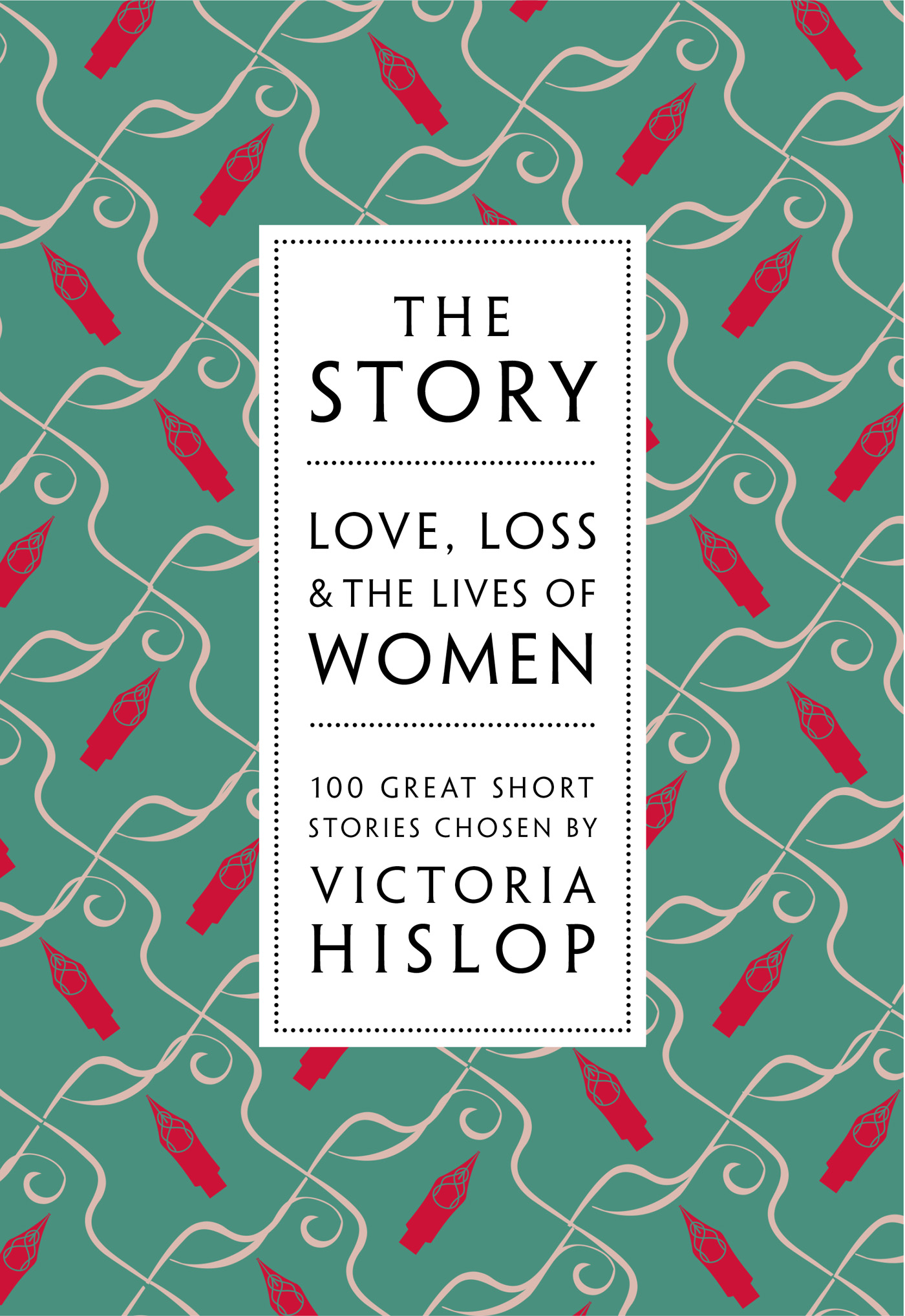
#BookReview ‘The Story’ by Victoria Hislop @VicHislop #shortstories

I read The Story: Love, Loss & the Lives of Women, edited by novelist Victoria Hislop, on my Kindle, without really appreciating just how much reading was involved for 100 stories. It’s not like holding a hefty book. But I enjoyed every single one of them. Some of the authors were well-known, others were new to me. Some made me laugh out loud (I’m thinking of Dorothy Parker here), others stopped my breath with sadness. I discovered authors I want to explore further: one of the reasons I have always loved short stories.Victoria HislopThe short story form is fascinating. As a reader I am very demanding, like anthology editor Victoria Hislop I want to be instantly grabbed by a story. “Readers are allowed to be impatient with short stories,” she writes. “My own patience limit for a novel which I am not hugely enjoying may be three or four chapters. If it has not engaged me by then, it has lost me and is returned to the library or taken to a charity shop. With a short story, three or four pages are the maximum I allow (sometimes they are only five or six pages long in any case). A short story can entice us in without preamble or background information, and for that reason it had no excuse. It must not bore us even for a second.”
So, my favourite stories? Hislop has divided her selection into three sections so I have chosen three from each.

LOVE:
Jeanette Winterson’s ‘Atlantic Crossing’ – the gentle story of love and longing at a distance. My favourite story of all, I think.

Dorothy Parker’s ‘A Telephone Call’ – the stream of consciousness dialogue of waiting for a telephone call is an everywoman story.

‘The Artist’ by Maggie Gee is about Emma, an unfulfilled wife who employs an East European, Boris, as an odd-job man/builder. He says he is an artist, she doesn’t believe him.

LOSS:
‘The First Year of My Life’ by Muriel Spark. It starts, “I was born on the first day of the second month of the last year of the First World War, a Friday.” An account of war seen through the innocent but at the same time all-knowing eyes of an infant.

‘The Pill Box‘ by Penelope Lively is about the flexibility of imagination. A male teacher and writer is haunted by the past, remembering, wondering how the world would be now if things had happened differently when he was young.

‘The Merry Widow’ by Margaret Drabble tells the story of Elsa Palmer who, after the death of her husband Philip, goes on the summer holiday they had planned together. Grief overcomes her, but in an unconventional way.

THE LIVES OF WOMEN:
‘G-String’ by Nicola Barker is about the triumph of the modern knicker. This made me laugh out loud.

‘Betty’ is the woman who captivates the teenage narrator of Margaret Atwood’s tale. “From time to time I would like to have Betty back, if only for an hour’s conversation.”

‘A Society’ by Virginia Woolf, about a group of young women on the verge of the Great War who make themselves into a “society for asking questions. One of us was to visit a man-of-war; another was to hide herself in a scholar’s study; another was to attend a meeting of business men; while all wee to read books, look at pictures, go to concerts, keep our eyes open on the streets, and ask questions perpetually.”

Read my reviews of other these books by Victoria Hislop:-
THE FIGURINE
THE SUNRISE
THOSE WHO ARE LOVED

If you like this, try:-
‘The Duchess’ by Wendy Holden
‘Anderby Wold’ by Winifred Holtby
‘All the Rage’ by AL Kennedy

And if you’d like to tweet a link to THIS post, here’s my suggested tweet:
#BookReview THE STORY by Victoria Hislop @VicHislop http://wp.me/p5gEM4-N5 via @SandraDanby

#BookReview ‘Mrs Sinclair’s Suitcase’ by Louise Walters #romance #WW2

rs Sinclair’s Suitcase by Louise Walters is a gentle mystery of a love affair during war and its consequences for the following generations. Louise Walters We follow the stories of two women: Dorothy Sinclair in 1940, and today Roberta who works at The Old and New Bookshop. Roberta is particularly fond of the secondhand stock, treasuring the notes and letters she finds hidden within their pages, wondering about the stories of the writer and the addressee. Each chapter starts with an excerpt from such a note.
The letter which starts Chapter One is dated 1941 and addressed to “My dear Dorothea” from Jan Pietrykowski in which he writes he “cannot forgive” her for “what you do, to this child, to this child’s mother, it is wrong.” The letter makes no sense to Roberta as it was written by her grandfather to her grandmother, and dated 1941 when Jan died in 1940. This is the puzzle which Roberta must unravel. What woman does Jan refer to, and what child?
Dorothy’s story starts with a plane crash. She lives on the edge of an airfield deep in the quiet Lincolnshire countryside, alone in her cottage [her husband is away at war] which she shares with two land girls. The plane crash brings the Polish pilot to her door. Nervous, Dorothy serves afternoon tea. She “watched Jan take a bite from a sandwich. His teeth were small, even and white. She noticed the way his fingers curved lightly around the sandwich. He was an elegant man… She watched him eat and he seemed unabashed, eating under her scrutiny. She, for her part, always ate guardedly. She hated the way eating contorted her face, and it made her feel exposed.” From their first meeting, he unsettles her. She is so buttoned-up; he is open, curious and confident.
There is a lot of sensuality in this tale. Despite herself, Dorothy wonders about the pilot. She does not miss her husband. When Jan visits the cottage again, she notices his “brown, lean, strong forearms and realizes how she feels… His arms were poetry.” But there is grief too, as this is wartime and what happened in the 1940s knocks on down the decades to affect Roberta, her father and her grandmother Babunia.

Here’s my review of A LIFE BETWEEN US, also by Louise Walters.

If you like this, try:-
‘At Mrs Lippincote’s’ by Elizabeth Taylor
‘The Paying Guests’ by Sarah Waters
‘After the Bombing’ by Clare Morrall

And if you’d like to tweet a link to THIS post, here’s my suggested tweet:
#BookReview MRS SINCLAIR’S SUITCASE by Louise Walters http://wp.me/p5gEM4-Na via @SandraDanby

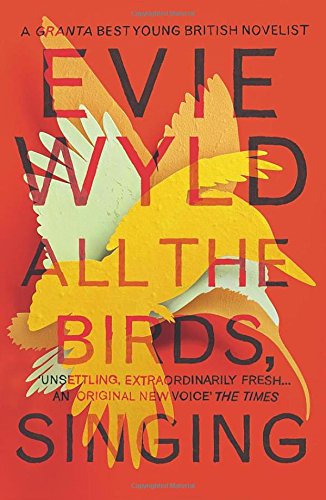
#BookReview ‘All the Birds, Singing’ by Evie Wyld #mystery

All the Birds, Singing by Evie Wyld is about secrets, now, in the past, in Australia, in England. The opening is shocking, a mutilated sheep, no description spared. Jack Whyte, a man’s name but a female character, feels threatened, fears the attack on the sheep is meant as a message for her. Evie Wyld And from here the rollercoaster starts, as we follow Jack’s current grey existence with her sheep, somewhere anonymous in England, and a dog called Dog. This story is told in alternating chapters, switching between England now, and Australia then. The story in the present goes forward, in linear time, normal time. Jack’s back story in Australia, the reasons she is where she is, is told backwards. This seemed strange to start with, but the author handles this structure elegantly and it suits the sinister tone. I didn’t guess Jack’s secret, didn’t know how it would all end.
There is a deep sense of foreboding throughout this book. Something happened: Jack is running from something, from someone, but what?  Are local children in England attacking her sheep, or is there a huge animal which roams at night? Why does she shun the locals? Why is she in England, so far from home? And is it all in her head? Should we believe her fears?
She has come from a hard world in Australia, a man’s world of sheep stations, sheep shearing, where she is the only woman, she does press-ups and has biceps to rival the men she works alongside. It feels as if she is trapped by her situation, by her life, by the sinister men which she seems to attract. At one point in Australia she moves the animals’ pen onto some thin grass so the pathetic sheep can eat “but they just stand there, a silent little group, I try to move them about, but they’re not scared of me. Resigned is what they are, and I tell them, ‘You can move around if you want to,’ waving my arms and jumping about, but they just sway a little in the hot fly air.” For a while, Jake acts like these sheep; staying where she is, swaying in the heat. But the reader knows she is in England now, so she must have run: when, where, why?
In England a neighbour advises her to go to the pub once in a while, get to know the other farmers. Don says:  “Some things you just can’t do on your own… That’s why farmers need to know each other, you help them, they help you, that’s just how it goes… because sooner or later I’m going to hit the post and be dead and then what’ll you do? Starve to death I suppose.” Yes, I believed she would rather starve.

If you like this, try:-
‘Restless Dolly Maunder’ by Kate Grenville
‘The Bear’ by Claire Cameron
‘Summer House with Swimming Pool’ by Herman Koch

And if you’d like to share a link:
#BookReview ALL THE BIRDS, SINGING by Evie Wyld http://wp.me/p5gEM4-MK via @SandraDanby 

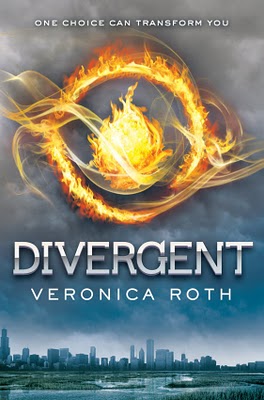
#BookReview ‘Divergent’ by Veronica Roth #YA #fantasy

Divergent by Veronica Roth is a book that had passed me by until I read online reviews, which prompted my Kindle purchase of the trilogy. Veronica RothI wonder what percentage of Young Adult [YA] fiction currently published features a dystopian world. Are our teens disenchanted with their own real world and so want to read fantasy? Certainly Suzanne Collins and Stephanie Meyer have a lot of responsibility for this, their two series have dominated the bookshelves and cinema screens. And they are all entertaining, in different ways.
Divergent is set in a city which was once Chicago where every citizen belongs to one of five factions. Each faction represents a human virtue: Candor [honesty], Amity [kindness], Dauntless [fearlessness], Abnegation [selflessness], Erudite [searching for knowledge]. At 16, teenagers are assessed for their affinity to the factions and can choose the faction they will be for the rest of their life. Anyone whose test results are inconclusive is labelled ‘divergent’. Tris, the protagonist, is divergent. This is her story and is the first of a trilogy.
Tris embraces her non-conformity. She is brave enough to be true to herself even though at times she is not sure what that is. She learns to be suspicious of labels, not to pre-judge people. But for me some factions verge on cliches. In particular, the fearlessness of the Dauntless verges on stupidity, danger for the sake of it. It is that particular computer-game type of violence that doesn’t hurt on the page but would seriously damage/kill in real life.
I’d like to see more character development, none of the depth here of The Hunger Games, but this is the first book of the trilogy so there is a world to set-up. Also I’d worked out the ending before I got there. It’s not that I didn’t enjoy the book but just that it seems superficial in comparison with The Hunger Games, which from page one gives you the sense of the deep back story. My expectations are set high.

Click the title to read my reviews of the other books in this series:-
INSURGENT #2DIVERGENT
ALLEGIANT #3DIVERGENT

If you like this, try:-
‘Gregor the Overlander’ by Suzanne Collins #1UNDERLANDCHRONICLES
‘The Queen of the Tearling’ by Erika Johansen #1TEARLING
‘The Magicians’ by Lev Grossman #1THEMAGICIANS

And if you’d like to share a link:
#BookReview DIVERGENT by Veronica Roth http://wp.me/p5gEM4-Jq via @SandraDanby

#BookReview ‘Wake’ by Anna Hope #historical #WW1

Amongst the profusion of novels about the centenary of the Great War, Wake by Anna Hope stood out for me from the rest because it is about the aftermath rather than the fighting. The spine of the narrative is the journey of the body to be entombed in Westminster Abbey as the ‘Unknown Soldier.’ Anna HopeI have visited the tomb but had not considered its selection, the post-war politics and social consequences of choosing one soldier’s remains rather than another. Anna Hope handles a delicate topic – isn’t everything to do with war emotionally-delicate? – with confidence. Wake is a powerful novel by a debut author.
There is something unsettling about the first scenes where un-named soldiers drive out into what was no-man’s-land, not knowing where they are going or why. They are directed to dig up the remains of a soldier: unidentified soldiers dig up the remains of an unidentified victim. Four bodies are laid out, not so much bodies as heaps of remains. A Brigadier-General closes his eyes and rests his hand on one of the stretchers, this body is put into a thin wooden coffin. The three not chosen are put into a shell hole at the side of the road, a chaplain says a short prayer, and then re-buried. The chosen one is taken to London.
Three storylines run parallel to this central spine. Hettie and Di are dancers at the Hammersmith Palais. Charging 6d for a dance, Hettie is skilled at spotting the injured soldiers who are disguising the lack of a limb, she is skilled at matching the rhythm of her dancing to theirs. Dancing is the bright spot in her life; her home is under the shadow of her father’s death and her brother’s shell shock.
Evelyn works in a Government department, her job is grey, her surroundings are grey. She is no longer close to her brother who returned from the war seemingly uninjured but is emotionally removed from life. Every day she deals with former soldiers, struggling to make a new life, and each soldier she sees reminds her of her lover who died in the war. She wants to move on from the war but feels that she, like everyone else, is trapped in a cycle of grief, disability, guilt and memory.
Ada is still grieving for her son, a grief which puts distance between her and her husband. Her solace is her neighbour Ivy, also grieving. Then one day an ex-soldier knocks on the door, wanting to sell her dishcloths, and something happens which sends her to a medium.
All are drawn to the streets of London on November 11th, 1920, looking for catharsis.

Read my review of THE BALLROOM, also by Anna Hope.

If you like this, try:-
‘Life Class’ by Pat Barker
‘A Long Long Way’ by Sebastian Barry
‘The Lie’ by Helen Dunmore

And if you’d like to tweet a link to THIS post, here’s my suggested tweet:
#BookReview WAKE by Anna Hope via @SandraDanby http://wp.me/p5gEM4-LK