Tag Archives: books

#BookReview ‘The Pearl Sister’ by Lucinda Riley #romance

I really enjoyed The Pearl Sister, the fourth in Lucinda Riley’s Seven Sisters adoption mysteries. While Maia, Ally and Star have already investigated their birth stories, Celaeno, CeCe, has shown no interest in her own. She is feeling sorry for herself, alone now that Star has become independent. Until her curiosity is piqued. Pa Salt’s lawyer tells her about a bequest, a large sum of money, and a photograph of two unidentified men. He advises CeCe to investigate Kitty Mercer from Broome in Australia. Lucinda RileyOn her journey to Australia, CeCe stops off in Thailand, staying at Railey Beach where she has holidayed in the past with Star. As she wonders why she is there alone, feeling envious of Star’s new home and new love in England, she meets a mysterious man on the beautiful beach. They bond over the morning sunrise, both are hurting – CeCe is missing Star and feeling betrayed by her sister’s newfound life, while Ace is hiding a big secret he cannot, or will not, explain. Riley hints that behind the beauty of Railey Beach there is a dark, sordid side. Could Ace be involved in drugs? Then when CeCe steps off the plane in Australia, she discovers Ace has been arrested and believes CeCe betrayed him to the press. As the journalists identify CeCe’s name and location, she runs away to Broome.
As with all the earlier novels in the series, the story of The Pearl Sister is told in two strands. CeCe is in 2008, Kitty Mercer’s story starts in 1906. The eldest daughter of a Edinburgh preacher, Kitty goes on a nine month trip to Australia as companion to the wealthy Mrs McCrombie. It changes Kitty’s life. She drinks alcohol for the first time, kisses a man, and acts immodestly in ways that would shock her clergyman father. Two men, twin brothers, pay attention to her. Drummond is the dangerous brother, the one who kisses her. But Kitty reverts to type by marrying the steady, safe, Andrew Mercer, and moves to Broome where he runs the family’s pearl fishing company for his father.
I found Kitty’s story enthralling, she is a true rebel at a time when women were finding their feet and their voices. She has a way of identifying people needing help. Along her life’s journey she collects waifs and strays, rescuing them from hunger, mistreatment, poverty and racism, giving them opportunities, security and winning their loyalty. Each of them comes to play a critical role in Kitty’s life; from Camira, the pregnant Aboriginal servant girl thrown from the house by her master, to Sarah, the fifteen year old orphan met on a boat from England who has a gift with the sewing needle.
Australia the country and the lives and customs of its Aboriginal people are a dominant presence throughout this novel. Be warned, it will make you want to visit. Throughout it all runs the enticing descriptions of Aboriginal art, by real artists such as Albert Namatjira who lived and worked at the Hermannsburg Lutheran Mission outside Alice Springs, which CeCe visits.
The loose ends come together in the end though Riley did keep me guessing on a couple of the links. The significance of Ace and CeCe’s time in Thailand was one such puzzle. These are all hefty books, but I read this one quickly. It’s my favourite of the series so far which seems to get better with every book.

Read my reviews of some of the other novels in Lucinda Riley’s ‘Seven Sisters’ series:-
THE SEVEN SISTERS #1SEVENSISTERS
THE STORM SISTER #2SEVENSISTERS
THE SHADOW SISTER #3SEVENSISTERS
THE MOON SISTER #5SEVENSISTERS
THE SUN SISTER #6SEVENSISTERS
THE MISSING SISTER #7SEVENSISTERS

… plus my reviews of these standalone novels, also by Lucinda Riley:-
THE BUTTERFLY ROOM
THE GIRL ON THE CLIFF
THE LOVE LETTER

If you like this, try:-
On a Night Like This’ by Barbara Freethy
You’ll Never See Me Again’ by Lesley Pearse
Fair Exchange’ by Michèle Roberts

And if you’d like to tweet a link to THIS post, here’s my suggested tweet:
#BookReview THE PEARL SISTER by Lucinda Riley https://wp.me/p5gEM4-45G via @SandraDanby

#BookReview ‘Staying Afloat’ by @SueWilsea #shortstories

Staying Afloat, the first anthology of short stories by Hull-based writer Sue Wilsea, has as its sub-text her experience teaching English in schools, colleges, prisons, libraries and community centres and this breathes life into her stories. She writes about lost children, bereaved children, struggling parents and struggling teachers with sincerity and a touch of humour. Sue WilseaI’ve chosen three of the 19 stories in Staying Afloat. You can read more of Wilsea’s stories in her second anthology, Raw Materials.
‘Shapes. Colours’ is the story of Stephen who loves his teacher Miss Anderson dearly but avoids her gaze every morning when she points to the thermometer chart and asks how everyone is feeling today. Stephen has a Worry that started “as just a tiny spider of anxiety, scuttling around in his head at night when he couldn’t sleep.” To avoid attention in class, Stephen usually chooses yellow or orange rather than a dark colour.
In ‘Two Ophelias and Me’, first published in QWF magazine, an unnamed narrator thinks of two friends, Lin and Lyndsey, who jumped off the Humber Bridge. “I like to think of their hair and clothes streaming out like twin Ophelias (the three of us went to see Hamlet once. I thought I wouldn’t understand a word and actually I didn’t, but it was brilliant all the same) as they drift down deep, deep onto the riverbed.”
‘Lost’ is a heart breaking story about loss and memory. It starts “I’d lost my mother and was therefore in somewhat of a tizz.” When her mother is not in her room at her care home or wandering around the garden, Alice takes to the streets to check her mother’s haunts. It is a short, poignant story with an unexpected ending.
The settings for Wilsea’s tales are primarily the North of England and East Yorkshire, her characters including a vicar who discovers his true vocation in his forties; and a schoolteacher whose mischievous and disruptive pupil uncannily echoes her own son. ‘Paper Flowers’ won a BBC radio competition and was read on air by Judi Dench.

If you like this, try these:-
‘The Story’ ed. Victoria Hislop
Scratched Enamel Heart’ by Amanda Huggins
‘Last Stories’ by William Trevor

And if you’d like to tweet a link to THIS post, here’s my suggested tweet:
#BookReview STAYING AFLOAT by @SueWilsea #shortstories https://wp.me/p5gEM4-3gu via @SandraDanby

Great Opening Paragraph 121… ‘For Whom the Bell Tolls’ #amreading #FirstPara

“He lay flat on the brown, pine-needled floor of the forest, his chin on his folded arms, and high overhead the wind blew in the tops of the pine trees. The mountainside sloped gently where he lay; but below it was steep and he could see the dark of the oiled road winding through the pass. There was a stream alongside the road and far down the pass he saw a mill beside the stream and the falling water of the dam, white in the summer sunlight.”
Ernest HemingwayFrom ‘For Whom the Bell Tolls’ by Ernest Hemingway

And here are the #FirstParas from other novels by Hemingway:-
A FAREWELL TO ARMS
THE OLD MAN AND THE SEA
TO HAVE AND HAVE NOT

Try one of these #FirstParas & discover a new author:-
Queen Camilla’ by Sue Townsend
Sacred Hearts’ by Sarah Dunant
Jack Maggs’ by Peter Carey

And if you’d like to tweet a link to THIS post, here’s my suggested tweet:
#Books #FirstPara FOR WHOM THE BELL TOLLS by Ernest Hemingway https://wp.me/p5gEM4-3JG  via @SandraDanby

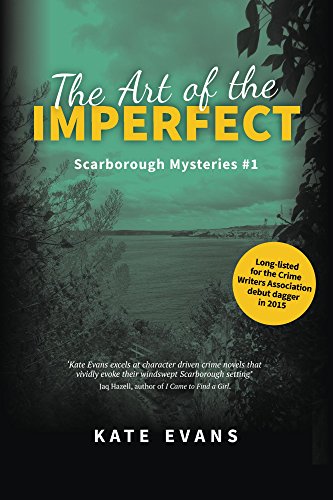
#BookReview ‘The Art of the Imperfect’ by Kate Evans #Yorkshire #crime

The Art of the Imperfect by Kate Evans starts with a murder but this mystery set in a Yorkshire seaside town is not a thriller, it is not a police procedural, it is not cosy crime; it a story about the psychology of the people concerned and the after-effects of the event. Evans is a counsellor, like her protagonist Hannah Poole, and this allows her to bring an emotional depth and understanding to her characters. This is the first in the Scarborough Mysteries series and was longlisted for the Crime Writers Association Debut Dagger award in 2015. Kate EvansLike Emma Woodhouse, Hannah is a serial not-finisher. She has failed to finish training to be an accountant, a plumber and, twice, to be a counsellor. This is the third time she’s tried the counselling thing, and now she discovers a dead body. Her boss. A large number of characters are introduced in the first few pages, and names are littered around which I found dislocating. But I love the drawing of the Yorkshire setting, the town of Scarborough– my home town, so I am biased – the train journey to York, all done with a light hand. For example, ‘The sea is below them. Its solid air-force blue cracked open only occasionally by a filament of white. It has retreated away from the brown sand and weedy rocks and is quiet, with only a whisper coming in on its frosty exhale.’
Dr Themis Greene, a romanticised version of her ordinary-sounding real name, is psychology lecturer at the Centre for Therapy Excellence. Hannah, back in Scarborough and lodging with her parents, is studying at the Centre but longs for the action of the city. She misses London, her lodgings with landlord Lawrence, and her friends. As part of her qualification Hannah must see a counsellor herself and this is where her deeply-hidden fears emerge, the trauma of finding the body, other things she has tried to forget.
The post-murder story is told by three people – Hannah, Detective Sergeant Theo Akande and lawyer Aurora, new mother and Hannah’s neighbour. In passages of intense description, Evans describes the post-natal depression suffered by Aurora as her dreams turn to delusion. She alternates between suspecting her husband Max of violence, to fearing Mad and their son have been abducted and replaced by wolf man and wolf baby. Some of these passages are a little wild for my taste and I admit to skipping paragraphs.
Therapy is an unusual element of this character-led mystery, unusual also for its portfolio of characters without one key protagonist. Theo and Hannah are not a double-act solving murder in the tradition of crime fiction, but this is not a traditional crime series.

If you like this, try:-
Reservoir 13’ by Jon McGregor
The Silent Twin’ by Caroline Mitchell
The Killing of Polly Carter’ by Robert Thorogood

And if you’d like to tweet a link to THIS post, here’s my suggested tweet:
#BookReview THE ART OF THE IMPERFECT by Kate Evans https://wp.me/p5gEM4-3Uz via @SandraDanby

#BookReview ‘Half of the Human Race’ by Anthony Quinn #WW1 #suffragette

Half of the Human Race by Anthony Quinn is a gem of a novel, one to keep and re-read. The front cover illustration suggests it is another Great War love story, but it is so much more than that. In fact the warfare occupies only a hundred or so pages. Rather, it is a character study of England before the war, of suffragettes and cricketers, of a different time, when the demands put on love were extreme. Anthony QuinnA new king is being crowned and the protestations of votes for women are taking a violent turn. Set against this background in 1911, we meet the key characters at a cricket match. Connie Calloway is a former medical student who now works in a bookshop after her father’s suicide left her family poorer than they expected to be. Will Maitland is a young county cricketer rubbing shoulders with the great ‘Tam’, AE Tamburlain, as popular as WG Grace. A flicker of attraction carries the pair throughout this story as both consider questions of loyalty and belief and where love fits into the mix. When the ageing Tam’s place in the M−Shire team is threatened, Will must consider whether to support his friend or risk losing his captaincy of the team. Connie, at once thrilled and intimidated as her friend Lily is imprisoned in Holloway for a suffragette demonstration, considers the strength of her belief in votes for women and how far she is prepared to go. When she meets an old school friend, she also must make a decision. The decisions they take govern the direction of their lives as times change and the country edges towards war. Will their attraction burgeon into romance and love? Connie is hardly Will’s mother’s idea of the girl he should marry. She is outspoken and independent, perhaps too much so for Will? Connie’s personality is juxtaposed with her older sister Olivia who, Connie fears, is trading her independence for a rich husband.
Quinn creates two characters of their time and beyond it, that are totally believable, with a surrounding cast of characters including the fascinating Tam, artist Denton Brigstock, cousin Louis and friend Lily. Quinn, obviously a cricket fan, writes with a light hand about the sport and this should not be off-putting for any readers who do not like cricket. It is a key part of the plot and offers a view of a gentleman’s world where codes of behavior and manners are assumed, where tradition rules; similar values are on show later in the book when Will, now Captain Maitland, is waiting for the next big push. When he confronts his commanding officer to query a battle plan, he is more like Connie than he would ever realize.

Click the title below to read my reviews of other books by Anthony Quinn:-
CURTAIN CALL
FREYA
MOLLY & THE CAPTAIN
OUR FRIENDS IN BERLIN
THE RESCUE MAN
THE STREETS

If you like this, try:-
‘My Dear, I Wanted to Tell You’ by Louisa Young
‘Stay Where You Are and Then Leave’ by John Boyne
‘A Long Long Way’ by Sebastian Barry

And if you’d like to tweet a link to THIS post, here’s my suggested tweet:
#BookReview HALF OF THE HUMAN RACE by Anthony Quinn https://wp.me/p5gEM4-33j via @SandraDanby

#BookReview ‘The Snakes’ by Sadie Jones #thriller #suspense

Bea and Dan come from completely different places. He is a mixed race boy from Peckham, South London, trying to make it as an artist but working as an estate agent. She is the daughter of parents with multiple homes, multiple cars, who travel in private jets and stay in luxurious hotels. Dan knows Bea dislikes her parents and their wealth, and applauds Bea’s decision to live an ordinary life with him in a scruffy flat. But Bea hasn’t been honest with him, she is an heiress to billions. Welcome to the Adamson family in The Snakes by Sadie Jones. Sadie JonesBilled as a psychological thriller, to me The Snakes is more a story of 360° snobbishness where characters make assumptions about the lives of others based on prejudice; it is about greed and excessive consumption; moral superiority in all quarters, a conviction of being right; racism; and unfamiliar police procedures, all wrapped up in the story of a seriously messed up family. The setting in rural France is beautifully written. One of the best, creepiest scenes is early on when Bea walks alone across the fields in the summer heat and takes a dip in a nearby stream. This early action suggests that Bea is emotional, an unreliable witness; should we believe her assessment of threat and safety? And if you query her judgement in a small situation, does it follow that she is unreliable as the horrible story progresses? Should we trust her, should we like her?
Most of the action takes place at the country house in Burgundy run by Bea’s brother Alex. Bea and Dan take time off work for a summer road trip, intending to stay with Alex at Paligny briefly before heading to the South of France. But Bea’s concern for Alex, his drinking and drug use, and the strange set-up at Paligny, lead them to stay. Alex fears snakes are in the house, he sets traps and dreams they are in the attic. And then Bea and Alex’s parents – Liv and Griff – arrive, bringing with them money, privilege and expectations. Griff sends Alex on an errand, and Alex is never seen again.
I went through phases of disliking every character, distrusting every character. Dan, though loyal to Bea, cannot help be intrigued by her bombastic father who sprays money around in a way Dan has never seen. Bea is self-righteous, something of a prig, lacking in confidence in the face of her bullying father and good-looking husband. Liv is indescribable; I had no feeling for her character except for understanding the hatred she triggers in Bea. Griff is a self-made man, a bully, unaware of the effect his behaviour has on his children. Everyone is selfish.
I was left with the feeling a different novel was trying to be heard. It is an odd ending, over-milked for every dramatic moment but oddly unthrilling. Difficult to figure out, this novel is like a Russian doll splitting with too many ideas. Perhaps the issue is that everyone seems to be lying, to each other and themselves.
CLICK HERE TO READ MORE ABOUT THIS BOOK AT AMAZON

If you like this, try:-
The House on Cold Hill’ by Peter James
The Girls’ by Lisa Jewell
The Ice’ by Laline Paull

And if you’d like to tweet a link to THIS post, here’s my suggested tweet:
#BookReview THE SNAKES by Sadie Jones https://wp.me/p5gEM4-41G  via @SandraDanby

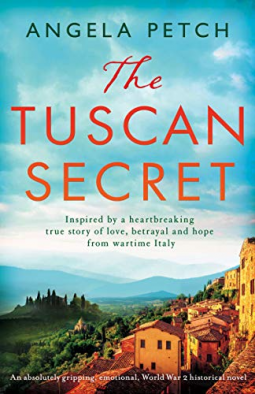
#BookReview ‘The Tuscan Secret’ by Angela Petch #WW2 #romance

The Tuscan Secret by Angela Petch is one of those books that is difficult to define. Is it a romance; partly. Is it historical; yes if World War Two counts as historical. Is it a page turner; for me, not quite. The heart of this novel lies in its Italian setting. The author lives part of the year in Tuscany and it really shows. From the descriptions of the countryside to the food and customs, The Tuscan Secret is totally believable. The deserted village of Montebotelino is real. Angela PetchTwo women – Ines, her daughter Anna – share tangled family histories. Ines has recently died and leaves to Anna some money and a box of diaries. Written in Italian, Anna cannot decipher the diaries so decides to leave behind her own unsatisfactory love life and use her mother’s money to travel to Rofelle in Tuscany. Why did Ines leave idyllic Roffele, what secrets did she write in the diaries, and how did she come to marry an Englishman.
This is a dual timeline story which switches back and forth between mother and daughter. Anna arrives in Rofelle where she moves into an agriturismo and gets to know its owner Teresa and her brother Francesco. Anna’s Italian soon proves inadequate so Francesco introduces her to the locals and translates the diary in sections. Ines’ story is presented to the reader as her diary though it reads as narrative complete with dialogue. Ines is a teenager, helping her mother, longing to be with her brother Davide who is with their schoolfriend Capriolo, fighting in the mountains. Then one day, they help an injured English soldier who is trying to escape enemy territory.
I found myself looking forward to Ines’ sections and almost wished the story was completely hers. Rofelle is located in the Apennine mountains, home to resistance fighters and the route for allied soldiers escaping the Germans. The experience of the local people – the urge to fight, the need to survive, the duty to help fleeing soldiers, the threat of atrocities by the occupying German army – sets up impossible choices. I love any world war two story and especially those about an area with which I’m unfamiliar.
I struggled with the character of Jim who is thinly sketched and affected by huge events off the page. The author keeps these a secret from the reader as Jim kept them hidden from Ines, but it does make him an unsympathetic character. This feels like a potential heavyweight war novel hidden beneath a layer of romance which, as nice as it is, feels light and predictable in comparison.

Here are my reviews of other novels also by Angela Petch:-
THE POSTCARD FROM ITALY
THE GIRL WHO ESCAPED

If you like this, try:-
The Invitation’ by Lucy Foley
Those Who Are Loved’ by Victoria Hislop
The Lost Letters of William Woolf’ by Helen Cullen

And if you’d like to tweet a link to THIS post, here’s my suggested tweet:
#BookReview THE TUSCAN SECRET by Angela Petch https://wp.me/p5gEM4-44D via @SandraDanby

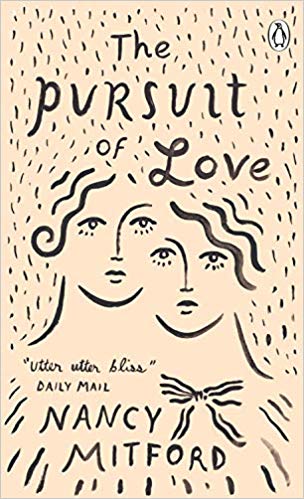
Great Opening Paragraph 120… ‘The Pursuit of Love’ #amreading #FirstPara

“There is a photograph in existence of Aunt Sadie and her six children sitting round the tea-table at Alconleigh. The table is situated, as it was, is now, and ever shall be, in the hall, in front of a huge open fire of logs. Over the chimney-piece plainly visible in the photograph hangs an entrenching tool, with which, in 1915, Uncle Matthew had whacked to death eight Germans one by one as they crawled out of a dug-out. It is still covered with blood and hairs, an object of fascination to us as children. In the photograph Aunt Sadie’s face, always beautiful, appears strangely round, her hair strangely fluffy, and her clothes strangely dowdy, but it is unmistakably she who sits there with Robin, in oceans of lace, lolling in on knee. She seems uncertain what to do with his head, and the presence of Nanny waiting to take him away is felt though not seen. The other children, between Louisa’s eleven and Matt’s two years, sit around the table in party dresses or frilly bibs, holding cups or mugs according to age, all of them gazing at the camera with large eyes opened wide by the flash, and all looking as if butter would not melt in their round pursed-up mouths. There they are, held like flies, in the amber of that moment – click goes the camera and on goes life; the minutes, the days, the years, the decades, taking them further and further from that happiness and promise of youth, from the hopes Aunt Sadie must have had for them, and from the dreams they dreamed for themselves. I often think there is nothing quite so poignantly sad as old family groups.” Nancy MitfordFrom ‘The Pursuit of Love’ by Nancy Mitford

Read my reviews of these novels by Nancy Mitford:-
CHRISTMAS PUDDING
HIGHLAND FLING
LOVE IN A COLD CLIMATE
PIGEON PIE
THE BLESSING
THE PURSUIT OF LOVE
WIGS ON THE GREEN

Try one of these #FirstParas & discover a new author:-
‘The Long Drop’ by Louisa Mina 
Original Sin’ by PD James 
Lucky You’ by Carl Hiassen 

And if you’d like to tweet a link to THIS post, here’s my suggested tweet:
#Books #FirstPara THE PURSUIT OF LOVE by Nancy Mitford https://wp.me/p5gEM4-3JC via @SandraDanby

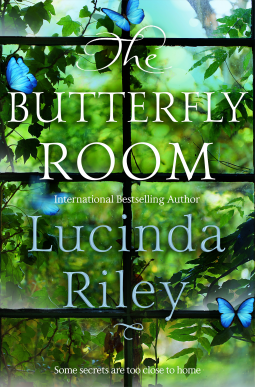
#BookReview ‘The Butterfly Room’ by Lucinda Riley #romance #suspense

The latest family saga from Lucinda Riley sweeps from Southwold in Suffolk to Bodmin Moor, London to Cambridge, carrying with it the tangled secrets of three generations. The Butterfly Room is a big book, 640 pages, but I didn’t notice. This is so much more than a romance, though there is love – and betrayal – in its pages; at the centre of it all is Admiral House in Southwold, the home of the Montague family. Lucinda RileyThe book opens in 1944 as Posy Montague catches butterflies with her Spitfire pilot father, just before he returns to the airforce for the last few months of the war. I actually found this a stuttering start, the first person voice of a seven-year old is difficult to pull off convincingly, even if she is bookish and described as ‘precocious’… a sharp, intelligent child, but one who doesn’t understand the behaviour of adults around her. In fact this first chapter is something of a prologue, setting up behaviour which rattles through the following generations. The story really took off for me when the 2006 strands start – Posy, now seventy; son Nick and girlfriend Tammy; daughter-in-law Amy; old friend Freddie and novelist lodger Sebastian. Off page, Posy married and was widowed, returning to Southwold to open up the family home. She hadn’t been there since her father was killed at the end of the war and Posy went to live with her grandmother in Devon. She raised her family in the house but now it is creaking and crumbling around her, it is too big for her and costs too much to keep going. There is some mystery about Admiral House, something happened there of which Posy is still unaware, but which is going to be disturbed as she sells the house in order to downsize.I had my guesses, and I was wrong.
The luxury of telling a story with this inter-generational scope is that it is possible to feature a number of characters in depth. Posy is the lynchpin of the book and at the centre of her family’s lives. And so we explore her eldest son Sam and his marriage to Amy, who is mistreated, downtrodden but full of love and determination. Posy’s second son Nick, a successful antiques dealer in Australia, has returned home to set up a new business. In London he meets former model Tammy, who is setting up her vintage fashion shop Reborn.
There are three core secrets, mysteries that saw me read late into the night and pick up the book at every available opportunity; something from Posy’s past, something from Nick’s past, and the business dealings of weak, unscrupulous Sam.
One of the type of books that, once you’ve finished it, you wish you’d never read it so you can start all over again. I galloped through it on holiday but some of the issues stayed with me afterwards; that fractured families can re-heal if the will is there, that cutting loose from the past can be both heart-breaking and freeing, and that it is never too late to say yes.

Read my reviews of the first seven novels in Lucinda Riley’s ‘Seven Sisters’ series:-
THE SEVEN SISTERS #1SEVENSISTERS
THE STORM SISTER #2SEVENSISTERS
THE SHADOW SISTER #3SEVENSISTERS
THE PEARL SISTER #4SEVENSISTERS
THE MOON SISTER #5SEVENSISTERS
THE SUN SISTER #6SEVENSISTERS
THE MISSING SISTER #7SEVENSISTERS

… plus my reviews of these standalone novels, also by Lucinda Riley:-
THE LOVE LETTER
THE GIRL ON THE CLIFF

If you like this, try:-
A Week in Paris’ by Rachel Hore
The Invitation’ by Lucy Foley
Amy Snow’ by Tracy Rees

And if you’d like to tweet a link to THIS post, here’s my suggested tweet:
#BookReview THE BUTTERFLY ROOM by Lucinda Riley https://wp.me/p5gEM4-3UR via @SandraDanby

#BookReview ‘Akin’ by Emma Donoghue #WW2 #contemporary

Noah Selvaggio, a widower and retired chemistry professor, is about to leave New York for Nice, France, on an 80th birthday trip to discover his childhood roots. He expects to travel alone. Except in Akin by Emma Donoghue, Noah finds himself in temporary charge of his 11-year old great nephew Michael. The trip to Nice goes ahead, the old man and the boy learn new things about themselves, each other, and about the world. Emma DonoghueThis is effectively a road trip in a book, more of a ‘holiday trip’. The unlikely travelling companions are quite sparky, irritating each other, each reacting wildly to the other’s strange cultural habits. Donoghue does an excellent job with the Nice setting, effortlessly bringing it alive; the gardens, the architecture, the food, the carnival, the French themselves. I loved the grumpiness that both characters demonstrate. Michael’s weary ‘dude’ when Noah tries to educate him about something – ‘it’s a selfie, dude’, ‘eyebleach, dude’; Noah’s repeated requests that Michael eat a proper meal that includes vegetables. Any adult who is not natural with children and who has spent uncomfortable time with an awkward teenager, will identify with Noah’s dilemma. Michael can be gentle, inquisitive, cocky, snide, exhausting and infuriating. Noah needs frequent naps, prefers education to circuses, but he makes an effort because Michael’s father is dead, his mother in prison, and his grandmother has just died. Noah is the nearest relative who can be found. It doesn’t matter that they have never met, and that Noah is 79. Michael is grieving for his grandmother, and the absence of his mother Amber; Noah is grieving for his wife Joan, who pops up occasionally with acid asides when his handling of Michael backfires.
The mismatch between these two males – their ages, education, class, life chances – sounds like a recipe for disaster but the mixture of two opposites causes a chemical reaction involving respect, support, empathy and disagreement about mobile phones. Noah left Nice at the age of four, leaving behind his mother who was caring for her photographer father, to join his father in the USA. When Margot arrived in New York after the war, nothing much was said about the war years. This trip is Noah’s chance to find some answers. So as they identify the locations in Margot’s photographs taken in Nice during the war, Noah and Michael attempt to piece together her life. Was she simply her father’s photography assistant, or something else? A member of the Resistance, a forger of documents for Jewish orphans; or a snitch who betrayed her neighbours to save her family. Is there anyone in Nice who can help Noah and Michael find the truth?
This is a slow-burn book about the relationship between an old man and a pre-teen boy from very different worlds, and is told exclusively from the adult viewpoint. It is about families across generations facing difficult choices, taking risks in the hope of helping family, paying the consequences if things don’t work out; and above all, about the similarities. ‘He and this boy were quite alien to each other, he decided. Yet, in an odd way, akin.’
For me, this is another Donoghue hit.

Read my reviews of these other Donoghue novels:-
FROG MUSIC
THE PULL OF THE STARS
THE WONDER

Read the first paragraph of ROOM.

If you like this, try:-
Days Without End’ by Sebastian Barry
The Ballroom’ by Anna Hope
Summertime’ by Vanessa Lafaye

And if you’d like to tweet a link to THIS post, here’s my suggested tweet:
#BookReview AKIN by Emma Donoghue https://wp.me/p5gEM4-436 via @SandraDanby