Tag Archives: histfic

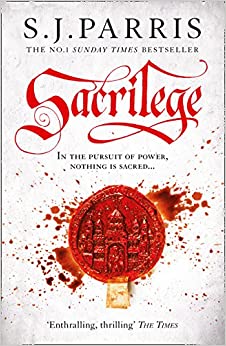
#BookReview ‘Sacrilege’ by SJ Parris @thestephmerritt #historical #crime

Everywhere he goes in the England of Queen Elizabeth I, Italian philosopher Giordano Bruno runs into trouble. In Sacrilege, third in this quickly-becoming-addictive series by SJ Parris, Bruno is in Canterbury to help an old friend prove her innocence of murder. And to spy for his master, Sir Francis Walsingham. SJ ParrisWhen the woman he loved in the first book of the series asks for his help, Bruno risks the wrath of Walsingham and heads to Canterbury. Set in turbulent political times, the various historical plots are twisted and complicated. Weary at Bruno’s determination to pursue what he believes is a lost cause, Walsingham charges him with identifying a traitor in the cathedral administration in Canterbury. Parris weaves a fictional plan by Catholics in Britain and France to use the ‘discovered’ bones of Thomas Becket to anoint a new Catholic king when France should invade England. The labyrinthine politics and geography of the inner sanctums of Canterbury cathedral add to the tension. The scenes in the crypt are thrilling as Bruno again and again takes huge risks to discover the truth. When he is charged with murder and a fabricated charge of theft, he realises his contacts at the royal court in London are too far away to help.
Bruno is a foreigner in England, a country where a strange accent and tanned skin make him an instant threat, his guilt automatically assumed. Parris populates her Canterbury with a collection of believable fictional characters, conflicted people who must sometimes take a wrong decision in order to survive or protect a loved one. Throw in an odious servant, a persecuted family of Huguenot weavers, a tremulous canon who has spied for Walsingham but missed some big hints of trouble and an independently-minded young woman not afraid to tell the truth as she sees it.
At times the pace slows to walking speed but turn a page and another chase begins or clue arrives. When the twist arrived at the end I was surprised, then realised I had known all along. Surely a satisfactory conclusion?

Read my reviews of other books in this series:-
HERESY #1GIORDANOBRUNO
PROPHECY #2GIORDANOBRUNO
TREACHERY #4GIORDANOBRUNO
CONSPIRACY #5GIORDANOBRUNO
EXECUTION #6GIORDANOBRUNO
ALCHEMY #7GIORDANOBRUNO

If you like this, try:-
The Diabolical Bones’ by Bella Ellis #2BRONTEMYSTERIES
Lord John and the Private Matter’ by Diana Gabaldon
Or the Bull Kills You’ by Jason Webster #1MAXCAMARA

And if you’d like to share a link:
#BookReview SACRILEGE by SJ Parris @thestephmerritt https://wp.me/p5gEM4-5CC via @SandraDanby

#BookReview ‘Plague Land’ by SD Sykes #historical #plague #histfic

I’ve realised that when I start reading the first book in new series, I should have different expectations. It will not be a standalone novel so there will be continuing threads, unanswered questions and seemingly unrelated sub-plots which all come good in later books. In other words, I wear my ‘be patient’ hat. Plague Land by SD Sykes is first in the historical mystery Oswald de Lacy series. Set in 1350 in countryside ravaged by the plague, teenager Oswald reluctantly finds himself called home from the monastery to be lord of the manor. For almost the whole of the book, he is out of control of events. SD Sykes

This is a historical mystery with an uncertain, inexperienced young lord at its centre. Oswald’s mother and sister are rude to him, the locals simply ignore him, his servants show a lack of respect. A neighbouring lord and the local churchman see him as easy to manipulate and when he is new to his role, Oswald agrees with them. He longs to return to the monastery with his mentor, Father Peter, who returned to Somershill Manor with Oswald. Sykes does a good job portraying a young adult trying to occupy a mature man’s role. What drives him on is an incurable determination to find the truth and an endearing bravery which makes him ask awkward questions and takes him to places he probably shouldn’t be.
When one young woman from the village, then another, are killed in mysterious circumstances, Oswald doesn’t so much lose control of the situation as never hold control in the first place. Rumours of dog-headed monsters rip through the community despite Oswald’s attempts to engage the villagers in logical analysis. Superstition, fear and myth abound in a countryside empty of people; understandable following the horror of death, disease and poverty of the plague.
Many people are not how or who they seem and Oswald learns the hard way not to take appearances or counsel for granted. His questioning of everything and everyone inevitably leads to conflict, and conflict is the beating heart of fiction.
I connected more with Oswald as the story progressed and he was less naive, and now anticipate reading the rest of the series.

Here are my reviews of other books in this series:-
THE BUTCHER BIRD #2OSWALDDELACY
CITY OF MASKS #3OSWALDDELACY
THE BONE FIRE #4OSWALDDELACY
THE GOOD DEATH #5OSWALDDELACY

If you like this, try:-
‘The Almanack’ by Martine Bailey #1TABITHAHART
‘Winter Pilgrims’ by Toby Clements #1KINGMAKER
‘Gone are the Leaves’ by Anne Donovan

And if you’d like to tweet a link to THIS post, here’s my suggested tweet:
#BookReview PLAGUE LAND by SD Sykes https://wp.me/p5gEM4-5nv via @SandraDanby

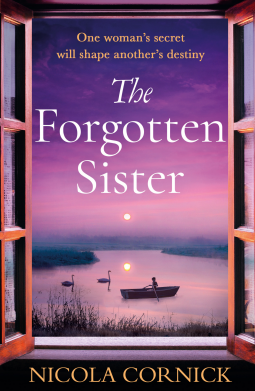
#BookReview ‘The Forgotten Sister’ by Nicola Cornick @NicolaCornick #historical #Tudor

The Forgotten Sister by Nicola Cornick is a retelling of the Tudor love triangle of Queen Elizabeth I, Robert Dudley and Dudley’s wife Amy Robsart. The death of Amy has intrigued historians for centuries: did she fall downstairs, or was she pushed? Did her husband arrange her murder so he could marry the queen? Tudor history is mashed together with time travel and all kinds of mystical goings-on. Nicola CornickCornick has fun with her explanation of events, telling the story in dual timelines and mirroring Tudor characters with a contemporary circle of celebrities. At first, I found this irritating and was diverted from the story by trying to match up modern personalities with their Tudor equivalent. But when I stopped doing that, I sank into this easy-to-read story which I read over a weekend.
Lizzie Kingdom is a television personality with a clean-cut image. Her best friend is Dudley Lester, wild boy and former boy band member of Call Back Summer. When Dudley’s wife Amelia falls down the stairs to her death at their country house, Oakhanger Hall, Lizzie is suspected of having an affair with Dudley. Her ‘good girl’ image is in tatters and the press is hunting her. Lizzie’s story races along, she quickly discards her sycophantic group of followers and retreats to a country house she inherited but has rarely visited. And there we start to understand the mystical ability which Lizzie possesses connecting her with events in the past simply by touching an object – known as psychometry, or token object reading.
The romantic sub-plot sparks into life when Lizzie accidentally touches Arthur Robsart, the quiet rather stolid older brother of Amelia. Never before has her psychometric ability worked on a person. Arthur and his sister Anna suspect Lizzie of responsibility for the disappearance in odd circumstances of their younger brother Johnny. With the police seeking her again, this time for possible murder, Lizzie must choose whether to use the ability she has previously used only to remember her dead mother. To say more will give away the plot.
This was a fun read though populated with some unpleasant characters who were difficult to like. I was left wondering what the story would have been like if the viewpoints had been expanded to four. Cornick tells the story only via Amy Robsart and Lizzie Kingdom and shows us nothing of the events as experienced by Queen Elizabeth I [Lizzie’s equivalent] or Amelia Lester [Amy’s modern-day equivalent]. After Amelia’s death, Lizzie is crucified on social media, I was left wondering if Queen Elizabeth knew, or cared about, the gossip surrounding Dudley’s, and her own, guilt in Amy’s death.
A note on the cover, yet again another cover design which, though attractive, bears little connection with the story.

Read my reviews of these other novels by Nicola Cornick:-
THE FOURTH QUEEN
THE LAST DAUGHTER
THE OTHER GWYN GIRL
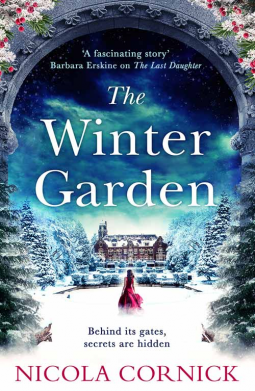
THE WINTER GARDEN

If you like this, try:-
‘Kings and Queens’ by Terry Tyler #1LANCHESTER
‘The Lady of the Rivers’ by Philippa Gregory
‘Cecily’ by Annie Garthwaite

And if you’d like to share a link:
#BookReview THE FORGOTTEN SISTER by Nicola Cornick @NicolaCornick https://wp.me/p5gEM4-4JT via @SandraDanby

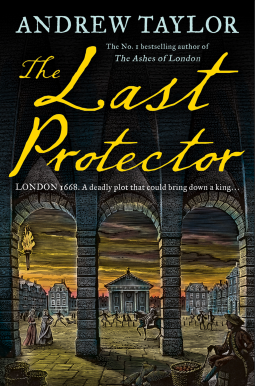
#BookReview ‘The Last Protector’ by Andrew Taylor @AndrewJRTaylor #Historical

Fourth in the 17th century crime series by Andrew Taylor, The Last Protector sees the return to London of Richard, Oliver Cromwell’s son, and last Protector of England before the restoration of the king in 1660. And it also heralds the central plot return of Cat Lovett. Ever since the first book in the series, I have waited for Cat to have a key role in the plot again. Andrew TaylorThe story begins as James Marwood, clerk to the Under secretary of State to Lord Arlington, is sent to secretly observe a duel between two lords. Meanwhile Cat, now Mistress Hakesby and married to a frail elderly architect, meets a childhood acquaintance in the street. This is Elizabeth Cromwell, daughter of Richard. Remembering their friendship as a fleeting thing, Cat is confused by Elizabeth’s eagerness to rekindle their relationship. Until, visiting Elizabeth at her godmother’s house, she is introduced to a fellow guest John Cranmore. But a peculiar habit of tapping a finger on the table brings back memories for Cat, to the time when she and her father moved in elevated political circles, and she realizes Cranmore is a false name. Elizabeth, it becomes clear, is seeking a precious object hidden by her grandmother. The object is hidden in the Whitehall sewers beneath The Cockpit, site of the cockfighting pit, theatre and jumble of additional buildings. The Hakesbys have the architectural drawings and Elizabeth needs Cat’s help to instigate her search.
In the bigger picture, Easter holiday riots attacking brothels seem to be politically motivated. Holidays are notorious times for brawls by apprentices, but these riots by the Levellers seem encouraged by bawdy newssheets of questionable origin. The Levellers shout ‘we have been servants, but we will be masters now’. Marwood is attacked and chased around the back alleys of the City while Cat, helping Elizabeth retrieve the mysterious package, is chased and escapes with the help of Ferrus, a mazer scourer, the lowest of the low who clears blockages in the sewers.
Marwood and Cat share little page time but their separate stories and chases become entwined as the troublesome history of Cat’s dissenter father puts her in grave danger. And affecting everything are the political machinations and arguments between crown and government.
An excellent page-turner.

Read my reviews of the other books in this series:
THE ASHES OF LONDON #1FIREOFLONDON… and try the #FirstPara of THE ASHES OF LONDON
THE FIRE COURT #2FIREOFLONDON
THE KING’S EVIL #3FIREOFLONDON
THE ROYAL SECRET #5FIREOFLONDON
THE SHADOWS OF LONDON #6FIREOFLONDON
And a World War Two novel by the same author:-
THE SECOND MIDNIGHT

If you like this, try:-
The Wicked Cometh’ by Laura Carlin
The Mermaid and Mrs Hancock’ by Imogen Hermes Gowar
‘The Winter Garden’ by Nicola Cornick

And if you’d like to tweet a link to THIS post, here’s my suggested tweet:
#BookReview THE LAST PROTECTOR by Andrew Taylor @AndrewJRTaylor https://wp.me/p5gEM4-4tI via @SandraDanby

#BookReview ‘A God in Ruins’ by Kate Atkinson #WW2

If the best recommendation for a novel is that, once you finish it, you want to start reading it all over again, then this is my recommendation for A God in Ruins by Kate Atkinson. The story of Teddy Todd reeled me in until I was reading late into the night.

Kate AtkinsonTeddy is brother to Ursula Todd, who featured in Atkinson’s Life after Life, but this is not a sequel. More a companion piece, one book informs the other but stands up fully on its own. Read either first, it doesn’t matter. This is a book about war – the Second World War, the daily grind of Teddy’s life as a bomber pilot – and the effect this experience has on the rest of his life. War doesn’t happen and then go away, it colours lives and affects them until death, mostly unnoticed or misunderstood by relatives. And so we see Teddy’s life, told in a chopped up manner with excerpts from his childhood, war, early marriage and fatherhood, and as a much-loved grandfather. I don’t think I’m giving much away here to say he survives the war, but Atkinson’s descriptions of his bomber sorties are realistic, we feel the cold, the fear, the near-misses, the camaraderie, the determination and discomfort. Reading the bibliography at the back of the book, her research was thorough but it never shouts out from the page. Details are included because they are important to Teddy’s life, not because they happened.
Kate Atkinson remains a ‘go to’ author for me, I buy every book she writes.

Read my reviews of these other books by Kate Atkinson:-
BIG SKY #5JACKSONBRODIE
DEATH AT THE SIGN OF THE ROOK #6JACKSONBRODIE
LIFE AFTER LIFE
NORMAL RULES DON’T APPLY
OUR NOBLE SELVES
SHRINES OF GAIETY
TRANSCRIPTION

… and try the #FirstPara of EMOTIONALLY WEIRD

If you like this, try:-
The Aftermath’ by Rhidian Brook
The Light Years’ by Elizabeth Jane Howard
After the Bombing’ by Clare Morrall

And if you’d like to share a link:
#BookReview A GOD IN RUINS by Kate Atkinson via @SandraDanby http://wp.me/p5gEM4-1IK

#BookReview ‘The Miniaturist’ by Jessie Burton #historical #Amsterdam

The Miniaturist by Jessie Burton is an intriguing treasure box of a story. Eighteen-year-old Nella starts her new life as a married woman at her husband’s home in Amsterdam. He is a wealthy merchant and it is an arranged marriage. But Nella finds herself in a world she did not expect: a husband never at home, an abrupt and unwelcoming sister-in-law, two servants who behave as if life on the Herengracht is full of secrets. Nella feels always at a disadvantage. Jessie BurtonJohannes Brandt’s wedding gift to his wife is a cabinet, a kind of empty doll’s house for a young woman, a miniature of their home intended to be used by a young woman to learn how to run a home. “The accuracy of the cabinet is eerie, as if the real house has been shrunk, its body sliced in two and its organs revealed.” It frightens her but she is unable to formulate why. There is other disturbing imagery to suggest life in the house is not as it first appears. On the dark walls there are paintings of dead animals and at Nella’s first public outing as a wife, to the Silver Guild dinner, Nella meets Agnes Meermans. Agnes wears pearls in her hair, “The pearls are the same size as milk teeth.” Odd.
Nella orders her first miniature objects from a craftsman, a miniaturist, and the story burst into life after a slowish start. First, the three objects Nella orders are chosen as symbols of defiance against her new life. Secondly, the package is delivered by the intriguing Jack Philips of Bermondsey. Who is Jack, is he the miniaturist? Or does the title of the book refer to Nella? How else does the miniaturist know what is happening in Nella’s home, and her mind?
One thing is clear, everything in this book – and in the house on the Herengracht – is not as it seems. I raced through this.

Read my review of THE CONFESSION, also by Jessie Burton.

If you like this, try:-
Rush Oh!’ by Shirley Barrett
The Penny Heart’ by Martine Bailey
The Knife with the Ivory Handle’ by Cynthia Bruchman

And if you’d like to tweet a link to THIS post, here’s my suggested tweet:
#BookReview THE MINIATURIST by Jessie Burton via @SandraDanby http://wp.me/p5gEM4-17B

#BookReview ‘The Quick’ by Lauren Owen #historical

The Quick by Lauren Owen is a gothic tale about a brother and sister from Yorkshire. The story moves between Aiskew Hall – where we first meet Charlotte and James as children – and London; both settings atmospheric, both drawn so clearly you can smell the air. This book will reward re-reading: only after I had finished the last page did I go back to the beginning and appreciate the menace of the first sentence, “There were owls in the nursery when James was a boy.” Lauren Owen Aiskew is ever-present. When they are older and far from home, Charlotte reminds James “… how the air smelled green in spring, and smoke-grey in autumn, how on April mornings the mists would lift slowly, leaving a blue haze behind.”
This book has a really slow build. It starts with a prologue, an excerpt from 1890, which I read and then immediately forgot. I enjoyed Part One about the childhood of James and Charlotte at Aiskew, their mother dead, their father absent, Charlotte teaching James his alphabet by chalking the letters onto flagstones, playing games in the secrets of the big house. When the siblings are parted as James goes to university and then to London, the story starts to move a little quicker. I started to feel expectant, waiting for something to happen. Which of course, it does, and it is creepy and not what I was expecting. For me the story really gets going when Charlotte comes to London. After that, the action comes thick and fast. The tension in the second half is more like a film, making the first part of the book feel as if the author was feeling her way into the story.
Definitely one to read again. And I can see it on television.

If you like this, try:-
Frog Music’ by Emma Donoghue
The Penny Heart’ by Martine Bailey
Orphans of the Carnival’ by Carol Birch

And if you’d like to tweet a link to THIS post, here’s my suggested tweet:
#BookReview THE QUICK by Lauren Owen via @SandraDanby http://wp.me/p5gEM4-Rj