Tag Archives: histfic

#BookReview ‘At the Edge of the Orchard’ by Tracy Chevalier @Tracy_Chevalier #historical

Tracy Chevalier is a ‘must buy’ author for me and At the Edge of the Orchard does not disappoint. It is a story about roots – of family and trees – about the pioneers who populated built America’s mid-west and west coast, battling swamp and mountains. Most importantly it is about apples. Tracy ChevalierThe scent of the fruit imbues every page. But this is not a romantic story. The Goodenough family live an at-times brutal life as they try to establish an apple orchard in Ohio’s Black Swamp in 1838. Love them or hate them, the apples affect the direction of their lives.
The story started slowly for me as we hear the family’s daily life told by mother Sadie and father James. The two are so antagonistic that you wonder how they ever married. They battle the elements, each other and Sadie’s need for applejack, to put food in the mouths of their surviving children. In winter they wade through mud, in summer they battle swamp fever. Sadie is an almost completely unsympathetic character, hiding in a bottle while her husband hides with his apples. The children, if they survive, are adults before their time.
The story really took off for me when we hear what happens to Robert, the youngest son, who one day simply walks away from the farm. Fifteen years later he is an itinerant worker on boats and even in the Gold Rush, before a chance meeting in California with a plant collector [the real William Lobb] changes his life. He writes home to the family in the Black Swamp, but hears nothing. Is his family dead? Why did he really leave? Can Robert leave behind the apple legacy and become his own man? Will he ever shake off memories of his difficult upbringing and forge close relationships himself? Having seen the Californian sequoias which Robert discovers, I loved the second half of this book.

Read my reviews of Tracy Chevalier’s other novels:-
A SINGLE THREAD
NEW BOY
THE GLASSMAKER
THE LAST RUNAWAY

If you like this, try:-
‘The Knife with the Ivory Handle’ by Cynthia Bruchman
‘If I Knew you were going to be this Beautiful, I never would have let you go’ by Judy Chicurel
‘Time will Darken It’ by William Maxwell

And if you’d like to share a link:
#BookReview AT THE EDGE OF THE ORCHARD by Tracy Chevalier @Tracy_Chevalier via @SandraDanby http://wp.me/p5gEM4-2dY

#BookReview ‘The French Lesson’ by Hallie Rubenhold @HallieRubenhold #historical

The French Lesson by Hallie Rubenhold is an entertaining account of Henrietta Lightfoot’s time in the Paris of 1792 during the French Revolution, a period of which my knowledge is scanty. This is a women’s story told with authority by social historian Rubenhold, at a time when the new order replaced the old and changed women’s lives in the process. Hallie Rubenhold Years after the event, Hettie writes her account of what happened at the request of a benefactor. As the novel opens, she is living in Brussels with the love of her life, George Allenham, 4th Baron Allenham of Herberton, expecting to be married and so calling herself Mrs Allenham. But when Allenham’s mysterious work takes him to Paris, he does not return. She receives a letter from him saying Paris is dangerous and though he must stay there for his work, she must return to England for her safety. But Hettie follows her heart to Paris.
With the Revolution threatening, she is attacked, robbed, rescued and so finds herself indebted to Mrs Grace Elliot, an English woman who survives in Paris as a lover to rich important men. Hettie is drawn into this life too. The French Lesson is an enjoyable account of a fast-paced, thrilling and bloodthirsty moment in history, combining real characters – d’Orleans, known as Philippe Égalité after the Revolution; his current mistress, Agnès de Buffon; and former mistress, Mrs Elliot – with fictional characters Hettie and Allenham.
As always in war, people are not what they seem. Hettie is driven on first by love, then by the need to survive. She is told by Mrs Elliot not ‘to trust’ and it is a hard lesson to learn.
I learned after reading The French Lesson that it is the second of a trilogy – the first is Mistress of My Fate – though I read it happily as a stand-alone novel.

If you like this, try:-
‘In Another Life’ by Julie Christine Johnson
‘An Officer and a Spy’ by Robert Harris
‘Citadel’ by Kate Mosse

And if you’d like to share a link:
#BookReview THE FRENCH LESSON by Hallie Rubenhold @HallieRubenhold via @SandraDanby http://wp.me/p5gEM4-1ZV

#BookReview ‘Orphans of the Carnival’ by Carol Birch @CarolBirch #historical

What to say about this unusual novel by Carol Birch? First, I loved part of it. Second, I didn’t realize until I got to the end that it is loosely-based on a true story. If you loved Birch’s Jamrach’s Menagerie, try this. Carol BirchA young veiled woman travels by train from Mexico to New Orleans. She is disfigured but we don’t know the exact details until quite a way into the book: this is a novel which rewards patient reading. Julia Pastrana becomes a music hall attraction – singing, dancing, playing a guitar – while undergoing examinations by doctors who proclaim her part-human. Her successive managers make the most of the doctors’ pronouncements. This is a linear narrative, Julia’s life story, driven by her search for unconditional love.
The real Julia Pastrana had large ears and nose, irregular teeth and straight black hair all over her body. Despite her obvious intelligence – she spoke three languages – the myths continued until her death. It is an indictment of the way people not considered ‘normal’ were treated in the 19th century, seeing them as attractions rather than people with feelings.
The modern-day storyline of Rose, a young woman who collects unwanted items, was, for me, an unnecessary distraction from the main story. The obvious connection between the two women is their struggle to fit into society, though Rose is more of an emotional drifter.

Click the title for a brief taster of Carol Birch’s JAMRACH’S MENAGERIE.

If you like this, try:-
‘An Appetite for Violets’ by Martine Bailey
‘The Miniaturist’ by Jessie Burton
‘Frog Music’ by Emma Donoghue

And if you’d like to share a link:
#BookReview ORPHANS OF THE CARNIVAL by Carol Birch @CarolBirch via @SandraDanby http://wp.me/p5gEM4-29G

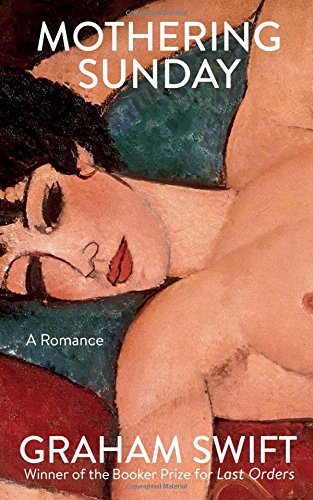
#BookReview ‘Mothering Sunday’ by Graham Swift #historical

The title of Mothering Sunday by Graham Swift refers to the day on which the story takes place, rather to any essay about motherhood. It is March 30, 1924, Mothering Sunday, when servants are given the day off to visit their mothers. A young woman, an orphan and servant, meets a young man from a neighbouring house, who is betrothed to another woman. It is to be their last assignation before his marriage. Graham SwiftThis is a slim book, a novella, beautifully-written. I wasn’t sure at the beginning, I found the first page and the reference to Fandango the racehorse a little odd. But once I got past that, I read it in one sitting on an airplane.
It is a story about telling stories. This story is told by a novelist in her nineties who is used to be interviewed and asked repetitively about her life as a writer: when did she become a writer? The answer lies on Mothering Sunday in 1924. This is a treatise about the class system of the time, about sex and sensuality, about rebellion and about bucking the system. Jane – the housemaid and novelist – is a keen reader and with the permission of her master, she borrows books from his library. She prefers boys’ stories, adventure tales, and then she stumbles on Joseph Conrad and is smitten. Her reading sets her apart from her master, and her lover Paul. The Mothering Sunday on which the events happen takes place at a time of great transition between the wars, as the role of women was widening. Books give Jane a route out of her servile world, away from sex with the master’s son without hope of subsequent marriage, to a job as an assistant in a bookshop.
We only see the story from Jane’s point of view, Young Jane and Old Jane. Is she telling the truth, embroidering the story for fictional effect, layering on the emotions of the tragedy that occurs that sunny March afternoon?
A masterpiece, again by Swift. It stayed with me and will be re-read.
An aside, this hardback edition has the most wonderful cover design: a detail from Reclining Nude [red nude] 1917-18 by Modigliani. It will look well on my bookshelves for years to come.

Here’s my review of Swift’s HERE WE ARE.

If you like this, try:-
‘The Whereabouts of Eneas McNulty’ by Sebastian Barry
‘My Name is Lucy Barton’ by Elizabeth Strout
‘Lean Fall Stand’ by Jon McGregor

And if you’d like to share a link:
#BookReview MOTHERING SUNDAY by Graham Swift via @SandraDanby http://wp.me/p5gEM4-1XD

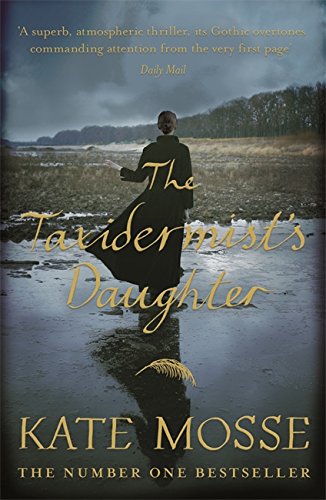
#BookReview ‘The Taxidermist’s Daughter’ by Kate Mosse #historical #gothic #mystery

I will say up front that the taxidermy sections in The Taxidermist’s Daughter by Kate Mosse were too gory for me. That aside, this is a gothic mystery set in the South Coast marshes of Fishbourne in 1912. In fact it seemed timeless, difficult to place the action only two years prior to the outbreak of the Great War.Kate MosseThe weather is ever-present to set the tone of the story: wind, rain and storms and Fishbourne is a real place. Mosse, a Chichester resident, uses her local knowledge to good effect. But, I struggled to connect with the story and cannot put my finger on why.
The storyline focuses on 22-year old Connie Gifford and her father, the taxidermist and his daughter, who live in an isolated house on the marshes at Fishbourne. In the Prologue, the village gathers in the churchyard to celebrate the Eve of St Mark. At the end of the evening, a woman is dead. So, already there is one dead woman and some secrets. Connie, it turns out, had an accident 10 years earlier and she has no memory either of what happened that day or of her life prior to the accident… more secrets. Are the two events, 10 years apart, connected? Are the same people involved? And if Connie’s memory returns, will she have the answer to the odd goings-on?
I admit to losing track of some of the peripheral characters who, unlike the atmospheric setting, are not fully-rounded. It is a strange book, taxidermy is an odd subject although it adds to the theme of reality versus false reality. There are lies between family and friends, lies between rich and poor; it is not only the guilty who lie, there are also secrets meant to protect the innocent. Amnesia is a difficult plot technique to use, too often it leaves the reader feeling cheated. I found the story rather drawn-out, the longer it went on the less mysterious it got.
My favourite Mosse novel remains Labyrinth.

And here are my reviews of other novels by Kate Mosse:-
CITADEL #3LANGUEDOC
THE BURNING CHAMBERS #1JOUBERT
THE CITY OF TEARS #2JOUBERT

If you like this, try:-
‘The Threshold’ by Anita Kovacevic
‘The House on Cold Hill’ by Peter James
‘The Little Red Chairs’ by Edna O’Brien

And if you’d like to share a link:
#BookReview THE TAXIDERMIST’S DAUGHTER by Kate Mosse http://wp.me/p5gEM4-1Rx via @SandraDanby 

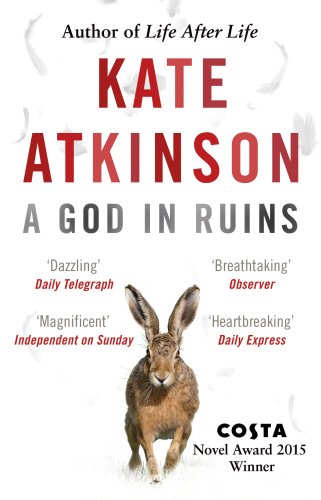
#BookReview ‘A God in Ruins’ by Kate Atkinson #WW2

If the best recommendation for a novel is that, once you finish it, you want to start reading it all over again, then this is my recommendation for A God in Ruins by Kate Atkinson. The story of Teddy Todd reeled me in until I was reading late into the night.

Kate AtkinsonTeddy is brother to Ursula Todd, who featured in Atkinson’s Life after Life, but this is not a sequel. More a companion piece, one book informs the other but stands up fully on its own. Read either first, it doesn’t matter. This is a book about war – the Second World War, the daily grind of Teddy’s life as a bomber pilot – and the effect this experience has on the rest of his life. War doesn’t happen and then go away, it colours lives and affects them until death, mostly unnoticed or misunderstood by relatives. And so we see Teddy’s life, told in a chopped up manner with excerpts from his childhood, war, early marriage and fatherhood, and as a much-loved grandfather. I don’t think I’m giving much away here to say he survives the war, but Atkinson’s descriptions of his bomber sorties are realistic, we feel the cold, the fear, the near-misses, the camaraderie, the determination and discomfort. Reading the bibliography at the back of the book, her research was thorough but it never shouts out from the page. Details are included because they are important to Teddy’s life, not because they happened.
Kate Atkinson remains a ‘go to’ author for me, I buy every book she writes.

Read my reviews of these other books by Kate Atkinson:-
BIG SKY #5JACKSONBRODIE
DEATH AT THE SIGN OF THE ROOK #6JACKSONBRODIE
LIFE AFTER LIFE
NORMAL RULES DON’T APPLY
OUR NOBLE SELVES
SHRINES OF GAIETY
TRANSCRIPTION

… and try the #FirstPara of EMOTIONALLY WEIRD

If you like this, try:-
‘The Aftermath’ by Rhidian Brook
‘The Light Years’ by Elizabeth Jane Howard
‘After the Bombing’ by Clare Morrall

And if you’d like to share a link:
#BookReview A GOD IN RUINS by Kate Atkinson via @SandraDanby http://wp.me/p5gEM4-1IK

#BookReview ‘The Miniaturist’ by Jessie Burton #historical #Amsterdam

The Miniaturist by Jessie Burton is an intriguing treasure box of a story. Eighteen-year-old Nella starts her new life as a married woman at her husband’s home in Amsterdam. He is a wealthy merchant and it is an arranged marriage. But Nella finds herself in a world she did not expect: a husband never at home, an abrupt and unwelcoming sister-in-law, two servants who behave as if life on the Herengracht is full of secrets. Nella feels always at a disadvantage. Jessie BurtonJohannes Brandt’s wedding gift to his wife is a cabinet, a kind of empty doll’s house for a young woman, a miniature of their home intended to be used by a young woman to learn how to run a home. “The accuracy of the cabinet is eerie, as if the real house has been shrunk, its body sliced in two and its organs revealed.” It frightens her but she is unable to formulate why. There is other disturbing imagery to suggest life in the house is not as it first appears. On the dark walls there are paintings of dead animals and at Nella’s first public outing as a wife, to the Silver Guild dinner, Nella meets Agnes Meermans. Agnes wears pearls in her hair, “The pearls are the same size as milk teeth.” Odd.
Nella orders her first miniature objects from a craftsman, a miniaturist, and the story burst into life after a slowish start. First, the three objects Nella orders are chosen as symbols of defiance against her new life. Secondly, the package is delivered by the intriguing Jack Philips of Bermondsey. Who is Jack, is he the miniaturist? Or does the title of the book refer to Nella? How else does the miniaturist know what is happening in Nella’s home, and her mind?
One thing is clear, everything in this book – and in the house on the Herengracht – is not as it seems. I raced through this.

Read my review of THE CONFESSION, also by Jessie Burton.

If you like this, try:-
‘Rush Oh!’ by Shirley Barrett
‘The Penny Heart’ by Martine Bailey
‘The Knife with the Ivory Handle’ by Cynthia Bruchman

And if you’d like to tweet a link to THIS post, here’s my suggested tweet:
#BookReview THE MINIATURIST by Jessie Burton via @SandraDanby http://wp.me/p5gEM4-17B

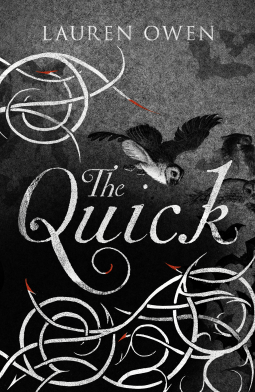
#BookReview ‘The Quick’ by Lauren Owen #historical

The Quick by Lauren Owen is a gothic tale about a brother and sister from Yorkshire. The story moves between Aiskew Hall – where we first meet Charlotte and James as children – and London; both settings atmospheric, both drawn so clearly you can smell the air. This book will reward re-reading: only after I had finished the last page did I go back to the beginning and appreciate the menace of the first sentence, “There were owls in the nursery when James was a boy.” Lauren Owen Aiskew is ever-present. When they are older and far from home, Charlotte reminds James “… how the air smelled green in spring, and smoke-grey in autumn, how on April mornings the mists would lift slowly, leaving a blue haze behind.”
This book has a really slow build. It starts with a prologue, an excerpt from 1890, which I read and then immediately forgot. I enjoyed Part One about the childhood of James and Charlotte at Aiskew, their mother dead, their father absent, Charlotte teaching James his alphabet by chalking the letters onto flagstones, playing games in the secrets of the big house. When the siblings are parted as James goes to university and then to London, the story starts to move a little quicker. I started to feel expectant, waiting for something to happen. Which of course, it does, and it is creepy and not what I was expecting. For me the story really gets going when Charlotte comes to London. After that, the action comes thick and fast. The tension in the second half is more like a film, making the first part of the book feel as if the author was feeling her way into the story.
Definitely one to read again. And I can see it on television.

If you like this, try:-
‘Frog Music’ by Emma Donoghue
‘The Penny Heart’ by Martine Bailey
‘Orphans of the Carnival’ by Carol Birch

And if you’d like to tweet a link to THIS post, here’s my suggested tweet:
#BookReview THE QUICK by Lauren Owen via @SandraDanby http://wp.me/p5gEM4-Rj

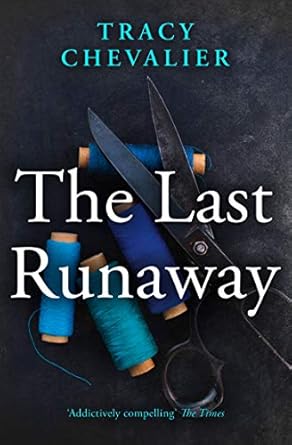
#BookReview ‘The Last Runaway’ by Tracy Chevalier @Tracy_Chevalier #historical

Tracy Chevalier is so skilled at getting under the skin of the protagonist in a specific period whether it’s a 19th century fossil collector or a 15th century Belgian weaver, you always believe her. Honor Bright is a real person from page 1 of The Last Runaway and you are rooting for her. Tracy ChevalierThe book tackles a difficult subject: the rights and wrongs of helping escaping slaves, and the moral issue this poses for Ohio’s Quakers. Honor struggles to understand this sometimes frightening new country with its huge skies and geometrical roads, forthright people and different social rules. Even the air seems strange. “I feel when I am in it as if the air around me has shifted and is not the same air I breathed and moved in back in England, but is some other substance,” she writes to her parents.
Chevalier does her research thoroughly, but feels no need to wave the depth of her research in her reader’s face. Instead it informs every simple description. Woven throughout the book is Honor’s sewing of quilts. Even this is different in Ohio where Honor’s calm nature and precise sewing is admired by the local hat-wearing ladies, but her needle workmanship is deemed overly exact for the local Quaker ladies who prefer to quickly sew appliqué quilts rather than take time to plan traditional patchwork designs.
Strong women play a key role in the book. Honor is a strong character, though perhaps she does not know it. Belle Mills, the local milliner is strong too. Honor describes Belle, “If women were meant to look like doves these days, Belle resembled a buzzard.” The quilt Honor most admires is owned and made by Mrs Reed, a small black woman who decorates her hat with fresh wildflowers.

Read my reviews of Tracy Chevalier’s other novels:-
A SINGLE THREAD
AT THE EDGE OF THE ORCHARD
NEW BOY
THE GLASSMAKER

If you like this, try:-
‘The Signature of All Things’ by Elizabeth Gilbert
‘The Knife with the Ivory Handle’ by Cynthia Bruchman
‘Summertime’ by Vanessa Lafaye

And if you’d like to share a link:
#BookReview THE LAST RUNAWAY by Tracy Chevalier @Tracy_Chevalier via @SandraDanby https://wp.me/p2ZHJe-1iN