Tag Archives: historical fiction

#BookReview ‘All Among the Barley’ by Melissa Harrison #nature

All Among the Barley by Melissa Harrison is set in a small world, the world of Wych Farm and the village of Elmbourne, in the inter-war years. The story is introduced by Edith June Mather, now an old lady, and transitions into the story of one summer when she was a teenager. Hanging over the first few pages is an unspoken warning that events so long in the past can be forgotten or recalled in error and that Edith may not be a reliable storyteller. Melissa HarrisonBut All Among the Barley  is more than a coming-of-age tale; it is a story of society adapting to change, a story which resonates today. It is 1933 in East Anglia and Edie Mather is thirteen years old, a clever well-read child who longs to fit in. She lives on the family farm where hardship is an everyday fact. Edie, balancing between childhood and womanhood, is unsure of what she should do with her life, unaware she has choices and at times overwhelmed by her seeming lack of power. Superstitions become real to her. This is a book combining the pragmatic facts of daily farm life, the looming presence of anti-semitism and fascism, with teenage volatility, fantasy and a little witchery. Into this tight-knit rural world walks city reporter Connie FitzAllen who is writing about the loss of the old rural ways. Connie becomes a catalyst for change for the whole community, not just Edie, and in ways not at first obvious. Despite initial distrust of strangers, the locals and Edie’s family become used to Connie’s presence and she becomes a stand-in older sister for Edie, dispensing advice and pushing behavioural boundaries.
Writing about nature with as light a hand as the flight of the birds she describes, Harrison combines agricultural change, rural poverty, the rise of anti-semitism, and the changing role of women. The role models available to Edie are her mother, who worked the land in place of men during the Great War but reverted to being a housewife afterwards; her sister Mary, married young and with a baby she is not sure she loves; and Connie, who tells Edie there is life outside Elmbourne. Harvest time approaches and decisions must be made; Edie’s father must sell his crop at the right time to get the best price while Edie, uncertain whose advice to listen to, receives a job offer based in the nearby town. In the heat of summer, reality merges with imagination and Edie loses the ability to judge what is real.
A beautiful and tragic novel flawed only by its slow descriptive pace and a rather sudden ending. I was left with the feeling that perhaps the author tackled too many issues for such a calm, contemplative novel.

If you like this, try:-
‘Ghost Wall’ by Sarah Moss
‘The Call of the Curlew’ by Elizabeth Brooks
‘Elmet’ by Fiona Mozley

And if you’d like to tweet a link to THIS post, here’s my suggested tweet:
#BookReview ALL AMONG THE BARLEY by Melissa Harrison https://wp.me/p5gEM4-3IW via @SandraDanby

#Bookreview ‘Call of the Curlew’ by Elizabeth Brooks #historical #WW2

Call of the Curlew by Elizabeth Brooks has the most fantastic sense of place. It is a haunting, atmospheric read that I didn’t want to put down. Tollbury Marsh is an ever-present character in the story too, quiet, empty, natural and ‘where a body could sink under that earth, slowly and inexorably, like an insect in a pot of glue.’ Elizabeth BrooksAn elderly woman sees a sign she has been awaiting and prepares to take her last walk, across the snowy marshes and into the sea. She imagines the freezing water creeping up her legs, planning how she will use her walking stick, loading her pockets with stones from the garden wall. And then she realises she has the wrong day, it is New Year’s Eve tomorrow, not today and she is a day too early. When a stranger appears, her plans are disrupted and the past must be faced.
Virginia Wrathmell arrives at Salt Winds, a house on the edge of the marshes, as a newly adopted orphan when she is ten. It is New Year’s Eve 1939. Her new parents, Clem and Lorna, seem ill at ease together and Virginia watches them from the banisters, trying to understand the adult tension which dominates the house. When a neighbour visits, Virginia takes an instant dislike to the way Max Deering’s eyes linger on her and this first impression of him does not improve as the weeks pass. The catalyst for change comes when a German fighter plane crashes on the marshes and Clem sets out with rope and torch to help. The wartime story is spliced with Virginia in 2015, her plans to wade into the marshes on hold. Slowly the mystery is unveiled; of what happened in the war that left such a lasting mark on Virginia so many decades later.
This is the first novel by Brooks that I have read. She writes with a poetic description that is engaging, particularly when describing the marshes and the natural world. ‘The stars were starting to poke through the sky, like silver pins through lilac silk.’ But she also writes with an eye to mystery and is adept at tantalising the reader. This is not a thriller, I hesitate to call it a mystery because the pacing is not intense. Rather this is an elegiac read about a delicate new family in wartime facing situations that would split apart the strongest of people.
Excellent.

If you like this, try:-
Shelter’ by Sarah Franklin
Life After Life’ by Kate Atkinson
The Good People’ by Hannah Kent

And if you’d like to tweet a link to THIS post, here’s my suggested tweet:
#BookReview CALL OF THE CURLEW by Elizabeth Brooks https://wp.me/p5gEM4-3y2 via @SandraDanby

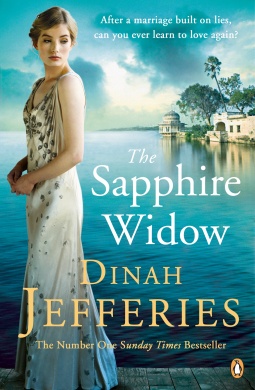
#Bookreview ‘The Sapphire Widow’ by @DinahJefferies #historical #romance

When Dinah Jefferies writes about Ceylon, you can smell it and sense it. The blossom, the flowers, the birds, she is excellent at evoking setting. The Sapphire Widow is not her strongest book, but it is nevertheless an enjoyable read. Whatever it may lack in plot – a weakness I think because the main character is the wronged one, rather than with a secret of her own to hide – it is a fascinating glimpse of mid-Thirties Ceylon and a beautiful seaside town. Dinah JefferiesIt is 1936 in Galle on the southernmost tip of Ceylon. Louisa Reeve and her husband Elliot seem to have it all except, after a series of miscarriages, a child. Louisa, who wonders if she will ever be a mother, is often alone as Elliot spends his spare time sailing with friends and on a cinnamon plantation in which he is an investor. But when tragedy hits Louisa discovers Elliot’s life, investments and hobbies were not as he told her. As she deals with one lie after another, Louisa continues to develop Sapphire, the retail emporium originally planned with Elliot and which provides the novel’s title.
Given the title I expected the gemstone business of Louisa’s father, and where Elliot worked, to be prominent in the plot. It is however lightly sketched and I felt rather short-changed. The description of the cinnamon plantation is fascinating though, as is the Galle setting, though at times it felt as if local history was being shoehorned in. Towards the end the plot went a little haywire, not what I was expecting. Frustrating, I was left feeling there was a deeper, more emotional story to be told.
An interesting read but not her finest.
CLICK HERE TO READ MORE ABOUT THIS BOOK

And here are my reviews of some of Dinah Jefferies’ other novels:-
DAUGHTERS OF WAR [#1 DaughtersOfWar]
THE HIDDEN PALACE [#2 DaughtersOfWar]

And these standalone novels:-
THE TEA PLANTER’S WIFE
THE TUSCAN CONTESSA

If you like this, try these:-
‘Beneath an Indian Sky’ by Renita d’Silva
The Gift of Rain’ by Tan Twan Eng
Quartet’ by Jean Rhys

And if you’d like to tweet a link to THIS post, here’s my suggested tweet:
#BookReview THE SAPPHIRE WIDOW by @DinahJefferies https://wp.me/p5gEM4-3xX via @SandraDanby

#BookReview ‘The Turn of Midnight’ by Minette Walters #historical

You just know when the book you’ve just started reading is going to be 5*. For me, not many are. I read lots of good 3* and 4* books. I reserve 5* sparingly for the special ones. The Turn of Midnight by Minette Walters is one of those. It ticks so many boxes. Thriller, history, surprises, great characters and a tantalising bit of love from afar; Walters is a master storyteller. Minette Walters This is a story of a grim period in British history. The Black Death. Medieval England. Gruesome detail, and yet I stayed up late to finish it. Why, because she makes me love the characters and manages that delicate balancing act of giving me just enough historical detail to be interesting but not too much that it becomes tedious.
The Turn of Midnight is the sequel to The Last Hours which tells the story of the Black Death and its impact on the small Dorsetshire demesne of Develish. After the death of her husband from the plague his widow Lady Anne quarantines the demesne, introduces cleanliness routines and organises her healthy family, servants and serfs into a self-supporting and mutually-respectful society; unheard of in 1348. Woven into this story of survival is a romantic thread as Lady Anne and Thaddeus Thirkell, an illegitimate serf born on the demesne who Lady Anne has educated over the years to a standard of education greater than anyone else in the community excepting herself. Where The Last Hours is something of a closed room story with a tight-knit cast of characters and one location, The Turn of Midnight sees Thaddeus and a group of young men venture out into Dorsetshire to assess the dangers of the plague and the survival of other villages. When they return with a story of death, desertion and dereliction, a plan is formed to buy the neighbouring demesne of Pedle Hinton and so provide a home and farmland for the Develish citizens, the number of which has grown with the number of healthy wanderers they have adopted. But outside the demesne moat there are many enemies: bandits thieving and preying on the vulnerable, Norman soldiers who hate the English serfs, English serfs who hate anyone Norman, and corrupt priests, stewards and lords who swear they are acting in the name of God.
The plan is risky. Lady Anne and Thaddeus know that, although not robbing living people, they are taking possessions and gold which is not rightly theirs. It culminates in a struggle of religion, power and prejudice. Will common sense and the right of the people triumph? Whilst Lady Anne fights a battle against prejudice of her sex where she is better educated than the men who accuse her, Thaddeus similarly fights against prejudice of his worker roots and foreign tall dark physique.
Walters lives in Dorset and this shows in her sweeping creation of medieval Dorsetshire, she writes of the countryside, nature and the seasons with such surety you know she knows it well. This is a story of the first breaths of social mobility in a time of class hierarchy that prevented starving serfs from eating food meant for their lords, even though those lords are dead or have fled. Lady Anne’s common sense approach brings survival, health, basic education and hope for the future.
Excellent.

Read my reviews of two other historical novels by Minette Walters:-
THE LAST HOURS #1BLACKDEATH
THE PLAYERS
THE SWIFT AND THE HARRIER

If you like this, try:-
The French Lesson’ by Hallie Rubenhold
The Ashes of London’ by Andrew Taylor #1FIREOFLONDON
Foxlowe’ by Eleanor Wasserberg

And if you’d like to tweet a link to THIS post, here’s my suggested tweet:
#BookReview THE TURN OF MIDNIGHT by Minette Walters https://wp.me/p5gEM4-3xR via @SandraDanby

#BookReview The Indelible Stain by Wendy Percival #genealogy #mystery

When the key character of a novel goes on holiday or visits a picturesque place, you know something is going to happen. Genealogist Esme Quentin in The Indelible Stain by Wendy Percival goes to Devon to help a friend archive the records of a local charity for underprivileged children. Second in the Esme Quentin genealogical mysteries, this is an enjoyable story of convict history set in a beautiful Devon location. But beneath that beauty lurk fraud, lies and revenge. Hatred and bitterness reach from the past to the current day. Wendy PercivalUp early on her first morning, Esme takes a walk on the wild beach and finds a body. The woman, just alive, seems to have fallen from the cliffs. Her last words, spoken to Esme, are key to the mystery which follows. “I lied,” she says. Beside her body is an old sepia photograph. The police don’t take seriously Esme’s concerns that the woman’s last words combined with the mystery photograph indicate foul play, so Esme decides to identify the family in the photograph.
Meanwhile, Neave Shaw is worrying about her mother who has disappeared after sending a confused, possibly drunken, email. Worried and not understanding her grandmother’s dismissive attitude to Bella’s disappearance, Neave presses for answers but is interrupted by a knock on the door. It is the police. Neave arrives in Warren Quay and asks Esme for help in understanding why her mother died. Esme quickly puts a name to one of the people in the sepia photograph: Sarah Baker, a thief who was transported as a convict in 1837. Sarah’s story adds a fascinating layer of history to this whodunnit and whydunnit mystery. But what is Sarah’s link to Neave’s dead mother? And did Bella fall or was she pushed? Esme’s research into Sarah’s convict history is helped by the presence of the Mary Ann, a restored nineteenth-century sailing ship with an on-board museum about the history of convict transportation.
The last few pages move at top speed as Esme discovers hidden identities and double-crossings and races to find Neave to warn her of danger. She knows that whoever killed Bella to protect the secret will not hesitate to kill again. I would have liked to read more about Sarah Baker’s journey on a convict ship to Australia and her life there, showing some of the facts rather than having Esme discover them in a dry record search. So much tantalising history lies beneath the surface of this story. I found some elements confusing at times as the story moves so fast and also because of the number of aliases and marriages; this might have been eased by merging or dropping some minor characters, for example Ruth/Maddy, Dan/Felix. But Percival’s characterisation of some minor characters was spot on; I particularly liked retired schoolteacher Miss Hodge and Neave’s irascible grandmother Gwen.
This is a well-paced genealogical thriller enriched by its Australian and Irish links and demonstrating how the resentment of wrongdoing can persevere across the generations.

Here’s my review of the first in the Esme Quentin series, BLOOD-TIED.

If you like this, try these:-
The Seven Deaths of Evelyn Hardcastle’ by Stuart Turton
Foxlowe’ by Eleanor Wasserberg
‘The Witchfinder’s Sister’ by Beth Underdown

And if you’d like to tweet a link to THIS post, here’s my suggested tweet:
#BookReview THE INDELIBLE STAIN by Wendy Percival https://wp.me/p5gEM4-3xs via @SandraDanby

#BookReview ‘The Burning Chambers’ by Kate Mosse #historical

The story starts in winter, 1562, in the South of France. In a prison in Toulouse, a man is being tortured, while in Carcassonne a young woman awakes from a bad dream, a sad memory. The Burning Chambers by Kate Mosse is heavy on atmosphere and historical detail and, like Mosse’s Languedoc trilogy, is slow to start. Despite my confusion, and I admit to being confused in parts for two-thirds of the book, I read on because Mosse is an expert storyteller who spins a tale and reels you in so you sit up late at night reading just one more chapter. Sometimes though, I wished she would cut some of the detail. Kate MosseThis is a story of religious war, of prejudice and violence, of loyalty and love, and principally a woman and a man who find themselves on opposite sides of the religious divide. Minou Joubert is a Catholic, the daughter of a bookseller who believes in selling books of all faiths for everyone to buy freely. When she receives an anonymous letter, sealed with a family insignia she does not recognize and comprising only five words ‘SHE KNOWS THAT YOU LIVE’, she is mystified. That same day, fate crosses her path as Huguenot convert Piet Reydon flees capture. And so starts this spiraling and twisting story of a fight for control of Toulouse between Catholics and Huguenots, the mysterious quest of Minou’s fragile father Bernard, Minou’s mysterious letter, a Bible, traitors who smile and friends who are taciturn. Letter forgotten, Minou and her young brother Aimeric are sent to Toulouse for their safety. There they stay with their mother’s aunt but find themselves in a bad-tempered house where Huguenots are hated and their uncle is a political agitator. Toulouse seems more dangerous than Carcassonne or is the danger following Minou?
Minou is a great heroine and I await the next installment of the series with curiosity. The Prologue and Epilogue hint that this is not a standalone book, set in 1862 in South Africa, a woman is seeking answers in a graveyard. Is this the beginning of book two?

And here are my reviews of other novels by Kate Mosse:-
CITADEL #3LANGUEDOC
THE CITY OF TEARS #2JOUBERT
THE TAXIDERMIST’S DAUGHTER

If you like this, try:-
‘In Another Life’ by Julie Christine Johnson
Fair Exchange’ by Michèle Roberts
The French Lesson’ by Hallie Rubenhold

And if you’d like to tweet a link to THIS post, here’s my suggested tweet:
#BookReview THE BURNING CHAMBERS by Kate Mosse https://wp.me/p5gEM4-3wV via @SandraDanby

#BookReview ‘The Fire Court’ by @AndrewJRTaylor #historical

In order to fully appreciate The Fire Court by Andrew Taylor, you need to read The Ashes of London first. Otherwise, references and subtleties will pass you by. This is definitely a trilogy to read in order. The threats and risks are not always clear on the page and I had a couple of ‘oh, now I get it’ moments. But as with the first book, Taylor writes about post-Fire London with all the smoke, heat and rotting smells vivid on the page. Andrew TaylorThe first chapter sets up the central mystery to be solved. James Marwood’s elderly confused father wanders in the city and follows a woman he believes to be Rachel, his deceased wife. He is brought home by a kindly roadsweeper. Marwood listens to his father’s confused ramblings and fears his wits are disappearing. The next day, Nathaniel Marwood is dead and his son attempts to recreate his father’s movements to see if there was truth in his ramblings; into the heart of the rookery at Clifford’s Inn to see if there really is a chamber of the ant and inside it, a sinful woman. Instead he meets an objectionable man called Gromwell.
Two women are key to Marwood’s story. Jemima, Lady Limbury, stays close to the house and struggles to be familiar with her husband Philip who is busy with affairs of business. Except the wealth of the marriage belongs to Jemima and Philip unfortunately lets money slip through his fingers. Jemima dislikes the company he keeps, particularly a slimy lascivious man called Gromwell. The second woman is Catherine Lovett, my favourite character from The Ashes of London. We first see her sitting in the chamber at the Fire Court, the chamber set up to resolve legal, property and construction issues between freeholders, leaseholders and tenants with the aim of rebuilding London fast. Cat is taking shorthand notes, practicing her skill, though really she longs to design buildings for her mentor, the infirm Simon Hakesby. Jemima and Cat do not meet for most of the novel when the two sides of the mystery finally become entangled. I admit to being impatient about this, I found Jemima’s storyline less than captivating though at the end I wished I had grasped her significance a little earlier. Taylor’s novels move fast but are dense with detail and I need to read both these books again before attempting the third.
At the centre of the story is the rebuilding of London after the Great Fire. Amongst the rubble there is destitution, opportunity, greed and hopelessness. It is a toxic mix, a dangerous place in which to start asking awkward questions. Which is exactly what James Marwood does. In the first book he was asking questions for two masters, in The Fire Court he seeks answers to his father’s puzzle. And when his life is in danger, he realises there must truth woven in his father’s nonsense words after all.
No word yet on when book three will follow, but I will definitely be reading it. Taylor is a new author for me and I look forward to exploring his other books. He is a historical writer rich in his period but with the twists and turns of a thriller. He creates mysteries that you want to puzzle out.

Read my reviews of the other books in this series:
THE ASHES OF LONDON #FIREOFLONDON1… and try the first paragraph of THE ASHES OF LONDON.
THE KING’S EVIL #FIREOFLONDON3
THE LAST PROTECTOR #FIREOFLONDON4
THE ROYAL SECRET #FIREOFLONDON5
THE SHADOWS OF LONDON #FIREOFLONDON6

And a World War Two novel by the same author:-
THE SECOND MIDNIGHT

If you like this, try:-
‘The Last Hours’ by Minette Walters
‘Dark Aemilia’ by Sally O’Reilly
‘Under a Pole Star’ by Stef Penney

And if you’d like to tweet a link to THIS post, here’s my suggested tweet:
#BookReview THE FIRE COURT by @AndrewJRTaylor https://wp.me/p5gEM4-3re via @SandraDanby

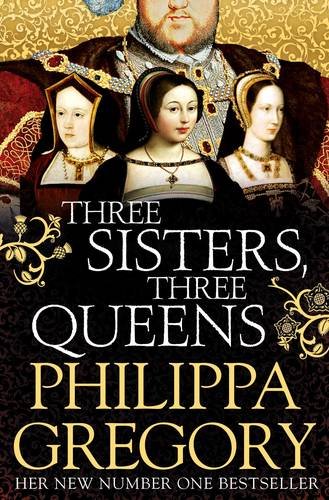
#BookReview ‘Three Sisters, Three Queens’ by Philippa Gregory #Tudor

‘What is the point of love if it does not make us kind?’ Three Sisters, Three Queens by Philippa Gregory is a story of three women, princesses all, who marry for duty, for their country but who long to marry for love. It is a not a tale of sisterly love, more of sisterly rivalry, envy and spitefulness. The three women become sisters of England, Scotland and France but each knows despair and great unhappiness, they are alternately supportive to each other and shamelessly selfish. Philippa GregoryThe three women are Margaret, older sister of Henry VIII; Mary, his younger sister; and Katherine of Aragon, his first wife. All women have been raised to do their duty, to behave correctly, to smile when in pain, to nod to their husband when they disagree, and to always put themselves second. It is a story of English and Scottish politics, the switching of allegiances, the lies and flattery, the convenient silences. The story is told by Margaret, married young to James IV of Scotland, who is horrified after their wedding to be presented with a mob of children, his illegitimate sons and daughters. She appeals to Katherine for advice who tells her to swallow her anger and humiliation and get on with being a good queen to her husband.
The novel tends to repetition and could be shorter, and it is true that in the early pages Margaret is rather mean-spirited and complains repetitively about what she wants and what her sisters have that she doesn’t. But as the pages turned I got more involved in her story, the twists and turns, riches and poverty, love and betrayal, lies and more lies. It is not Gregory’s best Tudor novel, but it is still a fascinating account of a little known queen and sheds a light on complicated Scottish politics of the time. That, and the manipulation of the English/Scottish borders by Henry VIII and his lords, makes modern politics look lily white.
I did expect the viewpoints of each of the three sisters, which the title does imply, but in fact the story is told completely by Margaret aided by letters she receives from her sisters.

Read my reviews of these other Philippa Gregory novels:-
THE LADY OF THE RIVERS
THE LITTLE HOUSE

Read the #FirstPara of THE OTHER BOLEYN GIRL, also by Philippa Gregory.

If you like this, try these:-
The Leviathan’ by Rosie Andrews
Kings and Queens’ by Terry Tyler #1LANCHESTER
The Lady of the Ravens’ by Joanna Hickson #1QUEENSOFTHETOWER

And if you’d like to tweet a link to THIS post, here’s my suggested tweet:
#BookReview THREE SISTERS, THREE QUEENS by Philippa Gregory http://wp.me/p5gEM4-2yg via @SandraDanby 

#BookReview ‘The Ashes of London’ by @AndrewJRTaylor #Historical

1666 and a fire starts in London, soon to devastate the medieval City of London. Watching the flames, a young man notices a boy in a ragged shirt who is standing so close as to risk to his life. When he pulls the boy to safety, he finds it is not a boy but a young woman. She bites him and escapes, though he intends only to help. And so are introduced the two key characters in The Ashes of London by Andrew Taylor. Andrew TaylorThis is not a novel about the Fire of London, rather a political mystery involving murder in the turbulent years following the execution of King Charles I, the English Civil War, the Commonwealth and subsequent Restoration of King Charles II. In the ruins of St Paul’s a body is found, differing from other mortalities for its thumbs tied together behind the man’s back. This is the sign of those who committed Regicide by signing the death warrant of Charles I. Though in hiding, these traitors are still active, lurking in the shadows.
The account of London burning is written vividly, so vivid I could imagine myself there, smell the charred timber and smoke. We see it through the eyes of two people. James Marwood, clerk, son of a traitor, is required by his superiors to investigate on their behalf. Catherine Lovett, a wealthy young woman lodges with the family of her mother but secretly searches for her father, a Regicide. Her position becomes precarious when her uncle seeks to marry her to a suitable man, one she detests. She flees and, at risk of discovery, Cat hides her identity with a false name. She is a bright woman who adapts to her changing circumstances, has a great presence of mind and is not afraid to defend herself when threatened. I particularly enjoyed her interest in architecture, something which brings her into the wider circle of Master Hakesby and Dr (Christopher) Wren as the new design for St Paul’s takes shape. She has a skill of fine draughtsmanship, and helps Master Hakesby who suffers from the ague.
We learn the story as seen by Marwood and Cat; the author controls what we know and don’t know. As they are aware of other things happening outside their circle, but not of the detail – of surviving traitors helping each other, of powerful men borrowing and lending money, of the scientifically-minded Charles II and his circle of influencers – so the reader realizes more is going on behind the scenes than is written on the page. Which adds to the mystery. This was a complex political time. We watch Marwood tread a delicate path as he tries to protect his elderly weak-witted Regicide father from persecution whilst also obeying his employer, Master Williamson, editor of The London Gazette. It is a time of whispers, gossip in the coffee houses, of secret meetings and spies standing behind screens the better to eavesdrop.
The paths of Marwood and Cat almost cross a number of times and as neither knows the true identity or intentions of the other, the reader is in a privileged position. When they do meet, the outcome is unexpected.
This is not a page-turning thriller or a crime novel, more a historical mystery. Taylor takes time to develop his characters and to show his location, the Restoration context is fascinating. Though a slow-burn I read this book quickly, finishing it and wanting to read its sequel, The Fire Court. That is always a good sign.
CLICK HERE TO READ MORE ABOUT THIS BOOK AT AMAZON

Try the first paragraph of THE ASHES OF LONDON here.

Read my reviews of the next books in this series:
THE FIRE COURT #FIREOFLONDON2
THE KING’S EVIL #FIREOFLONDON3
THE LAST PROTECTOR #FIREOFLONDON4
THE ROYAL SECRET #FIREOFLONDON5
THE SHADOWS OF LONDON #FIREOFLONDON6

And a World War Two novel by the same author:-
THE SECOND MIDNIGHT

If you like this, try:-
‘The Witchfinder’s Sister’ by Beth Underdown
‘The Last Hours’ by Minette Walters
‘The Western Wind’ by Samantha Harvey

And if you’d like to tweet a link to THIS post, here’s my suggested tweet:
#BookReview THE ASHES OF LONDON by Andrew Taylor https://wp.me/p5gEM4-3p2 via @SandraDanby

#BookReview ‘Our Friends in Berlin’ by Anthony Quinn #WW2

Our Friends in Berlin by Anthony Quinn tells a story of London in World War Two seldom told. It is a spy novel but not a thriller. It focuses on the individuals concerned and has a deceptive pace which means the threats, when they come, are more startling. Jack Hoste is not who he seems to be. He is not a tax inspector; he is not looking for a wife. He is a special agent who tracks down Nazi spies. And at night he is an ARP warden. Anthony Quinn The juxtaposition of Hoste’s life of secrets is set nicely against that of Amy Strallen who works at the Quartermaine Marriage Bureau. Ordinary life does go on in London during the Luftwaffe bombing and Amy must match clients together, a matter of instinct rather than calculation. In order to be matched with the right person, clients are asked to tell the truth about what they are seeking, truths which may have been disguised or hidden until now. Client requests include ‘a lady with capital preferred’ and ‘not American’. Then one day she meets a new client who seems oddly reluctant to explain what he is looking for. The client is Jack Hoste and he doesn’t want a wife, he is searching for Marita Pardoe, a suspected Nazi sympathiser and friend of Amy in the Thirties. What unfolds is a story of spying, gentle romance, betrayal, fanaticism and the life of living in a bombed city.
Jack and Amy seem to run on parallel tracks, veering towards and then away from each other, both romantically unsure, both allow the real world to get in the way. And get in the way it does, in the shape of Marita. Quinn is excellent at building characters, he makes you care for them and that’s what keeps you reading. In a time of war, decisions are often made recklessly but Jack and Amy draw back from doing this. Both are people of honour, making the secrets they must keep and the lies they must tell all the more pertinent. The nature of truth is a theme wriggling its way through every page.
Anthony Quinn is a favourite author of mine, his novels are each quite different and I will read everything he writes. I read this one quickly.

Read my reviews of these other novels also by Anthony Quinn:-
CURTAIN CALL
FREYA
HALF OF THE HUMAN RACE
MOLLY & THE CAPTAIN
THE RESCUE MAN
THE STREETS

If you like this, try:-
‘Mrs Sinclair’s Suitcase’ by Louise Walters
‘The Paying Guests’ by Sarah Waters
‘The Heat of the Day’ by Elizabeth Bowen

And if you’d like to tweet a link to THIS post, here’s my suggested tweet:
#BookReview OUR FRIENDS IN BERLIN by Anthony Quinn https://wp.me/p5gEM4-3pl via @SandraDanby