Tag Archives: historical fiction

#BookReview ‘Tulip Fever’ by Deborah Moggach #historical

Amsterdam in the 17th century was a time when commerce was king and the sale of tulip bulbs made some people very rich and others bankrupt. This is the setting for Tulip Fever by Deborah Moggach, when Rembrandt and Vermeer painted some of the most-recognised art of our time. Sophia’s husband Cornelis is rich, thanks to tulips, and he celebrates his wealth by commissioning a joint portrait to be painted. It is a decision which changes their lives. Deborah MoggachThe deft switching of viewpoints – and each chapter is a single voice, Sophia, Cornelis, Jan [the painter], Maria [their servant] and Willem [Maria’s lover] – allows for a new take on each situation. The plot moves quickly, things are hinted at and passed over but relevant later. It is the sort of novel which seems simple but has hidden depths. The language can be so sensual. “Jacob van Loos is not painting the old man’s mouth. He is painting Sophia’s lips. He mixes pink on his palette – ochre, grey and carmine – and strokes the paint lovingly on the canvas. She is gazing at him. For a moment, when the old man was talking, her lips curved into a smile – a smile of complicity. He paints the ghost of this, though it is now gone.”
The reader must remain vigilant to catch everything. After four chapters I realised the significance of the quotation at the head of each chapter, and went back to the beginning again. They shed fresh light on the story being told. For example, “‘Trust not to appearances.’ Jacob Cats, Moral Emblems, 1632.” And, another chapter heading, by the same author, ‘Stolen waters are sweet, and bread eaten in secret places is pleasant.’
In places, Moggach’s description echoes Dutch paintings of the period: “Sophia stands at the window. She is reading the letter. Through the glass, sunlight streams on to her face. Her hair is pulled back from her brow. Tiny pearls nestle in her headband; they catch the light, winking at the severity of her coiffure. She wears a black bodice, shot with lines of velvet and silver. Her dress is violet silk; its pewtery sheen catches the light.” Certainly an understanding of art of the period will help a reader get more from the text.

Read my review of these other novels by Deborah Moggach:-
SOMETHING TO HIDE
THE BLACK DRESS
THE CARER

Read the first paragraph of THESE FOOLISH THINGS [now THE BEST EXOTIC MARIGOLD HOTEL] here.

If you like this, try:-
‘The Miniaturist’ by Jessie Burton
An Appetite for Violets’ by Martine Bailey
‘Girl in Hyacinth Blue’ by Susan Vreeland

And if you’d like to tweet a link to THIS post, here’s my suggested tweet:
#BookReview TULIP FEVER by Deborah Moggach via @SandraDanby http://wp.me/p5gEM4-2sv
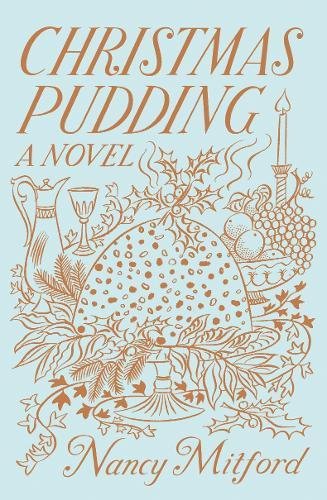
#BookReview ‘Christmas Pudding’ by Nancy Mitford #satire #historical

Christmas Pudding is another between-the-wars comedy of manners by Nancy Mitford. With scathing observation at times as sharp as Jane Austen, Mitford introduces a new character, Lord Lewes: ‘He was tall, very correctly dressed in a style indicating the presence of money rather than of imagination, and had a mournful, thin, eighteenth-century face.’ This is her second novel and features some of the personalities featured in her first, Highland Fling, though familiarity with the first is not essential for enjoyment. Nancy MitfordThe action takes place over one month around Christmas, the pudding of the title refers to Mitford’s mixture of personalities in two house parties in the Cotswold countryside. Paul Fotheringay, whose debut literary novel has been heralded as a comic farce, is desperate to escape London and find inspiration for his next book. Wanting to be taken seriously as an author, he settles on a biography of Victorian poet, Lady Maria Bobbin. When he is refused access to the diaries by the current Lady Bobbin he conjures a plot with her teenage son Bobby to masquerade as Bobby’s tutor over the Christmas holidays and so gain secret access to the diaries. And so Paul becomes part of a love triangle at the Bobbin’s home Compton Bobbin, involving Bobby’s sister Philadelphia and the honest, boring but reliable Lord Michael Lewes. The second house party, at the rather kitsch over-furnished Mulberrie Farm, is held by former prostitute and now society lady Amabelle Fortescue. Mitford’s characters move in the same overlapping social circles so it is inevitable that Amabelle and her guests Sally and Walter Monteath will socialize with some of the guests at Compton Bobbin.
Love is the central theme, true love, idealised love, upper-class arranged marriage and marriage for pragmatic facing-old-age reasons. As has always occurred in aristocratic circles, marriage is approached with a healthy dose of pragmatism making romantic love seem frothier and more idealised than ever.
This is light-hearted fiction and limited in its observation of characters; there is no upstairs/downstairs contrast here, which would enrich the social commentary. But the old and young are perfectly capable of condemning themselves out of their own mouths. Reading this novel will not change your life, but it will amuse you and the ending is not the easy way-out you may expect. My one criticism is that there are slightly too many peripheral characters with their own strings of plot.

Read my reviews of these other novels by Nancy Mitford:-
HIGHLAND FLING
LOVE IN A COLD CLIMATE
PIGEON PIE
THE BLESSING
THE PURSUIT OF LOVE
WIGS ON THE GREEN

Read the first paragraph of THE PURSUIT OF LOVE here.

If you like this, try these:-
‘Sweet Caress’ by William Boyd
‘A Death in the Dales’ by Frances Brody
‘Mothering Sunday’ by Graham Swift

And if you’d like to tweet a link to THIS post, here’s my suggested tweet:
#BookReview CHRISTMAS PUDDING by Nancy Mitford http://wp.me/p5gEM4-2UO via @SandraDanby

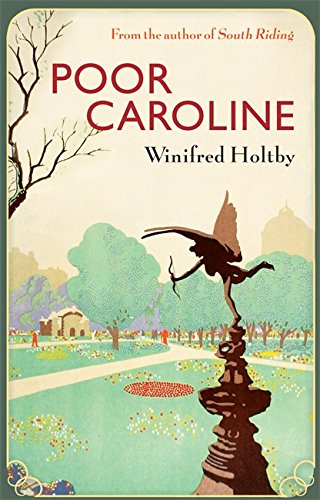
#BookReview ‘Poor Caroline’ by Winifred Holtby #historical

I can’t help but think this novel would be helped by a better title. Poor Caroline is such a negative sounding title for this, the fourth novel by Yorkshire author Winifred Holtby. From the first page, it is clear this is a fond but sharp satire of the inter-war years showing how the expectations of people can on the surface appear aligned but in reality are self-serving. Winifred HoltbyCaroline Denton-Smyth, honorary secretary of the Christian Cinema Company, works hard in the belief that her company is doing good. But the people on the board of directors each have their own reason for being involved with the company, reasons that are not admitted and which diverge hugely from Caroline’s intentions. One hopes to leverage connections with the chairman to gain entrance for his son to Eton. Another wishes to sell his new type of film. Caroline has so many ideas but little success. At the age of 72 she has no money and is dependent on loans from long-suffering relatives. But she is always hopeful. This is the story of Caroline, her fellow directors, and the Christian Cinema Company. Holtby tells the story of each person in turn so the full picture, and the extent of Caroline’s folly, becomes evident. You can’t help but feel simultaneously sorry for her and exasperated with her inability to see the truth.
It is a while before we meet the eponymous heroine. First we learn of her death, as some distant relatives return from her funeral. In her will, Caroline left bequests of money she didn’t have. “Oh, you can’t alter people like Caroline. She always thought she knew better than anyone. She was always going to do something extraordinary.”
Two scenes in particular stayed with me. The description of the odious Clifton Roderick Johnson’s screenwriting class is a classic. He spits instructions to his paltry four students. ‘They did not know, and indeed Mr Johnson hardly knew, that their lecturer who spoke so confidently of technique, cuts, drama and royalties had himself been able to sell for performance only one scenario and a set of captions.’ And the storm at film inventor Hugh Macafee’s derelict warehouse when he continues to work despite the efforts of two fellow directors to evacuate him before a wall collapses.
This novel requires patience, to allow the author time to draw the full scenario so the true manipulations, fraud, dissembling and love, can unfold.

Click the title to read my review of ANDERBY WOLD, also by Winifred Holtby.

If you like this, try:-
‘Miss Pettigrew Lives for a Day’ by Winifred Watson
‘Curtain Call’ by Anthony Quinn
‘Highland Fling’ by Nancy Mitford

And if you’d like to tweet a link to THIS post, here’s my suggested tweet:
#BookReview POOR CAROLINE by Winifred Holtby https://wp.me/p5gEM4-3nn via @SandraDanby

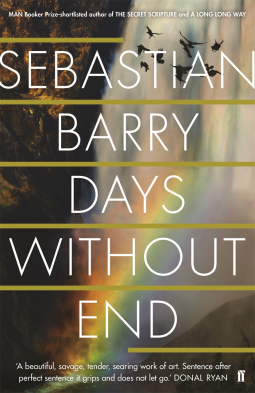
#BookReview ‘Days Without End’ by Sebastian Barry #historical

There is not a word out of place in this harrowing and beautiful tale of love, war, duty and sacrifice. Days Without End by Sebastian Barry deservedly had award success in 2016/2017. I already knew Barry could write about war, having read and loved A Long Long Way set in the Great War. What is different about Days Without End is the relationship between Thomas McNulty and John Cole. Barry tells the epic story of the Indian and Civil wars in America, combined with a heart-stopping tale of love. Sebastian BarryThe story is the first person narrative of Thomas, an Irish émigré fleeing the Irish famine. He arrives in a young America with so many disparate groups, contrasted and never seeming to connect: men, women; officers, foot soldiers; gay, straight; white, black; American, Irish immigrant; army, native Indian; north, south. Barry does not shy from telling the reality of the American wars, the brutality, the atrocities of army against Indians and vice versa; but also the comradeship and solidity of men fighting alongside each other. There is betrayal on both sides, brutality on both sides, and soldiers hating and turning on each other. At the core of this though is the story of Thomas and John Cole, who meet as boys and perform a cross-dressing act on stage before signing up for the army. It is not all about war. There are three sections of ordinary life when we see the ordinary life of the two men, finding a role for themselves and fitting into society.
Much was written at the time this novel was published about how Barry dedicated this book to his son. The portrayal of the men’s relationship is gentle, fond and loving, but the single thing which struck me most was their absolute loyalty to each other.
Full of beautiful prose, plot twists and turns, savage cruelty and betrayal, poignant loyalty at the expense of self, it feels like a slow-moving story but I didn’t want to put it down. Highly recommended.
The story is continued in the sequel, A Thousand Moons.

Read my reviews of these books also by Sebastian Barry:
A THOUSAND MOONS #2DAYSWITHOUTEND
A LONG LONG WAY
OLD GOD’S TIME
THE WHEREABOUTS OF ENEAS MCNULTY

If you like this, try:-
‘Barkskins’ by Annie Proulx
‘At the Edge of the Orchard’ by Tracy Chevalier
My Name is Yip’ by Paddy Crewe

And if you’d like to tweet a link to THIS post, here’s my suggested tweet:
#BookReview DAYS WITHOUT END by Sebastian Barry https://wp.me/p5gEM4-3oB via @SandraDanby

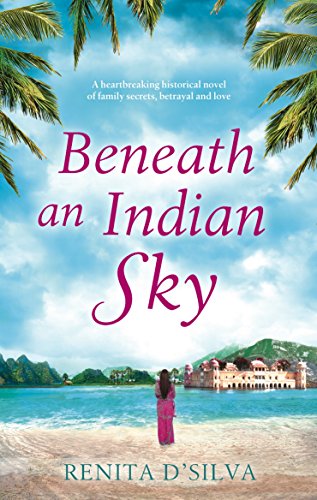
#BookReview ‘Beneath an Indian Sky’ by Renita D’Silva @RenitaDSilva #historical #India

Women’s ambition, women’s capability to lie and manipulate, and women’s ability to love, cherish and recover. Beneath an Indian Sky by Renita D’Silva is the cautionary tale of Sita and Mary and how their lives, from childhood to old age, are entwined in India. It is a symmetrical story, but the permutations of its angles and consequences are not clear until the end. Be patient, relax into the story, because the ending is worth it. Renita D’Silva1925, India. Sita’s parents despair of her acting like a girl so, to encourage more restrained behavior, they arrange for her to become friends with Mary. Mary’s parents encourage individuality, freedom and learning, but Mary secretly envies the rules and ordered life of Sita’s home. And so the two girls become friends. Until in 1926 something happens which splits them apart.
This is a tale of opposites; two little girls who, despite being different, become friends. What happens when they grow up turns into a darker more difficult story about friendship, honesty, betrayal, loss, anguish and regret. Renita D’Silva takes you to another world, India pre- and post-partition, with all its scents, colours, flavours, wealth and poverty. She is a magical writer of the setting into which she lays an emotional story of the twists and turns of women’s treachery and ability to heal.
The girls are born into an India where women must defer to their husbands and sons, where endless wealth and dirt-grovelling poverty exist side-by-side; where women do not always support each other and mistakes are not forgotten. Behind the story is a ‘be careful what you wish for’ moral that applies to both girls. Intertwined with their story is the modern one of Priya, a documentary film-maker, who lives in London and is unable to have a child.
I really enjoyed this book, read quickly over a weekend. Be warned, secrets have a way of being found out.

Read my reviews of these other novels by Renita D’Silva:-
A DAUGHTER’S COURAGE
A MOTHER’S SECRET
THE GIRL IN THE PAINTING
THE ORPHAN’S GIFT
THE SECRET KEEPER
THE SPICE MAKER’S SECRET
THE WAR CHILD

If you like this, try:-
‘White Chrysanthemum’ by Mary Lynn Bracht
‘The Tea Planter’s Wife’ by Dinah Jeffries
‘A Life Between Us’ by Louise Walters

And if you’d like to tweet a link to THIS post, here’s my suggested tweet:
#BookReview BENEATH AN INDIAN SKY by Renita D’Silva @RenitaDSilva https://wp.me/p5gEM4-3jl via @SandraDanby

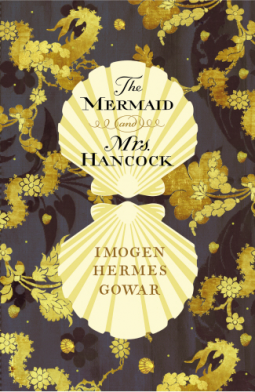
#BookReview ‘The Mermaid and Mrs Hancock’ by Imogen Hermes Gowar #historical

Quite a few things in The Mermaid and Mrs Hancock by Imogen Hermes Gowar are not as they seem. The mermaid, which may or not be real, is actually dead and quite gruesome. And the story starts with shipping merchant Mr Hancock, not Mrs. He is a widower. Imogen Hermes GowarThis story about London in 1785 is a full-on feast for the senses and at first is a bit overwhelming: wind ‘sings’, raindrops ‘burst’, skin is ‘scuffed and stained’, a face is ‘meaty’. But then I fell into the life of Jonah Hancock and wondered when the mermaid, and Mrs Hancock, would appear. Soon the captain of the Calliope, one of Jonah’s ships, returns homes without the ship but with a mermaid.
The Mermaid and Mrs Hancock overflows with contrasts: Deptford and Mary-le-Bone are villages outside London, whales are dismembered and rendered beside the river but in nearby Blackheath the air is to be treasured. It seems unlikely that the path of Jonah, conservative, hard-working, will intersect with Angelica Neal, a former upper class prostitute. But thanks to the mermaid, they meet and their lives take different turns as a result. Gowar juxtaposes sumptuous silks, satins and pearls of the girls at Mrs Chappell’s high-class brothel, where they are tutored at some expense in dancing and singing, performing masques for their high-paying clientele; with the potatoes peeled and stockings darned by Jonah’s niece Sukie and maid Bridget. The beauty of the whores, the ugliness of the mummified mermaid. Contrasts are everywhere.
The story is slow to build and I admit to skipping some paragraphs of description, many dedicated to situations and characters with no bearing on the main storyline. But then I would stop and admire a sentence like this, ‘Overnight, Deptford’s heady miasma had begun to settle, like silt in a puddle, but sunrise stirs it back up again and Mr Hancock stumps through that great rich stink of baking bread and rotten mud and old blood and fresh-sawn wood with the cat trotting on her tiptoes beside him.’ Over-stuffed with imagery, but beautifully written. I enjoyed the final third but was left regretting threads and characters left dangling that could have enriched the story; Tysoe Jones and Polly particularly.
This is a bawdy morality tale set in Georgian London that issues the warning to be careful what you wish for and compares inner and outer beauty, man’s treatment of women and the exploitation of a mermaid for money. The story is predictable, given the tradition of mermaids, and because of this the pacing would benefit from more audacious plot twists and turns. I liked Jonah and wanted to shout to him, ‘have nothing to do with her.’ He is simply too nice.

If you like this, try:-
‘The Quick’ by Lauren Owen
‘An Appetite for Violets’ by Martine Bailey
‘The Wicked Cometh’ by Laura Carlin

And if you’d like to tweet a link to THIS post, here’s my suggested tweet:
#BookReview THE MERMAID AND MRS HANCOCK by Imogen Hermes Gowar https://wp.me/p5gEM4-3lK via @SandraDanby

SaveSave

SaveSave

SaveSave

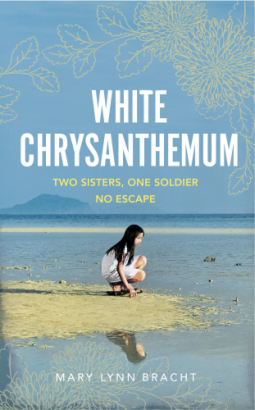
#BookReview ‘White Chrysanthemum’ by Mary Lynn Bracht‪ #WW2

It’s not often that I find myself using the words ‘delightful’ and ‘harrowing’ in the same book review, but here they are. White Chrysanthemum by Mary Lynn Bracht is the harrowing story of two Korean sisters separated during World War Two; one snatched to become a ‘comfort woman’ for Japanese soldiers, the other saved by her older sister’s actions. Mary Lynn BrachtIt is difficult to read of the violence, the arrogance, the misuse of power and the humiliation of this piece of war history – still being publicised and discussed – but this is leavened by the magical water sequences. Sixteen-year old Hana is a haenyeo, a female diver of the sea, she is taught by her mother, in the family tradition, to dive deep, hold her breath and withstand the cold. When she is abused, she retreats to her memories. She is a tough cookie.
One day, she and her mother are diving, their father is away fishing, and her younger sister Emiko sits on the beach, guarding the buckets that contain their day’s catch from interested seagulls; then Japanese soldiers arrive. Desperate to stop them taking her sister to a life of captivity, Hana races out of the water and distracts them. Throughout Hana’s capture and enforced slavery, at the most horrific moments of fear and violation, the thing that anchors her to the idea of survival is the thought of her sister, learning to dive, the memory of the water, the smell of the sea. “Hana is lying on the bottom of the ocean, looking upward at the sunlight shimmering above the surface. The great ocean’s heartbeat pulses against her eardrums. The current caresses her skin. A heaviness on her chest is an old ship’s anchor she has found. She hugs it close to weigh her down.”
Emi, Hana’s eleven-year old sister, is too young to understand what is happening when Hana is taken away. It is Emi’s story, told looking back when she is herself a grandmother, which brings contemporary perspective to the microscopic detail of Hana’s story. The complicated war history of this region is clarified as we learn of Emi’s silence about her experiences in World War Two and the Korean War which followed. Such is her shame she has never told her two children that they had an aunt. But once a year Emi travels to Seoul to take part in the Wednesday Demonstration to demand official recognition for the ‘comfort women’.
The bibliography at the end of the book is testament to the author’s research but this never weighs heavily in the story. When a little historical exposition is necessary, Bracht adds it with a light hand. This is a solemn book with flashes of beauty and love which give you hope to read to the end. I admired Hana’s strength and honour. And I did not guess the ending. A delightful read.

If you like this, try:-
‘The Translation of Love’ by Lynne Kutsukake
‘The Aftermath’ by Rhidian Brook
‘The Gift of Rain’ by Tan Twan Eng

And if you’d like to tweet a link to THIS post, here’s my suggested tweet:
#BookReview WHITE CHRYSANTHEMUM by Mary Lynn Bracht‪ https://wp.me/p5gEM4-3hH via @SandraDanby

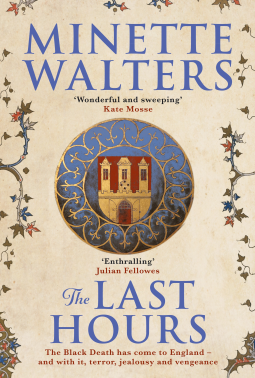
#BookReview ‘The Last Hours’ by Minette Walters #historical

I cannot remember when I last read a novel by Minette Walters although her psychological crime thrillers occupy a considerable section of my bookshelf. As soon as I read the blurb for The Last Hours, I was fascinated. What could  Walters do with a historical drama based on the Black Death of 14th century England? I wasn’t disappointed. Minette WaltersThe Last Hours tells the story of the Develish demesne in Devon in 1348 when infectious illness spread rapidly and threatened to wipe out the 200 bonded serfs, servants and family. What did take me by surprise is that The Last Hours is only the first instalment of the story, so there is the unexpected anticipation of the next book now to enjoy.
The first character we meet, pre-infection, is Eleanor. The only daughter of Sir Richard and Lady Anne of Develish, she watches preparations for the departure of her father and his retinue as they travel to meet the neighbouring lord to whose son Eleanor is promised. Eleanor seems at once fascinated by and repelled by a serf, Thaddeus Thurkell, who she distains for his illegitimacy. As a first chapter it sets up the relationships and future action in such a detailed way, I found myself re-reading it for clues. Because, though this is a historical novel, never forget it is written by Walters, author of The Scold’s Bridle and The Ice House.
Mystery, deceit, betrayal, lies and gruesome horror are a part of the story of how Lady Anne marshalls the population of Develish, family, stewards, servants and serfs alike, to survive when infection threatens to engulf them. Thaddeus is a key character, educated, tough and inspiring, he becomes a key figure when Sir Richard’s party returns from its visit to the neighbouring Bradmayne estate. Facing disease, Lady Anne must decide how to save the lives of the majority. Her knowledge of basic medical practices and herbal remedies, gleaned for her girlhood in a nunnery, enable her to reorganise Develish for survival. Walters does not lighten her descriptions of the Black Death; its symptoms, the corpses and infection are explicitly described but not in a sensationalist way, instead they add tension to the plot. Can this group of people possibly survive when whole Devonshire villages are dead and packs of wild dogs roam the countryside? How can you protect yourself from infection when the source of the disease is unknown and there is no help from outside?
The storyline is handled with expert timing. Just at the point where I wondered where the next threat would come from, Walters splits the storyline in two. After a suspicious death of a teenage boy, Thaddeus takes a group of five youths across the moat to explore the surrounding countryside to assess the threat from bandits and disease, and search for food. Meanwhile Eleanor’s behaviour is becoming more extreme, her hatred for her mother and the serfs make daily life difficult for all in such a confined space. Indulged by her father, Eleanor has grown to be a selfish, arrogant, ungrateful young woman who believes in her own superiority and expects special treatment even in such abnormal times.
As well as a historical study of the disease, The Last Hours also examines the social changes of the time, as serfs become educated and, encouraged by Lady Anne, consider a life independent of the feudal system. Walters has written two Black Death novels, the second is The Turn of Midnight.

Read my reviews of two other historical novels by Minette Walters:-
THE TURN OF MIDNIGHT #2BLACKDEATH
THE PLAYERS
THE SWIFT AND THE HARRIER

If you like this, try:-
‘Gone are the Leaves’ by Anne Donovan
‘At the Edge of the Orchard’ by Tracy Chevalier
‘The Taxidermist’s Daughter’ by Kate Mosse

And if you’d like to tweet a link to THIS post, here’s my suggested tweet:
#BookReview THE LAST HOURS by Minette Walters https://wp.me/p5gEM4-35D via @SandraDanby

#BookReview ‘The Cursed Wife’ by Pamela Hartshorne #historical

London 1590. The Cursed Wife by Pamela Hartshorne starts with two un-named women in a room; one alive, one dead. And then follows the story of two women who meet as children, Cat and Mary, mistress and maid. Page by twisting page the story of Cat and Mary unfolds as, you can’t help but wonder, which one dies and which lives. Pamela HartshorneMistress Mary Thorne sometimes forgets she is cursed. It is 1590 and she steps out into the rain to buy herbs for an ill maid, little knowing her life will be changed. Two stories are told in parallel; from 1562 when the two girls first meet, and 1590 when their paths cross again in London. There is a tug of power between the two as fortunes rise and fall; Cat is envious of what Mary has, while Mary feels guilt at every small slight she has made in her life.
In 1562, Mary is a gentleman’s daughter; orphaned by sickness, she is put into a cart to be taken to the house of a distant cousin where she has been offered shelter. Her solace is Peg, the small wooden doll given to her by her father. When a mob of urchins sets on the cart, one girl grabs Peg and in her haste Mary pushes her. The girl falls and dies. An old woman who sees it happen, curses Mary saying the truth of what she has done will haunt her for the rest of her life. Mary arrives at Steeple Tew, the manor of her relations, and there meets the daughter of the house, Cat. Mary is to be her maid. The two girls become companions, though a pecking order is retained as they grow into young women, until sickness again enforces a change of circumstances.
This is a novel about social mobility, up as well as down, and adjusting to life’s events. It is about destiny; making your own, or expecting it as a right. Cat is an over-indulged child who becomes a spoiled young woman used to everything in life. Though is too simplistic to say Cat is selfish and Mary a saint, you do feel that Cat will always be dissatisfied with her lot. Mary thinks, “Cat sees the world not through a window as others do, but in a looking glass that reflects back what she wishes to see.”
A dark tale of bitterness, blame, jealousy and resentment, the two girls are mirror images of each other, but inverted. Both start as gentleman’s daughters, both are brought low by circumstances, one adapts, the other does not. This is a curiously modern novel with a young woman confident of her entitlement, regardless of her actions and choices. Everyone, the story makes clear, has choices and must live by those, accepting responsibility for one’s own life.
Hartshorne is a brilliant writer of atmosphere. When Cat marries George, the two girls move to Haverley Court. Though it is newly-built, Mary sees threats everywhere. “To me, the house was a living creature, watching me slyly. Its shadows tiptoed behind me as I walked through it. I would feel them like a breath on the back of my neck and my skin would prickle.” Adding to the haunted atmosphere is the doll Peg, a kind of bellwether, whose painted face changes its expression forewarning of events happening to Mary.
The Elizabethan setting is full of wonderful detail from food to under-garments, but there were times when it became a little too much.

If you like this, try:-
‘The Penny Heart’ by Martine Bailey
‘At First Light’ by Vanessa Lafaye
‘The Knife with the Ivory Handle’ by Cynthia Bruchman

And if you’d like to tweet a link to THIS post, here’s my suggested tweet:
#BookReview THE CURSED WIFE by Pamela Hartshorne https://wp.me/p5gEM4-3i1 via @SandraDanby

#BookReview ‘The Western Wind’ by Samantha Harvey #historical

In 15th century Somerset, a village is isolated between high ground and a river. Various attempts to find funding and the skills to build a bridge have foundered, and with it the village’s hopes of prosperity. Then in the early hours of Shrove Saturday, the body of a villager is swept away by the river and everyone looks to the priest for answers. The Western Wind by Samantha Harvey is a contemplative, slow burn about John Reve, the priest, his care for the villagers of Oakham, and the persistent questions of his visiting rural dean about the death of Thomas Newman. Samantha HarveyThe story timeline is chopped up and told backwards, which adds to the mystery. The novel starts with the sighting of the body and the finding of a green shirt in the bulrushes. This is a sign, Reve says, that Newman’s soul has crossed into heaven. Only at the end, do we find out the truth of what really happened. The dean is a threat; we never know his name, and only at the end are we given a physical description of him. He suggests to Reve that as this is the season of confession, a pardon be issued to anyone confessing in the next three days. This, he hopes, will enable him to tell the archdeacon that the death was investigated and the village is full of church-going people who are faithful penitents. He tells Reve: ‘You’re the parish priest – your word weighs a hundred times a normal man’s, two hundred times a woman’s, three hundred times a child’s. Your word is a silver weight in the palm. Your word is worth trading money for. It would cut like a stone through water.’ But what is a parish to do if a priest fails in his office and then compounds that failure with lies; and worse, encourages a parishioner to lie. Everyone in the village is affected by what has happened. Reve has a privileged position, he listens to the confessions of all the villagers; he knows their secrets. But to whom does he tell his own secrets? Unsure of his actions and feeling threatened by the dean’s relentless questions, he asks God to send the western wind as a sign of approval and to blow away the spirits.
There are all sorts of themes going on here. The fine line between religion and superstition. The hypocrisy and lies of religion and its priests. The honesty and doggedness of the rural poor and their willingness to believe in symbols and spirits as well as God. It considers the practice of confession, that allows a person to sin in the knowledge that they will be blessed by the priest afterwards.
This is a careful, restrained novel – as fitting its contemplative clerical narrator – rich in descriptive detail. But at times I wishes it moved a little faster or was a little shorter. Told entirely from Reve’s point of view, it might perhaps have benefited from another voice. I also found the ending rather abrupt.

If you like this, try:-
‘Reservoir 13’ by John McGregor
‘Master of Shadows’ by Neil Oliver
‘Under a Pole Star’ by Stef Penney

And if you’d like to tweet a link to THIS post, here’s my suggested tweet:
#BookReview THE WESTERN WIND by Samantha Harvey https://wp.me/p5gEM4-37m via @SandraDanby