Tag Archives: World War Two

#BookReview ‘The Pursuit of Love’ by Nancy Mitford #romance

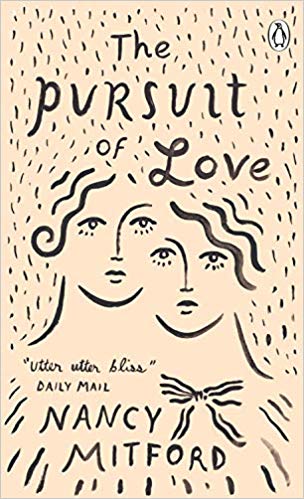
A slower, more meditative pace inhabits The Pursuit of Love by Nancy Mitford, less frenetic than her earlier novels. More fond, less satirical. Fanny Logan narrates this story of the Radlett family and, in particular, her cousin Linda’s pursuit of love. Nancy MitfordThe teenage Linda and sisters, and cousin Fanny who visits the Radletts at the fading freezing family pile, Alconleigh in the Cotswolds, want to grow up now. They are obsessed by sex and romance whilst being woefully ignorant of the practicalities. The reality, however, is more difficult and less romantic than they imagined. They form a secret society The Hons. When not out hunting, The Hons spend hours in a large warm cupboard gossiping about love and Fanny’s disreputable mother, ‘The Bolter’, who abandoned her daughter to pursue love. Fanny, raised by her Aunt Emily and stepfather Davey, spends all her holidays at Alconleigh with Uncle Matthew and Aunt Sadie and their family.
As with all Mitford novels there are many laugh-out-loud moments. Alconleigh is an eccentric world where Uncle Matthew rules his staff and family; he despises foreigners, Catholics, the nouveaux riche and people who say ‘perfume’ instead of ‘scent’. Desperate to find true love and not follow the family black sheep – The Bolter – into leapfrogging from affair to affair, the cousins are woefully naïve and unprepared for meeting men. Linda sums up true love, ‘it was like seeing somebody in the street who you think is a friend, you whistle and wave and run after him, and it is not only not the friend, but not even very like him. A few minutes later the real friend appears in view, and then you can’t imagine how you ever mistook that person for him.’
Published in 1945, the story starts in the Thirties and runs through the Spanish Civil War and the start of World War Two and The Blitz. The Radletts may be ‘hons’ but they suffer and slings and arrows of fortune in love. Fanny is the narrator of the family’s story and we are treated to occasional morsels about her own love and life. Like Nick Carraway in The Great Gatsby, the story therefore includes Fanny’s own interpretation of affairs as well as her recounting of Linda’s own stories.
This is a tale of lost aristocracy, and the levelling effects of love and war. Funny, witty and sharp featuring an absent parenting style completely alien today, The Pursuit of Love has at its heart a strong streak of sadness and tragedy. No matter who you are, love cannot always be found; if found, it cannot always be retained.
CLICK HERE TO READ MORE ABOUT THIS BOOK AT AMAZON

Read the first paragraph of THE PURSUIT OF LOVE here.

Read my reviews of these other novels by Nancy Mitford:-
CHRISTMAS PUDDING
HIGHLAND FLING
LOVE IN A COLD CLIMATE
PIGEON PIE
THE BLESSING
WIGS ON THE GREEN

If you like this, try these:-
‘Miss Pettigrew Lives for a Day’ by Winifred Watson
‘The Ballroom’ by Anna Hope
‘My Dear, I Wanted to Tell You’ by Louisa Young

And if you’d like to tweet a link to THIS post, here’s my suggested tweet:
#BookReview THE PURSUIT OF LOVE by Nancy Mitford https://wp.me/p5gEM4-3kq via @SandraDanby

#BookReview ‘The Second Midnight’ by @AndrewJRTaylor #WW2

In The Second Midnight, Andrew Taylor unpicks the connections between a group of people – a dysfunctional family, spies, ordinary people – before, during and after World War Two in England and Czechoslovakia. Essentially it is a novel of relationships wrapped up in the parcel of wartime spying, lies and romance. In its scope it reminds me of Robert Goddard’s Wide World trilogy, except Taylor covers the subject in one book rather than three. Andrew TaylorIt is 1939 and twelve year old Hugh Kendall is bullied by his father, sighed over by his harried mother, ignored by his older brother and manipulated by his older sister. Hugh retreats into imaginative games with his toy soldiers. His father, failing glass importer Alfred Kendall, is recruited by the Secret Services as a courier on a glass-buying trip to Czechoslovakia. In tow is Hugh, recently expelled from school, a nuisance to his father. Alfred is not a natural spy, though he thinks he is. When things get sticky and Alfred must return to England, the Czech Resistance keeps Hugh as collateral to ensure his father’s quick return. But Hugh finds himself alone in Prague after the German invasion, unsure who to trust, unsure if he will be rescued. He quickly learns to live on his wits. This for me was the best section of the book.
The thing that makes this story stand apart for me is Hugh. He makes an uncanny narrator, giving us a view of life in an occupied country, stranded from everything that is safe and familiar. Adept at languages, Hugh quickly becomes familiar with Czech and German allowing him to assume a false identity as Rudi Messner, a Czech-Hungarian boy.  Cared for by a German officer, Colonel Helmut Scholl, Hugh works as the gardener’s boy at Scholl’s mansion in Prague and meets the colonel’s children, Heinz and Magda. These relationships weave across the years and the pages into the post-war years and the fight against communism.
The significance of the title left me wondering if I had missed something. It is set up with an intriguing connection between two characters, then abandoned. The connection with the Prologue was also lost on me as it is only mentioned again at the end and I had forgotten what happened; ends neatly tied without adding understanding. Taylor knows how to tell a page turning story, I read this quickly. This is a fascinating read over a complex time period, but an enormous subject; I wish it had been given the space of three books to explore fully.
CLICK HERE TO READ MORE ABOUT THIS BOOK AT AMAZON

Read my reviews of Andrew Taylor’s ‘Marwood & Lovett’ series that starts on the night of the Great Fire of London:-
THE ASHES OF LONDON #FIREOFLONDON1… and read the first paragraph of THE ASHES OF LONDON.
THE FIRE COURT #FIREOFLONDON2
THE KING’S EVIL #FIREOFLONDON3
THE LAST PROTECTOR #FIREOFLONDON4
THE ROYAL SECRET #FIREOFLONDON5
THE SHADOWS OF LONDON #FIREOFLONDON6

If you like this, try:-
Corpus’ by Rory Clements
The Ways of the World’ by Robert Goddard
Five Days of Fog’ by Anna Freeman

And if you’d like to tweet a link to THIS post, here’s my suggested tweet:
#BookReview THE SECOND MIDNIGHT by @AndrewJRTaylor https://wp.me/p5gEM4-4gC via @SandraDanby

#BookReview ‘The Tuscan Secret’ by Angela Petch #WW2 #romance

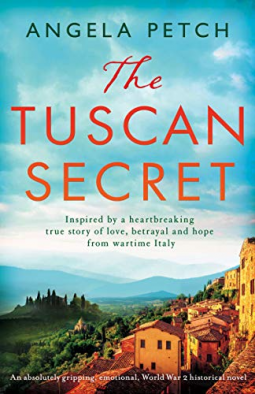
The Tuscan Secret by Angela Petch is one of those books that is difficult to define. Is it a romance; partly. Is it historical; yes if World War Two counts as historical. Is it a page turner; for me, not quite. The heart of this novel lies in its Italian setting. The author lives part of the year in Tuscany and it really shows. From the descriptions of the countryside to the food and customs, The Tuscan Secret is totally believable. The deserted village of Montebotelino is real. Angela PetchTwo women – Ines, her daughter Anna – share tangled family histories. Ines has recently died and leaves to Anna some money and a box of diaries. Written in Italian, Anna cannot decipher the diaries so decides to leave behind her own unsatisfactory love life and use her mother’s money to travel to Rofelle in Tuscany. Why did Ines leave idyllic Roffele, what secrets did she write in the diaries, and how did she come to marry an Englishman.
This is a dual timeline story which switches back and forth between mother and daughter. Anna arrives in Rofelle where she moves into an agriturismo and gets to know its owner Teresa and her brother Francesco. Anna’s Italian soon proves inadequate so Francesco introduces her to the locals and translates the diary in sections. Ines’ story is presented to the reader as her diary though it reads as narrative complete with dialogue. Ines is a teenager, helping her mother, longing to be with her brother Davide who is with their schoolfriend Capriolo, fighting in the mountains. Then one day, they help an injured English soldier who is trying to escape enemy territory.
I found myself looking forward to Ines’ sections and almost wished the story was completely hers. Rofelle is located in the Apennine mountains, home to resistance fighters and the route for allied soldiers escaping the Germans. The experience of the local people – the urge to fight, the need to survive, the duty to help fleeing soldiers, the threat of atrocities by the occupying German army – sets up impossible choices. I love any world war two story and especially those about an area with which I’m unfamiliar.
I struggled with the character of Jim who is thinly sketched and affected by huge events off the page. The author keeps these a secret from the reader as Jim kept them hidden from Ines, but it does make him an unsympathetic character. This feels like a potential heavyweight war novel hidden beneath a layer of romance which, as nice as it is, feels light and predictable in comparison.

Here are my reviews of other novels also by Angela Petch:-
THE POSTCARD FROM ITALY
THE GIRL WHO ESCAPED

If you like this, try:-
The Invitation’ by Lucy Foley
Those Who Are Loved’ by Victoria Hislop
The Lost Letters of William Woolf’ by Helen Cullen

And if you’d like to tweet a link to THIS post, here’s my suggested tweet:
#BookReview THE TUSCAN SECRET by Angela Petch https://wp.me/p5gEM4-44D via @SandraDanby

#BookReview ‘Akin’ by Emma Donoghue #WW2 #contemporary

Noah Selvaggio, a widower and retired chemistry professor, is about to leave New York for Nice, France, on an 80th birthday trip to discover his childhood roots. He expects to travel alone. Except in Akin by Emma Donoghue, Noah finds himself in temporary charge of his 11-year old great nephew Michael. The trip to Nice goes ahead, the old man and the boy learn new things about themselves, each other, and about the world. Emma DonoghueThis is effectively a road trip in a book, more of a ‘holiday trip’. The unlikely travelling companions are quite sparky, irritating each other, each reacting wildly to the other’s strange cultural habits. Donoghue does an excellent job with the Nice setting, effortlessly bringing it alive; the gardens, the architecture, the food, the carnival, the French themselves. I loved the grumpiness that both characters demonstrate. Michael’s weary ‘dude’ when Noah tries to educate him about something – ‘it’s a selfie, dude’, ‘eyebleach, dude’; Noah’s repeated requests that Michael eat a proper meal that includes vegetables. Any adult who is not natural with children and who has spent uncomfortable time with an awkward teenager, will identify with Noah’s dilemma. Michael can be gentle, inquisitive, cocky, snide, exhausting and infuriating. Noah needs frequent naps, prefers education to circuses, but he makes an effort because Michael’s father is dead, his mother in prison, and his grandmother has just died. Noah is the nearest relative who can be found. It doesn’t matter that they have never met, and that Noah is 79. Michael is grieving for his grandmother, and the absence of his mother Amber; Noah is grieving for his wife Joan, who pops up occasionally with acid asides when his handling of Michael backfires.
The mismatch between these two males – their ages, education, class, life chances – sounds like a recipe for disaster but the mixture of two opposites causes a chemical reaction involving respect, support, empathy and disagreement about mobile phones. Noah left Nice at the age of four, leaving behind his mother who was caring for her photographer father, to join his father in the USA. When Margot arrived in New York after the war, nothing much was said about the war years. This trip is Noah’s chance to find some answers. So as they identify the locations in Margot’s photographs taken in Nice during the war, Noah and Michael attempt to piece together her life. Was she simply her father’s photography assistant, or something else? A member of the Resistance, a forger of documents for Jewish orphans; or a snitch who betrayed her neighbours to save her family. Is there anyone in Nice who can help Noah and Michael find the truth?
This is a slow-burn book about the relationship between an old man and a pre-teen boy from very different worlds, and is told exclusively from the adult viewpoint. It is about families across generations facing difficult choices, taking risks in the hope of helping family, paying the consequences if things don’t work out; and above all, about the similarities. ‘He and this boy were quite alien to each other, he decided. Yet, in an odd way, akin.’
For me, this is another Donoghue hit.

Read my reviews of these other Donoghue novels:-
FROG MUSIC
THE PULL OF THE STARS
THE WONDER

Read the first paragraph of ROOM.

If you like this, try:-
Days Without End’ by Sebastian Barry
The Ballroom’ by Anna Hope
Summertime’ by Vanessa Lafaye

And if you’d like to tweet a link to THIS post, here’s my suggested tweet:
#BookReview AKIN by Emma Donoghue https://wp.me/p5gEM4-436 via @SandraDanby

#BookReview ‘Pattern of Shadows’ by Judith Barrow #historical #WW2

The first instalment of Judith Barrow’s Mary Howarth series is Pattern of Shadows, a historical romance set in World War Two Lancashire that explores the  challenges and new opportunities for women in wartime. Set against a male-dominated background where the aspirations of working class women have traditionally been put second, war brings change and some people adapt better than others. Judith BarrowMary is a nursing sister in the hospital attached to a prisoner of war camp, nursing German soldiers captured and injured in action. Some people find that challenging but for Mary it is a satisfying and fulfilling job. Things get complicated when she attracts the attention of two men who could not be more different. One night Mary meets Frank Shuttleworth, a guard at the POW camp and, thanks to a combination of unforeseen circumstances, runs to a shelter with him during a bombing raid. This evening has far-reaching consequences for Mary and her flighty younger sister Ellen. There are tensions at home too with her argumentative irascible father and defeated mother, as Tom her older brother is in prison as a conscientious objector and her younger brother, injured fighting, must now work as a coal miner. Meanwhile a new German doctor arrives at the hospital. With two choices in front of her, Mary must decide whether to do what is expected or defy convention, to be loyal to her family who are not always loyal to her, or to be selfish and do something for herself.
A well-paced story combining stalking, prejudice, domestic violence, homophobia, poverty and family strife, Mary is the only unselfish, balanced person in her family. Will she finally put herself first? This is at times a grim story set at a difficult time and at first I worried this was misery fiction and longed for an occasional bright light. But the setting and time period are so well researched I soon relaxed into the story as the character of Mary and her predicament drew me in. I admire her stubbornness, her selflessness and loyalty, above all her bravery. Sometimes she is misguided, always well-intentioned, I look forward to reading more about Mary in Changing Patterns, the sequel.

If you like this, try:-
After the Bombing’ by Clare Morrall
Homeland’ by Clare Francis
The Aftermath’ by Rhidian Brook

And if you’d like to tweet a link to THIS post, here’s my suggested tweet:
#BookReview PATTERN OF SHADOWS by Judith Barrow #books https://wp.me/p5gEM4-3Ul via @SandraDanby

#BookReview ‘A Week in Paris’ by Rachel Hore @Rachelhore #mystery #WW2

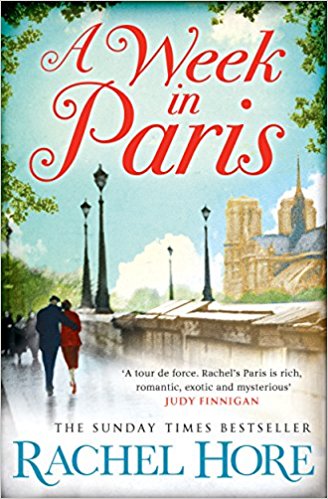
I really enjoyed this book but can’t help feeling the title did it no favours. A Week in Paris by Rachel Hore is a story of hidden secrets, wartime Paris, resistance, collaboration, bravery and music. Because of the title I was expecting something more cosy and romantic; although there is a romantic strand to the story, this book is worth reading for so much more. Rachel HoreThe week in Paris in question happens in 1956 when teenager Fay goes on a school trip to Paris. Two significant things happen to her there. She meets a fanciable boy, Adam, and has a strange fainting episode triggered by the ringing of the bells at Notre Dame. Back home, she questions her mother Kitty who denies that Fay has ever been to Paris. But Fay cannot shake off the feelings of familiarity.
In 1961 Fay, now a professional violinist, has the chance to go to Paris for a series of performances. However her mother, always emotionally vulnerable, has taken an accidental overdose and is in St Edda’s Hospital. Before she leaves for Paris, Fay visits her mother who tells her to look at the bottom of a locked trunk at home. In it, Fay finds a small canvas rucksack. Attached to it is a label. On one side is written ‘Fay Knox, Southampton’, on the reverse, ‘Convent Ste-Cécile, Paris.’
‘She sat staring at the label for some time, while the faintest glimmer of a memory rose in her mind. Sunshine falling on flagstones, the blue robes of a statuette, and… but no, it was gone. It was as though a door had opened, just a chink, in her mind, before it shut again.’
The story is told in two strands, World War Two and afterwards, from the viewpoints of Kitty and Fay. Gradually the mysteries are unveiled. Fay has the unsettling feeling that her mother is keeping secrets, while Kitty knows she must some day explain everything to her daughter. For a long time, the reader keeps guessing.
In Paris, Fay sets off to find the convent mentioned on the label. There she slowly unravels the truth. How, despite denying to Fay that she has ever been to France, Kitty went to Paris in 1937 to study piano at the Conservatoire. What follows is an unveiling of a secret life during the Second World War, a time when Fay was a toddler, a time her mother told her they lived in a pretty cottage in Richmond. The real story of Kitty’s pre-war life in Paris, her meeting and love affair with Fay’s father Eugene, and what happened next, is fascinating. Again, Fay experiences feelings of déjà vu but this time she is old enough to seek the answers. She never imagined the truth she discovers.
I found myself picking up the book at every opportunity, just to read another couple of pages. It is a fascinating study of wartime secrets being kept from the next generation, not in an attempt to deny but as a way of pushing away the pain, grief and shame of what happened in an occupied city.

Click the title to read my reviews of other books by Rachel Hore:-
A BEAUTIFUL SPY
ONE MOONLIT NIGHT
THE HIDDEN YEARS
THE LOVE CHILD

If you like this, try these:-
‘The Ballroom’ by Anna Hope
‘The Book of Lies’ by Mary Horlock
‘In Another Life’ by Julie Christine Johnson

And if you’d like to tweet a link to THIS post, here’s my suggested tweet:
#BookReview A WEEK IN PARIS by @Rachelhore http://wp.me/p5gEM4-2RH via @SandraDanby

#BookReview ‘Munich’ by @Robert___Harris #spies #WW2 #thriller

Robert Harris is a classy thriller writer at the top of his game. Munich is his re-telling of the September 1938 meetings between British Prime Minister Neville Chamberlain and German Chancellor Adolf Hitler. Both had public, and private, objectives. Chamberlain was a pragmatist; though he sought peace, he was prepared to accept a delay of war to enable our woefully-equipped armed forces to prepare. Hitler wanted all of Europe for Aryans, which meant war. All of this is well-documented. But Harris takes two fictional characters and places them into this real history, splicing their personal stories into the political drama. Robert HarrisHugh Legat and Paul von Hartmann met at Oxford in the early Thirties. In 1938, Legat is a junior private secretary to Chamberlain. Hartmann holds a similar position in the German government; he is also part of the anti-Hitler movement. They two men have not spoken or seen each other since a holiday in Munich with a girlfriend. We do not know why. Everyone in this story faces a personal decision of conscience: whether to be loyal to country, self, and family, or betray them. The costs are different for each person. For some; death. For others; isolation, loss of job, loss of family, loss of self-respect.
Chamberlain and Hitler meet in Munich with Mussolini and Daladier to settle the fate of the Sudetenland in Czechoslovakia. We are party to a fascinating game of chess as the diplomats and civil servants behind each of the leaders struggle to find a way through the opposition’s refusals and disagreements. The subtle tensions and pettiness within the teams, the one-upmanship, the jealousies, the cliques – which anyone who has worked in management will recognise – remind us that these politicians are ordinary people with an extra-ordinary job to do. If they fail, millions will die. Chamberlain is portrayed as a dedicated, workaholic who is desperate to avoid another war less than twenty years after the end of the Great War.
I read this over a weekend, the last pages flew by as Legat and Hartmann sneak around Munich, hiding secret documents and running from the Gestapo. This is a meticulously-researched literary thriller where the tension comes partly from our own knowledge of the outcome and our understanding that, whatever words the British present, Hitler’s mind is made up. Chamberlain will give his ‘peace in our time’ speech. But to find out what happens to the fictional Hugh and Paul, we must read to the end.

Read my reviews of these other thrillers, also by Robert Harris:-
AN OFFICER AND A SPY
V2

If you like this, try:-
‘The Travelers’ by Chris Pavone
‘Darktown’ by Thomas Mullen
‘The Long Drop’ by Denise Mina

And if you’d like to tweet a link to THIS post, here’s my suggested tweet:
#BookReview MUNICH by @Robert___Harris https://wp.me/p5gEM4-357 via @SandraDanby

#BookReview ‘Pigeon Pie’ by Nancy Mitford #satire #historical

Pigeon Pie, the fourth novel of Nancy Mitford, was first published in 1940 by Hamish Hamilton. This was a serious error by its publisher given that Mitford wrote this light-hearted satire about wartime spying just before World War Two broke out in 1939. Not surprisingly, it was a commercial miss. Which is a shame. It is a funny, more tightly-plotted and disciplined novel than her first three and is a transition between her pre-war and post-war novels. Nancy MitfordAt the outbreak of war, Lady Sophia Garfield enrols at her nearest First Aid Post and is put in charge of the office, folding and counting laundry and taking telephone calls. As the book is set during the first few months of war, the Phoney War, not a lot happens for Sophia except endless first aid drills. She teases an acquaintance, Olga – who poses in the press as a mysterious Mata Hari figure – and lunches with inept friends Ned and Fred who work at the Ministry of Information. Then Sophia stumbles on a nest of spies; or counter-spies, or counter-counter spies, she’s not sure which.
Although her characters seem of a type with those of her first three novels – Mitford has a reputation for writing about the upper class, their extravagant and thoughtless lifestyles – in Pigeon Pie they are less cartoonish. Sophia particularly is interesting, drawn as she is into different worlds: her husband Luke’s enthusiasm for a new American religion, the Boston Brotherhood, brings new friends to dinner and a lodger upstairs; her godfather Sir Ivor King, aka The King of Song, disappears; journalist Rudolph Jocelyn enlists; and Sister Wordsworth at the Post is jolly and efficient about bandages and disinfectants and such like. Mitford weaves a plot of spies, kidnapping, bombs, code and general sneaking around, despite Sophia being unable to remember Morse Code and seeing codes in innocent messages.
This had me chuckling aloud.
CLICK HERE TO READ MORE ABOUT THIS BOOK

Read my reviews of these other novels by Nancy Mitford:-
CHRISTMAS PUDDING
HIGHLAND FLING
LOVE IN A COLD CLIMATE
THE BLESSING
THE PURSUIT OF LOVE
WIGS ON THE GREEN

Read the first paragraph of THE PURSUIT OF LOVE here.

If you like this, try these:-
‘The Paying Guests’ by Sarah Waters
‘The Heat of the Day’ by Elizabeth Bowen
‘The Slaves of Solitude’ by Patrick Hamilton

And if you’d like to tweet a link to THIS post, here’s my suggested tweet:
#BookReview PIGEON PIE by Nancy Mitford https://wp.me/p5gEM4-3h2 via @SandraDanby

#BookReview ‘Nemesis’ by Rory Clements #thriller #WW2

Nemesis by Rory Clements is the third in his Tom Wilde series which sees the American-born Cambridge professor tangle with more spies as Britain enters the Second World War. It is a page-turning read that I galloped through despite a few moments of confusion about who was double-crossing who; to the point where I started to distrust everyone except Tom. Rory ClementsIt is September 1939 and a strange time, the pause before war starts when sandbags are filled and the propaganda starts. Wilde, on holiday in southern France with girlfriend Lydia, negotiates the release of a former student, a brilliant chorister, from an internment camp. Marcus Marfield fought for the International Brigade in the Spanish Civil War and seems to be suffering from PTSD. Wilde returns him to Cambridge though feeling uneasy about the circumstances of Marcus’s release. Marcus’s behaviour is worrying. Clements includes many of the characters featured in the earlier two books, including British spy Philip Eaton, doctor Rupert Weir and fellow don Horace Dill.
Critical at this stage of the war was America joining the Allies but two unrelated incidents spread bad PR in the US; the ambassador in Paris escapes assassination and a British ship The Athenia, carrying American civilians, is sunk. On board are the wife and children of Jim Vandenberg, Tom’s contact at the US Embassy. As Jim waits for news of his wife and sons, strange things start to happen around Marcus Marfield and Tom is pulled into the investigation. Though unqualified, he has a skill for spying and takes to it eagerly, always riding his distinctive Rudge motorcycle.
This is a fun, gripping series set at a fascinating time in Britain’s history when each side was plotting to win the propaganda war and influence America. It tempts me to start reading Clements’ Elizabethan spy novels.

Click the title to read my reviews of the other books in the Tom Wilde series:-
CORPUS #1TOMWILDE
NUCLEUS #2TOMWILDE
HITLER’S SECRET #4TOMWILDE

A PRINCE AND A SPY #5TOMWILDE
THE MAN IN THE BUNKER #6TOMWILDE
THE ENGLISH FUHRER #7TOMWILDE

And from the Sebastian Wolff series:-
MUNICH WOLF #1SEBASTIANWOLFF

If you like this, try:-
A Hero in France’ by Alan Furst
An Officer and a Spy’ by Robert Harris
Day’ by AL Kennedy

And if you’d like to tweet a link to THIS post, here’s my suggested tweet:
#BookReview NEMESIS by Rory Clements https://wp.me/p5gEM4-3PU via @SandraDanby

#Bookreview ‘Call of the Curlew’ by Elizabeth Brooks #historical #WW2

Call of the Curlew by Elizabeth Brooks has the most fantastic sense of place. It is a haunting, atmospheric read that I didn’t want to put down. Tollbury Marsh is an ever-present character in the story too, quiet, empty, natural and ‘where a body could sink under that earth, slowly and inexorably, like an insect in a pot of glue.’ Elizabeth BrooksAn elderly woman sees a sign she has been awaiting and prepares to take her last walk, across the snowy marshes and into the sea. She imagines the freezing water creeping up her legs, planning how she will use her walking stick, loading her pockets with stones from the garden wall. And then she realises she has the wrong day, it is New Year’s Eve tomorrow, not today and she is a day too early. When a stranger appears, her plans are disrupted and the past must be faced.
Virginia Wrathmell arrives at Salt Winds, a house on the edge of the marshes, as a newly adopted orphan when she is ten. It is New Year’s Eve 1939. Her new parents, Clem and Lorna, seem ill at ease together and Virginia watches them from the banisters, trying to understand the adult tension which dominates the house. When a neighbour visits, Virginia takes an instant dislike to the way Max Deering’s eyes linger on her and this first impression of him does not improve as the weeks pass. The catalyst for change comes when a German fighter plane crashes on the marshes and Clem sets out with rope and torch to help. The wartime story is spliced with Virginia in 2015, her plans to wade into the marshes on hold. Slowly the mystery is unveiled; of what happened in the war that left such a lasting mark on Virginia so many decades later.
This is the first novel by Brooks that I have read. She writes with a poetic description that is engaging, particularly when describing the marshes and the natural world. ‘The stars were starting to poke through the sky, like silver pins through lilac silk.’ But she also writes with an eye to mystery and is adept at tantalising the reader. This is not a thriller, I hesitate to call it a mystery because the pacing is not intense. Rather this is an elegiac read about a delicate new family in wartime facing situations that would split apart the strongest of people.
Excellent.

If you like this, try:-
Shelter’ by Sarah Franklin
Life After Life’ by Kate Atkinson
The Good People’ by Hannah Kent

And if you’d like to tweet a link to THIS post, here’s my suggested tweet:
#BookReview CALL OF THE CURLEW by Elizabeth Brooks https://wp.me/p5gEM4-3y2 via @SandraDanby