Tag Archives: book review

#BookReview ‘Agatha Raisin and the Vicious Vet’ by MC Beaton #cosycrime

Re-bound dates are never a good idea, and Agatha Raisin and the Vicious Vet by MC Beaton starts with retired PR supremo and now amateur sleuth Agatha feeling spurned by sexy neighbour James Lacey. MC BeatonOn the re-bound, she goes out for dinner with the village’s new flirtatious vet, Paul Bladen. It soon turns out that he dislikes cats, although he does seem to have a penchance for middle-aged ladies.
When he drops dead, seemingly of an unfortunate accident, Agatha refuses to accept it is not murder. And so the second novel in the prolific Agatha Raisin series sets off at a pace, as Agatha tries to spend time with James Lacey without drooling.
They ignore police warnings not to ask questions where it is inappropriate, and after breaking into the bank, and snooping around the dead man’s house, they think they find evidence of wrongdoing. Except it is not quite the wrongdoing that they expected.
Another easy-to-read detective romp by MC Beaton, charming to read with your feet up on a rainy Sunday afternoon. Formulaic, yes. But very funny.

Read my review of other books in this series:-
AGATHA RAISIN AND THE QUICHE OF DEATH #1AGATHARAISIN
AGATHA RAISIN AND THE POTTED GARDENER #3AGATHARAISIN
AGATHA RAISIN AND THE WALKERS OF DEMBLEY #4AGATHARAISIN
AGATHA RAISIN AND THE MURDEROUS MARRIAGE #5AGATHARAISIN

If you like this, try:-
‘Etta and Otto and Russell and James’ by Emma Hooper
‘Cover Her Face’ by PD James #1ADAMDALGLIESH
‘The Funny Thing About Norman Foreman’ by Julietta Henderson

And if you’d like to tweet a link to THIS post, here’s my suggested tweet:
#BookReview AGATHA RAISIN AND THE VICIOUS VET by MC Beaton http://wp.me/p5gEM4-1K6 via @SandraDanby
#BookReview ‘Don’t You Cry’ by Mary Kubica @MaryKubica #mystery #suspense

Don’t You Cry explores how easy it is to make assumptions and how this guesswork is so often wrong. This is the third novel by Mary Kubica, all thoughtful mysteries, carefully written and detailed. It took me longer to get into this one, but Kubica spends time drawing the characters and I was prepared to go along with her. Mary KubicaThere are two narrators. In Chicago, Quinn’s roommate disappears. After a couple of days waiting for Esther to return and wondering if she has done anything to upset her, Quinn starts to poke around looking for answers. The first things she finds are confusing, they contradict the Esther she knows, or thinks she knows. And then she starts to wonder what Esther is hiding. Quinn’s voice is alternated with Alex, a young man who lives in the small town where he grew up on the shore of Lake Michigan. He is a nice guy, who passed up on college for a boring low-paid in a rundown lakeside café so he can care for his drunken father. He takes lunch to Ingrid, a housebound elderly lady and stays to eat with her, and to play cards. One day, he goes to work and sees a girl with distinctive, ombre hair. There is something about her that captures his imagination. The girl, in his head he calls her Pearl, is watching the house next door to Ingrid, which is the office of a psychologist.
Nothing is what it seems. I raced through the last few pages as the answers came thick and fast. The twists and turns are clever but, compared with Kubica’s other two novels, this feels baggy and would benefit from an edit to improve the pace and cut repetitions.

Read my reviews of two other novels by Mary Kubica:-
PRETTY BABY
THE GOOD GIRL

If you like this, try:-
‘Pretty Is’ by Maggie Mitchell
‘The Lost Girl’ by Sangu Mandanna
‘The Accident’ by CL Taylor

And if you’d like to tweet a link to THIS post, here’s my suggested tweet:
#BookReview DON’T YOU CRY by Mary Kubica @MaryKubica by @SandraDanby http://wp.me/p5gEM4-21l

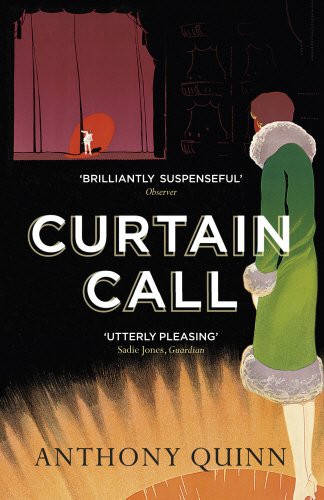
#BookReview ‘Curtain Call’ by Anthony Quinn #historical #1930s

The 1930s come alive in Curtain Call by journalist Anthony Quinn, I stepped into his world and felt as if I was there. An effortless read, I was plunged into the worlds of Stephen Wyley, artist; Nina Land, actress; the gloriously-named Madeline Farewell, hostess; Jimmy Erskine, theatre critic; and Tom Tunner, Erskine’s assistant. Anthony Quinn The setting is a time of looming war, royal crisis, blackshirts and strict homosexuality laws. It is not an easy novel to categorize: there are murders, but it is not a detective novel; we see the world of art and theatre and prostitution, but it is not a novel about art etc. Packed with period detail, with not one detail too many, this is written with a light hand and a clever plot. It starts with a romantic assignation and chance encounter in a hotel with a murderer, known in the newspapers as the Tiepin Killer. This meeting of only seconds, brings together the key characters and kickstarts the murder plotline.
Curtain Call is the predecessor, not prequel, to Quinn’s novel Freya.

Click the titles to read my review of other novels by Anthony Quinn:
FREYA
HALF OF THE HUMAN RACE
MOLLY & THE CAPTAIN
OUR FRIENDS IN BERLIN
THE MILLIONAIRE WALTZ
THE MOUTHLESS DEAD
THE RESCUE MAN
THE STREETS

If you like this, try:-
‘The Light Years’ by Elizabeth Jane Howard  #1CAZALET
‘At Mrs Lippincote’s’ by Elizabeth Taylor
‘The Heat of the Day’ by Elizabeth Bowen

And if you’d like to share a link:
#BookReview CURTAIN CALL by Anthony Quinn http://wp.me/p5gEM4-1Xu via @Sandra Danby

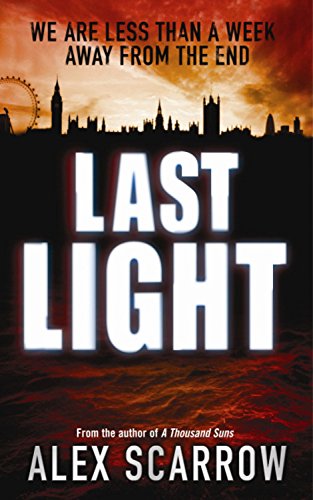
#BookReview ‘Last Light’ by Alex Scarrow #thriller #dystopian #adventure

I’m sure that you, like me, watch end-of-the-world scenarios in films and wonder ’what would I do?’ That’s the thought I had reading Last Light by Alex Scarrow. Oil consultant Andy Sutherland writes an investigate report for a client about what would happen if the world’s oil suppliers were cut off. Ten years later, the trigger points he identified start to happen. Alex Scarrow Within hours, society breaks down. Andy is in Iraq, his wife Jenny has packed her stuff ready to move out of the family home and has gone to Manchester for a job interview. Their daughter Leona is at university in Norwich and son Jacob at private school. They could not be more widely spread. The instinct of the, newly separated, parents, is to get back to their children. The children long for the security of their parents. While in the background, the unknown group causing the chaos has sent Ash to find Leona.
The pages of this turn so rapidly you could read it in one sitting on a long haul flight. Excellent stuff. It’s clear that Scarrow is fascinated by the ‘Peak Oil’ scenario at the centre of the story, and it shows on every page. As each of the Sutherland family learns the hard way not to trust anyone, we wonder if they [and society in general] can possibly survive.

And here’s my review of the sequel, AFTERLIGHT #2LASTLIGHT

If you like this, try:-
‘In Ark’ by Lisa Devaney
‘The Last of Us’ by Rob Ewing
‘The Ship’ by Antonia Honeywell

And if you’d like to share a link:
#BookReview LAST LIGHT by Alex Scarrow via @SandraDanby http://wp.me/p5gEM4-1Pn

#BookReview ‘The Marriage Certificate’ by Stephen Molyneux #genealogy #mystery

The Marriage Certificate by Stephen Molyneux is a mystery story combining family secrets with turn of the century British history: the Boer War, the Great War, the merchant navy, the changing role of women and attitudes to illegitimacy. Stephen MolyneuxIt is the story of two couples – the bride and groom, Louisa and John, best man Frank and bridesmaid Rose – at a wedding on January 15, 1900; their lives, loves, dangers and tragedies. Running alongside is a modern-day strand. In 2011, amateur genealogist Peter Sefton finds the marriage certificate of Louisa and John’s wedding in an antiques shop and his curiosity is piqued. As he researches the names on the certificate, we also see their lives unfolding in a rapidly-changing world as the 19th century turns into the 20th. The men leave home to fight, while the women stay at home. War brings a change of life, but social mores remain Victorian.
Meanwhile, an elderly man dies alone in London. Without relatives, Harry Williams is listed on the Bona Vacantia list of unclaimed estates. In 2011, a professional heir hunting company starts to research Williams’ life in the hope of finding distant relatives and earn a share of the money. How will Highborn Research’s investigation coincide with Peter’s? Is there a connection to Laura and John? And who will inherit Harry Williams’ money?
This is not a thrilling page-turner with rapid action on every page, instead it is a slow-burning story rooted in historical detail which, for me, came alive in the final 100 pages. Perhaps this is due to the writing style, which can be a little formal and repetitive, and the author’s tendency to include tiny details. I did wonder whether the storyline was based on real people, the genealogical detail is fascinating and it is clear the author knows the research procedure, its twists and turns. I read this over one weekend, and found myself sitting up late to read to the end. Incidentally, the last page leaves the story hanging – but don’t be tempted to look!

If you like this, try:-
‘The Blood Detective’ by Dan Waddell 1BLOODDETECTIVE
‘Hiding the Past’ by Nathan Dylan Goodwin #1MORTONFARRIER
‘In the Blood’ by Steve Robinson

And if you’d like to tweet a link to THIS post, here’s my suggested tweet:
#BookReview THE MARRIAGE CERTIFICATE by Stephen Molyneux via @SandraDanby http://wp.me/p5gEM4-1YO

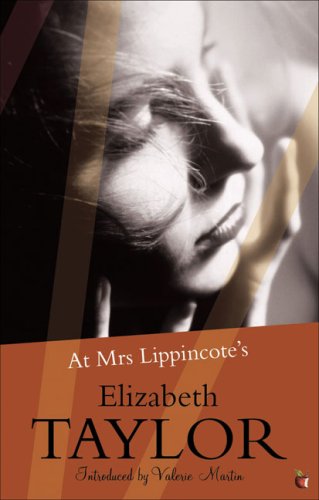
#BookReview ‘At Mrs Lippincote’s’ by Elizabeth Taylor #historical

Oh the delight at discovering a new author. I can’t remember where I stumbled across Elizabeth Taylor, but she seems to be the “novelist’s novelist” with fans ranging from Valerie Martin and Kingsley Amis to Sarah Waters, Jilly Cooper and Elizabeth Jane Howard. At Mrs Lippincote’s is Taylor’s debut novel, first published in 1945. Elizabeth TaylorIt is a minutely observed account of a family in wartime, following the story of Roddy who, posted away from London, rents a house from a widow, Mrs Lippincote. The landlady remains ever-present in the house through her family photographs on the mantelpiece and her possessions in the cupboards. Julia’s life has a transitory feel, she is where she is because of her husband and war, war which is ever-present on every page, and she is curious about the life of the Lippincote family. This is not a war novel about bombs and sirens, it is the snapshot of a normal family living in abnormal times.
The Davenants live at Mrs Lippincote’s with their sickly, seven-year-old book-obsessed son Oliver, and Roddy’s cousin Eleanor. Eleanor, in love with her cousin, finds new friends via a fellow schoolteacher. Julia becomes close to the Wing Commander, Roddy’s boss, while Oliver makes friends with the boss’s daughter Felicity. The latter is an expert at identifying the type of military aircraft flying overhead, a revelation for Oliver who is in the process of re-living the life of Alan Breck Stewart in RL Stevenson’s Kidnapped. His love of books is shared with his mother who constantly refers her real life situation to that of the Brontes and their fictional characters.
Roddy in turn is exasperated by his wife. ‘When he had married Julia, he had thought her woefully ignorant of the world; had looked forward, indeed, to assisting her development. But she had been grown up all the time; or, at least, she had not changed. The root of the trouble was not ignorance at all, but the refusal to accept. ‘If only she would!’ he thought now, staring at her; ‘If only she would accept.’ At a time when women are, for the second time in decades, assuming the jobs of men during wartime, Julia is trapped in a domestic life determined for her by her husband and his boss.
There are 11 Elizabeth Taylor novels waiting to be read, plus numerous short stories, and this makes me happy.

Read my reviews of other books by Elizabeth Taylor:-
A VIEW OF THE HARBOUR
A WREATH OF ROSES
ANGEL
IN A SUMMER SEASON
THE SLEEPING BEAUTY

If you like this, try:-
‘The Paying Guests’ by Sarah Waters
‘The Light Years’ by Elizabeth Jane Howard #1CAZALET
‘Life After Life’ by Kate Atkinson

And if you’d like to tweet a link to THIS post, here’s my suggested tweet:
#BookReview AT MRS LIPPINCOTE’S by Elizabeth Taylor via @SandraDanby http://wp.me/p5gEM4-1Pf

#BookReview ‘A Hero in France’ by Alan Furst #thriller #WW2

France 1941, British bombers fly every night to Germany, many aircraft don’t make it back home. The aircrew parachuting into Occupied France must somehow find their way home in order to fight again. A Hero in France by Alan Furst is a story of that individual battle within the wider war, seen from different sides by two ordinary men. This is the beginning of the French Resistance. Alan FurstThe man known as Mathieu – we don’t know his real name or identity until the very end of the book, this is the name by which he is known to his Resistance cell – escorts airmen along the north-south escape lines into Vichy France and onwards to Spain. Old clothes are sourced at jumble sales, innocent-looking shops serve as message drops, and a schoolgirl delivers messages by bicycle. In the beginning it was successful and relatively simple, but now the German command in Paris realizes there is a big problem. Word is getting around about the Resistance and people want to join, but how does Mathieu know who is genuine and who is a German spy?
In Hamburg, Otto Broehm, senior inspector of the police department, is transferred to the Kommandantur in Paris to stop the flow of downed airmen being returned to the UK by French people, working together in coordinated groups.
This is a huge subject and a story much-told, but by focussing on a few personalities and what happens to them, Alan Furst writes an engaging story which I read over a weekend. It is a low-key study of personalities, rather than a page-turning thriller.

Read my review of MIDNIGHT IN EUROPE, also by Alan Furst.

If you like this, try:-
‘Inflicted’ by Ria Frances
‘After the Bombing’ by Clare Morrall
‘The Paying Guests’ by Sarah Waters

And if you’d like to share a link:
#BookReview A HERO IN FRANCE by Alan Furst http://wp.me/p5gEM4-21g via @SandraDanby

#BookReview ‘Mothering Sunday’ by Graham Swift #historical

The title of Mothering Sunday by Graham Swift refers to the day on which the story takes place, rather to any essay about motherhood. It is March 30, 1924, Mothering Sunday, when servants are given the day off to visit their mothers. A young woman, an orphan and servant, meets a young man from a neighbouring house, who is betrothed to another woman. It is to be their last assignation before his marriage. Graham SwiftThis is a slim book, a novella, beautifully-written. I wasn’t sure at the beginning, I found the first page and the reference to Fandango the racehorse a little odd. But once I got past that, I read it in one sitting on an airplane.
It is a story about telling stories. This story is told by a novelist in her nineties who is used to be interviewed and asked repetitively about her life as a writer: when did she become a writer? The answer lies on Mothering Sunday in 1924. This is a treatise about the class system of the time, about sex and sensuality, about rebellion and about bucking the system. Jane – the housemaid and novelist – is a keen reader and with the permission of her master, she borrows books from his library. She prefers boys’ stories, adventure tales, and then she stumbles on Joseph Conrad and is smitten. Her reading sets her apart from her master, and her lover Paul. The Mothering Sunday on which the events happen takes place at a time of great transition between the wars, as the role of women was widening. Books give Jane a route out of her servile world, away from sex with the master’s son without hope of subsequent marriage, to a job as an assistant in a bookshop.
We only see the story from Jane’s point of view, Young Jane and Old Jane. Is she telling the truth, embroidering the story for fictional effect, layering on the emotions of the tragedy that occurs that sunny March afternoon?
A masterpiece, again by Swift. It stayed with me and will be re-read.
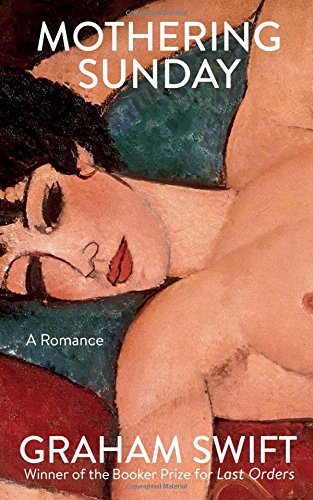
An aside, this hardback edition has the most wonderful cover design: a detail from Reclining Nude [red nude] 1917-18 by Modigliani. It will look well on my bookshelves for years to come.

Here’s my review of Swift’s HERE WE ARE.

If you like this, try:-
‘The Whereabouts of Eneas McNulty’ by Sebastian Barry
‘My Name is Lucy Barton’ by Elizabeth Strout
‘Lean Fall Stand’ by Jon McGregor

And if you’d like to share a link:
#BookReview MOTHERING SUNDAY by Graham Swift via @SandraDanby http://wp.me/p5gEM4-1XD

#BookReview ‘Foxlowe’ by Eleanor Wasserberg #contemporary

‘It’s hard to resist the pull of the shoal.’ Foxlowe is a strange, sinister book by Eleanor Wasserberg about the group dynamic of adults who should know better, experienced and observed by children who learn from this parenting and either accept or rebel. If they rebel, they have the Bad inside them. Eleanor WasserbergThis is not an easy read, not so much because of the story but I found the writing style obscure. The narrator is Green, a girl who grows up as part of the Family, a cult, living in a house called Foxlowe on a deserted moor. They share everything, their way of life is steeped in the land and ley lines. They have everything they will ever need at Foxlowe, there is no need to become a Leaver. Green knows no other life, has nothing with which to compare it.
For the first 15% [I read on Kindle] I struggled with a lack of clarity, an avalanche of seemingly unconnected facts. For example, ‘The Scattering is something we learned from the Time of Crisis. Remember that the Bad had come inside the walls.’ Characters have before and after names, which added to my confusion. It seemed like an alternative world, given the double sunset at Summer Solstice, and I couldn’t help comparing it with the opening technique of dystopian novels which got me straight away. The first page of The Hunger Games, for example, which starts with an intensely personal moment which lets you into the strange world in which it is set.
Once I reached 20% of Foxlowe, I was skipping the vague bits and the lack of dialogue punctuation – a pet hate of mine – and so turned the pages quicker. It is the story of a commune, the Family, where the outside world is excluded by means of myth, abuse and scare stories. Gradually I pieced the facts together. Despite my original confusion, it is not an alternative world; they have a car and drive to the supermarket. Some are painters or craftsmen who earn money, others grow vegetables and raise animals. This then is a conscious decision on the part of the adults to be there. The children are either born there, or more sinister, appear to be stolen from outside. This is the story of Green, a girl of undefined age, and that of Blue, who arrives at Foxlowe as a babe in arms. The arrival of Blue, and a man called Kai who remembers Foxlowe in earlier times, changes everything.
There are three parts, the second told by the adult Jess/Green, sandwiched between two Green childhood sections. The third part and Epilogue are truly dark and disturbing, with the sense of inherited abuse.

If you like this, try:-
‘Crow Blue’ by Adriana Lisboa
‘A History of Loneliness’ by John Boyne
‘The Quarry’ by Iain Banks

And if you’d like to tweet a link to THIS post, here’s my suggested tweet:
#BookReview FOXLOWE by Eleanor Wasserberg http://wp.me/p5gEM4-212 via @SandraDanby

#BookReview ‘Agatha Raisin and the Quiche of Death’ by MC Beaton #cosycrime

When a newly-retired PR executive arrives in the Cotswolds expecting a quiet retirement, she finds real life in Carsley is not as she expected. First of all, no-one likes her. Second, no-one seems to give a fig about who she is. Third, she is bored. And so begins Agatha Raisin and the Quiche of Death, first in this addictive series by MC Beaton. MC BeatonDesperate to make friends, she enters a village baking competition. Except Agatha can’t bake. So she buys a quiche and enters it as her own. So what, you may think. Lots of people probably do that. But when the competition judge dies of poisoning, Agatha is the key suspect. Desperate to clear her name, she turns detective.
And so a new crime series is born, featuring an overweight, pompous and self-important woman who always thinks she knows best. Why is this series so good? Because Agatha always gets her come-uppance and the story is very funny. A circle of village characters – her cleaner Doris, the vicar’s wife Mrs Bloxley, the deliciously disgusting elderly couple the Boggles, the real policeman Bill Wong – and London PR friend Roy, all contribute warning voices when Agatha gets carried away with her theories. And, there are lots of references to Agatha Christie. A policeman warns her: “You really must leave investigations to the police. Everyone has something to hide, and if you are going to go around shoving your nose into affairs which do not concern you, you are going to be hurt.” In true Agatha fashion, she ignores him.
This is a long series, lots more to read.

Read my reviews of some of the other novels in the Agatha Raisin series:-
AGATHA RAISIN AND THE VICIOUS VET #2AGATHARAISIN
AGATHA RAISIN AND THE POTTED GARDENER #3AGATHARAISIN
AGATHA RAISIN AND THE WALKERS OF DEMBLEY #4AGATHARAISIN
AGATHA RAISIN AND THE MURDEROUS MARRIAGE #5AGATHARAISIN

If you like this, try:-
‘ELIZABETH IS MISSING’ by Emma Healey
‘THE LOVE SONG OF MISS QUEENIE HENNESSY’ by Rachel Joyce
‘THE HUMANS’ by Matt Haig

And if you’d like to tweet a link to THIS post, here’s my suggested tweet:
#BookReview AGATHA RAISIN AND THE QUICHE OF DEATH by MC Beaton http://wp.me/p5gEM4-1IY via @SandraDanby