Tag Archives: historical fiction

#BookReview ‘The Tuscan Secret’ by Angela Petch #WW2 #romance

The Tuscan Secret by Angela Petch is one of those books that is difficult to define. Is it a romance; partly. Is it historical; yes if World War Two counts as historical. Is it a page turner; for me, not quite. The heart of this novel lies in its Italian setting. The author lives part of the year in Tuscany and it really shows. From the descriptions of the countryside to the food and customs, The Tuscan Secret is totally believable. The deserted village of Montebotelino is real. Angela PetchTwo women – Ines, her daughter Anna – share tangled family histories. Ines has recently died and leaves to Anna some money and a box of diaries. Written in Italian, Anna cannot decipher the diaries so decides to leave behind her own unsatisfactory love life and use her mother’s money to travel to Rofelle in Tuscany. Why did Ines leave idyllic Roffele, what secrets did she write in the diaries, and how did she come to marry an Englishman.
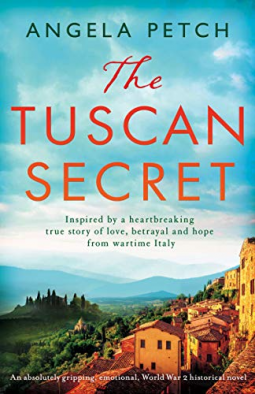
This is a dual timeline story which switches back and forth between mother and daughter. Anna arrives in Rofelle where she moves into an agriturismo and gets to know its owner Teresa and her brother Francesco. Anna’s Italian soon proves inadequate so Francesco introduces her to the locals and translates the diary in sections. Ines’ story is presented to the reader as her diary though it reads as narrative complete with dialogue. Ines is a teenager, helping her mother, longing to be with her brother Davide who is with their schoolfriend Capriolo, fighting in the mountains. Then one day, they help an injured English soldier who is trying to escape enemy territory.
I found myself looking forward to Ines’ sections and almost wished the story was completely hers. Rofelle is located in the Apennine mountains, home to resistance fighters and the route for allied soldiers escaping the Germans. The experience of the local people – the urge to fight, the need to survive, the duty to help fleeing soldiers, the threat of atrocities by the occupying German army – sets up impossible choices. I love any world war two story and especially those about an area with which I’m unfamiliar.
I struggled with the character of Jim who is thinly sketched and affected by huge events off the page. The author keeps these a secret from the reader as Jim kept them hidden from Ines, but it does make him an unsympathetic character. This feels like a potential heavyweight war novel hidden beneath a layer of romance which, as nice as it is, feels light and predictable in comparison.

Here are my reviews of other novels also by Angela Petch:-
THE GIRL WHO ESCAPED
THE LOST GARDEN
THE POSTCARD FROM ITALY
THE SICILIAN SECRET

If you like this, try:-
The Invitation’ by Lucy Foley
Those Who Are Loved’ by Victoria Hislop
The Lost Letters of William Woolf’ by Helen Cullen

And if you’d like to tweet a link to THIS post, here’s my suggested tweet:
#BookReview THE TUSCAN SECRET by Angela Petch https://wp.me/p5gEM4-44D via @SandraDanby
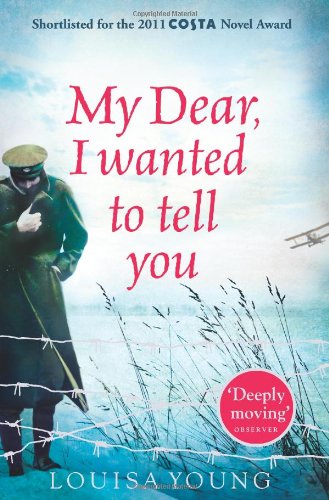
#BookReview ‘My Dear, I Wanted to Tell You’ by Louisa Young #WW1

My Dear, I Wanted to Tell You by Louisa Young is a Great War story of love/war, of duty/self-sacrifice, of denial of the truth and fear of change, of physical/mental scars. At the centre of the story is a lie told to protect. Louisa YoungRiley Purefoy and Nadine Waveney, children from different classes, meet in a London park. When war is declared, knowing the gulf in their backgrounds prevents them from marrying, Riley volunteers and goes off to war. In the trenches he meets commanding officer, Peter Locke, whose wife Julia and cousin Rose remain at home in Kent throughout the war. This is the story of these five people.
The first half of the book is a long set-up for the second half, when the interesting stuff begins. I made myself continue reading through the first half, and raced through the second. We see Riley and Nadine meeting, Riley’s transition from boy to teenager, his introduction to a new world. Nadine’s father is a famous conductor; their friends include musicians, writers and artists. He is taken under the wing of artist Sir Alfred who introduces him to art and music; good-looking Riley becomes a model for Sir Alfred and, fascinated by drawing and painting, leaves his old world behind. Peter deals with the trauma of the trenches by drinking and whoring, he is tight-lipped and distant with Julia who feels she must be doing something wrong to alienate him so.
I found Julia a most unsympathetic character; she has been encouraged to believe in her own prettiness, is unable to break away from her spoiled pre-war life and allows her mother to bully her and remove her baby from her care. Her plain cousin Rose trained as a nurse and, having worked at the front, is now based at the Queen’s Hospital in Sidcup. Rose, in danger of being a stereotype, later in the story faces a dilemma about patient confidentiality that elevates her character. Riley is promoted through the ranks, popular with the men, knowing the right thing to say, when to josh them along. He is fond of his CO, sees him safely home when he is drunk. One leave, he meets Nadine in London and their friendship is rekindled.
The turning point of the story is war injury and damage, and how everyone reacts to it. This is a serious book, not quite the romantic read it is billed. Particularly excellent are the passages about the Queen’s Hospital and the amazing work of surgeon Major Gillies in facial reconstruction. Some of the descriptive passages are clinical and shocking and are a stark contrast to Julia’s worries about beauty treatments. However there is a lot of internal monologue which became repetitive and I also found the constant swapping of viewpoint mid-paragraph a distraction from the fine historical setting.

If you like this, try:-
‘The Lie’ by Helen Dunmore
‘A Long Long Way’ by Sebastian Barry
‘Stay Where You Are and Then Leave’ by John Boyne

And if you’d like to tweet a link to THIS post, here’s my suggested tweet:
#BookReview MY DEAR, I WANTED TO TELL YOU by Louisa Young https://wp.me/p5gEM4-2Zg via @SandraDanby

#BookReview ‘The Confessions of Frannie Langton’ by Sara Collins #historical

The Confessions of Frannie Langton by Sara Collins tells the story of a Jamaican woman enslaved as a child, exploited by two men and subsequently accused of murder in Georgian London. I am left with the feeling that this debut, though full of lush description and a distinctive heroine, is an ambitious story that would benefit from being given some air to breathe. Sara CollinsFrances Langton, house-slave at Paradise, a Jamaica sugar cane plantation. Frances Langton, housemaid in the home of a London scholar. Frances Langton, the mulatto murderess. Which is the real Frannie? A woman born into slavery in Jamaica then transported to London and gifted to another master, in each place she is studied and manipulated by two men who cannot agree on the pigment of negro skin, the intellectual capacity of blacks and whether they can be educated. There are hints about things that happened to Frannie in her past, things that she did to others – leading I think to the description of the book as ‘gothic’ – some of which are explained by the end, some of which remained vague to me.
This is Frannie’s story, told in her voice, written as she waits in gaol for her trial and written for her lawyer. But we never actually meet this lawyer, he remains a cardboard cut-out so Frannie’s version of the truth remains unverified.We read the sworn testaments of witnesses at her trial, are they the truth or spoken with prejudice and ulterior motives? The book is really two stories – Frannie’s exploitation at Paradise by two men who fancy themselves scientists, and her London lesbian love affair and the murder – that don’t fit together convincingly.
The best thing for me about the book is the character of Frannie, unlike anything I have read recently. The depth of research is evident in the detail but the pacing is unpredictable – Frannie’s voice in the beginning is spellbinding but the middle section is soggy – and I’m intrigued by the scientific exploration of racism. I wanted less of the laudanum addiction and romance between Frannie and her mistress and longed for the trial to be used as the spine on which to hang Frannie’s slave story. A slow read, but definitely an author to watch.

If you like this, try:-
The Mermaid and Mrs Hancock’ by Imogen Hermes Gowar
The Convenient Marriage’ by Georgette Heyer
The Cursed Wife’ by Pamela Hartshorne

And if you’d like to tweet a link to THIS post, here’s my suggested tweet:
#BookReview THE CONFESSIONS OF FRANNIE LANGTON by Sara Collins @mrsjaneymac https://wp.me/p5gEM4-3Us via @SandraDanby

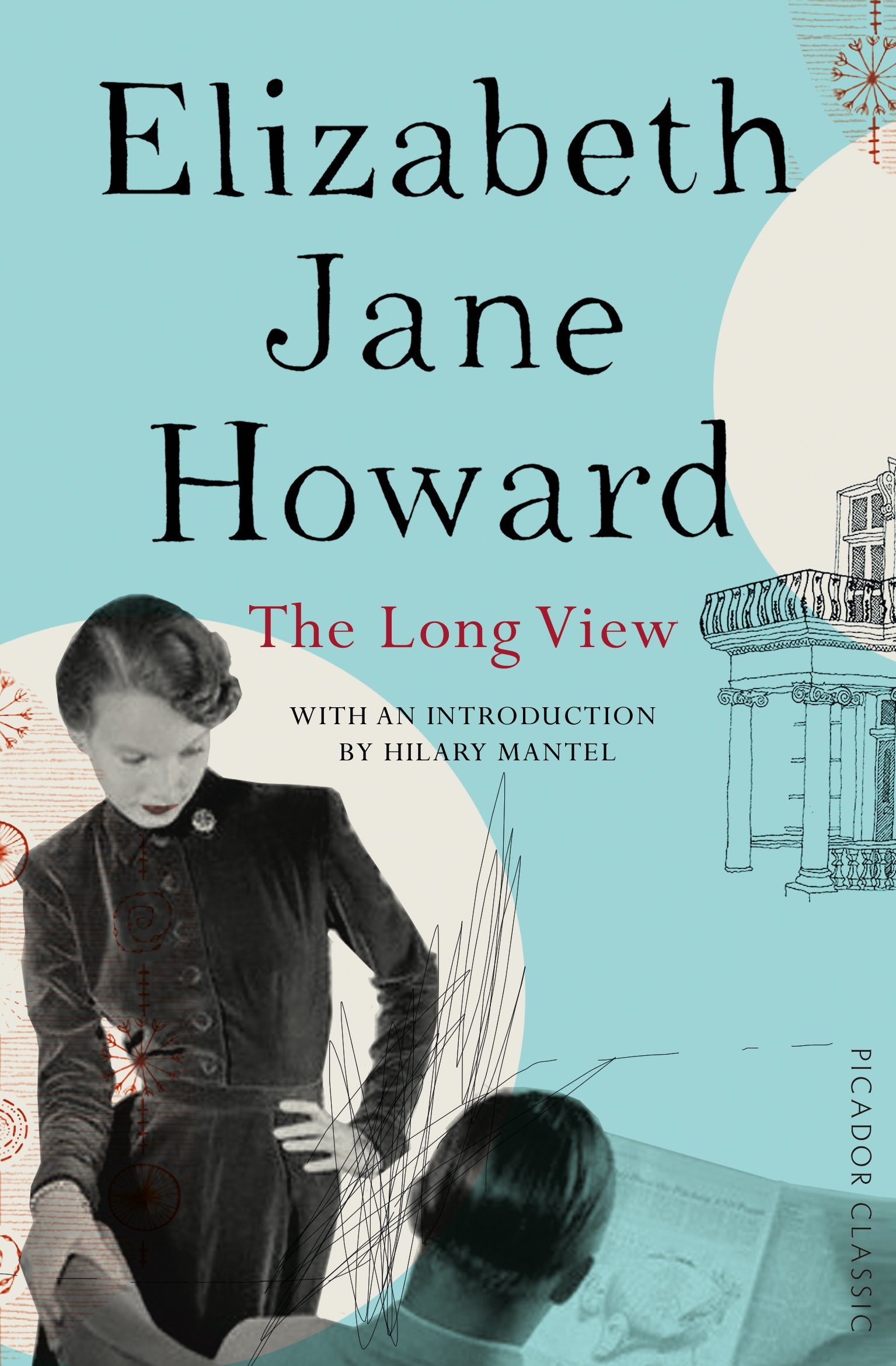
#BookReview ‘The Long View’ by Elizabeth Jane Howard #historical #marriage

The Long View by Elizabeth Jane Howard is not so much a ‘what happens next’ novel as ‘what has happened in the past to lead to this situation’ story. It is a novel about choices and where they can lead. Howard tells the story, backwards from 1950 to 1926, of the marriage of Antonia and Conrad Fleming. As the story starts, the marriage seems doomed and you cannot help but wonder how these two people ever got married in the first place. In fact, once I finished it I was tempted to read it again from back to front. Elizabeth Jane HowardThe first paragraph is a masterful example of scene setting. It opens with a dinner party to celebrate the engagement of Julian Fleming to June, who has secretly spent the afternoon alone at the cinema. As Antonia considers the complicated marital affairs of her son – and her daughter, Deirdre, who is pregnant by a man who does not love her – I wondered how her own marriage must have shaped her children’s handling of relationships and how hers, in turn, was shaped by her parents. I found Conrad an almost totally unsympathetic character, indeed in the first part he is referred to simply as Mr Fleming. ‘One of his secret pleasures was the loading of social dice against himself. He did not seem for one moment to consider the efforts made by kind or sensitive people to even things up; or if such notions ever occurred to him, he would have observed them with detached amusement, and reloaded more dice.’
This is very much a novel of its time in which middle-class women had limited choices. As a young woman, Antonia lacks the strength to break out. She is timid, feeling she has proved unsatisfactory for both her mother and father. ‘She grew up, therefore, feeling, not precisely a failure so much as an unnecessary appendage.’ Her mother bemoans her lack of interests [Antonia does have interests, simply not those of her mother] and her father her lack of intellect [but without stimulus of career or education]. We see the transition from hopeful, eager young girl experiencing first love, to weary, middle age when the ‘trees ahead so horribly resembled the trees behind, and the undergrowth of their past caught and clung and tore at them as they moved on.’
This is Howard’s second novel. I am most familiar with her later ‘Cazalet Chronicles’ series and there are some key comparisons to be made in the writing style. Sentences in The Long View are longer, paragraphs longer, and the style not as simple and nuanced as the later books. Viewpoint also shifts within paragraphs, a technique she changed for the Cazalets. This is not to say this spoiled my enjoyment of The Long View, it is perhaps an observation for writers rather than readers, but it shows an interesting development in the author’s writing style. And I particularly enjoyed the descriptions of Antonia’s horse rides in Sussex, countryside in which the Cazalet’s house, Home Place, is set.

Read my reviews of ‘The Cazalet Chronicles’, also by Elizabeth Jane Howard:-
THE LIGHT YEARS #1CAZALET 
MARKING TIME #2CAZALET
CONFUSION  #3CAZALET
CASTING OFF #4CAZALET
ALL CHANGE #5CAZALET

If you like this, try:-
‘The Past’ by Tessa Hadley
‘Offshore’ by Penelope Fitzgerald
‘Mothering Sunday’ by Graham Swift

And if you’d like to tweet a link to THIS post, here’s my suggested tweet:
#BookReview THE LONG VIEW by Elizabeth Jane Howard https://wp.me/p5gEM4-2ZS via @SandraDanby

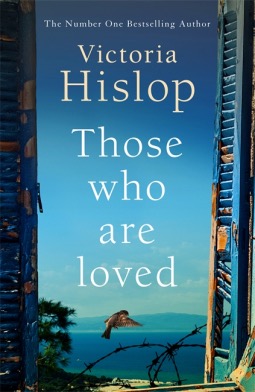
#BookReview ‘Those Who Are Loved’ by Victoria Hislop @VicHislop #Greece #historical

Those Who Are Loved by Victoria Hislop is the story of Themis Koralis from 1930 to 2016. Set in Greece it tells the troubled history of the country through the Second World War, occupation, Civil War and military dictatorship. They are harsh years; the country, its people and families are divided by beliefs, poverty and wealth. It is a long book, 496 pages, and a lot of history is covered. Victoria HislopThemis has two brothers – Panos and Thanasis – and a sister, Margarita; they live with their grandmother in the Athens district of Patissia. Their father is a merchant seaman and hardly comes home, their mother Eleftheria is in a psychiatric hospital; both appear briefly. Central to the home is Kyría Koralis. I enjoyed the descriptions of these early years in the apartment, the meals, the squabbling teenagers, Themis and her friendship with Fotini. But political beliefs are dividing the country and as the arguments grow in the Koralis apartment, they also divide the siblings. The divisions only get worse under German occupation, leading Panos and Themis to support the communists in the fight against the Nazis. Thanasis however becomes a policeman. Margarita, working in a dress shop, is secretly in love. Their political views, forged as teenagers, impact on the rest of their lives.
At times I struggled with this book, other sections I enjoyed. Perhaps this is because the linear narrative is driven by historical events which Hislop felt bound to include, and is not dynamic or character-driven. There are many peripheral characters who disappear without another mention and I found the middle section particularly slow, as if Themis is treading water before reaching the next phase of her life. The novel is effectively the life story of Themis, the history of Greece during her lifetime and its effect on her, and it includes a fascinating account of the post-WW2 communist rebellion in Greece, my knowledge of which was rather hazy. At times it is difficult reading and it is certainly thought-provoking; extreme views with two uncompromising sides unable to meet in the middle, quickly deteriorating to violence, cruelty and abhorrent behaviour.
Hislop is my go-to author for novels set in Greece. I finished Those Who Are Loved wishing she had chosen a specific phase of Themis’s life to concentrate on rather than the full 86 years. For me though, her subsequent novels cannot rival her debut The Island which I really must re-read again.

Read my reviews of other these books by Victoria Hislop:-
THE FIGURINE
THE STORY
THE SUNRISE

If you like this, try:-
Sweet Caress’ by William Boyd
Freya’ by Anthony Quinn
Quartet’ by Jean Rhys

And if you’d like to tweet a link to THIS post, here’s my suggested tweet:
#BookReview THOSE WHO ARE LOVED by Victoria Hislop @VicHislop https://wp.me/p5gEM4-40c via @SandraDanby 

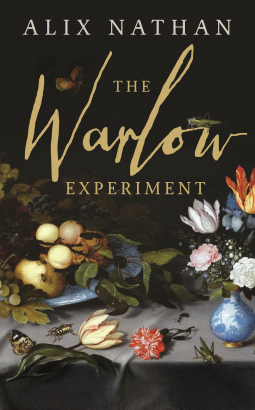
#BookReview ‘The Warlow Experiment’ by Alix Nathan #historical

This is a story of two men. One plays at being a god. The other grabs a chance to escape poverty. The Warlow Experiment by Alix Nathan is about power, ambition, control, the disintegration of respect and vanishing of common sense. What a breath of fresh air this book is; it is so unusual. The country gentleman who conducts the experiment, Powyss, is an isolated character. He has no family and, when he has the idea of experimenting with the life of another man, thinks he is doing good by supporting the man’s family. In truth he seeks the approbation of the Royal Society. Alix NathanWarlow is a farm labourer who scrapes a living at the edge of starvation, struggling to feed this family. When he sees an advertisement asking for a man to take part in Powyss’s experiment, he sees it as an escape. So what is the experiment? Powyss is a man who experiments with exotic seedlings and plants. He sources them from abroad and studies them, experimenting with conditions – soil, temperature, water – to see which flourish in the climate of the Marches climate. It is a short step for him to wonder how a man would fare without seeing a human face for seven years. A cellar is converted in Powyss mansion, furnished with carpets, bedstead and comfortable mattress, an organ, books, writing equipment and a dumb waiter lift which is the only means of communication with above. He is forbidden to talk to anyone; his needs are communicated by notes sent up in the lift. But Powyss forgets to vary Warlow’s conditions, whose surroundings remain the same. He is below ground with no natural light; the only sign of changing daylight and season is from the frogs that find their way into his cellar via a grating. At the beginning both men are happy with the scheme; both think they benefit. Powyss makes his observations; Warlow escapes his grinding life of work and poverty. He was knocked around by his father, and now knocks around his own kids. He longs for something better and decides that when he gets out, he will have earned enough money not to work and so will drink all day instead. Neither man realise what they have undertaken.
The story is told by three people; Powyss, Warlow and Catherine, a servant in the Powyss household. I would also like to have heard the first hand story of Mrs Warlow, who has quite a part to play. The beginning of Warlow’s viewpoint reminds me of Emma Donoghue’s Room; the repetition of simple detail as he studies his surroundings, he focuses on the functional. He is barely literate but, as Powyss impresses on him that it is part of his job to write a journal, Warlow begins to write. Nathan’s portrayal of the early attempts of this uneducated man to write, the bad spelling, the stumbling expression, are convincing; later I wanted his stream of consciousness ramblings to be more concise. The imprisonment represents only the first part of the story; there is more to tell than the experiment itself. The servants in Powyss household become uncomfortable with their part in the proceedings, they also observe Mrs Warlow as she visits the house to receive the payment from Powyss promised as part of Warlow’s contract. Unknown to her, Mrs Warlow becomes the subject of a secondary report into the ‘lateral effects’ on the man’s family.
A sub-plot sets this story in its time. Revolution rumbles on in France and there are demonstrations in London against the King and prime minister Pitt. Head gardener Abraham Price is a rebel who seduces housemaid Catherine with talk of improvement, of rights, of freedom without masters. This country mansion in the Marches reflects the class tensions in the country – rich/poor, vote/no vote. Powyss receives the latest information about politics and uprisings in letters from his London correspondent. In exchange for boxes of fruit, Fox is the only voice Powyss hears from outside his insular world. He questions the morality of the experiment but Powyss refuses to listen; he also fails to see how the servants observe the experiment with dislike. He is a naïve man who fails to understand he is destined to be part of the experiment too.
This is such an unusual subject and in an Author’s Note, Nathan explains where she got the idea. She read a report of a man in 1797 who conducted such an experiment as that of Powyss. She was intrigued and wrote two short stories, one from the viewpoint of each man. After that, she realised there was a bigger story to tell. I’m glad she did. It is an unusual, absorbing read. It deserves time to be read, so please don’t rush it.

If you like this, try:-
The Quick’ by Lauren Owen
The Night Child’ by Anna Quinn
Master of Shadows’ by Neil Oliver

And if you’d like to tweet a link to THIS post, here’s my suggested tweet:
#BookReview THE WARLOW EXPERIMENT by Alix Nathan https://wp.me/p5gEM4-3UJ via @SandraDanby

#BookReview ‘Pattern of Shadows’ by Judith Barrow #historical #WW2

The first instalment of Judith Barrow’s Mary Howarth series is Pattern of Shadows, a historical romance set in World War Two Lancashire that explores the  challenges and new opportunities for women in wartime. Set against a male-dominated background where the aspirations of working class women have traditionally been put second, war brings change and some people adapt better than others. Judith BarrowMary is a nursing sister in the hospital attached to a prisoner of war camp, nursing German soldiers captured and injured in action. Some people find that challenging but for Mary it is a satisfying and fulfilling job. Things get complicated when she attracts the attention of two men who could not be more different. One night Mary meets Frank Shuttleworth, a guard at the POW camp and, thanks to a combination of unforeseen circumstances, runs to a shelter with him during a bombing raid. This evening has far-reaching consequences for Mary and her flighty younger sister Ellen. There are tensions at home too with her argumentative irascible father and defeated mother, as Tom her older brother is in prison as a conscientious objector and her younger brother, injured fighting, must now work as a coal miner. Meanwhile a new German doctor arrives at the hospital. With two choices in front of her, Mary must decide whether to do what is expected or defy convention, to be loyal to her family who are not always loyal to her, or to be selfish and do something for herself.
A well-paced story combining stalking, prejudice, domestic violence, homophobia, poverty and family strife, Mary is the only unselfish, balanced person in her family. Will she finally put herself first? This is at times a grim story set at a difficult time and at first I worried this was misery fiction and longed for an occasional bright light. But the setting and time period are so well researched I soon relaxed into the story as the character of Mary and her predicament drew me in. I admire her stubbornness, her selflessness and loyalty, above all her bravery. Sometimes she is misguided, always well-intentioned, I look forward to reading more about Mary in Changing Patterns, the sequel.

If you like this, try:-
After the Bombing’ by Clare Morrall
Homeland’ by Clare Francis
The Aftermath’ by Rhidian Brook

And if you’d like to tweet a link to THIS post, here’s my suggested tweet:
#BookReview PATTERN OF SHADOWS by Judith Barrow #books https://wp.me/p5gEM4-3Ul via @SandraDanby

#BookReview ‘The Invitation’ by Lucy Foley #romance #historical

A romance, almost an anti-romance, The Invitation by Lucy Foley is a poignant novel with two parallel stories of dangerous obsession and fantasy. Lucy FoleyHal, who has drifted to Rome after serving in the Royal Navy in World War Two, leads a cheap life, surviving on writing assignments, living in a cheap area, Trastevere. One day he accepts from a friend an invitation to a party, an invitation the friend is unable to use. Arriving in his dusty suit, Hal feels apart from the glamour and wealth on show, the jewels, the gowns, the dinner suits. There he sees an enchanting, puzzling young woman who appears icy, untouchable, out of reach.
They meet again when Hal is invited by the hostess of the Rome party, the Contessa, to be attached as journalist to the forthcoming promotional tour for her film, The Sea Captain. They are to sail along the coast to Cannes where the film will be premiered at the film festival. Invitations, accepted and refused, feature frequently throughout the novel, forcing decisions to be made, plans changed, opportunities grasped. The close proximity of the group of disparate passengers begins to unveil secrets, cracks in carefully-controlled behaviour, shameful secrets and lies. As well as Hal and the Contessa, on board are the ageing, artistic film producer; the ageing, drunk leading man; the glamorous siren-like leading lady; the pale beaten-down photographer; the husband and wife investors; and Roberto, the Contessa’s skipper.
Within this story of a coastal journey is a story-within-a-story, the love story on which The Sea Captain is based. A sea captain returning home from a victorious naval battle rescues a drowning figure. Once on board, it is realised it is a naked woman. The captain is captivated by her, his crew fear she is a witch and will bring bad luck. On land, the captain keeps the woman as his mistress, given everything she might wish, in a lavishly-decorated house. It is a morality tale of the perils of attempting to mould another person into something you want but which they are not. This tale of the gilded cage echoes throughout the novel. So will true life mirror the film version of the story, or the true story? Of course a film is fictional, the truth being manipulated for dramatic effect, something which cannot be done with true secrets which have a way of making themselves known.
A sad, subtle tale of warning about obsessive love, fantasy and longing.

Read my reviews of these other Lucy Foley novels:-
THE GUEST LIST
THE HUNTING PARTY
THE MIDNIGHT FEAST
THE PARIS APARTMENT

If you like this, try:-
‘The Believers’ by Zoe Heller
‘The Tea Planter’s Wife’ by Dinah Jeffries
‘A Mother’s Secret’ by Renita d’Silva

And if you’d like to tweet a link to THIS post, here’s my suggested tweet:
#BookReview THE INVITATION by Lucy Foley https://wp.me/p5gEM4-3hU via @SandraDanby

SaveSave

SaveSave

SaveSave

SaveSave

#BookReview ‘The Convenient Marriage’ by Georgette Heyer #Regency #Romance

This is my first Georgette Heyer novel and I thoroughly enjoyed it. The Convenient Marriage is a standalone Regency romance although Heyer wrote many historical romances and detective fiction; some as one-off novels others as series. I didn’t know what to expect from The Convenient Marriage but right from the off I loved Horry Winwood. She is cheeky and clever, charming and brave. Georgette HeyerThe story starts with the three Winwood sisters. The eldest Elizabeth has agreed to receive the attentions of Lord Rule, knowing he intends to propose. But Lizzie wants to marry her impoverished soldier beau Lieutenant Edward Heron. The Winwood family is destitute due to the gambling habit of their brother Pelham and Lizzie knows the marriage will save the family. Her sister Charlotte will not consider marrying Rule and Horatia, or Horry, is too young being only seventeen. Until Horry, so named after her godfather Horace Walpole, uses her initiative and visits Rule. She proposes that she marry him so Lizzie is free to marry Edward. And so the convenient marriage takes place.
The real story is what happens next. Horry is a bit of a minx, getting into trouble, playing cards and generally doing things a wife shouldn’t do. And despite always expecting the disapproval of Rule, she cannot seem to stop getting into trouble. Motivated by gossip about Rule’s mistress, Horry takes more risks but her gallant brother Pel is on hand to help.
If you like fizzing, humorous romances tossed together with convincing Regency details, you will love this; the dresses, the hair styles, the wigs, the manners, the food. Regency London seems full of chaotic parties with dancing, music, cards and flirting. An exuberant escapist book, ideal for transporting you to another time far away from your everyday life.

If you like this, try these:-
‘Christmas Pudding’ by Nancy Mitford
‘An Appetite for Violets’ by Martine Bailey
The Wicked Cometh’ by Laura Carlin

And if you’d like to tweet a link to THIS post, here’s my suggested tweet:
#BookReview THE CONVENIENT MARRIAGE by Georgette Heyer https://wp.me/p5gEM4-3zU via @SandraDanby

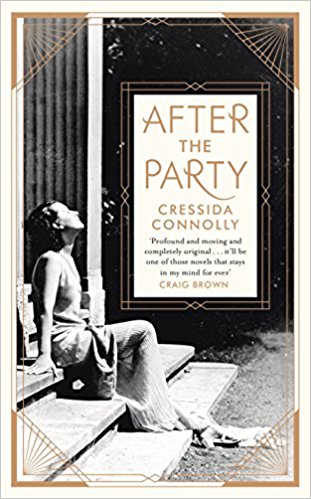
#BookReview ‘After the Party’ by Cressida Connolly #historical #Thirties

After the Party by Cressida Connolly is set in a difficult period of British history. It starts gently, lulling you into a sense that it is about three sisters, which it is, but it is also an uncomfortable story of pre-World War Two politics. From the first page, we know that Phyllis Forrester was in prison. In 1979, Phyllis looks back cryptically at what happened to her and her sisters, Patricia and Nina, in the Thirties. Why she was imprisoned is the question that made me keep reading. All we know is that someone died. Cressida ConnollyIn 1938, Phyllis and her husband Hugh return to live in England after years working abroad. They settle in West Sussex near Nina and Patricia. At a loose end, Phyllis is drawn into the peace camps organised by Nina; it is something to do over the summer, there are educational talks to attend and activities for the children. Nina is an organiser with a clipboard. Phyllis revels in their rented house at Bosham beside the sea, until Hugh buys a patch of land on which to build a house. At a dinner party thrown by Patricia, Phyllis meets a new friend, Sarita Templeton. “She said her ‘esses’ softly, so that ‘crazy’ sounded like ‘craissy’ and ‘is like ‘iss’.” Phyllis and Hugh are drawn into the circle of The Party, which the author has still not named. It is only the appearance of ‘The Leader’ or the ‘Old Man’ that tells us what we suspect, this is Oswald Mosley and The Party is the British Union of Fascists. Sarita does not appear much, but she is a key influence on Phyllis.
All is not well with the sisters, demonstrated by Connolly with concise words and a slight of hand. The three women have driven from Sussex to Buckinghamshire to visit their father who is in hospital after a fall, his future is uncertain as is that of their weak dependant mother. “Before they arrived at the hospital Patricia brought out her lipstick and compact and dabbed her nose with powder. Even from the back of her head Phyllis could tell that this small display of vanity was annoying to Nina. ‘Will I do?’ she asked Phyllis, turning her head. ‘No smudges?’ In actual fact she had applied the powder more thickly on one side of her nose, but Phyllis did not say so.”
The titular party is held by Sarita and Fergus Templeton. Sarita loves parties, Phyllis hasn’t been to one for years and Hugh, her husband, hates them. So a scene of conflict approaches, set amongst a background of Oswald Mosley and the British Union of Fascists. Why is Phyllis in prison? Did she murder someone? One of her sisters? Her husband? Mosley?
This is not a thriller but there are obfuscations which are misleading, especially at the beginning, which affect the pace of the story and left the second half slower to read. Is the delay in mentioning Oswald Mosley intended to add tension, or because the author feared it may deter people from reading the novel? The light hand with which the British Union of Fascists is portrayed was difficult to read, partly because I never understood Phyllis’ motivation for joining The Party. She seems to drift into it, but could she really be that naïve? Much better I think to address it head-on rather than have Phyllis refer to ugly incidents in passing.
I expected to enjoy After the Party more than I did. Perhaps the time was so vile that writing about it in an entertaining way is impossible. The novel is awkward but perhaps that reflects the character of Phyllis, as she is our narrator. It does make you think ‘what would I have done if I was her?’ The ending, though is an anti-climax, given the stakes were raised so high on the second page. “Had it not been for my weakness, someone who is now dead could still be alive. This is what I believed and consequently lived with every day in prison.”
A thought-provoking novel.

If you like this, try:-
‘Wigs on the Green’ by Nancy Mitford
‘Corpus’ by Rory Clements
‘Our Friends in Berlin’ by Anthony Quinn 

And if you’d like to tweet a link to THIS post, here’s my suggested tweet:
#BookReview AFTER THE PARTY by Cressida Connolly https://wp.me/p5gEM4-3sU via @SandraDanby