Tag Archives: novels set in wartime

#BookReview ‘Transcription’ by Kate Atkinson #WW2

Few of the characters in Transcription by Kate Atkinson are who they seem to be. A novel of the Second World War, Transcription suggests that the ripples of wartime secrecy spread out through the following years so that outstanding lies and betrayals are eventually repaid. Many years later. Kate AtkinsonIn 1940, Juliet Armstrong intends to join one of the women’s armed forces when she receives a letter on government notepaper and is summoned to an interview. After being informed by telegram that she has got the, still unspecified, job, Juliet boards a bus which takes her to Wormwood Scrubs prison, now converted into government offices. There she works in Registry, shuffling files around, until Perry Gibbons says, ‘I need a girl’ and Juliet finds herself working for Perry’s MI5 counter-fascism team at a flat in Dolphin Square.
Told across two timelines, 1940 and 1950 – with a brief glimpse at 1981 in the prologue and epilogue – Transcription has a huge cast of characters, most of whom I confused and, I suspect, Atkinson wishes me to confuse. Some characters are spies with cover names, some are only described and have no name while others seem innocent, too innocent to actually be innocent. If this is all confusing, it is meant to be. That is Atkinson’s point. This is a story about the importance of truth and how lies, which seem pragmatic and normal in wartime, are still lies. And that the most obvious traitors are not always the ones to be worried about.
The 1940 storyline covers the MI5 operation. At first, Juliet’s job is type up transcripts of bugged conversations between fascist supporters in the next door flat; later she takes on the persona of Iris to infiltrate a group of fascist agitators. Sometimes she fluffs her lines, sometimes she is impulsive and gets into trouble. At all times she feels isolated and unsure of the value of what she is doing. She is also a young woman and looks for signs of interest from the men surrounding her. In 1950, while working in the Schools Department of the BBC making educational radio programmes with titles such as ‘Can I Introduce You To?’ and ‘Have You Met?’, she sees familiar faces from her wartime days and the past revisits her.
Atkinson excels at the small detail which makes these workplaces convincing, creating believable relationships between Juliet and radio engineer Cyril at Dolphin Square, and with junior programme engineer Lester Pelling at the BBC. I enjoyed this book but wouldn’t describe it as a page turner. I’m not sure I liked Juliet but she held enough fascination for me as I tried to figure out what she did and didn’t believe in. I was never totally sure if I believed in her.
The Author’s Note at the end of the book is fascinating and perhaps would have served better as a Foreword. So, in summary, not my favourite Atkinson novel but not a bad one either.

Click the title to read my reviews of these other books by Kate Atkinson:-
A GOD IN RUINS
BIG SKY #5JACKSONBRODIE
DEATH AT THE SIGN OF THE ROOK #6JACKSONBRODIE
LIFE AFTER LIFE
NORMAL RULES DON’T APPLY
OUR NOBLE SELVES
SHRINES OF GAIETY
… and try the #FirstPara of EMOTIONALLY WEIRD

If you like this, try:-
The Heat of the Day’ by Elizabeth Bowen
After the Party’ by Cressida Connolly
Shelter’ by Sarah Franklin

And if you’d like to share a link:
#BookReview TRANSCRIPTION by Kate Atkinson https://wp.me/p5gEM4-4cx via @SandraDanby

#BookReview ‘The Ends of the Earth’ by Robert Goddard #WW2 #thriller

Don’t do what I did, and read the first two books in this series by Robert Goddard and then leave 12 months before reading The Ends of the Earth, the third. Ideally this trilogy should be read back to back, in full sun when sitting on a sunlounger. The story runs along at a cracking pace, with dense plotting, loads of characters, politics, spies and locations from Europe to Japan. The pace of this, the third book, is constant, hardly time to draw a breath. Robert GoddardQuestions that I had forgotten about from the first book are revisited, challenged and solved. Japan is the scene for the climax of this tale of James Maxted, ‘Max’, and his hunt for the truth about his father’s death. But this is so much more than a single case of murder, on it hangs the future of post-Great War Europe and the twentieth-century relationship of Japan and America. At times things happen which seem a little convenient, a person turns out to have a skill or history of which we knew nothing before, but I forgave Goddard for this. He is a prime storyteller. It is clear he knows his settings – Paris, Marseilles, Switzerland, Japan – and this adds to the verisimilitude.
In this rollicking spy story, Goddard examines the nature of courage. Max finds himself drawing on the type of bravery he needed to survive in the Royal Flying Corps. “He was not surprised by how calm he felt, how undismayed by what lay before him. He had discovered his aptitude for taking risks early in the war. ‘You should be more careful, sir,’ Sam had said to him more than once. And Max had always given the same reply. ‘Being careful is what gets a chap killed.’ Eventually, he had come to believe that. And it was a belief that had served him well. So far.”

Read my reviews of Goddard’s other books:-
THE WAYS OF THE WORLD #1WIDEWORLD
THE CORNERS OF THE GLOBE #2WIDEWORLD
PANIC ROOM
THE FINE ART OF INVISIBLE DETECTION #1UMIKOWADA
THIS IS THE NIGHT THEY COME FOR YOU #1SUPERINTENDENTTALEB

If you like this, try:-
Midnight in Europe’ by Alan Furst
Stay Where You Are and Then Leave’ by John Boyne
Slow Horses’ by Mick Herron #1SLOUGHHOUSE

And if you’d like to tweet a link to THIS post, here’s my suggested tweet:
#BookReview THE ENDS OF THE EARTH by Robert Goddard http://wp.me/p5gEM4-1O8 via @SandraDanby 

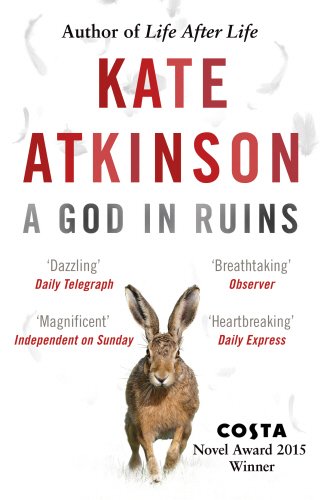
#BookReview ‘A God in Ruins’ by Kate Atkinson #WW2

If the best recommendation for a novel is that, once you finish it, you want to start reading it all over again, then this is my recommendation for A God in Ruins by Kate Atkinson. The story of Teddy Todd reeled me in until I was reading late into the night.

Kate AtkinsonTeddy is brother to Ursula Todd, who featured in Atkinson’s Life after Life, but this is not a sequel. More a companion piece, one book informs the other but stands up fully on its own. Read either first, it doesn’t matter. This is a book about war – the Second World War, the daily grind of Teddy’s life as a bomber pilot – and the effect this experience has on the rest of his life. War doesn’t happen and then go away, it colours lives and affects them until death, mostly unnoticed or misunderstood by relatives. And so we see Teddy’s life, told in a chopped up manner with excerpts from his childhood, war, early marriage and fatherhood, and as a much-loved grandfather. I don’t think I’m giving much away here to say he survives the war, but Atkinson’s descriptions of his bomber sorties are realistic, we feel the cold, the fear, the near-misses, the camaraderie, the determination and discomfort. Reading the bibliography at the back of the book, her research was thorough but it never shouts out from the page. Details are included because they are important to Teddy’s life, not because they happened.
Kate Atkinson remains a ‘go to’ author for me, I buy every book she writes.

Read my reviews of these other books by Kate Atkinson:-
BIG SKY #5JACKSONBRODIE
DEATH AT THE SIGN OF THE ROOK #6JACKSONBRODIE
LIFE AFTER LIFE
NORMAL RULES DON’T APPLY
OUR NOBLE SELVES
SHRINES OF GAIETY
TRANSCRIPTION

… and try the #FirstPara of EMOTIONALLY WEIRD

If you like this, try:-
The Aftermath’ by Rhidian Brook
The Light Years’ by Elizabeth Jane Howard
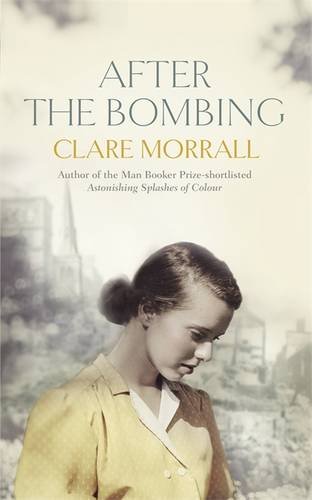
After the Bombing’ by Clare Morrall

And if you’d like to share a link:
#BookReview A GOD IN RUINS by Kate Atkinson via @SandraDanby http://wp.me/p5gEM4-1IK

#BookReview ‘The Corners of the Globe’ by Robert Goddard #WW2 #thriller

The Corners of the Globe is a very fast-moving sequel by Robert Goddard, second in his Wide World series. There’s a Scotland to London train chase complete with spies, a captured German warship, murder, kidnapping, secret codes and jumping on and off trains which would rival The 39 Steps [which Goddard playfully has one of his characters read in the restaurant car of one of the trains]. Robert GoddardGreat War flying hero James Maxted is in London, convinced that the death of his father [in the first book] is not as simple as it appeared. His investigations take him further into danger, into the dark and deadly preview of the Second World War. You really do need to read book one first [see the link below for my review] although there is a little exposition at the beginning in the form of a Secret Service report, but to be honest it functions more as a recap for the reader who has read the first book than as an introduction for a newcomer.
I failed to guess the ending of the first book, did I guess the ending of this one correctly? No.

Read my reviews of Goddard’s other books:-
THE WAYS OF THE WORLD #1WIDEWORLD  
THE ENDS OF THE EARTH #3WIDEWORLD  
PANIC ROOM
THE FINE ART OF INVISIBLE DETECTION #1UMIKOWADA
THIS IS THE NIGHT THEY COME FOR YOU #1SUPERINTENDENTTALEB

If you like this, try:-
Corpus’ by Rory Clements #1TOMWILDE
The Second Midnight’ by Andrew Taylor
Noonday’ by Pat Barker #3LIFECLASS

And if you’d like to tweet a link to THIS post, here’s my suggested tweet:
#BookReview THE CORNERS OF THE GLOBE by Robert Goddard via @SandraDanby http://wp.me/p5gEM4-19H

#BookReview ‘After the Bombing’ by Clare Morrall #WW2

I am a huge Clare Morrall fan and wasn’t disappointed by After the Bombing.  As with all Morrall’s novels, the observations of character are spot-on and so poignant. She peoples her novels with characters who feel real. Clare MorrallTwin story strands tell the story of Alma Braithwaite, before and after the bombing of her school near Exeter in May 1942, and in 1963 in a modern world which has moved on from the war. But Alma still remembers. “She’s conscious of sitting on a swing that has been steady for a long time and is starting to move again, gently but perceptibly, backwards and forwards, disturbing her equilibrium.”
The novel opens with the British bombing of Lübeck in March 1942, the raid which famously made Hitler pick up a copy of the Baedecker tourist guide and select at random the English cities of Bath, Norwich, York, Canterbury, and Exeter. That is how 15-year old Alma and her schoolfriends Curls, Giraffe and Natalie are forced to run from Merrivale, the boarding house at their girls’ school Goldwyns on the outskirts of Exeter, to the bomb shelter. When they emerge, Merrivale has gone.
The four girls, in that unspecified limbo between girl and woman, lodge in a mens’ hall of residence at the nearby university, living alongside male students for the first time. The influences there change their lives just as much as the bombing did, with freedoms they have never guessed exist, and the gentle presence of mathematics lecturer Robert Gunner. They are introduced by the men to the Lindy Hop, a vibrant, energetic dance which the girls, though initially nervous and suspicious, come to love dancing.
War is ever-present, a character of its own. There is a poignant scene where Alma and her brother Duncan, on a brief visit home from the war in an unspecified hot country, go back to their family home in Exeter after their parents’ death. Searching for some semblance of normality, they try to play tennis on the grass court. The grass has grown too long but they play anyway, and in their diving for the balls and their laughter, the reader gets a glimpse of their pre-war life and a sign of how everything is now different… after the bombing.
There are parallels in the 1942 and 1963 storylines: a concert which never takes place, flirtations, unexpected death and unexpected love. One of those books which, when I finished it, I wanted to re-read immediately.

Read my review of these other novels by Clare Morrall:-
NATURAL FLIGHTS OF THE HUMAN MIND
THE LANGUAGE OF OTHERS
THE LAST OF THE GREENWOODS
THE MAN WHO DISAPPEARED
THE ROUNDABOUT MAN

Read the #FirstPara of ASTONISHING SPLASHES OF COLOUR .

If you like this, try:-
Freya’ by Anthony Quinn
At Mrs Lippincote’s’ by Elizabeth Taylor
The Aftermath’ by Rhidian Brook

And if you’d like to tweet a link to THIS post, here’s my suggested tweet:
#BookReview AFTER THE BOMBING by Clare Morrall via @SandraDanby http://wp.me/p5gEM4-W4

#BookReview ‘Life After Life’ by Kate Atkinson #WW2

It’s a while since I read a book I didn’t want to put down, a book that made me continue reading in bed gone midnight. Life After Life by Kate Atkinson is that book. Kate AtkinsonAtkinson manages the macro settings and the micro details with ease, from the petty sibling squabbles at Fox Corner to the camaraderie of the ARP wardens in the Blitz. Before I started reading Life after Life I read the phrase ‘Groundhog Day’ a few times in reviews, which belittles the intricate weaving of Ursula Todd’s lives. In the way that Logan Mountstuart’s life runs parallel to the great historical moments of the last century, Ursula’s life stories are book-ended by the approach and aftermath of the First and Second World Wars. Ursula, little bear, is an engaging character we see born and die, again and again through her own personal déjà vu.  I wasn’t sure how this was going to work but once I stopped worrying about it and surrendered myself to Ursula, I was transfixed.
This is another work of art, as mesmerising as her first Behind the Scenes at the Museum. It is such an ambitious novel, that I can only guess at the intricacy of the writing process and admire her for it.

Read my reviews of these other novels by Kate Atkinson:-
A GOD IN RUINS
BIG SKY #5JACKSONBRODIE
DEATH AT THE SIGN OF THE ROOK #6JACKSONBRODIE
NORMAL RULES DON’T APPLY
OUR NOBLE SELVES

SHRINES OF GAIETY
TRANSCRIPTION
… and try the #FirstPara of EMOTIONALLY WEIRD

If you like this, try:-
Homeland’ by Clare Francis
‘The Aftermath’ by Rhidian Brook
‘The Translation of Love’ by Lynne Kutsukake

And if you’d like to share a link:
#BookReview LIFE AFTER LIFE by Kate Atkinson via @SandraDanby https://wp.me/p2ZHJe-4aw