Tag Archives: novels set in WW2

#BookReview ‘The Second Midnight’ by Andrew Taylor @AndrewJRTaylor #WW2

In The Second Midnight, Andrew Taylor unpicks the connections between a group of people – a dysfunctional family, spies, ordinary people – before, during and after World War Two in England and Czechoslovakia. Essentially it is a novel of relationships wrapped up in the parcel of wartime spying, lies and romance. In its scope it reminds me of Robert Goddard’s Wide World trilogy, except Taylor covers the subject in one book rather than three. Andrew TaylorIt is 1939 and twelve year old Hugh Kendall is bullied by his father, sighed over by his harried mother, ignored by his older brother and manipulated by his older sister. Hugh retreats into imaginative games with his toy soldiers. His father, failing glass importer Alfred Kendall, is recruited by the Secret Services as a courier on a glass-buying trip to Czechoslovakia. In tow is Hugh, recently expelled from school, a nuisance to his father. Alfred is not a natural spy, though he thinks he is. When things get sticky and Alfred must return to England, the Czech Resistance keeps Hugh as collateral to ensure his father’s quick return. But Hugh finds himself alone in Prague after the German invasion, unsure who to trust, unsure if he will be rescued. He quickly learns to live on his wits. This for me was the best section of the book.
The thing that makes this story stand apart for me is Hugh. He makes an uncanny narrator, giving us a view of life in an occupied country, stranded from everything that is safe and familiar. Adept at languages, Hugh quickly becomes familiar with Czech and German allowing him to assume a false identity as Rudi Messner, a Czech-Hungarian boy.  Cared for by a German officer, Colonel Helmut Scholl, Hugh works as the gardener’s boy at Scholl’s mansion in Prague and meets the colonel’s children, Heinz and Magda. These relationships weave across the years and the pages into the post-war years and the fight against communism.
The significance of the title left me wondering if I had missed something. It is set up with an intriguing connection between two characters, then abandoned. The connection with the Prologue was also lost on me as it is only mentioned again at the end and I had forgotten what happened; ends neatly tied without adding understanding. Taylor knows how to tell a page turning story, I read this quickly. This is a fascinating read over a complex time period, but an enormous subject; I wish it had been given the space of three books to explore fully.

Read my reviews of Andrew Taylor’s ‘Marwood & Lovett’ series that starts on the night of the Great Fire of London:-
THE ASHES OF LONDON #1FIREOFLONDON… and read the #FirstPara of THE ASHES OF LONDON
THE FIRE COURT #2FIREOFLONDON
THE KING’S EVIL #3FIREOFLONDON
THE LAST PROTECTOR #4FIREOFLONDON
THE ROYAL SECRET #5FIREOFLONDON
THE SHADOWS OF LONDON #6FIREOFLONDON

If you like this, try:-
‘Corpus’ by Rory Clements #1TOMWILDE
‘The Ways of the World’ by Robert Goddard #1WIDEWORLD
‘Five Days of Fog’ by Anna Freeman

And if you’d like to tweet a link to THIS post, here’s my suggested tweet:
#BookReview THE SECOND MIDNIGHT by Andrew Taylor @AndrewJRTaylor https://wp.me/p5gEM4-4gC via @SandraDanby
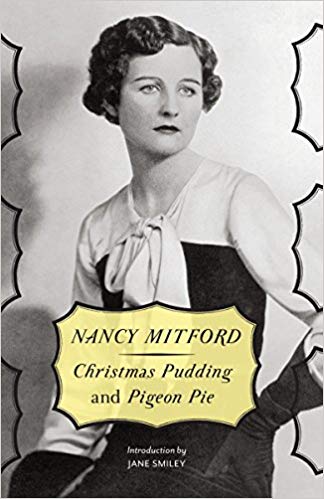
#BookReview ‘Pigeon Pie’ by Nancy Mitford #satire #historical

Pigeon Pie, the fourth novel of Nancy Mitford, was first published in 1940 by Hamish Hamilton. This was a serious error by its publisher given that Mitford wrote this light-hearted satire about wartime spying just before World War Two broke out in 1939. Not surprisingly, it was a commercial miss. Which is a shame. It is a funny, more tightly-plotted and disciplined novel than her first three and is a transition between her pre-war and post-war novels. Nancy MitfordAt the outbreak of war, Lady Sophia Garfield enrols at her nearest First Aid Post and is put in charge of the office, folding and counting laundry and taking telephone calls. As the book is set during the first few months of war, the Phoney War, not a lot happens for Sophia except endless first aid drills. She teases an acquaintance, Olga – who poses in the press as a mysterious Mata Hari figure – and lunches with inept friends Ned and Fred who work at the Ministry of Information. Then Sophia stumbles on a nest of spies; or counter-spies, or counter-counter spies, she’s not sure which.
Although her characters seem of a type with those of her first three novels – Mitford has a reputation for writing about the upper class, their extravagant and thoughtless lifestyles – in Pigeon Pie they are less cartoonish. Sophia particularly is interesting, drawn as she is into different worlds: her husband Luke’s enthusiasm for a new American religion, the Boston Brotherhood, brings new friends to dinner and a lodger upstairs; her godfather Sir Ivor King, aka The King of Song, disappears; journalist Rudolph Jocelyn enlists; and Sister Wordsworth at the Post is jolly and efficient about bandages and disinfectants and such like. Mitford weaves a plot of spies, kidnapping, bombs, code and general sneaking around, despite Sophia being unable to remember Morse Code and seeing codes in innocent messages.
This had me chuckling aloud.

Read my reviews of these other novels by Nancy Mitford:-
CHRISTMAS PUDDING
HIGHLAND FLING
LOVE IN A COLD CLIMATE
THE BLESSING
THE PURSUIT OF LOVE
WIGS ON THE GREEN

Read the #FirstPara of THE PURSUIT OF LOVE

If you like this, try these:-
‘The Paying Guests’ by Sarah Waters
‘The Heat of the Day’ by Elizabeth Bowen
‘The Slaves of Solitude’ by Patrick Hamilton

And if you’d like to tweet a link to THIS post, here’s my suggested tweet:
#BookReview PIGEON PIE by Nancy Mitford https://wp.me/p5gEM4-3h2 via @SandraDanby

#BookReview ‘Nemesis’ by Rory Clements #thriller #WW2

Nemesis by Rory Clements is the third in his Tom Wilde series which sees the American-born Cambridge professor tangle with more spies as Britain enters the Second World War. It is a page-turning read that I galloped through despite a few moments of confusion about who was double-crossing who; to the point where I started to distrust everyone except Tom. Rory ClementsIt is September 1939 and a strange time, the pause before war starts when sandbags are filled and the propaganda starts. Wilde, on holiday in southern France with girlfriend Lydia, negotiates the release of a former student, a brilliant chorister, from an internment camp. Marcus Marfield fought for the International Brigade in the Spanish Civil War and seems to be suffering from PTSD. Wilde returns him to Cambridge though feeling uneasy about the circumstances of Marcus’s release. Marcus’s behaviour is worrying. Clements includes many of the characters featured in the earlier two books, including British spy Philip Eaton, doctor Rupert Weir and fellow don Horace Dill.
Critical at this stage of the war was America joining the Allies but two unrelated incidents spread bad PR in the US; the ambassador in Paris escapes assassination and a British ship The Athenia, carrying American civilians, is sunk. On board are the wife and children of Jim Vandenberg, Tom’s contact at the US Embassy. As Jim waits for news of his wife and sons, strange things start to happen around Marcus Marfield and Tom is pulled into the investigation. Though unqualified, he has a skill for spying and takes to it eagerly, always riding his distinctive Rudge motorcycle.
This is a fun, gripping series set at a fascinating time in Britain’s history when each side was plotting to win the propaganda war and influence America. It tempts me to start reading Clements’ Elizabethan spy novels.

Click the title to read my reviews of the other books in the Tom Wilde series:-
CORPUS #1TOMWILDE
NUCLEUS #2TOMWILDE
HITLER’S SECRET #4TOMWILDE

A PRINCE AND A SPY #5TOMWILDE
THE MAN IN THE BUNKER #6TOMWILDE
THE ENGLISH FUHRER #7TOMWILDE
A COLD WIND FROM MOSCOW #8TOMWILDE

And from the Sebastian Wolff series:-
MUNICH WOLF #1SEBASTIANWOLFF
EVIL IN HIGH PLACES #2SEBASTIANWOLFF
INVITATION FROM A DICTATOR #3SEBASTIANWOLFF

If you like this, try:-
‘A Hero in France’ by Alan Furst
‘An Officer and a Spy’ by Robert Harris
‘Day’ by AL Kennedy

And if you’d like to tweet a link to THIS post, here’s my suggested tweet:
#BookReview NEMESIS by Rory Clements https://wp.me/p5gEM4-3PU via @SandraDanby

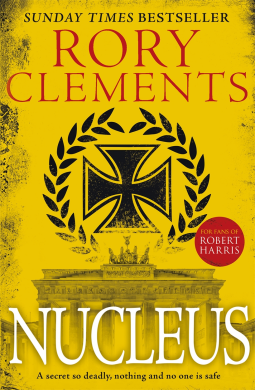
#BookReview ‘Nucleus’ by Rory Clements #thriller #WW2

Summer 1939. Germany has invaded Czechoslovakia. Jews desperate to flee Nazi persecution queue outside embassies in Berlin in the hope of getting a visa, while sending their children on Kindertransport to Britain. In the UK, the IRA’s bombing campaign continues. Scientists in Europe and America are researching atomic fission, and also at the Cavendish Laboratory in Cambridge. It is a vulnerable, combustible time. This is the setting for Nucleus by Rory Clements, second in his trilogy of history professor and amateur spy, Tom Wilde. Rory ClementsIn the first book in the series, Corpus, Tom Wilde was more amateur detective than spy. In Nucleus, the stakes are higher, war is imminent, spies are everywhere and so are traitors. The problem is, they look like friends. Asked by none other than the US president Franklin D Roosevelt to be a ‘clear and unbiased voice’ for him on research at the Cavendish, Wilde is drawn into a world of American millionaires, a Hollywood actress, champagne, tennis parties and horseracing. And then one of the Cavendish physicists, a withdrawn, complicated genius due to move to the USA to work with Oppenheimer, is found drowned in the River Cam. Was he killed because he had unlocked the answer to converting atomic fission into a bomb capable of destroying a city?
Meanwhile, Wilde’s girlfriend and neighbour, Lydia Morris, goes to Berlin on a mercy mission to search for the disappeared eight-year old son of Jewish scientist, Eva Haas, now in England. Could Albert have been kidnapped by the Gestapo to put pressure on his mother? And who is the mysterious German, Baumgarten, who helps Eva and her uncle, physicist Arnold Lindberg, escape to Austria. Tom Wilde, a specialist on Francis Walsingham, spymaster to Queen Elizabeth I, is an interesting protagonist; at times reckless but capable of analysis and leaps of faith.
Corpus was a slow read, at times lightly plotted, but Nucleus an emotional rollercoaster that continues until the last page. Clements avidly recreates the atmosphere of Britain on the brink of war; a summer where parties abound, people approach life with a reckless abandonment, where fear and paranoia combine with a ‘let’s get on with it’ attitude. I enjoyed Corpus but Nucleus is better. The plot twists and turns with all disparate elements connected together by the end. This is a compelling read which I devoured on a plane, sitting up to read it while others slept around me.

Click the title to read my reviews of the other books in the Tom Wilde series:-
CORPUS #1TOMWILDE
NEMESIS #3TOMWILDE
HITLER’S SECRET #4TOMWILDE

A PRINCE AND A SPY #5TOMWILDE
THE MAN IN THE BUNKER #6TOMWILDE
THE ENGLISH FUHRER #7TOMWILDE
A COLD WIND FROM MOSCOW #8TOMWILDE

And from the Sebastian Wolff series:-
MUNICH WOLF #1SEBASTIANWOLFF
EVIL IN HIGH PLACES #2SEBASTIANWOLFF
INVITATION FROM A DICTATOR #3SEBASTIANWOLFF

If you like this, try:-
‘The Farm’ by Tom Rob Smith
‘Last Light’ by Alex Scarrow #1LASTLIGHT
‘Dominion’ by CJ Sansom

And if you’d like to tweet a link to THIS post, here’s my suggested tweet:
#BookReview NUCLEUS by Rory Clements https://wp.me/p5gEM4-3iZ via @SandraDanby

#BookReview ‘Corpus’ by Rory Clements #thriller #WW2

It is 1936. The Spanish civil war is in full swing. A constitutional crisis looms as Edward VIII considers abdicating in order to marry the woman he loves. Corpus by Rory Clements starts in Berlin as a young Englishwoman slips away from a friend to deliver a secret package to an unnamed man. Soon after, Nancy Hereward is dead. Rory ClementsIt is Nancy’s death which makes Cambridge history professor Tom Wilde ask questions, awkward questions which lead him to uncover conspiracy, lies, and pre-war positioning by Stalin and Hitler.
Wilde makes an interesting amateur detective. For one, he is American with a different reading of human nature; he sits on the fence and observes. For another, he is a professor of history; he analyses and looks for proof rather than opinion. And third, he has a cool motorcycle that he uses to cross the fens and investigate isolated country houses. The story starts rather slowly as Clements fleshes out various groups involved without letting the reader know how these people are connected, and who is traitorous. There is one out-and-out baddie, another who looks like a baddie but possibly isn’t, and a journalist who may or not be a spy or a traitor. The reader’s confusion reflects Tom Wilde’s muddle as he and Nancy’s friend Lydia, both disillusioned with official efforts to explain Nancy’s death, unite to investigate. I particularly enjoyed the description of Cambridge in the 1930s, college life, the city and surrounding fens. The portrayal of Cambridge dons is rather polarised, they all seem to be either fascists or communists, reflecting the political jockeying that went on pre-war.
The plot features twist upon twist as Wilde, and the reader, doesn’t know who to trust: is that policeman really honest, or in the pay of the fascists or communists? Perhaps there is one twist too many as Clements manipulates history to fit his plotline. I have a few minor quibbles, knowing that this is the first book of a series. Some of the loose ends were tied off conveniently at the end with minimal or no explanation. The gold plot was lightly sketched and lacked significance. And the budding romance seemed rather one-sided.
A good read, not a great read, but it left me liking Tom Wilde and anticipating the next novel in this spy series.

Click the title to read my reviews of the other books in the Tom Wilde series:-
NUCLEUS #2TOMWILDE
NEMESIS #3TOMWILDE
HITLER’S SECRET #4TOMWILDE

A PRINCE AND A SPY #5TOMWILDE
THE MAN IN THE BUNKER #6TOMWILDE
THE ENGLISH FUHRER #7TOMWILDE
A COLD WIND FROM MOSCOW #8TOMWILDE

And from the Sebastian Wolff series:-
MUNICH WOLF #1SEBASTIANWOLFF
EVIL IN HIGH PLACES #2SEBASTIANWOLFF
INVITATION FROM A DICTATOR #3SEBASTIANWOLFF

If you like this, try:-
‘An Officer and a Spy’ by Robert Harris
‘The Ways of the World’ by Robert Goddard #1WIDEWORLD
‘The Bone Church’ by Victoria Dougherty

And if you’d like to tweet a link to THIS post, here’s my suggested tweet:
#BookReview CORPUS by Rory Clements https://wp.me/p5gEM4-3cu via @SandraDanby

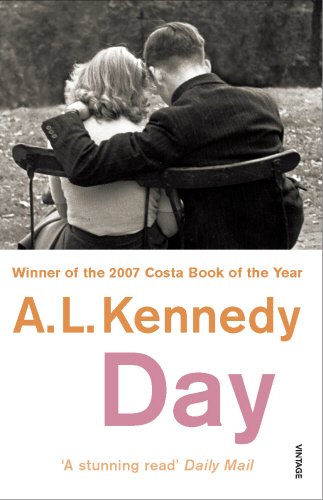
#BookReview ‘Day’ by AL Kennedy @Writerer #WW2

Day, the title of this novel by AL Kennedy, does not refer to a period of twenty-four hours, but to Alfred Francis Day. Alfie. Rear gunner in a Lancaster in World War Two and now extra on the set of a war film. Past and present are mingled together as he starts to remember things he would rather forget. The passages in the bomber are electrifying, in their detail and understanding. The cold, the smell, the fear, how the professionalism of their training kicks in when the action starts. It is totally believable. AL KennedyThe timelines are mixed here as Alfred’s memories are inter-mingled: when Alfred was a member of the bomber crew; his time in a prisoner-of-war camp; and as a film extra in 1949. Where the novel is not so clear, for me, is the intermingling of these three timelines, though after fifty pages everything started to clarify. If you find this, persist and everything will fall into place.
Through Alfred’s memories and his conversations with Ivor, his post-war employer at a bookshop, his bomber crew and the other film extras, we start to piece together the story of his life. It is particularly poignant when he falls in love, heavily, after a fleeting encounter during a bombing raid in London. He meets Joyce in a shelter and from then on she fills his head, when his head should be concentrating on shooting down enemy fighters as his crew drops bombs on Hamburg. ‘Turning his head and turning his head while the heath beyond him dreams, his head pressing back in his pillow and eyes closed and no clear memory he can see, only the wonder that her heartbeat was everywhere in her skin.’
Alfie is a complex character. He is a small man who reads to educate himself. He is nicknamed ‘Boss’ by his flight crew even though he is not the skipper. In flight training, he asks Sergeant Hartnell to show him how to fight and win. ‘Look, son… You’re not the first. Happens quite often in fact. Lads come along and they ask me for help… help with an argument they’ve got to settle back home…’ He tells Alfred his best bet is to hit them from behind with a bit of pipe, but when Alfred gets his chance he throws bricks.
We learn most about him as he remembers his mother and father, both of whom die during the war. In Alfred’s head, his mother and Joyce seem connected and he learns that memories are fickle, the things we would rather forget are the ones that return. ‘Some memories, the ones you’d rather keep – the more you tried to look at them, the more they wore away.’

And here are my reviews of other AL Kennedy novels:-
ALL THE RAGE
SERIOUS SWEET

If you like this, try:-
‘The Paying Guests’ by Sarah Waters
‘The Slaves of Solitude’ by Patrick Hamilton
‘Wake’ by Anna Hope

And if you’d like to share a link, try:
#BookReview DAY by AL Kennedy @Writerer via @SandraDanby http://wp.me/p5gEM4-2C6

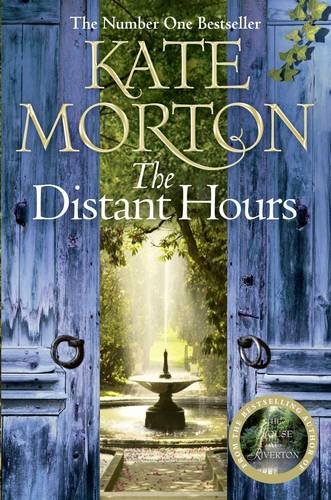
#BookReview ‘The Distant Hours’ by Kate Morton #contemporary #romance #WW2

If ever there was a novel in which a house plays the role of a character, this is it. The Distant Hours by Kate Morton is told in two strands, World War Two and the Nineties, involving the three Blythe sisters in Kent at Milderhurst Castle and a South London mother and daughter, Meredith and Edie. They all are connected by the war, the house, and the truth of what really happened when Juniper Blythe was abandoned by her lover in 1941. Kate Morton This is a brick of a book [678 pages], like Morton’s other novels. A little too long for me, the story meanders at times through past and present until it works towards the final mystery. What a mystery, an ingenious storyline and an unpredictable final twist. The story starts when a letter arrives for Edie’s mother, a letter lost for decades, a letter dating from wartime when Meredith was a schoolgirl evacuated to Kent. Edie is fascinated by her mother’s history, but her mother does not talk of it. They are not close, and Edie feels unable to press for information. So she sets off to investigate on her own.
At the centre of the story is the house, and what a house it is: beautiful, crumbling, representative of a time past. When Edie visits the castle in 1992 for the first time, she thinks: ‘Have you ever wondered what the stretch of time smells like? I can’t say I had, not before I set foot inside Milderhurst Castle, but I certainly know now. Mould and ammonia, a pinch of lavender and a fair whack of dust, the mass disintegration of very old sheets of paper. And there’s something else, too, something underlying it all, something verging on rotten or stewed but not. It took me a while to work out what that smell was, but I think I know now. It’s the past.’ Living there, Edie finds the three Blythe sisters, alone after the death of their father.
Morton writes brilliantly about the war years, conjuring up life at this vast castle and in the village of the same name. Running throughout is a mysterious, ghostly, spooky thread based on Raymond Blythe’s best-selling book The True History of the Mud Man. ‘The moat has begun to breathe. Deep, deep, mired in the mud, the buried man’s heart kicks wetly.’
Is the book set at Milderhurst Castle? Is the Mud Man based on a true story? The book is yet another connection between Edie and the castle, she loved it as a child after being given a library copy when ill by her mother. And so the concentric circles tighten.

And here’s my review of another novel by Kate Morton:-
THE CLOCKMAKER’S DAUGHTER

If you like this, try these books with atmospheric houses:-
‘A Sudden Light’ by Garth Stein
‘A Traveller at the Gates of Wisdom’ by John Boyne
‘The Other Eden’ by Sarah Bryant

And if you’d like to tweet a link to THIS post, here’s my suggested tweet:
#BookReview THE DISTANT HOURS by Kate Morton http://wp.me/p5gEM4-1YD  via @SandraDanby

#BookReview ‘A Hero in France’ by Alan Furst #thriller #WW2

France 1941, British bombers fly every night to Germany, many aircraft don’t make it back home. The aircrew parachuting into Occupied France must somehow find their way home in order to fight again. A Hero in France by Alan Furst is a story of that individual battle within the wider war, seen from different sides by two ordinary men. This is the beginning of the French Resistance. Alan FurstThe man known as Mathieu – we don’t know his real name or identity until the very end of the book, this is the name by which he is known to his Resistance cell – escorts airmen along the north-south escape lines into Vichy France and onwards to Spain. Old clothes are sourced at jumble sales, innocent-looking shops serve as message drops, and a schoolgirl delivers messages by bicycle. In the beginning it was successful and relatively simple, but now the German command in Paris realizes there is a big problem. Word is getting around about the Resistance and people want to join, but how does Mathieu know who is genuine and who is a German spy?
In Hamburg, Otto Broehm, senior inspector of the police department, is transferred to the Kommandantur in Paris to stop the flow of downed airmen being returned to the UK by French people, working together in coordinated groups.
This is a huge subject and a story much-told, but by focussing on a few personalities and what happens to them, Alan Furst writes an engaging story which I read over a weekend. It is a low-key study of personalities, rather than a page-turning thriller.

Read my review of MIDNIGHT IN EUROPE, also by Alan Furst.

If you like this, try:-
‘Inflicted’ by Ria Frances
‘After the Bombing’ by Clare Morrall
‘The Paying Guests’ by Sarah Waters

And if you’d like to share a link:
#BookReview A HERO IN FRANCE by Alan Furst http://wp.me/p5gEM4-21g via @SandraDanby

#BookReview ‘The Ends of the Earth’ by Robert Goddard #WW2 #thriller

Don’t do what I did, and read the first two books in this series by Robert Goddard and then leave 12 months before reading The Ends of the Earth, the third. Ideally this trilogy should be read back to back, in full sun when sitting on a sunlounger. The story runs along at a cracking pace, with dense plotting, loads of characters, politics, spies and locations from Europe to Japan. The pace of this, the third book, is constant, hardly time to draw a breath. Robert GoddardQuestions that I had forgotten about from the first book are revisited, challenged and solved. Japan is the scene for the climax of this tale of James Maxted, ‘Max’, and his hunt for the truth about his father’s death. But this is so much more than a single case of murder, on it hangs the future of post-Great War Europe and the twentieth-century relationship of Japan and America. At times things happen which seem a little convenient, a person turns out to have a skill or history of which we knew nothing before, but I forgave Goddard for this. He is a prime storyteller. It is clear he knows his settings – Paris, Marseilles, Switzerland, Japan – and this adds to the verisimilitude.
In this rollicking spy story, Goddard examines the nature of courage. Max finds himself drawing on the type of bravery he needed to survive in the Royal Flying Corps. “He was not surprised by how calm he felt, how undismayed by what lay before him. He had discovered his aptitude for taking risks early in the war. ‘You should be more careful, sir,’ Sam had said to him more than once. And Max had always given the same reply. ‘Being careful is what gets a chap killed.’ Eventually, he had come to believe that. And it was a belief that had served him well. So far.”

Read my reviews of Goddard’s other books:-
THE WAYS OF THE WORLD #1WIDEWORLD
THE CORNERS OF THE GLOBE #2WIDEWORLD
PANIC ROOM
THE FINE ART OF INVISIBLE DETECTION #1UMIKOWADA
THIS IS THE NIGHT THEY COME FOR YOU #1SUPERINTENDENTTALEB

If you like this, try:-
‘Midnight in Europe’ by Alan Furst
‘Stay Where You Are and Then Leave’ by John Boyne
‘Slow Horses’ by Mick Herron #1SLOUGHHOUSE

And if you’d like to share a link:
#BookReview THE ENDS OF THE EARTH by Robert Goddard http://wp.me/p5gEM4-1O8 via @SandraDanby 

#BookReview ‘Inflicted’ by Ria Frances #WW2 #holocaust

Theo is sixteen, and unhappy. He stumbles into the life of an elderly neighbour, Anna. Together they share their secrets and Anna, by telling the story of her own life as a teenager, helps Theo face up to his difficult emotions. Inflicted is the debut novel of English author Ria Frances and, despite the unflinching approach to a difficult subject, is I think aimed at teenagers. Ria FrancesIt tells the story of Anna, a teenager in the Second World War, on the run with her parents from the German army. Her mother dies and Anna is separated from her father as they are taken to Theresienstadt, the city-turned-ghetto run by the Nazis. Anna’s story of hardship is a difficult emotional read, the author does not sweeten the hardships, but the central message is one of hope, courage and love amidst suffering.
I wanted to know how Anna’s story ended, even though the adult Anna was telling her own story, because I was curious about her journey from the Czech village of Lidice, to Theresienstadt, Berlin and finally to Sussex in 2010. Curiously, it was Anna’s story which drew me on not Theo’s.
I found the ending rather rushed and difficult to follow, perhaps in the author’s effort to tie-up all the loose ends. But I don’t mind some loose ends at the end of a novel, it leaves the story fresh in my mind and gives me something to consider.

If you like this, try:-
‘The Little Red Chairs’ by Edna O’Brien
‘The Bone Church’ by Victoria Dougherty
‘All The Broken Places’ by John Boyne

And if you’d like to share a link:
#BookReview INFLICTED by Ria Frances http://wp.me/p5gEM4-1q8 via @SandraDanby